
Loading, please wait...
LOT 1672
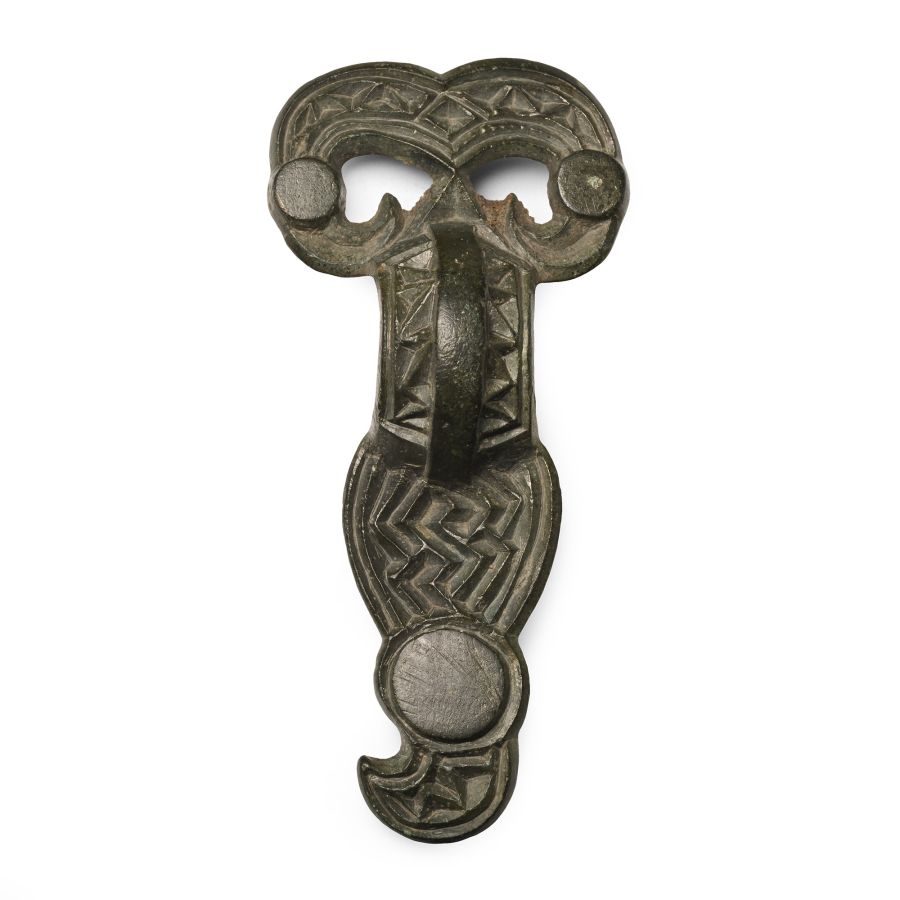
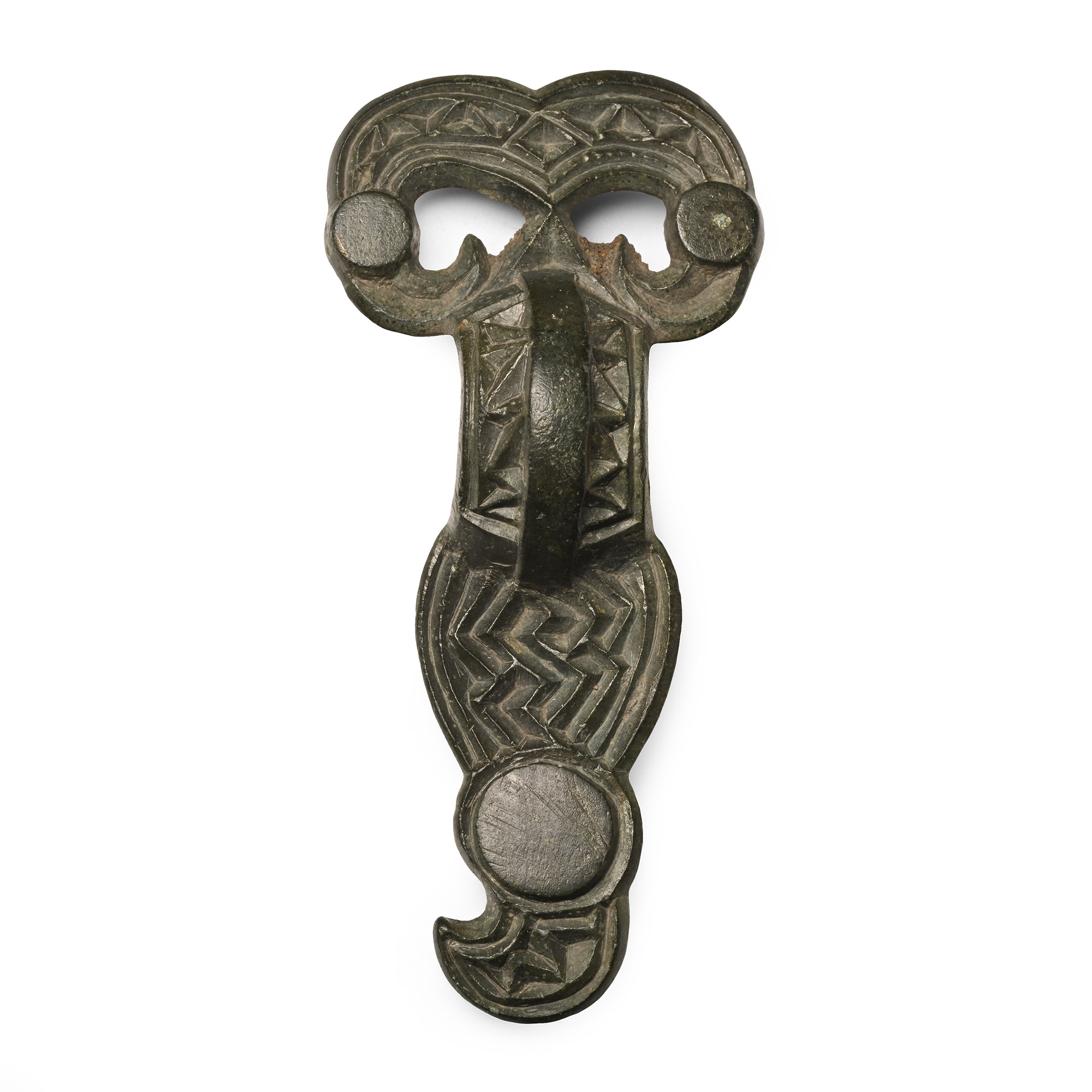
Visigothic Bronze Bird Brooch
6TH-8TH CENTURY A.D.
2 1/8 in. (10 grams, 55 mm).
Comprising: headplate formed as two addorsed bird-heads on arched necks, each with a discoid eye and hooked beak beneath; vrow bow with median band and chip-carved edges; bow-sided foot with chip-carved ornament, bird-head finial with eye and hooked beak; remains of ferrous pin to reverse, catchplate. [No Reserve]
ProvenanceEx European collection, 1990s.
Ex Cambridgeshire, UK, collection.
Cf. Beck, H. et al., Fibel und Fibeltracht, Berlin, 2000, item 154 (1,2), for type.
CONDITIONTimeLine Auctions follows a vetting process to ensure the authenticity and legality of all items, reinforcing our commitment to integrity and responsible trading. Each antiquity, antique, and coin lot undergoes thorough examination by a vetting committee of at least ten external specialists, professional trade association members, scientists, and archaeologists: Our Vetting Process
AUCTIONS:
TimeLine is a leading auction house specialising in antiquities, ancient art, collectables, natural history, coins, medals, and books. Our auctions offer museums, collectors, historians, and enthusiasts the opportunity to acquire unique and historically significant pieces.
-
Visigothic Bronze Bird Brooch
6th-8th century A.D.Sold for (Inc. bp): £260
Comprising: headplate formed as two addorsed bird-heads on arched necks, each with a discoid eye and hooked beak beneath; vrow bow with median band and chip-carved edges; bow-sided foot with chip-carved ornament, bird-head finial with eye and hooked beak; remains of ferrous pin to reverse, catchplate. 10 grams, 55 mm
Ex European collection, 1990s. Ex Cambridgeshire, UK, collection. -
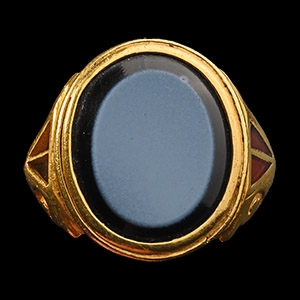
Large Migration Period Gold Ring with Gemstones
Eastern Europe, 4th-5th century A.D.Sold for (Inc. bp): £10,530
Wide hoop with volute decoration on the shoulders, two triangular settings on both shoulders, one side with garnet cloisonnés separated by a narrow bar, an applied strip of sheet-gold to the inside of the ring behind the setting; large oval bezel set with nicolo. 22.03 grams, 29.00 mm overall, 21.65 mm internal diameter (approximate size British U, USA 10, Europe 22.52, Japan 21)
with Fran Sternberg AG, Zurich, Sale XXVI, 16 November 1992, no.689. Private collection, UK. This lot has been checked against the Interpol Database of stolen works of art and is accompanied by search certificate number no.12984-245991. -
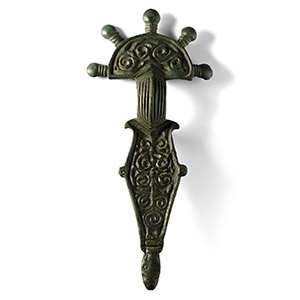
Large Visigothic Bronze Radiate Brooch
6th-8th century A.D.Sold for (Inc. bp): £234
Comprising: D-shaped headplate with five radiating collared knops, running scroll to the plaque; carinated bow with vertical ribbing; lozengiform foot with lateral spurs and running scroll design, beast-head finial; pin-lugs and pierced catch to reverse. 63 grams, 15 cm
Ex European collection, 1990s. Ex Cambridgeshire, UK, collection.
