
Loading, please wait...
LOT 0565
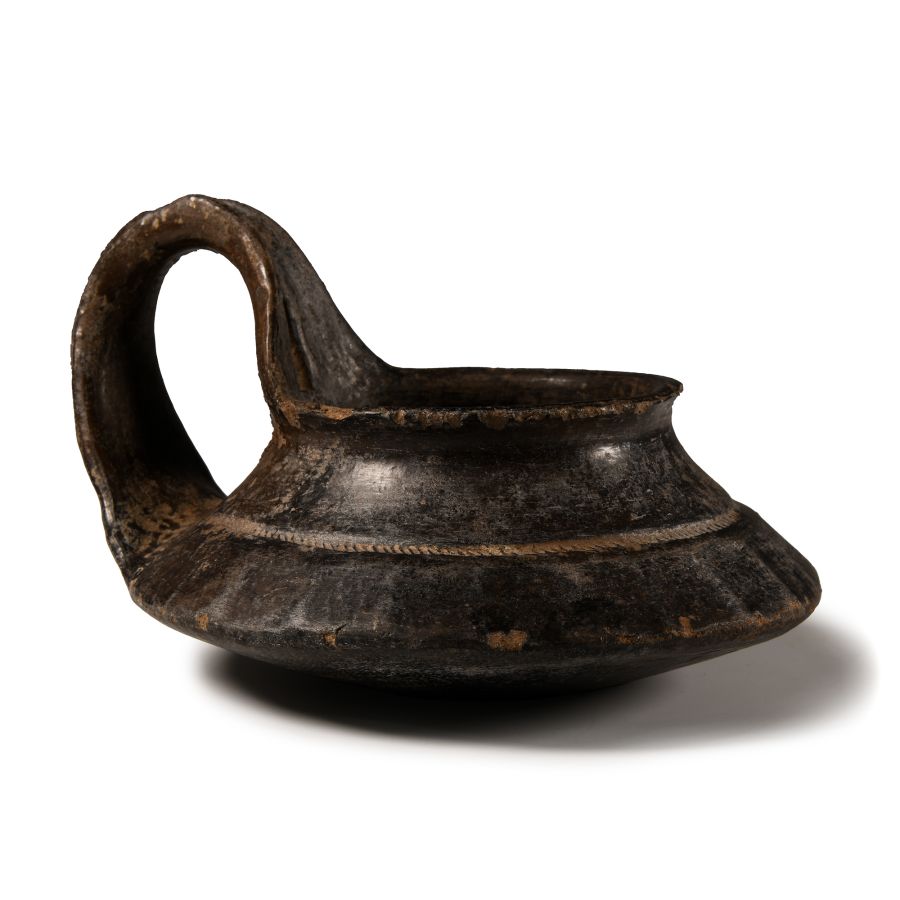
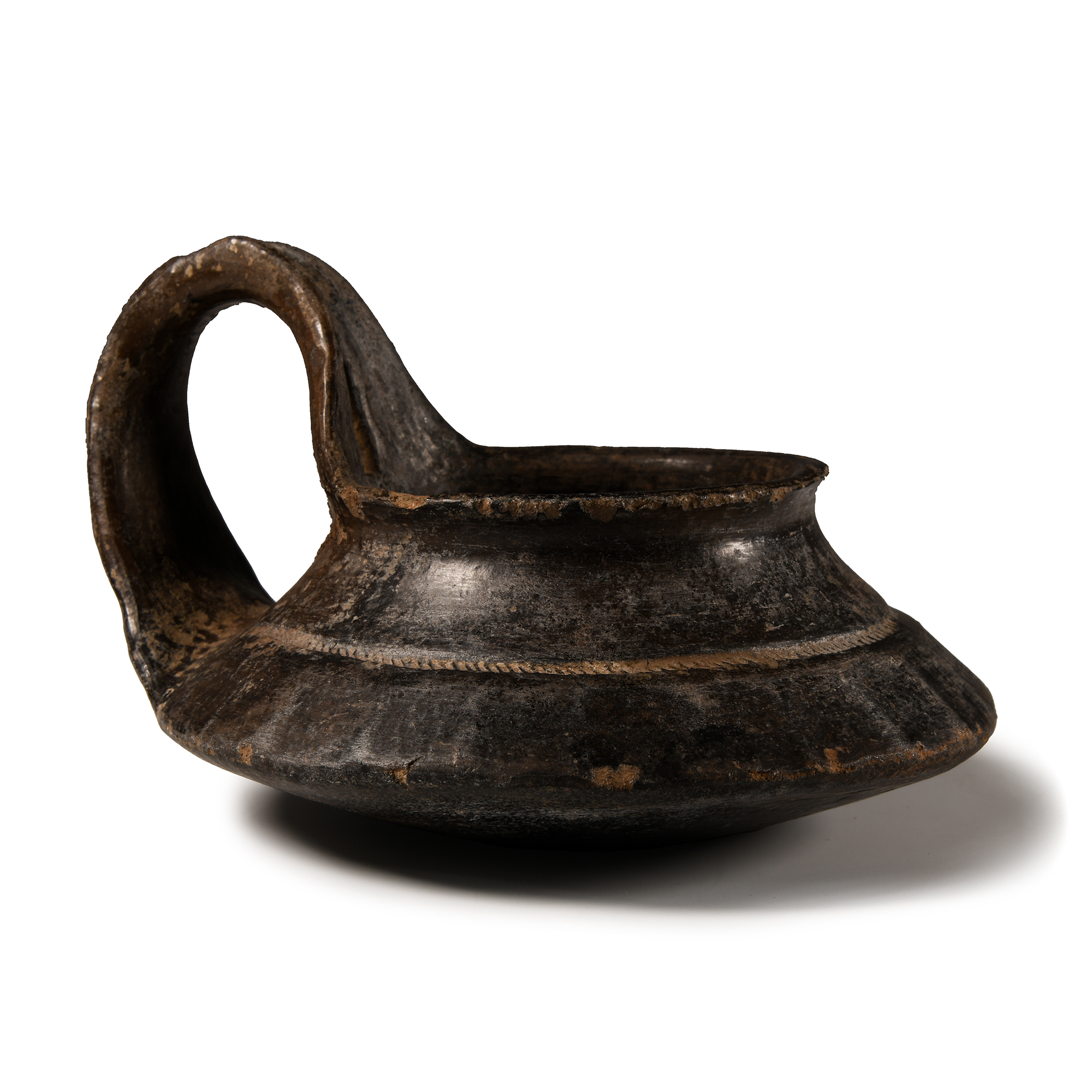
Villanovan Terracotta Impasto Kyathos
8TH-7TH CENTURY B.C.
5 1/2 in. (286 grams, 14 cm wide).
Blackware vessel with carination to the squat body, deep shoulder and rolled rim, low foot, single upstanding strap handle to the rear with split at the junction with the mouth.
ProvenanceEx Haynault Ventes Publiques Auction, Uccle, Belgium, 21 September, 2021, no.30.
Property of a South Australian private collector, with collection reference 21.102.
Accompanied by a collector's catalogue page including description and image.
See Rasmussen, Bucchero Pottery from Southern Etruria, p.116, pl.36.
FootnotesVillanovan culture is often regarded as the earliest phase of Etruscan civilisation in the Iron Age.
CONDITIONTimeLine Auctions follows a vetting process to ensure the authenticity and legality of all items, reinforcing our commitment to integrity and responsible trading. Each antiquity, antique, and coin lot undergoes thorough examination by a vetting committee of at least ten external specialists, professional trade association members, scientists, and archaeologists: Our Vetting Process
AUCTIONS:
TimeLine is a leading auction house specialising in antiquities, ancient art, collectables, natural history, coins, medals, and books. Our auctions offer museums, collectors, historians, and enthusiasts the opportunity to acquire unique and historically significant pieces.
-
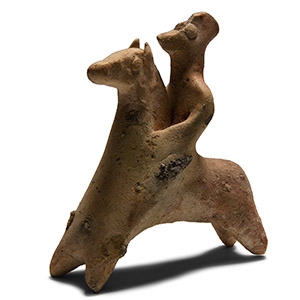
Archaic Greek Terracotta Horse and Rider Statuette
7th-5th century B.C.Sold for (Inc. bp): £234
Integrally modelled horse and rider with applied pellet eyes, traces of red pigment. 112 grams, 96 mm high
From a collection acquired on the UK art market from various auction houses and collections mostly before 2000. From an important Cambridgeshire estate; thence by descent.
Terracotta figurines of horse and rider were common grave offerings in Boeotia, northwest of Attica, particularly during the 6th century B.C. Representations of warriors on horseback were already widespread in the Geometric Period, and widely used in Cyprus during this period. The rider, although influenced by Cypriot designs, does not show typical Cypriot characteristics. -
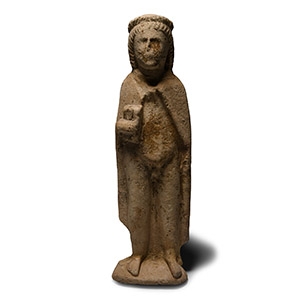
Cypro-Archaic Standing Limestone Male Scribe
Circa 4th-3rd century B.C.Sold for (Inc. bp): £780
Modelled in the half-round, standing nude male with mantle to the shoulders, clutching a codex in the right hand; with carefully dressed hair and diadem; D-shaped base. 536 grams, 27 cm
Acquired Bonhams, London, UK. From a collection acquired on the UK art market from various auction houses and collections mostly before 2000. From an important Cambridgeshire estate; thence by descent. -
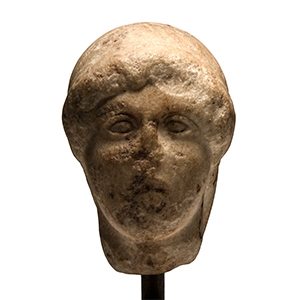
Greek Marble Head of a Youth
Early 5th century B.C.Estimate: £3,000 - 4,000 (‡+bp*)
Opening Bid: £1,500
Carved in the round; semi-naturalistic anatomic and facial detailing, hair gathered loosely at the neck and tied with a taenia knotted at the nape of the neck; mounted on a custom-made display base. 879 grams total, 18 cm high including stand
Ex old European private property, by inheritance to the previous owner. Ex Schuler Auktionen, Zürich, 10 December 2020, no.1211. Accompanied by an academic report by Dr Raffaele D’Amato. This lot has been checked against the Interpol Database of stolen works of art and is accompanied by search certificate number no.11817-206512.
The small statuette to which the head belonged was probably that of a naked youth, the so-called kouros, typical of archaic Greek sculpture from the 7th century B.C. onwards.
