
Loading, please wait...
LOT 0532
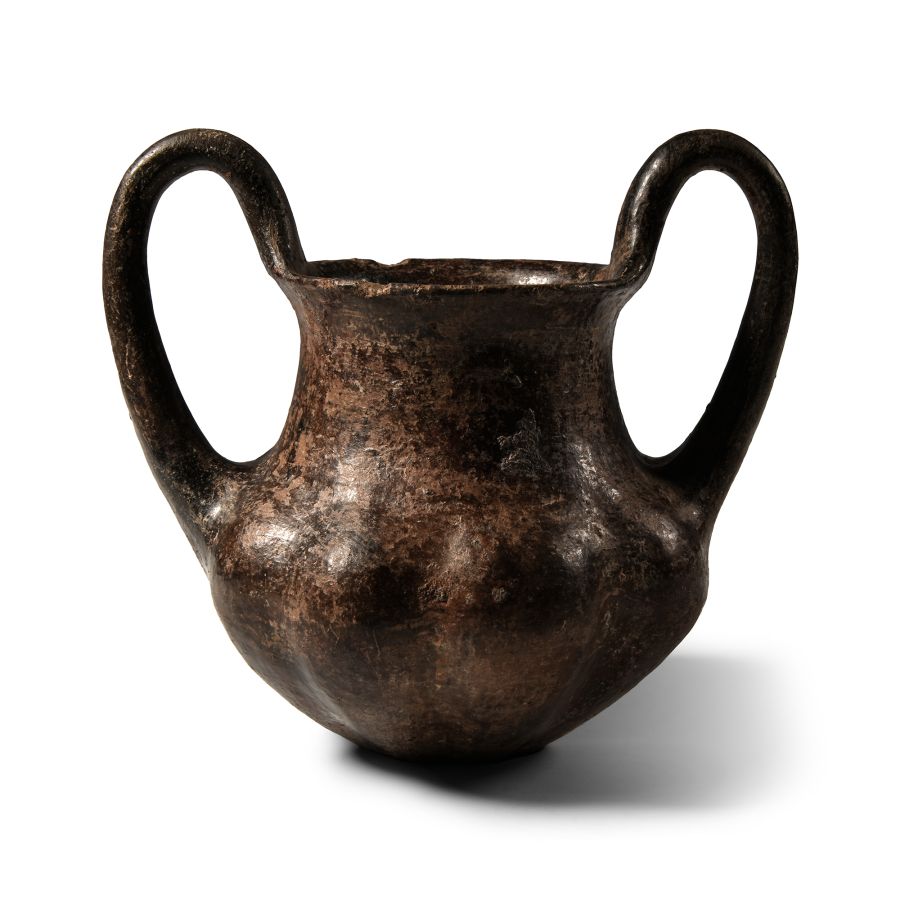
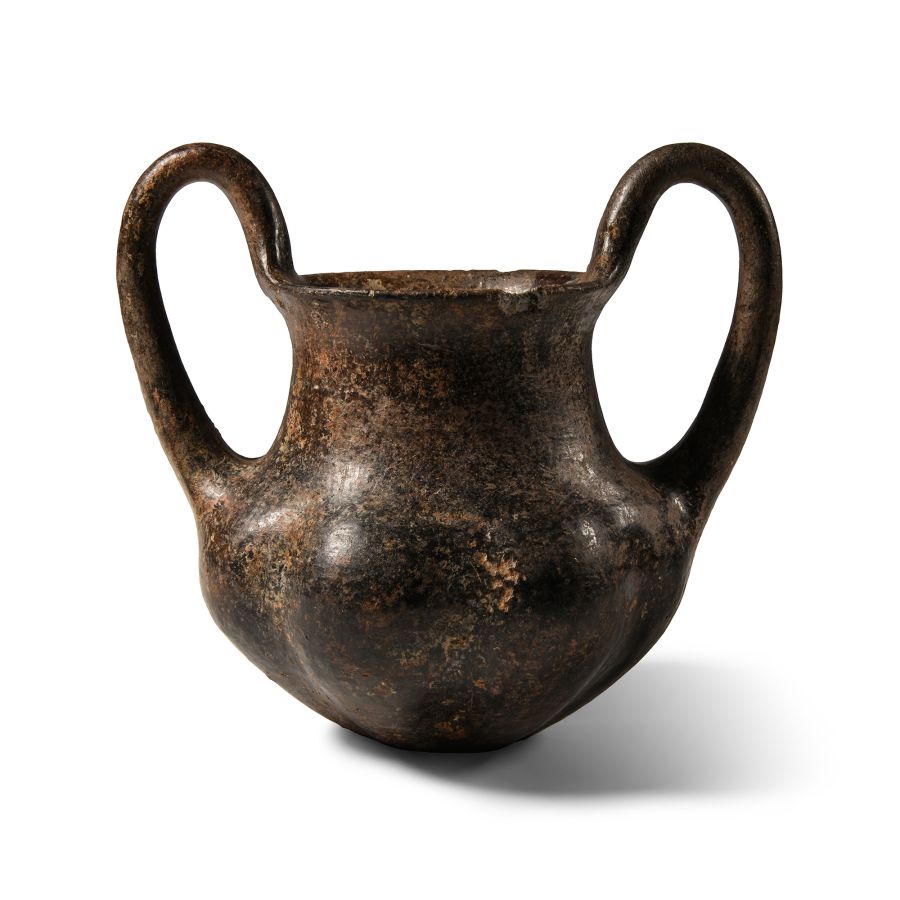
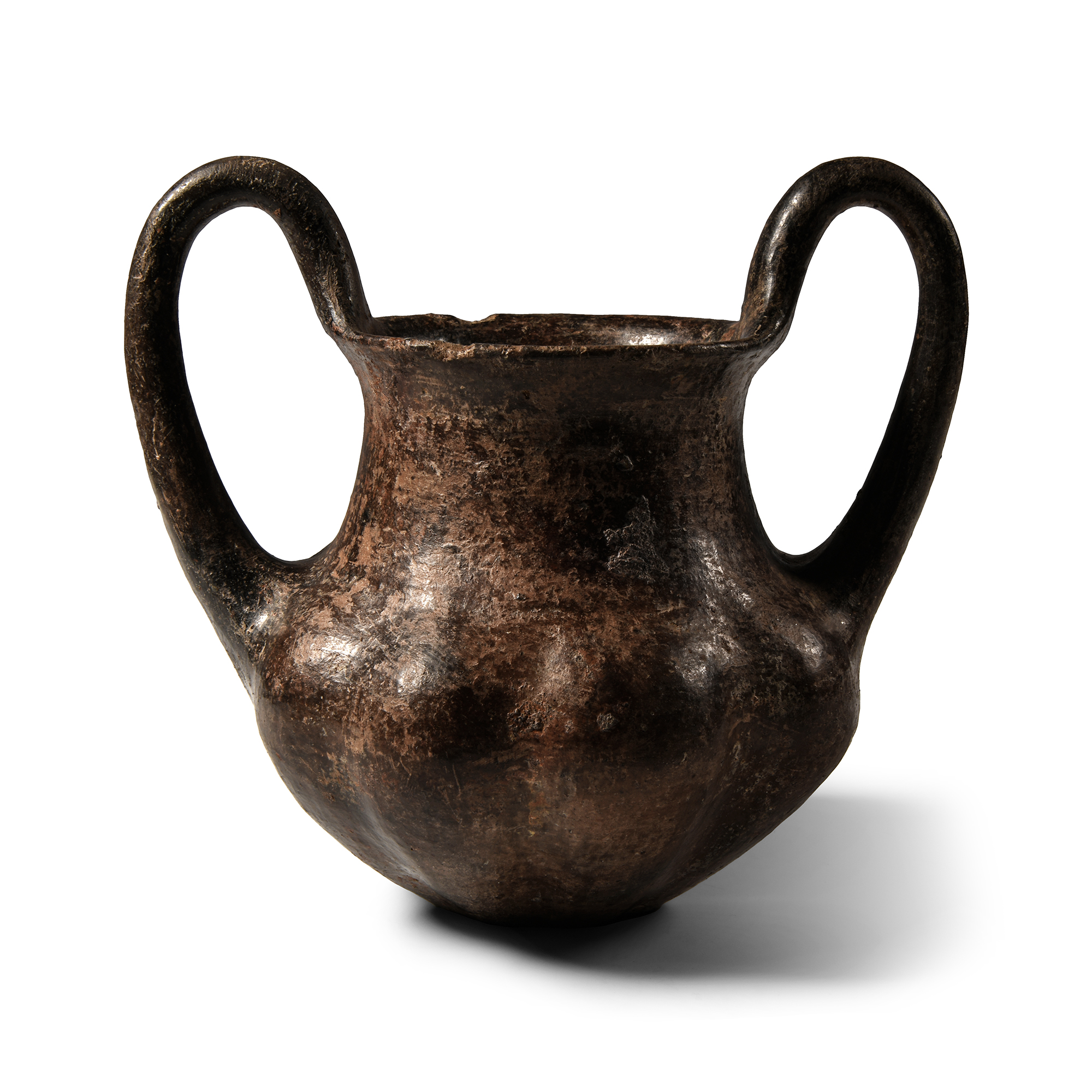
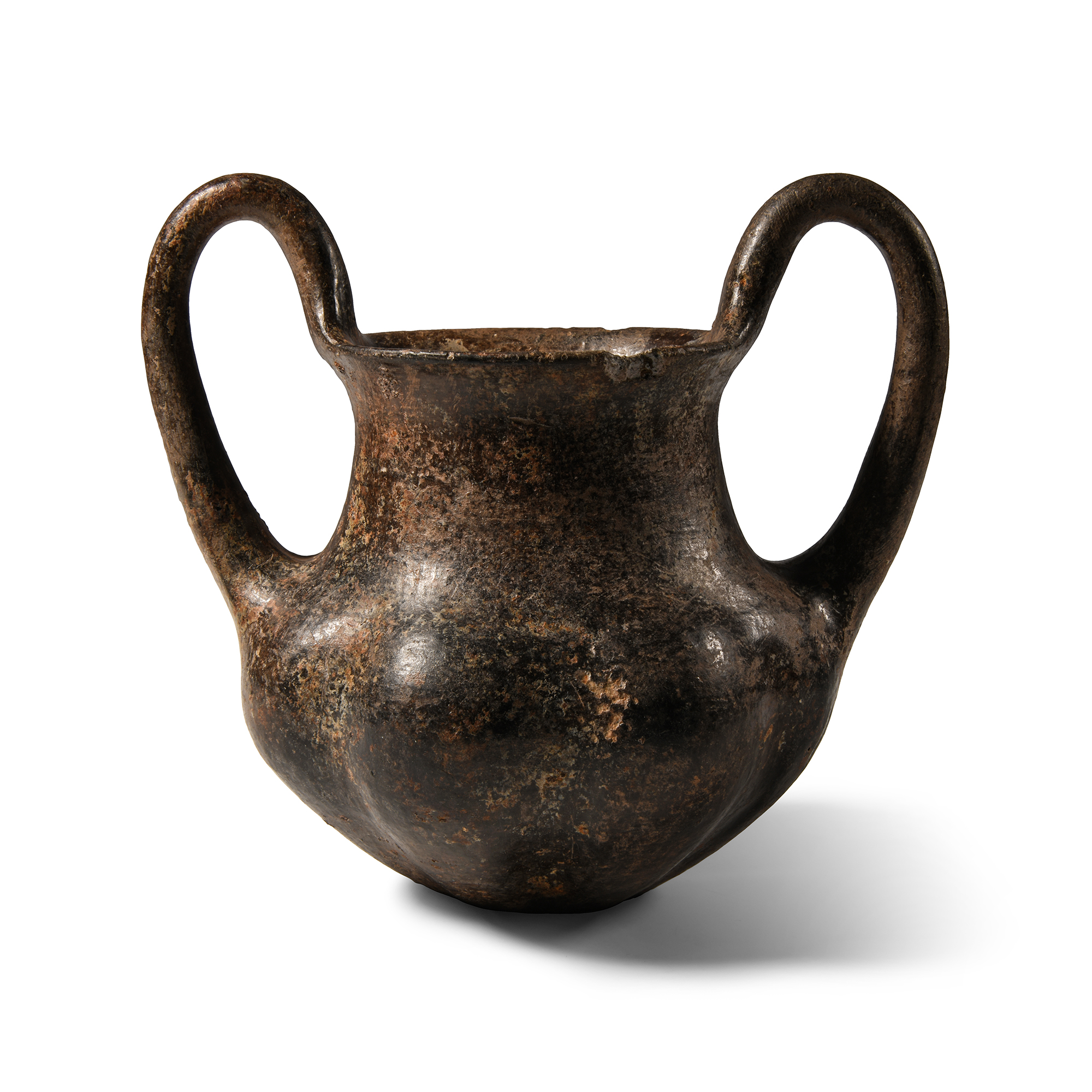
Villanovan Impasto Two-Handled Kyathos
CIRCA 750-650 B.C.
5 7/8 in. (302 grams, 15 cm wide).
With a scalloped profile to the body, scooped shoulder, lateral symmetrical handles rising from the shoulder to the flared rim; chipped.
ProvenancePrivate collection, Cannes, France.
Ex Setdart Fine Art, Spain.
Property of a South Australian private collector, with collection reference 23.12.
Accompanied by detailed collector's catalogue pages including description and photograph.
Cf. for a similar khiatoi (in bucchero) and a khantaros in similar style Camporeale, G., La Tomba del Duce, Firenze, 1947, pls.IX and XI.
FootnotesCompared to certain types of khantaroi (such as some found in the tomb of the Duce of Vetulonia) the shape of this cup seems more developed in height than in width. These typologies of khiatoi presupposed ceramic rather than metallic models.
CONDITIONTimeLine Auctions follows a vetting process to ensure the authenticity and legality of all items, reinforcing our commitment to integrity and responsible trading. Each antiquity, antique, and coin lot undergoes thorough examination by a vetting committee of at least ten external specialists, professional trade association members, scientists, and archaeologists: Our Vetting Process
AUCTIONS:
TimeLine is a leading auction house specialising in antiquities, ancient art, collectables, natural history, coins, medals, and books. Our auctions offer museums, collectors, historians, and enthusiasts the opportunity to acquire unique and historically significant pieces.
-
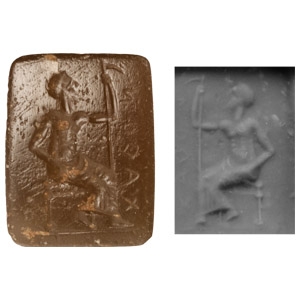
Greek Pyramid Seal with Inscription
Circa 5th century B.C.Sold for (Inc. bp): £208
With incuse Zeus seated on a stool, holding the shaft of a sceptre topped by an eagle, legend to the side 'XAΡOΝ'; supplied with a museum-quality impression. 5.02 grams, 20 mm
From the property of late Mr SM, London, UK, 1969-1999.
The seal bears a classical representation of seated Zeus with his eagle-headed sceptre. The inscribed name (Charon) is probably the one of the owner, according to the interpretation of Boardman. The parallel of the image on this seal can be seen on a blue chalcedony scaraboid, type A.L.17 preserved in the Getty Museum (inventory 84.AN.I.12). -
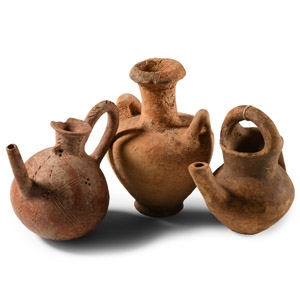
Cypriot Mixed Terracotta Vessel Group
2nd-1st millennium B.C.Sold for (Inc. bp): £169
Comprising: miniature amphora with two loop handles to the shoulder; spherical ewer with tall spout, trumpet-shaped neck and loop handle; biconical ewer with broad neck, spout and transverse strap handle. 350 grams total, 82-92 mm
From a collection acquired on the UK art market from various auction houses and collections mostly before 2000. From an important Cambridgeshire estate; thence by descent. -
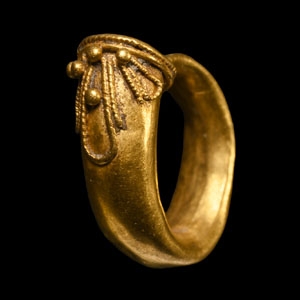
Greek Gold Earring
Circa 4th-3rd century B.C.Sold for (Inc. bp): £286
Formed as a horn with applied filigree and granule detailing below the rim. 0.59 grams, 12 mm
Ex collection of the Chierroni family, Paris, France, formed between 1980-1990s. Property of a French collector.
