
Loading, please wait...
LOT 0504
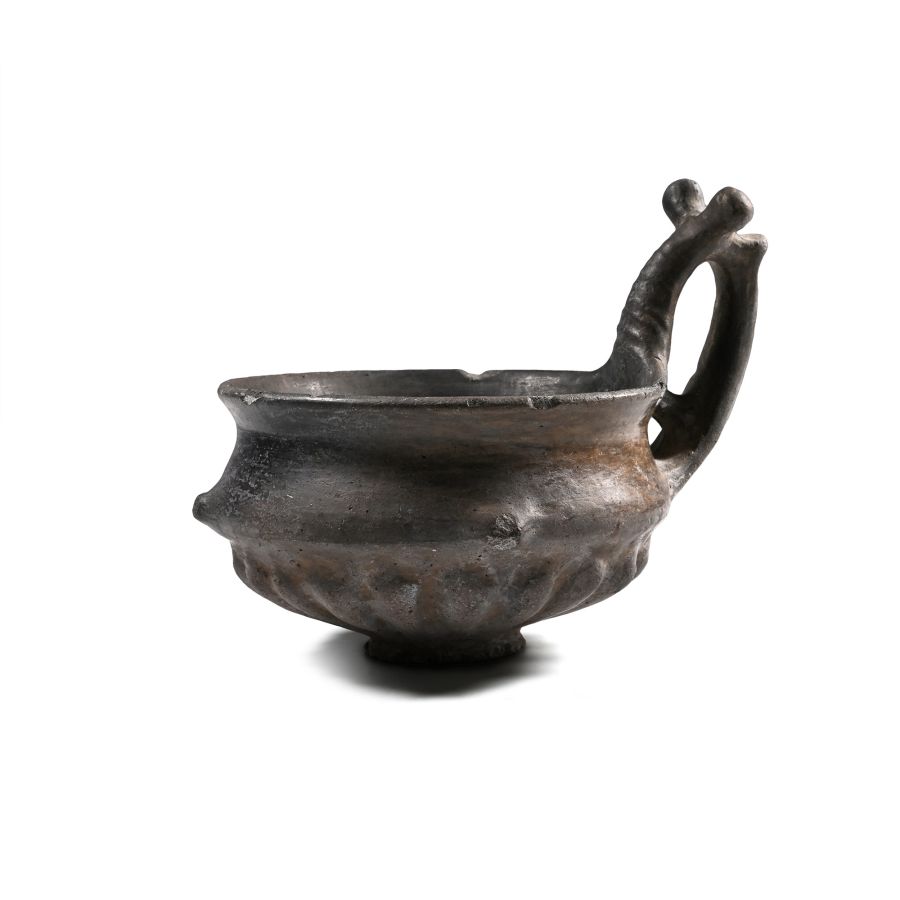
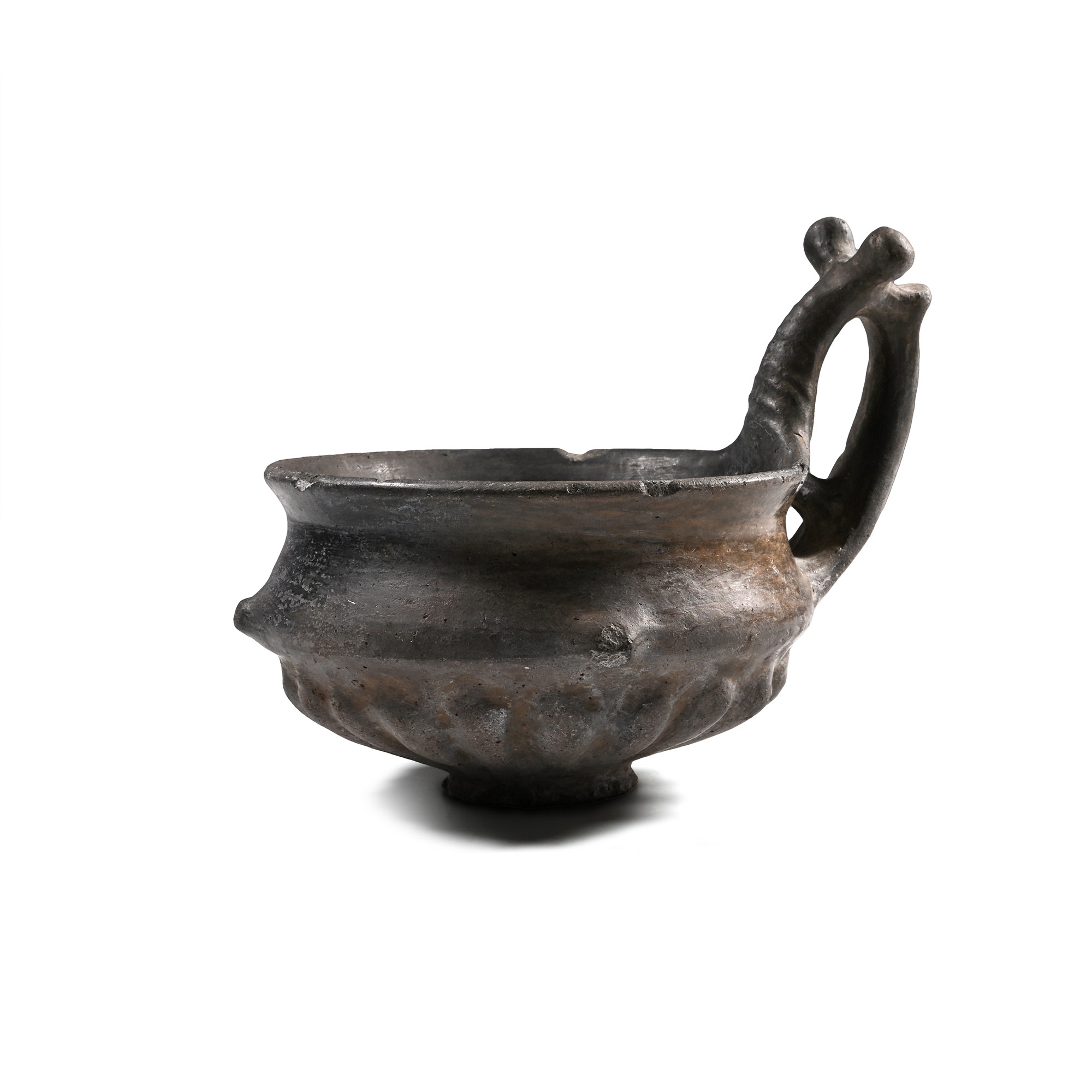
Villanovan Impasto Kyathos with Zoomorphic Handle
7TH CENTURY B.C.
5 1/4 in. (208 grams, 13.3 cm wide).
Modelled with squat body and raised openwork handle with two projecting lobes to the top, the body with three raised bosses on the shoulder and the base with raised petals radiating from the low foot.
ProvenanceUlrike Feuz-Lauprecht, NIKE Kunst der Antike, Bremgarten 9 April 1991.
Private collection, Bern, Switzerland.
This lot is accompanied by an illustrated lot declaration signed by the Head of the Antiquities Department, Dr Raffaele D'Amato.
TimeLine Auctions follows a vetting process to ensure the authenticity and legality of all items, reinforcing our commitment to integrity and responsible trading. Each antiquity, antique, and coin lot undergoes thorough examination by a vetting committee of at least ten external specialists, professional trade association members, scientists, and archaeologists: Our Vetting Process
AUCTIONS:
TimeLine is a leading auction house specialising in antiquities, ancient art, collectables, natural history, coins, medals, and books. Our auctions offer museums, collectors, historians, and enthusiasts the opportunity to acquire unique and historically significant pieces.
-
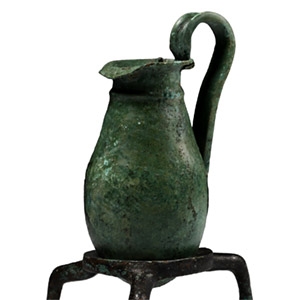
Greek Bronze Olpe
6th century B.C.Estimate: £800 - 1,000 (‡+bp*)
Opening Bid: £400
Pear-shaped body with rounded base, raised circumferential hoop at the neck and everted rim; applied high, ribbed handle with an engraved palmette at the base; accompanied by a stand. 145 grams, 12.5 cm (250 grams total, 15 cm including stand)
Private collection Dr L.M., Zurich, Switzerland. with Galerie Rhéa, Zurich, Switzerland. This lot is accompanied by an illustrated lot declaration signed by the Head of the Antiquities Department, Dr Raffaele D'Amato. -
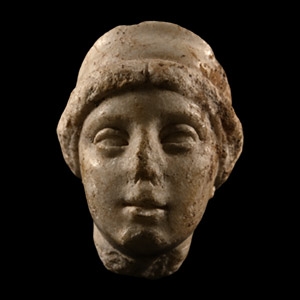
Hellenistic Marble Head of a Woman
3rd-2nd century B.C.Sold for (Inc. bp): £1,300
Carved in the round with carinated diadem in the hair, heavily lidded eyes, small mouth with pursed lips. 620 grams, 95 mm
Acquired in the mid 1980s-1990s. From the family collection of Mr S.A., Switzerland, thence by descent. Private collection since the late 1990s. This lot has been checked against the Interpol Database of stolen works of art and is accompanied by a search certificate number no.12102-218191. This lot is accompanied by an illustrated lot declaration signed by the Head of the Antiquities Department, Dr Raffaele D'Amato. -
.jpg)
Hellenistic Garnet Gemstone with Hercules Club and Lionskin
2nd century B.C.Sold for (Inc. bp): £1,300
Plano-convex with incuse image of spiked club and lionskin mantle, repaired. 1.8 grams, 17 mm
Acquired in the 1970s. Ex London, UK, collection. This lot has been checked against the Interpol Database of stolen works of art and is accompanied by a search certificate number no.12386-226380. This lot has been cleared against the Art Loss Register database, and is accompanied by an illustrated lot declaration signed by the Head of the Antiquities Department, Dr Raffaele D’Amato. This lot has been cleared against the Art Loss Register database, and is accompanied by an illustrated lot declaration signed by the Head of the Antiquities Department, Dr Raffaele D'Amato.
