
Loading, please wait...
LOT 0078
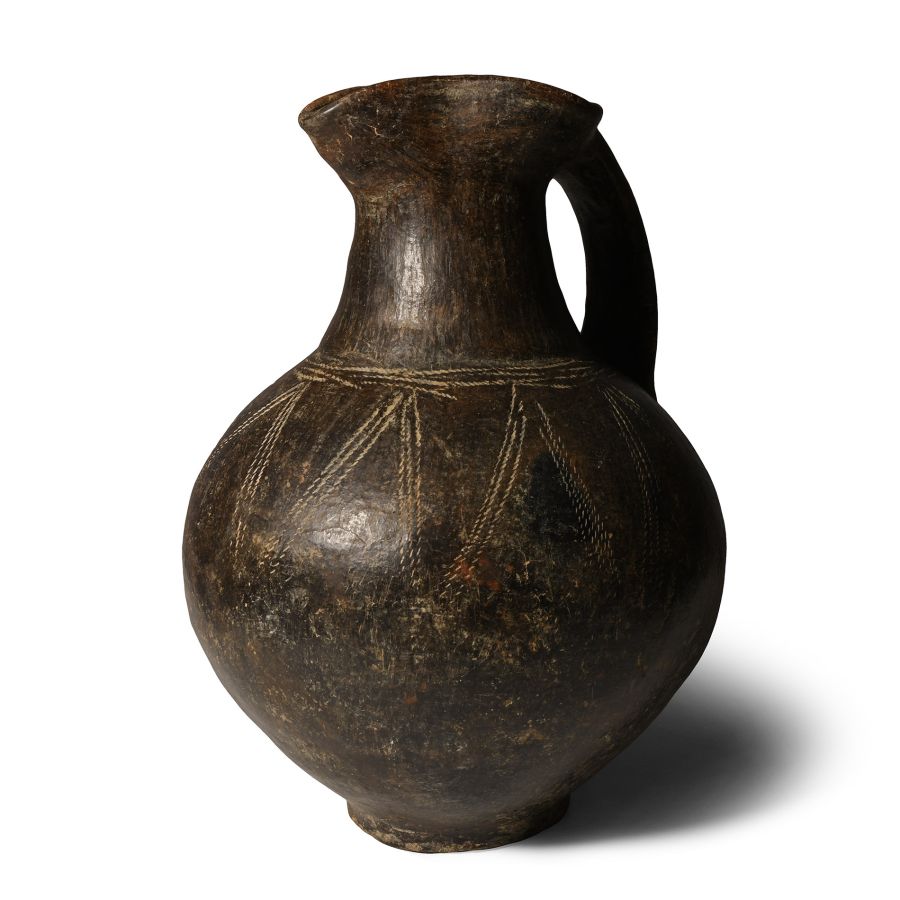
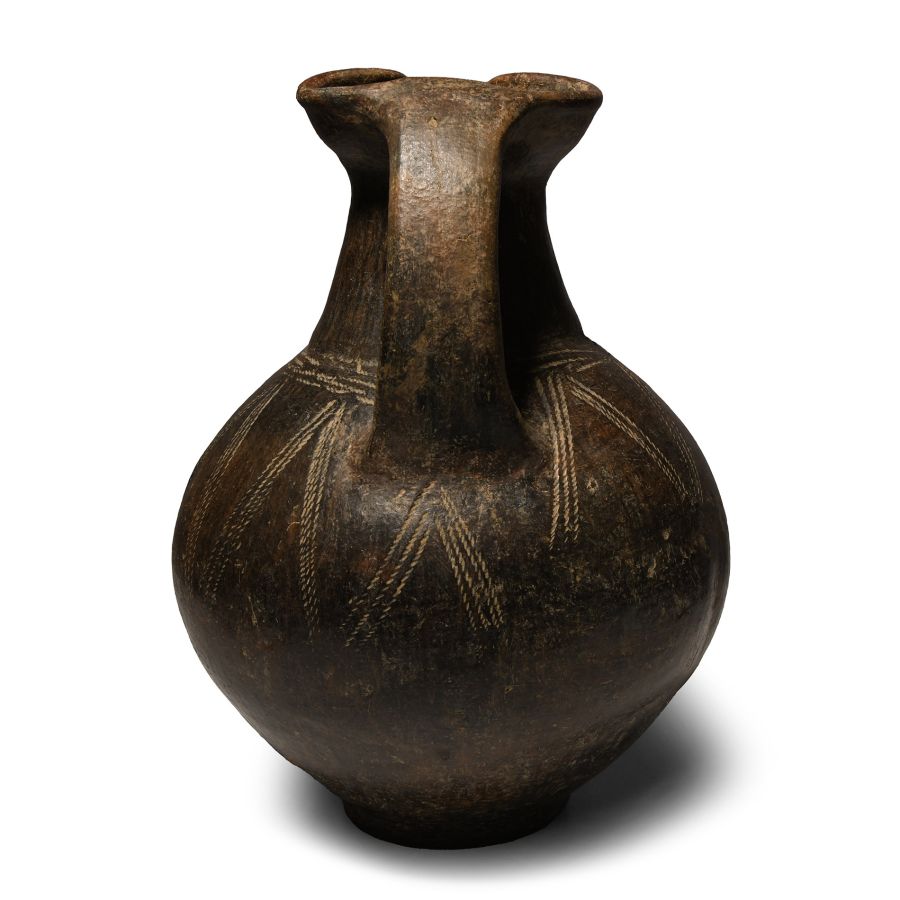
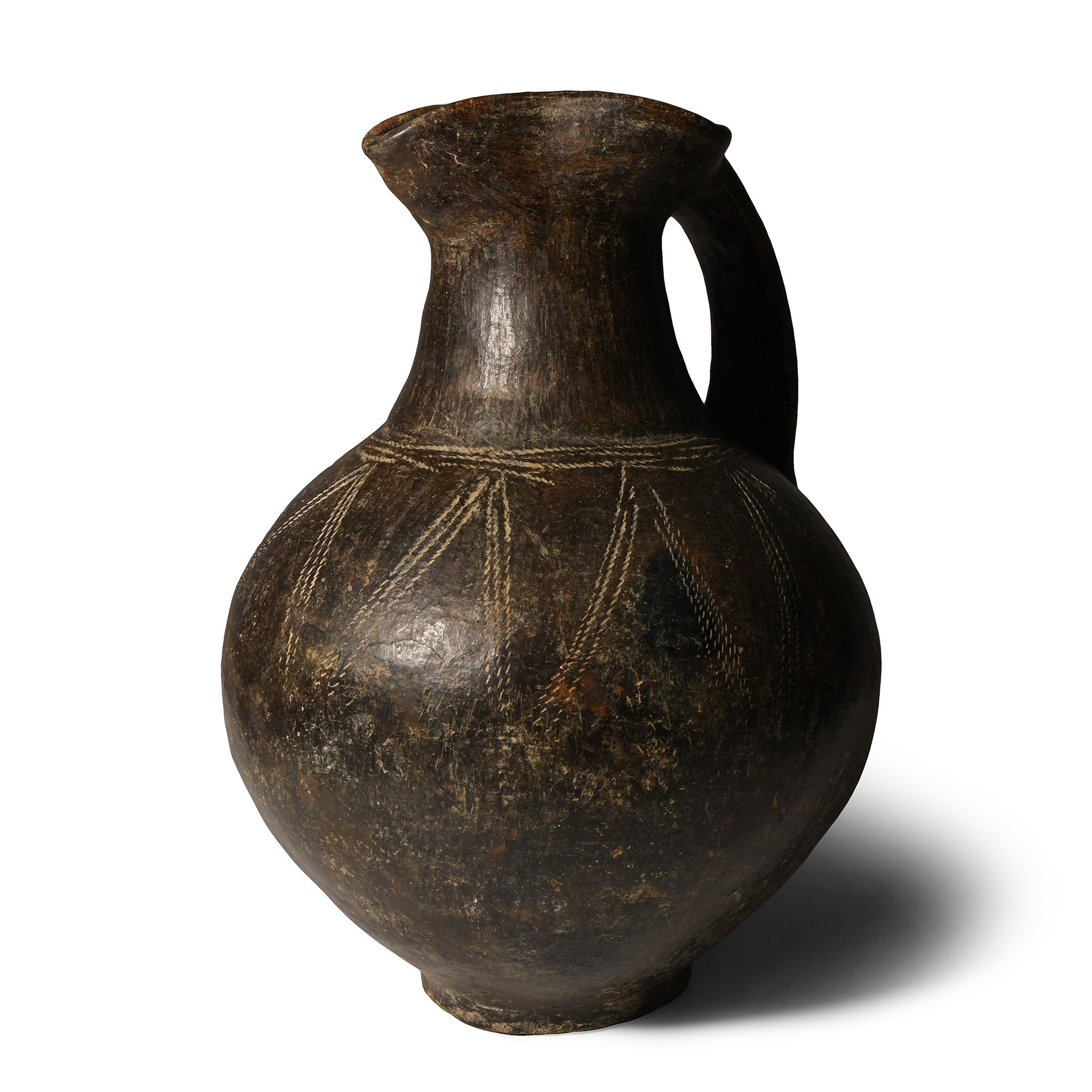
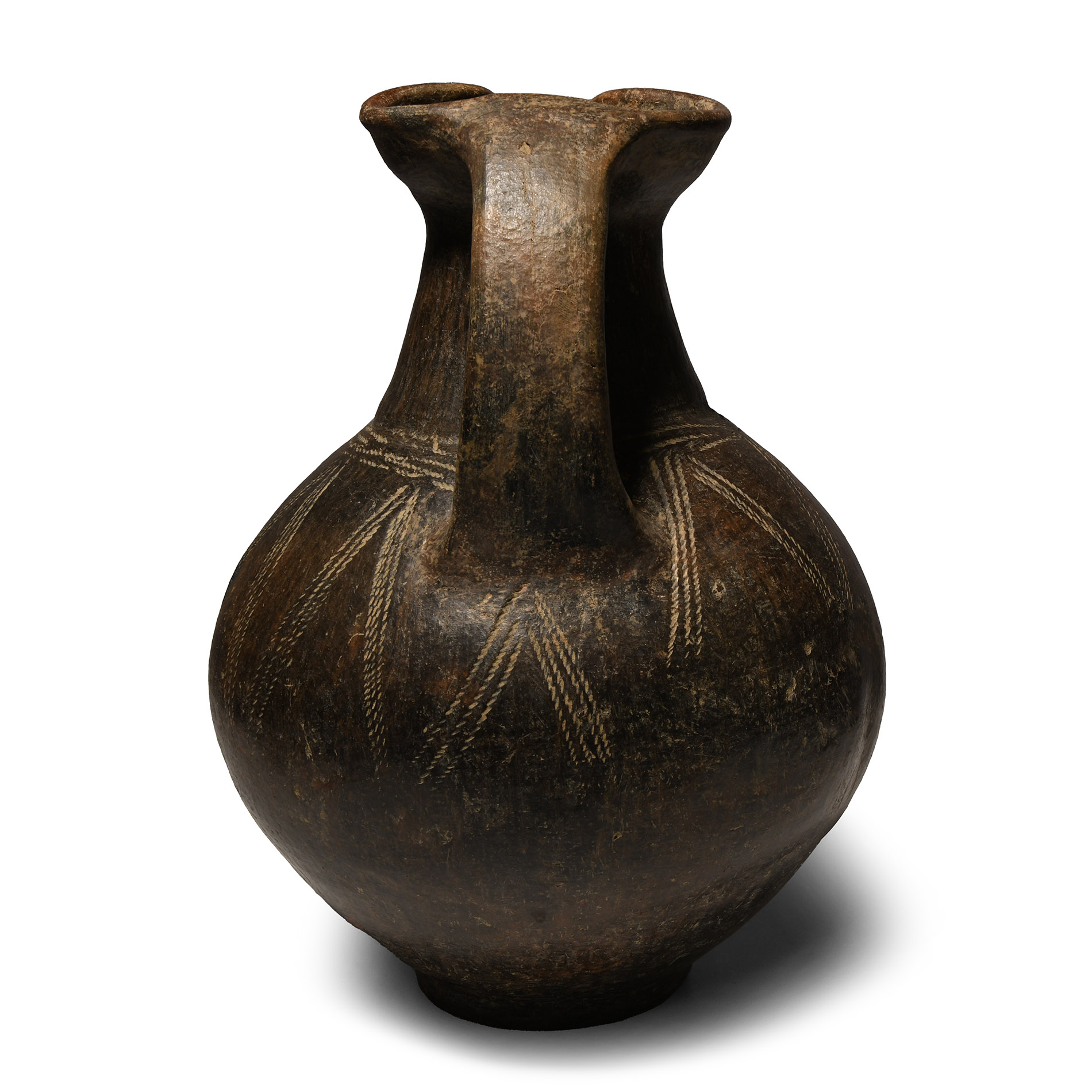
Villanovan Impasto Handled Oinochoe
CIRCA 9TH-7TH CENTURY B.C.
11 3/4 in. (2.38 kg, 30 cm high).
Wheel-thrown and with a highly-burnished surface, comprising a protruding foot beneath the globular body, a tapering cylindrical neck and a trefoil-lipped spout, a wide strap handle joining spout to shoulder; decorated with an incised corded motif formin twisting rope patterns around the neck and zigzag across the body; repaired.
ProvenanceEx Richard Brockway, Vero Beach, Florida, USA.
Ex Arte Primitivo, New York, USA, in 1995.
with Artemis Gallery, Colorado, USA, 22 February 2019, lot 48E (US$2,500-3,500).
Property of a South Australian private collector, with collection reference 20.07.
Accompanied by detailed collector's catalogue pages including description and photograph.
TimeLine Auctions follows a vetting process to ensure the authenticity and legality of all items, reinforcing our commitment to integrity and responsible trading. Each antiquity, antique, and coin lot undergoes thorough examination by a vetting committee of at least ten external specialists, professional trade association members, scientists, and archaeologists: Our Vetting Process
AUCTIONS:
TimeLine is a leading auction house specialising in antiquities, ancient art, collectables, natural history, coins, medals, and books. Our auctions offer museums, collectors, historians, and enthusiasts the opportunity to acquire unique and historically significant pieces.
-
Greek Silver Fibula
5th-4th century B.C.Estimate: £180 - 240 (‡+bp*)
Opening Bid: £100
Comprising an ellipsoid bow with lateral knops (one absent) and applied collars, longitudinal band of applied filigree braid, knop finial with collar, perpendicular two-coil spring and long pin; footplate with incised saltire with reversed-loop finial, square catchplate with pointillé gammadion and frame. 6.86 grams, 42 mm
Private European collection, 1994, thence by descent. -
Phoenician Terracotta Head Collection
4th-2nd century B.C.Sold for (Inc. bp): £143
Including one with tongue-shaped headdress and painted detailing, one with radiating hair and chignon to the rear, and other types; each mounted on a custom-made display stand. 308 grams total, 7.3-10.7 cm including stand
From a collection acquired on the UK art market from various auction houses and collections mostly before 2000. From an important Cambridgeshire estate; thence by descent. -
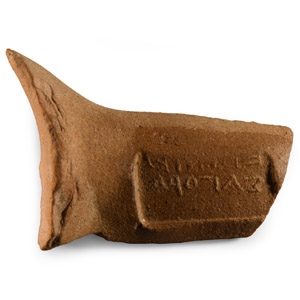
Greek Rhodian Stamped Amphora Handle Fragment
131 B.C.Sold for (Inc. bp): £26
With stamped retrograde inscription and rectangular panel : 'ΕΠΙ NΙΚΑΣΑΓΟΡΑ[Σ]' = under Nikasagoras. 49 grams, 82 mm
Acquired in the 1970s. From the private collection of a retired East Anglian teacher.
This fragment of Rhodian Amphora carries the Eponym official 'Nikasagoras', referring to the Eponym Officer of Rhodes of the year in which the amphora was produced and stamped. He is a well known eponym, also attested by an inscription. His stamps are individualised in comparison to those of the other two namesakes, Nikasagoras the Elder (circa 240 B.C.) and Nikasagoras 1 (circa 172–171 B.C.). These officers seem to have been those of the annually chosen priests of Helios who were the dating authorities of the Rhodian state.
