
Loading, please wait...
LOT 0079
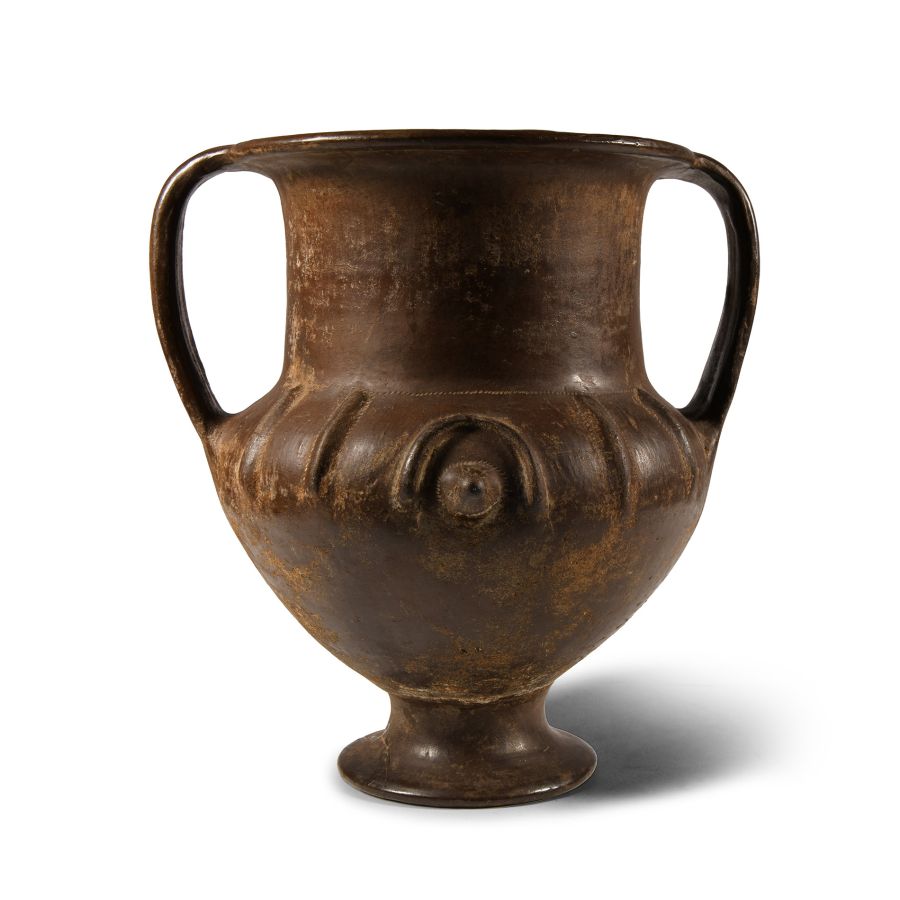
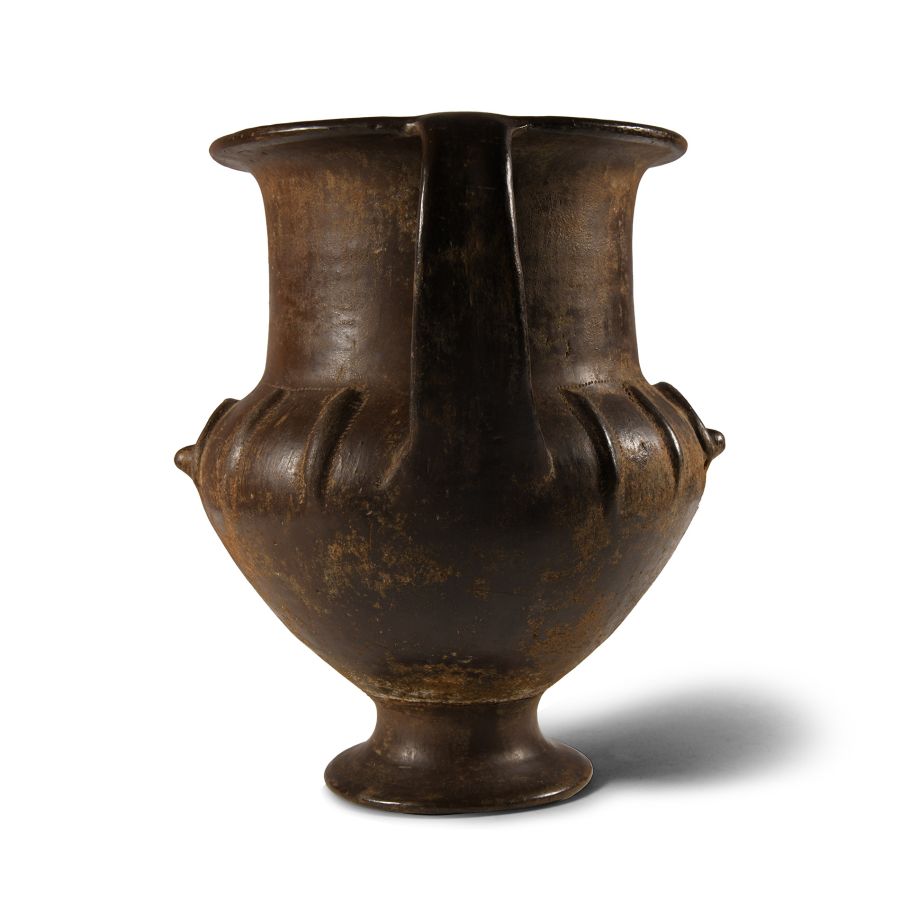
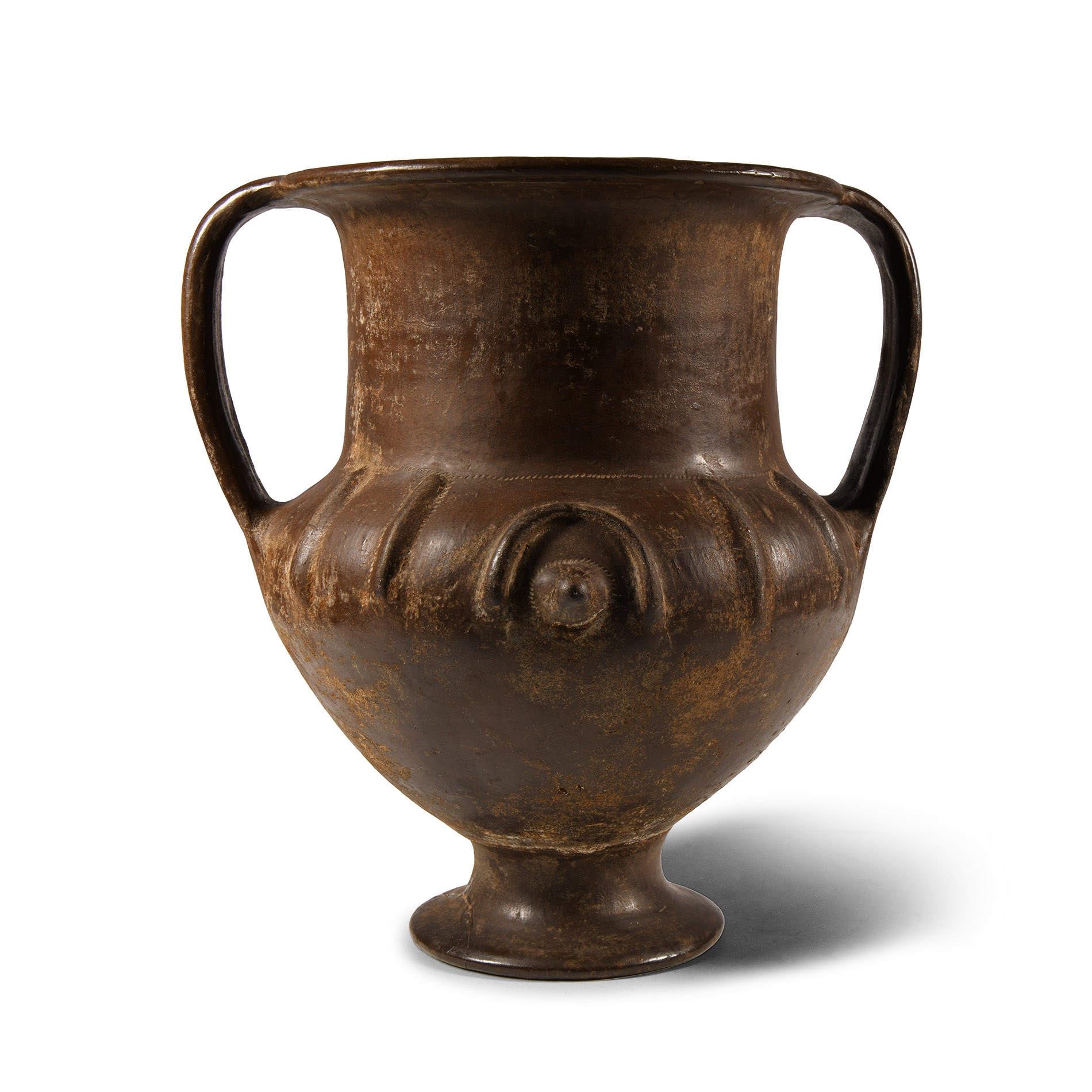
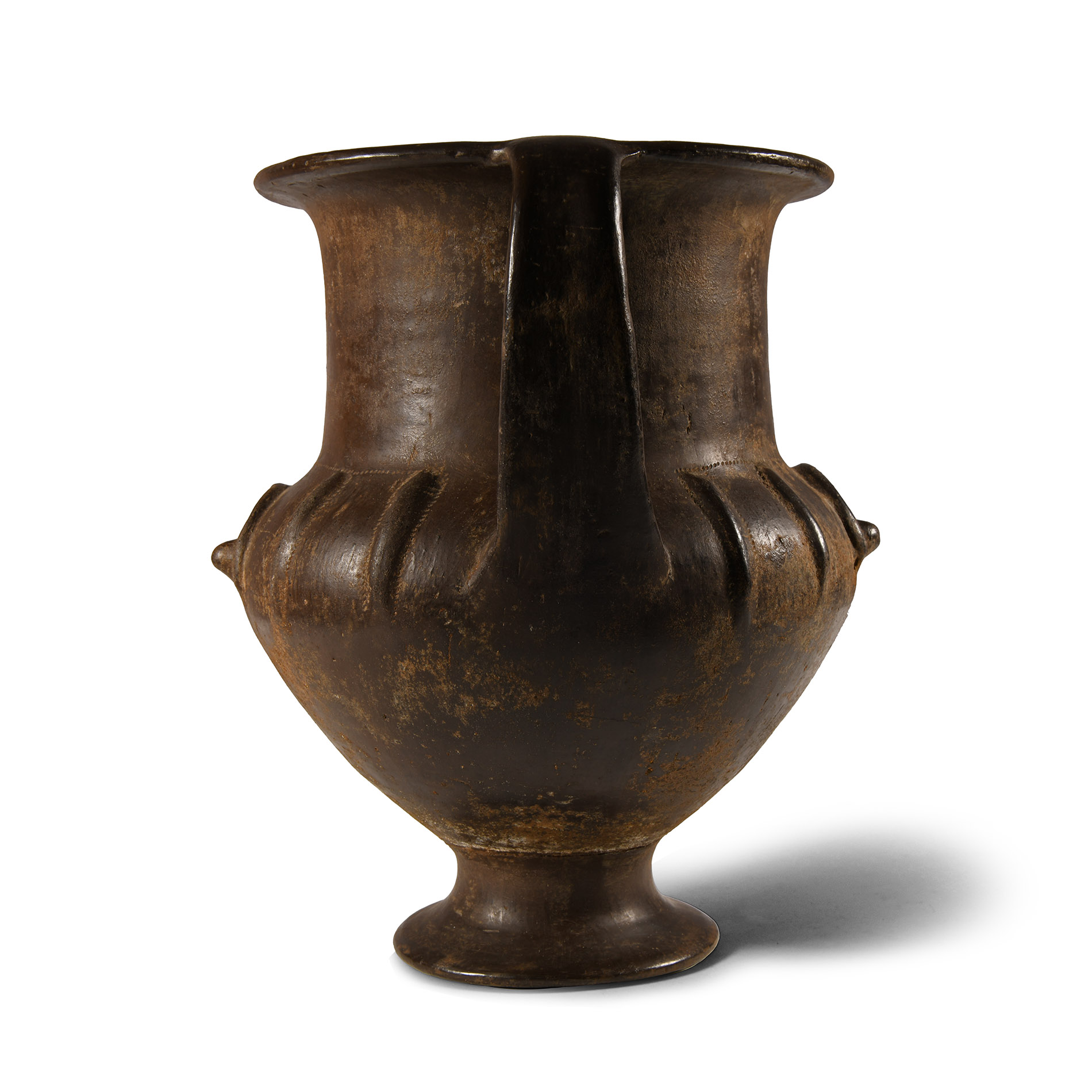
Villanovan Impasto Handled Amphora
CIRCA 750-700 B.C.
8 3/4 in. (1.29 kg, 22.1 cm).
Comprising a wide foot beneath a squat stem with a bulbous body, a sloped shoulder beneath a columnar neck, a flared rim, and a pair of applied strap handles arching between rim and shoulder; body decorated with eight slender, vertical ribs surrounded by pecked stippling; two lateral bosses beneath a parabolic arch; surface burnished throughout; foot restored.
ProvenanceFrom the collection of Eleanor Hilowitz (1913-2007), an abstract expressionist painter and sculptor, New York, USA; acquired between 1956 and 1975.
Acquired by Randall Hixenbaugh of Hixenbaugh Ancient Art, New York, USA, in 2007.
with Artemis Gallery, 26 September 2019, lot 54 (US$2,000-3,000).
Property of a South Australian private collector, with collection reference 20.03.
Accompanied by detailed collector's catalogue pages including description and photograph.
TimeLine Auctions follows a vetting process to ensure the authenticity and legality of all items, reinforcing our commitment to integrity and responsible trading. Each antiquity, antique, and coin lot undergoes thorough examination by a vetting committee of at least ten external specialists, professional trade association members, scientists, and archaeologists: Our Vetting Process
AUCTIONS:
TimeLine is a leading auction house specialising in antiquities, ancient art, collectables, natural history, coins, medals, and books. Our auctions offer museums, collectors, historians, and enthusiasts the opportunity to acquire unique and historically significant pieces.
LOT 0079
Villanovan Impasto Handled Amphora
Estimate £800 - 1,000€930 - 1,160 (for guidance only)$1,080 - 1,350 (for guidance only)
-
Very Large Cypriot Bichrome Ware Pottery Amphora
Iron Age, Cypro-Geometric, 950-850 B.C.Sold for (Inc. bp): £6,240
With narrow base, oblate profile, two lateral loop handles to the shoulder, broad neck and flared rim to the mouth; painted bands of circumferential geometric ornament, linear with lentoid motifs, radiating bars to the mouth. 8.5 kg, 53.5 cm
with Christie's, South Kensington, 4 November 1992, no.33. From an important Cambridgeshire estate; thence by descent. This lot has been checked against the Interpol Database of stolen works of art and is accompanied by a search certificate number no.12088-214715. -
Cypriot Brown Ware Jug
Late Bronze Age, circa 1700 B.C.Sold for (Inc. bp): £156
Comprising a bulbous body with slightly conical underside, tapering tubular neck and everted flange rim, loop handle to the shoulder; restored. 1.03 kg, 25.5 cm
From a collection acquired on the UK art market from various auction houses and collections mostly before 2000. From an important Cambridgeshire estate; thence by descent.
Wheelmade red lustrous ware was a ceramic of foreign origin which found its way into Cyprus during the Late Bronze Age, when international trade was widespread. According to Karageorghis it originated in Anatolia during the early Bronze Age but was known in Alasya (Cyprus) during the Late Bronze Age II. -
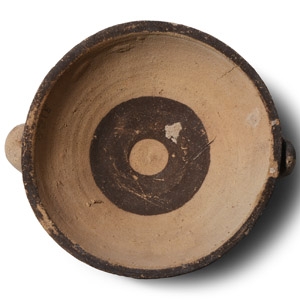
Cypriot Painted Terracotta Dish
Early Iron Age, circa 1050-600 B.C.Sold for (Inc. bp): £91
Low ceramic dish with two loop handles to the underside, painted rim and tondo, concentric rings ro the underside and cruciform panel to the foot; pencilled collection number to the rim: '3128', inked collection number to the inside of one handle '[B]U 4139', and a red inked collection number: '634' on white painted panel to the base. 81 grams, 11.8 cm
The red-ink inscription to the base suggesting it may have been deaccessioned from The Metropolitan Museum of Art. From an important Cambridgeshire estate; thence by descent.
