
Loading, please wait...
LOT 0516
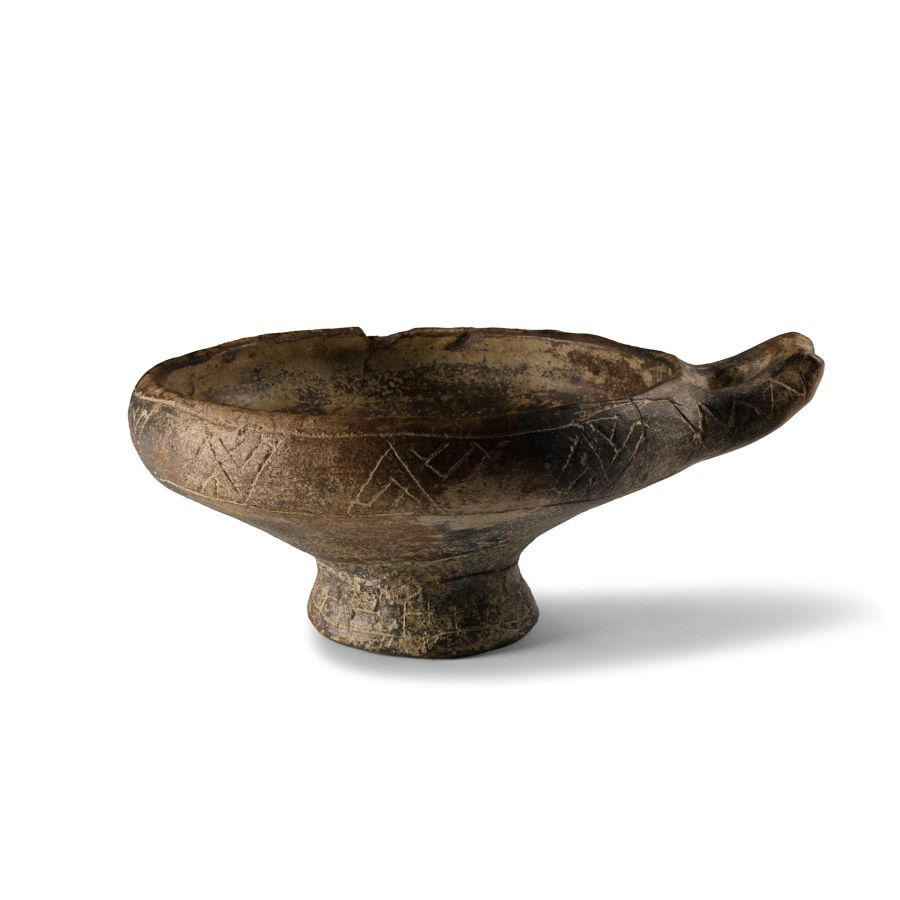
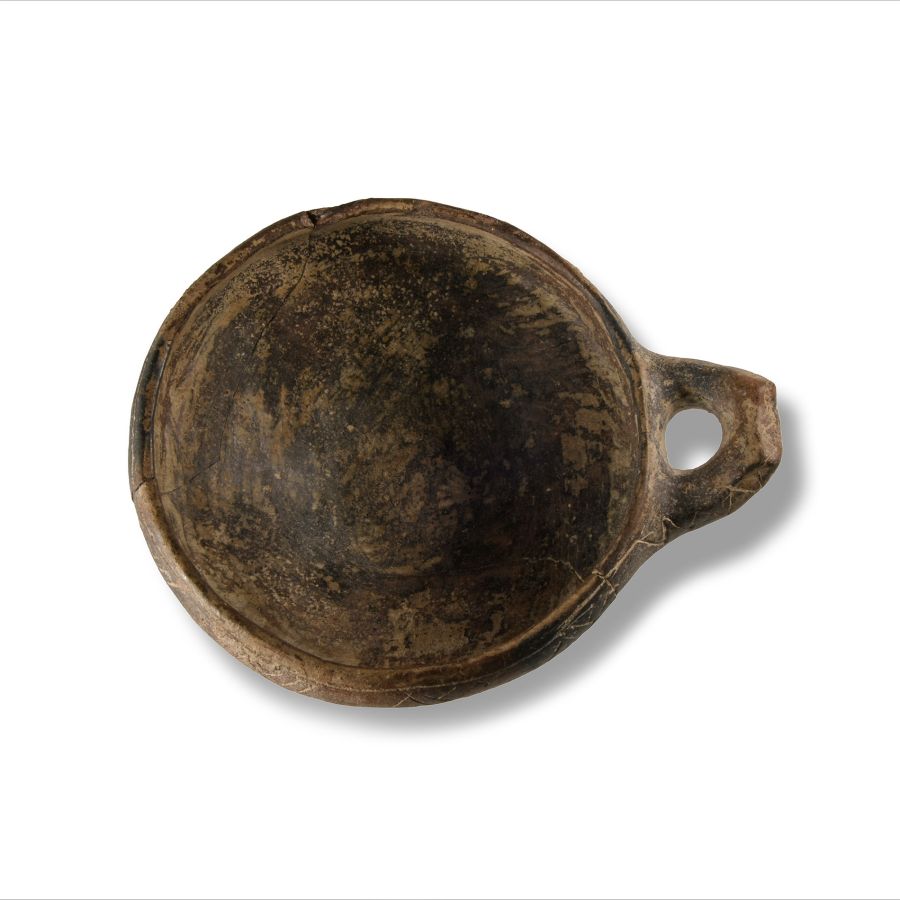
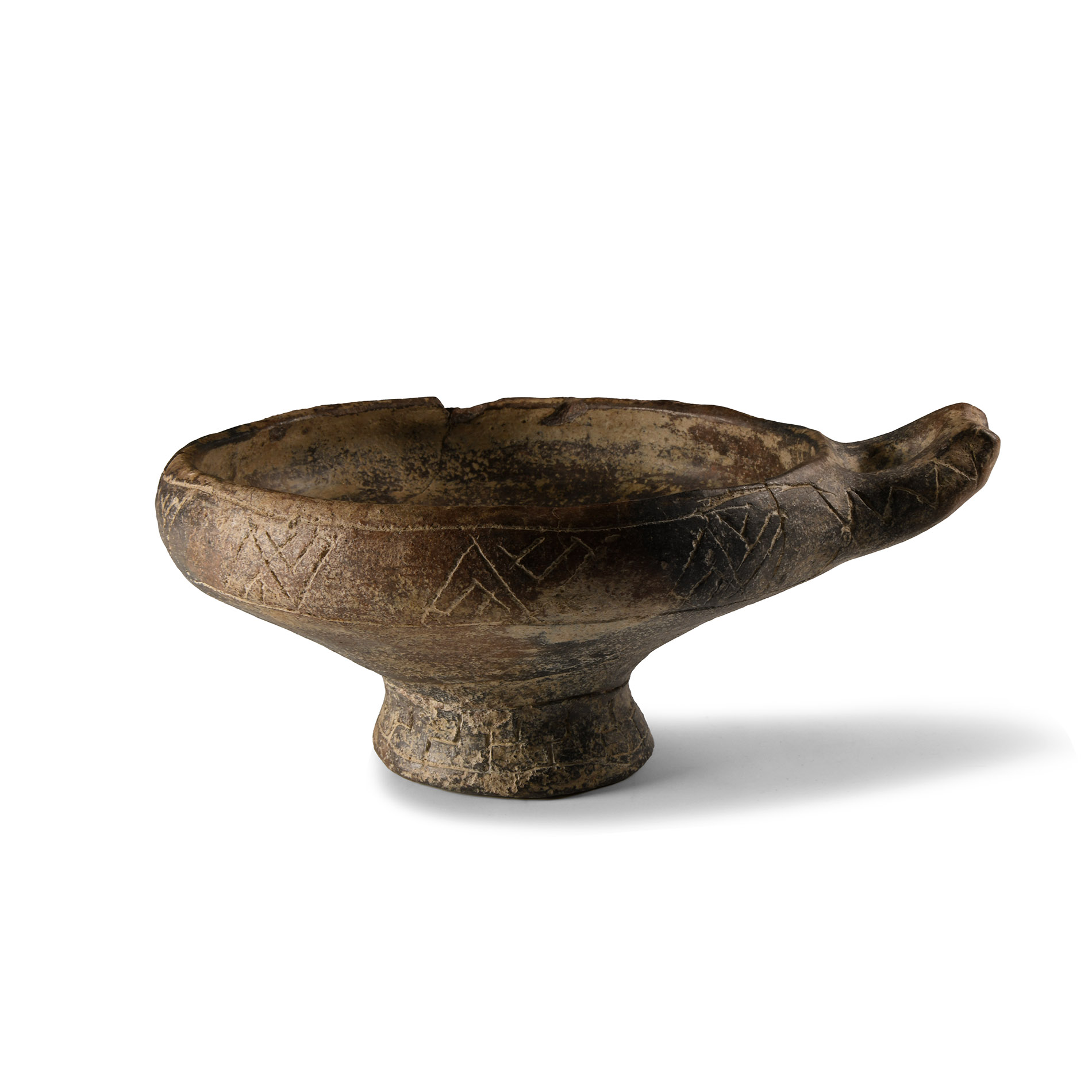
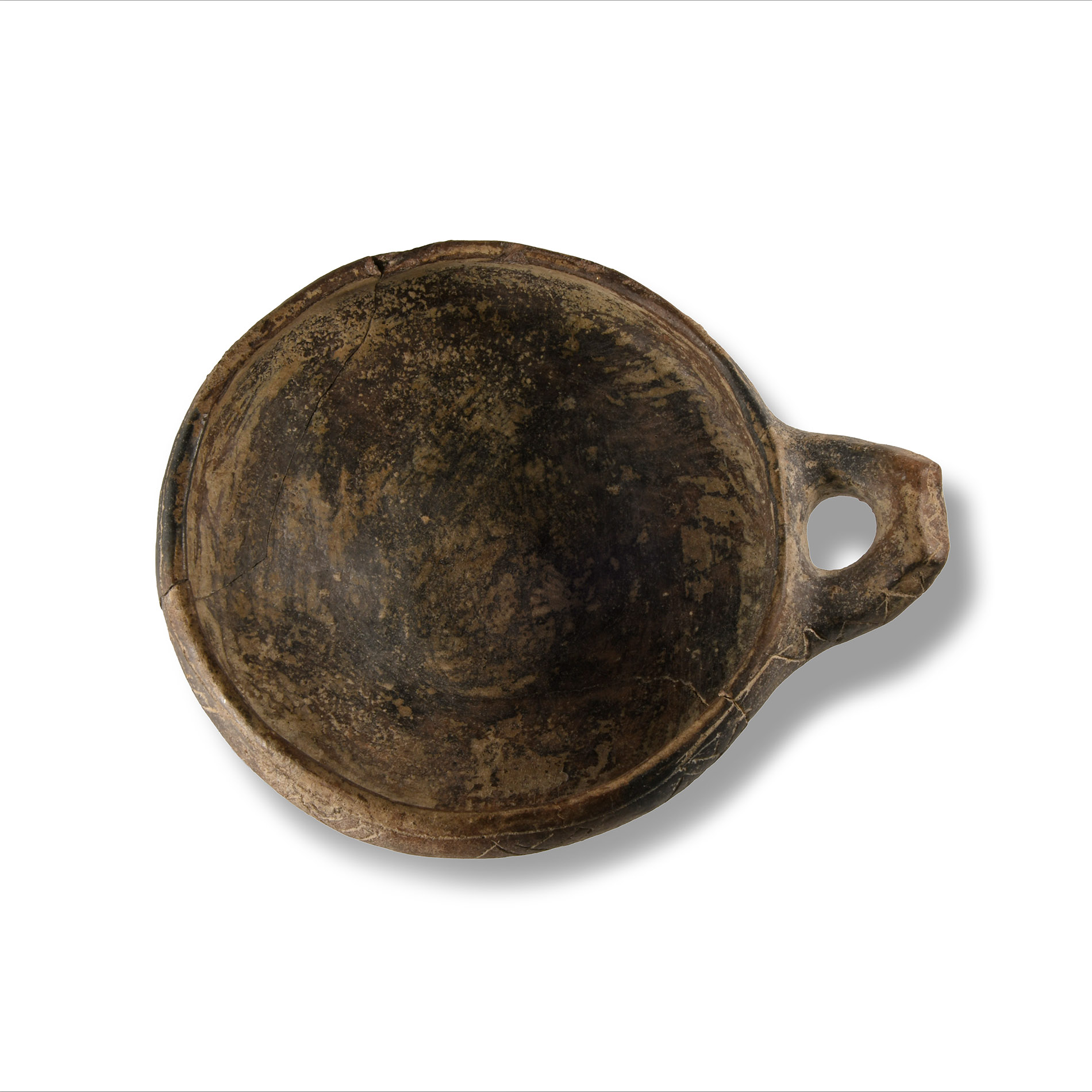
Villanovan Impasto Cover-Bowl for Biconical Urn
CIRCA 10TH-MID 8TH CENTURY B.C.
7 1/8 in. (410 grams, 18 cm).
Formed with a high foot and loop handle to the inturned rim, decorated on the outside rim with a complex pattern of interlocked chevrons perhaps representing two seated figures. [No Reserve]
ProvenanceFrom the estate of Mr Robert Onsted (1948-2011).
Ex Malter Galleries Inc, California, USA, 2007.
Palmyra Heritage Gallery, New York, USA, 19 October 2020, lot 141.
Property of a South Australian private collector, with collection reference 20.21.
Accompanied by detailed collector's catalogue pages including description and photograph.
Cf. Hencken, H., Tarquinia and Etruscan Origins, London, 1968, p.35.
FootnotesHencken notes that cover-bowls as the lids of urns assume various closely related shapes; if there is ornament, it generally consists of some of the same decoration as is found on urns.
CONDITIONTimeLine Auctions follows a vetting process to ensure the authenticity and legality of all items, reinforcing our commitment to integrity and responsible trading. Each antiquity, antique, and coin lot undergoes thorough examination by a vetting committee of at least ten external specialists, professional trade association members, scientists, and archaeologists: Our Vetting Process
AUCTIONS:
TimeLine is a leading auction house specialising in antiquities, ancient art, collectables, natural history, coins, medals, and books. Our auctions offer museums, collectors, historians, and enthusiasts the opportunity to acquire unique and historically significant pieces.
-
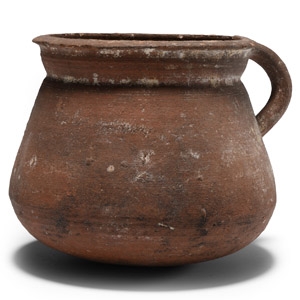
Greek Brown Ware Terracotta Cup
Circa 5th-3rd century B.C.Sold for (Inc. bp): £78
Squat in profile with rounded underside, broad mouth with carinated rim and single strap handle. 162 grams, 12 cm wide
From a collection acquired on the UK art market from various auction houses and collections mostly before 2000. From an important Cambridgeshire estate; thence by descent. -
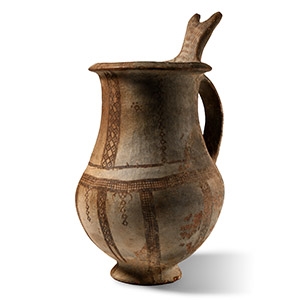
Cypriot White-Slip Ware Tankard
Circa 1600-1450 B.C.Sold for (Inc. bp): £676
Comprising a biconvex body and flared foot, tapering shoulder, carinated mouth; strap handle to rear with tall notched thumb-pad; painted scheme of panels with hatched bands and reserved lozenges, eye motifs and other detailing. 650 grams, 23.5 cm
The property of an English collector. with Bonhams, London, 20 October 2005, no.408. Property of a North London collector. Accompanied by copies of the relevant Bonhams catalogue pages. -
.jpg)
Villanovan Impasto Kyathos with Openwork Handle
Circa 8th century B.C.Sold for (Inc. bp): £234
Modelled with wide and squat body; raised, biforal handle, saddle-shaped on top and grooved on the front with cross-hatch below; small projections emerging from the sides and an incised zigzag line around the lower body. 170 grams, 13 cm wide
Ex Carlton collection, Los Angeles, acquired 1965-1980. Acquired from Artemis Gallery, Colorado, USA, 21 November 2017, lot 24. Property of a South Australian private collector, with collection reference 17.08. Accompanied by detailed collector's catalogue pages including description and photograph. Accompanied by an Artemis certificate of authenticity dated 27 November 2017.
Di Genarro notes that the pottery forms appearing as standard grave goods are designed for containing, serving and drinking a beverage, which suggests the consumption of wine as a focus of funerary ideology.
