
Loading, please wait...

LOT 0546
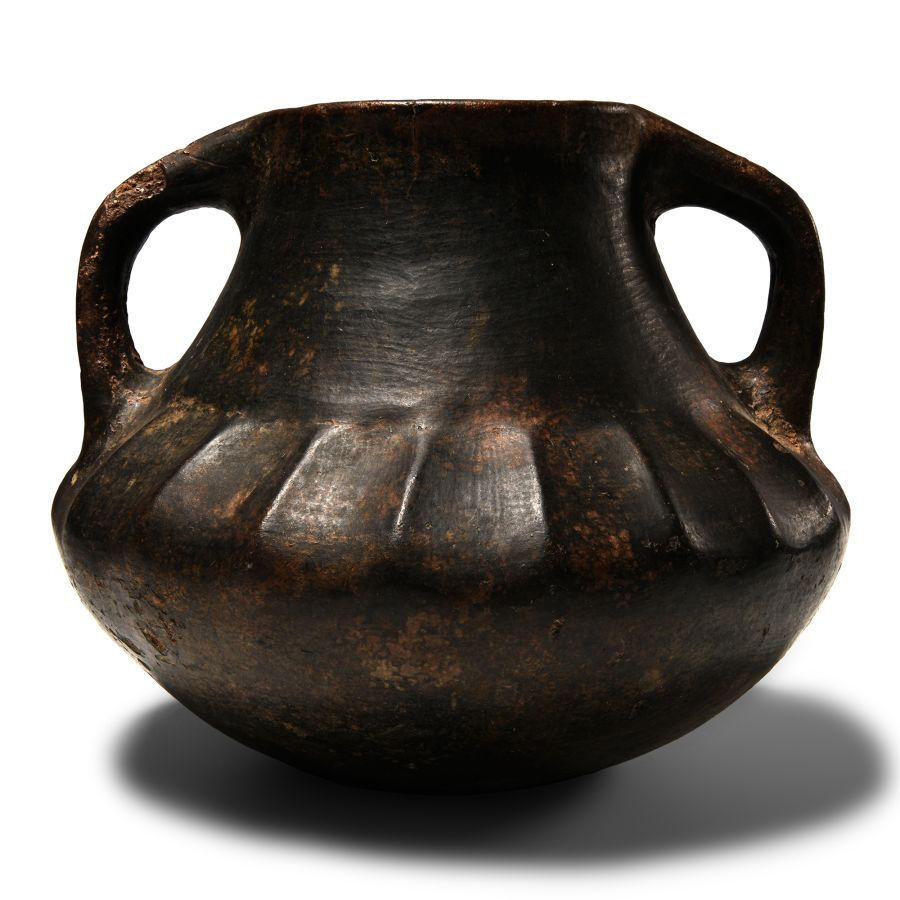
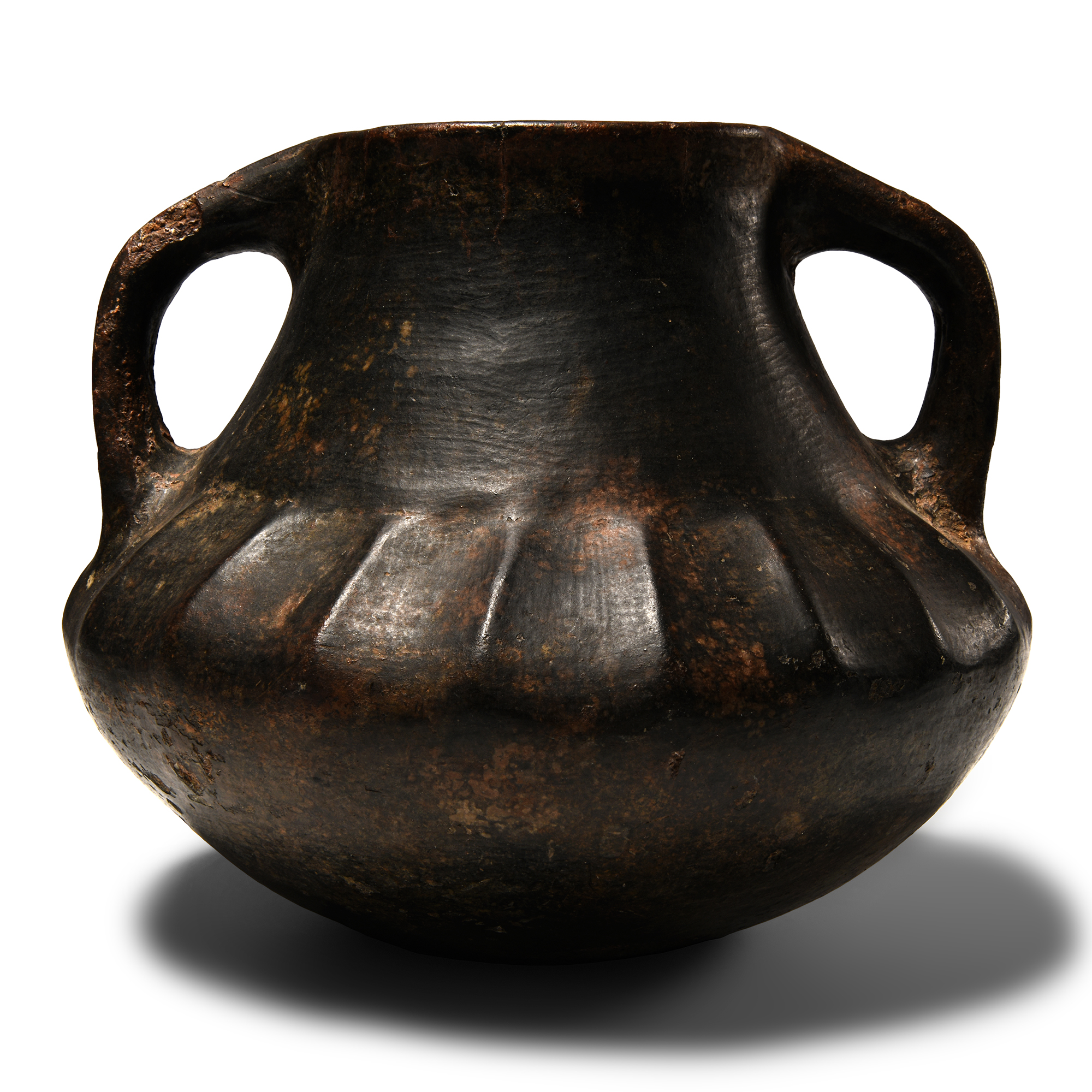
Villanovan Impasto Amphora
CIRCA 10TH-8TH CENTURY B.C.
7 1/4 in. (790 grams, 18.5 cm wide).
With a scalloped design on the body and twin symmetrical handles rising from the shoulder; restored.
ProvenanceFrom the Rempte collection, Upstate New York, USA; acquired before 1980.
Ex Artemis Gallery, Colorado, USA, 4 August 2016, lot 10.
with a Chicago, USA, collection.
Ex Harlan J. Berk Ltd, Chicago, USA.
Acquired from Palmyra Heritage Gallery, New York, 27 April 2020, lot 2.
Property of a South Australian private collector, with collection reference 20.22.
Accompanied by detailed collector's catalogue pages including description and photograph.
Cf. The Metropolitan Museum, New York, accession number 96.18.80, for similar; cf. also Buranelli, F., La raccolta Giacinto Guglielmi, Roma, 1989, p.84 no.308.
FootnotesThe terracotta has a distinctive shape, characterised by vertical grooves and frequently incised double spirals. The style was indigenous to Italy. The handles were thin and flat, while their sharp curves imply that the vessel’s shape originated from metallic prototypes, like shown by silver examples with gold handles found in the Regolini-Galassi Tomb in Caere (modern Cerveteri).
CONDITIONTimeLine Auctions follows a vetting process to ensure the authenticity and legality of all items, reinforcing our commitment to integrity and responsible trading. Each antiquity, antique, and coin lot undergoes thorough examination by a vetting committee of at least ten external specialists, professional trade association members, scientists, and archaeologists: Our Vetting Process
AUCTIONS:
TimeLine is a leading auction house specialising in antiquities, ancient art, collectables, natural history, coins, medals, and books. Our auctions offer museums, collectors, historians, and enthusiasts the opportunity to acquire unique and historically significant pieces.
-
Greek and Other Pottery Fragment Group
Circa 1st millennium B.C.Sold for (Inc. bp): £98
Including squat and biconical bowls, amphora sherds and other types. 3.34 kg total, 4-19 cm
From a collection acquired on the UK art market from various auction houses and collections mostly before 2000. From an important Cambridgeshire estate; thence by descent. -
Cypriot Brown Burnished Ware 'Bilbil' Vessel
Late Bronze Age II, 1400-1200 B.C.Sold for (Inc. bp): £260
Unglazed tall juglet (bilbil) with flared foot, piriform body, tapering neck and flared mouth. strap handle; bands of bilinear ornament to the shoulder and neck. 103 grams, 13.7 cm
From a collection acquired on the UK art market from various auction houses and collections mostly before 2000. From an important Cambridgeshire estate; thence by descent. -
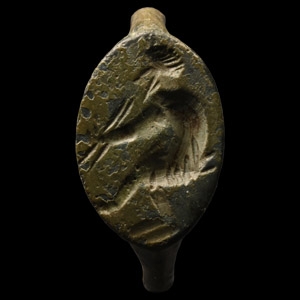
Greek Bronze Signet Ring with Pan
4th-3rd century B.C.Sold for (Inc. bp): £208
With scaphoid bezel, intaglio seated faun with syrinx. 3.55 grams, 20.92 mm overall, 17.06 mm internal diameter (approximate size British M, USA 6, Europe 12.46, Japan 12)
Ex German art market, 2000s. Acquired from an EU collector living in London. From the collection of Surrey, UK, gentleman.
