
Loading, please wait...
LOT 0619
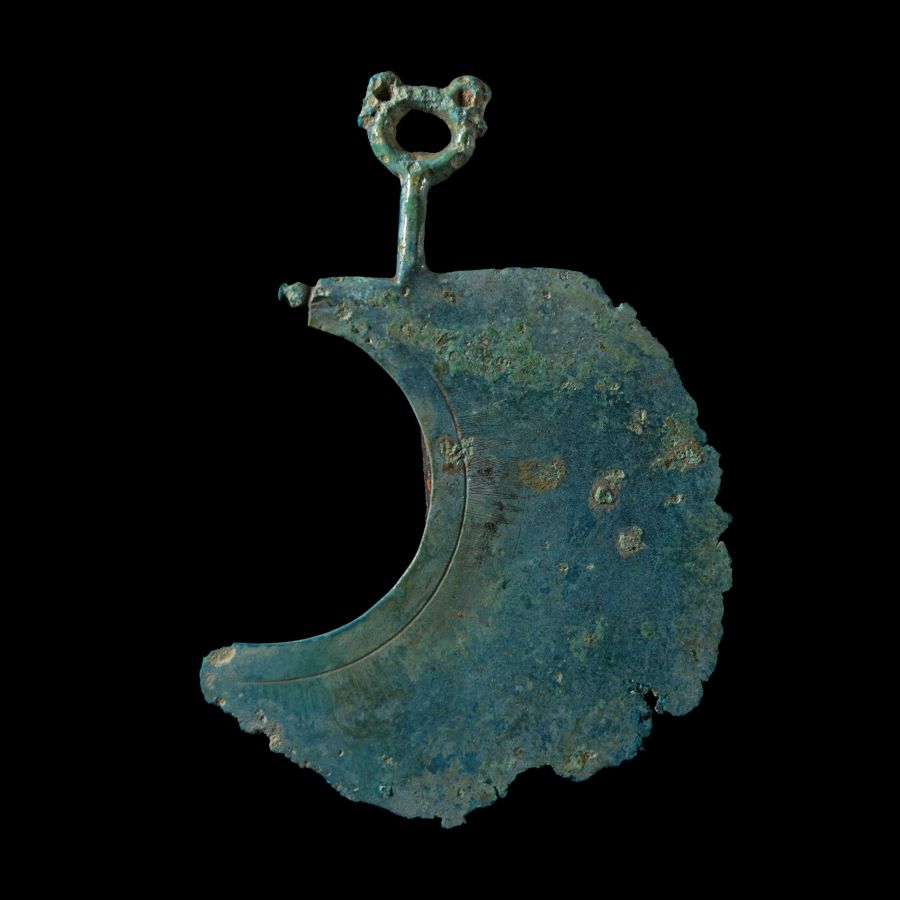
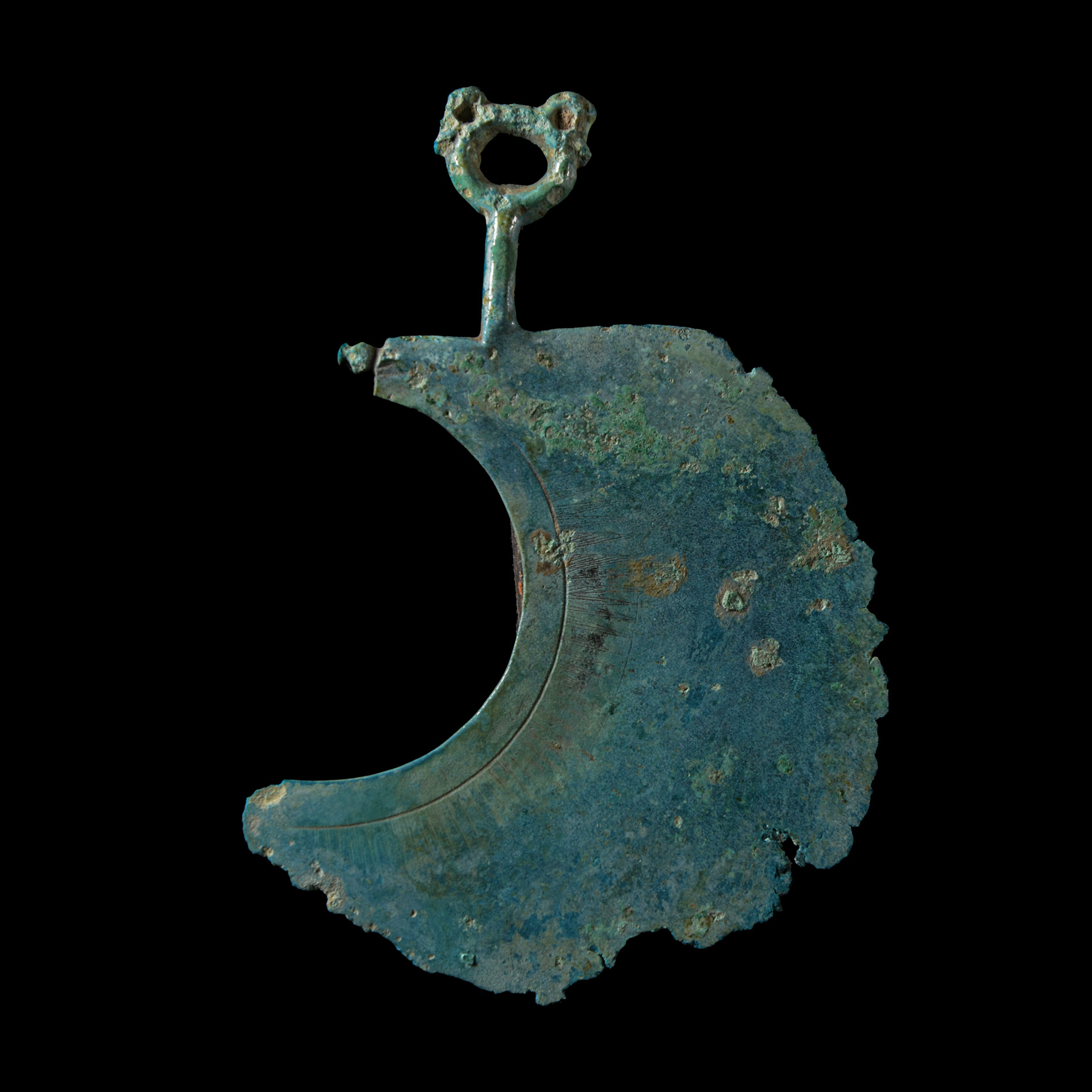
Villanovan Bronze Lunate Razor
9TH-8TH CENTURY B.C.
4 1/4 in. (22 grams, 10.7 cm).
Comprising a broad crescentic plate with incised border and radiating hatched triangles respecting the concave curve of the blade; knop below the inner edge, short handle with stem and ring formed as addorsed birds; Grotta Gramicella Type A.
ProvenanceAcquired on the European art market, 1990s.
English private collection.
with Bertolami Fine Arts Ltd, Auction 43, no.71.
Cf. similar item in National Museums Liverpool, World Museum under accession no.M4574.
CONDITIONTimeLine Auctions follows a vetting process to ensure the authenticity and legality of all items, reinforcing our commitment to integrity and responsible trading. Each antiquity, antique, and coin lot undergoes thorough examination by a vetting committee of at least ten external specialists, professional trade association members, scientists, and archaeologists: Our Vetting Process
AUCTIONS:
TimeLine is a leading auction house specialising in antiquities, ancient art, collectables, natural history, coins, medals, and books. Our auctions offer museums, collectors, historians, and enthusiasts the opportunity to acquire unique and historically significant pieces.
-
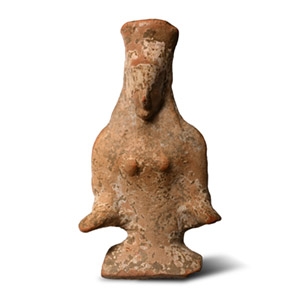
Greek Terracotta Antefix
Archaic, 6th-5th century B.C.Estimate: £1,000 - 1,400 (‡+bp*)
Opening Bid: £500
Mould-made figure of a female upper body with tall headdress and arms spread, hands palm-upwards; beneath, a C-section channel for attachment to a roof. 78 grams, 13.1 cm
Acquired in the mid 1980s-1990s. Private collection, Switzerland, thence by descent. Private collection, since the late 1990s. -
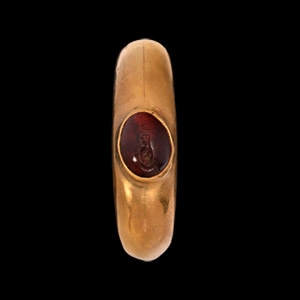
Hellenistic Osiris Canopus Gemstone in Gold Ring
2nd century B.C.Sold for (Inc. bp): £975
Hollow-formed shank with cell above, inset garnet cabochon with intaglio figure of Osiris Canopus. 5.05 grams, 27.35 mm overall, 18.25 mm internal diameter (approximate size British L, USA 5 3/4, Europe 11.24, Japan 10)
Ex H. Norry collection, 1980s-1990s. -
.jpg)
Hellenistic Gold Ring with Artemis Gemstone
2nd-1st century B.C.Estimate: £5,000 - 7,000 (‡+bp*)
Opening Bid: £2,500
Hollow-formed shank with broad plaque and inset garnet cabochon intaglio profile bust of Artemis in high-relief. 11.27 grams, 26.91 mm overall, 17.95x20.72 mm internal diameter (approximate size British R, USA 8 1/2, Europe 18 3/4, Japan 18)
European art market. This lot has been checked against the Interpol Database of stolen works of art and is accompanied by search certificate number no.12219-222340.
