
Loading, please wait...


LOT 0296
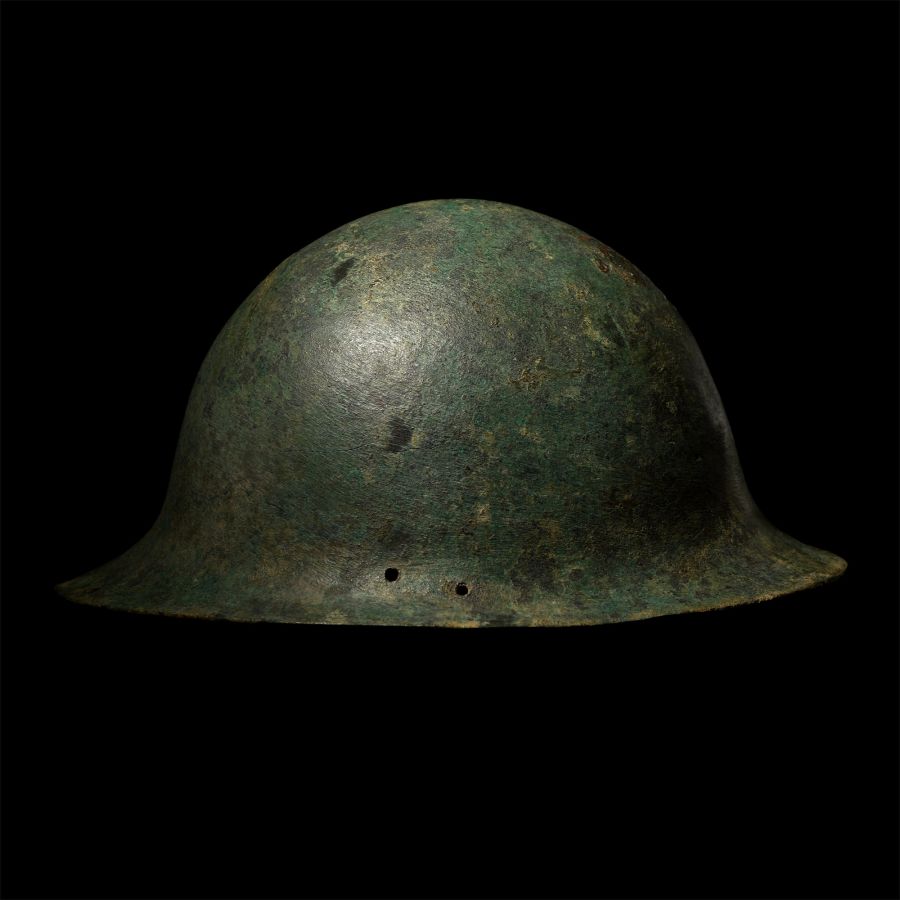
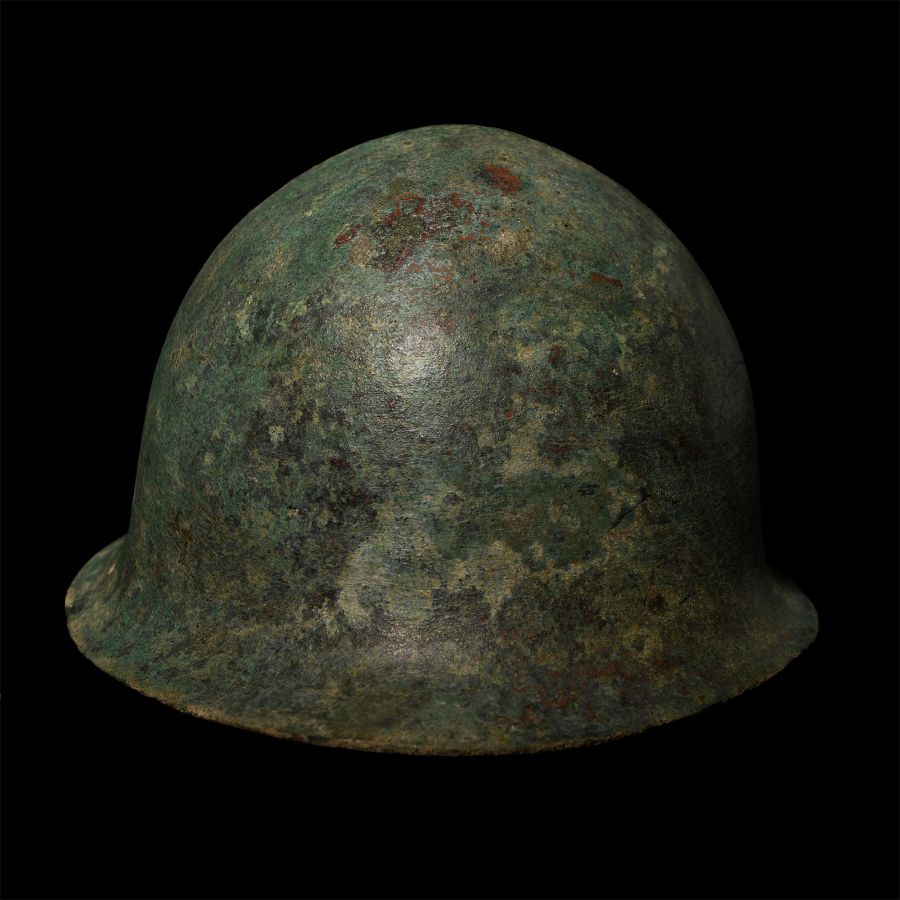
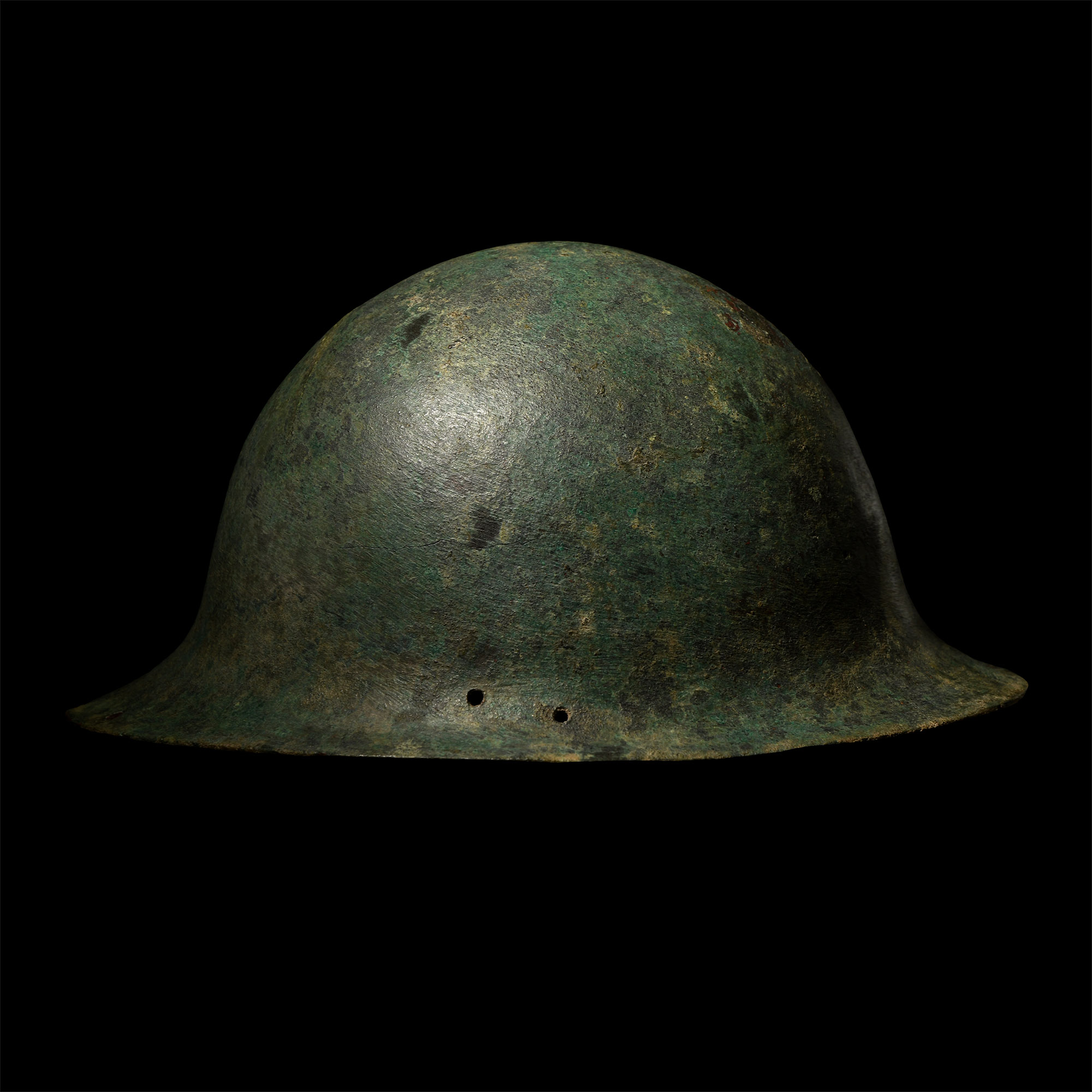
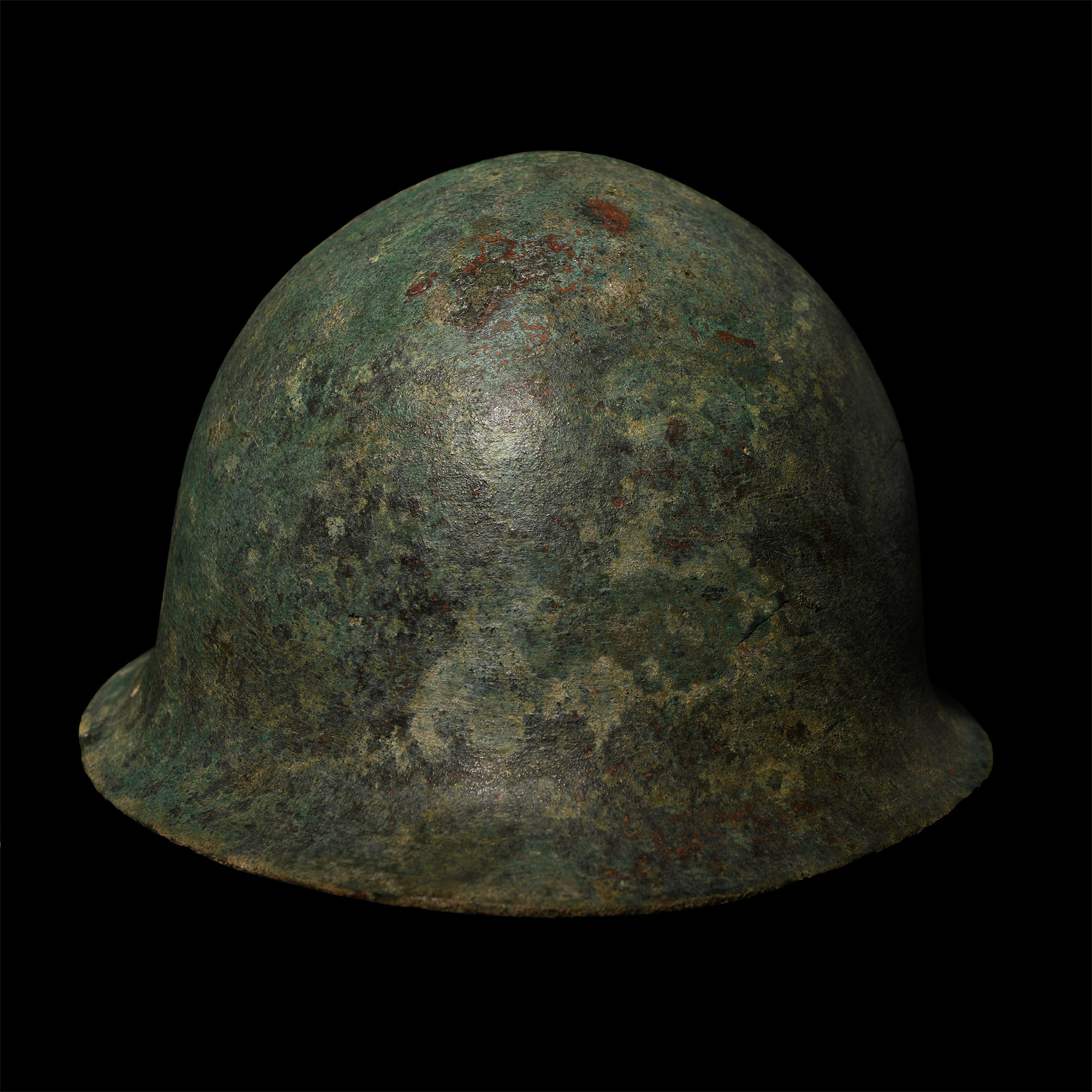
Villanovan Bronze Helmet
8TH CENTURY B.C.
12 in. (1.7 kg, 30.5 cm wide).
With rounded bowl and flared rim; three sets of paired piercings for attachment of leather cheek-flaps; cracked.
ProvenanceAcquired early 1990s.
Ex private American collection; thence by descent.
Private European collection since 1998.
Accompanied by an academic report by Dr Raffaele D'Amato.
This lot has been checked against the Interpol Database of stolen works of art and is accompanied by search certificate no.11573-199009.
Cf. Coussin, P., Les Armes Romaines, Paris, 1926; Connolly, P., Greece and Rome at War, London, 1981; Fossati, I., Etruscan Armies, Milano, 1987, p.50, fig.4; Egg, M., 'Italische Helme mit krempe' in Antike Helme, RGZM Monographien 14, Mainz, 1988, pp.222ff., figs.1, 2, 34 and items 58-59, for type; Sekunda, N., and Northwood, S., Early Roman Armies, Oxford, 1995; Connolly, P., Greece and Rome at War, London, 2006; D'Amato, R., Salimbeti, A., The Etruscans, Oxford, 2018, pp.21ff. and pl.B3; D’Amato, R., Negin, A., Decorated Roman Armour, London, 2017, pp.8ff. and fig.2.
FootnotesThe ‘pot’ or ‘bell’ helmet, found in contexts as early as the 8th century coffer grave (ad arca) from the Esquiline (Rome) and other graves (Coussin, 1926, p.88, fig.23; Sekunda, Northwood,1995, p.6, grave 94) was made from a single piece of bronze, while later Italic variants were fashioned from jointed plates (Connolly, 1981, p.102, figs.2-2a; Egg, 1988, p.223, variant Vetulonia). The skull was somewhat spherical, with a flared rim: in some Etruscan and Italic specimens, this was rivetted for strength.
CONDITIONTimeLine Auctions follows a vetting process to ensure the authenticity and legality of all items, reinforcing our commitment to integrity and responsible trading. Each antiquity, antique, and coin lot undergoes thorough examination by a vetting committee of at least ten external specialists, professional trade association members, scientists, and archaeologists: Our Vetting Process
AUCTIONS:
TimeLine is a leading auction house specialising in antiquities, ancient art, collectables, natural history, coins, medals, and books. Our auctions offer museums, collectors, historians, and enthusiasts the opportunity to acquire unique and historically significant pieces.
LOT 0296
Villanovan Bronze Helmet
Estimate £8,000 - 10,000€9,280 - 11,600 (for guidance only)$10,800 - 13,500 (for guidance only)
-
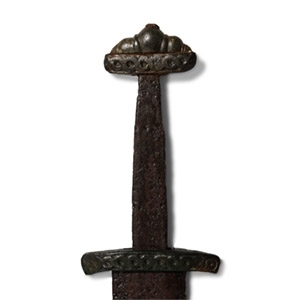
Viking Age Iron Pattern-Welded Sword with Bronze Jellinge Hilt
11th-13th century A.D.Estimate: £3,000 - 4,000 (+bp*)
Opening Bid: £1,500
Double-edged cutting sword of Curonian Type with tapering fullers and showing battle scars; boat-shaped bronze cross-guard with Jellinge Style decoration, the seven-lobed pommel with similar decoration. 918 grams, 92.5 cm
From the private collection of a London gentleman, from his grandfather's collection formed before the early 1970s. Accompanied by an academic report by Dr Raffaele D’Amato. This lot has been checked against the Interpol Database of stolen works of art and is accompanied by search certificate number no.12175-221434.
The Curonian swords of this type, sometimes with animal head decoration on the lower guard, were widespread and used in the Eastern Baltic lands from 10th to 13th century. Curonian swords possessed both plastic hilt details (ends of the lower guards in the form of animal heads) of animal style, a clear influence from the Germanic style of Scandinavians, as well as a regular geometric ornament, a decoration motif derived from the Romanesque art. -
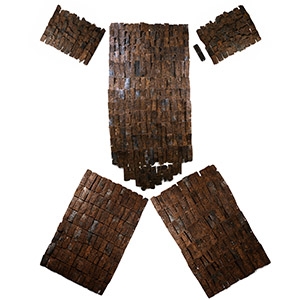
Jin Jurchen Warrior Signed Suit of Iron Plate Armor
Jin Dynasty, early 13th century A.D.Estimate: £6,000 - 8,000 (+bp*)
Opening Bid: £3,380
A complete suite of rectangular iron plates to form a protective coat; the plates provided with a series of holes close to the long edges by which they were laced together into articulating panels; one plate with inscription in Chinese script recording: 'first month of the Datong era / control of the propagation of Armour. Yanhui'. 8.5 kg total, 3-11.1 cm
From the private collection of a London gentleman, from his grandfather's collection formed before the early 1970s. Accompanied by an academic report by Dr Raffaele D’Amato. This lot has been checked against the Interpol Database of stolen works of art and is accompanied by a search certificate number no.12051-216403.
The Datong Era (大同, 1224–1233) is a name used for the reign of Puxian Wannu, a Jurchen warlord who established the Eastern Xia Dynasty in 13th century China. However, the war with the Jurchen states took more than 30 years: having first invaded the Jurchen borders in 1211, the Mongols finally defeated the Jin Empire only in 1234, while the Eastern Xia fell in 1246. -
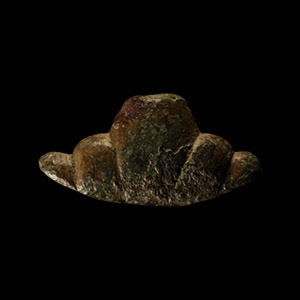
Anglo-Scandinavian Viking Bronze Five-Lobed Sword Pommel
Late 10th-early 11th century A.D.Sold for (Inc. bp): £442
Of Petersen's Type S (Wheeler Type III) with five graduated lobes; the lower face a swept arc; pierced through the tallest lobe to accept the tang of the sword's blade. 67 grams, 54 mm
Found Market Rasen, Lincolnshire Wolds, UK, 1970s. Property of Mr A.B., an American collector.
