
Loading, please wait...
LOT 0046
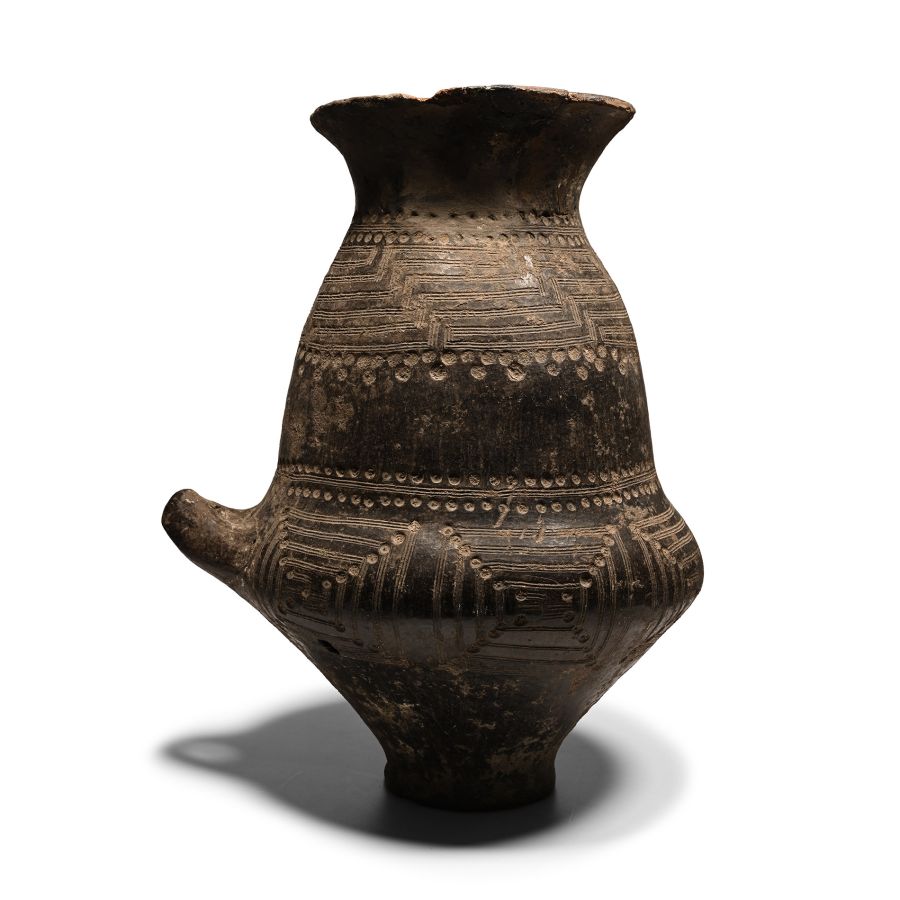
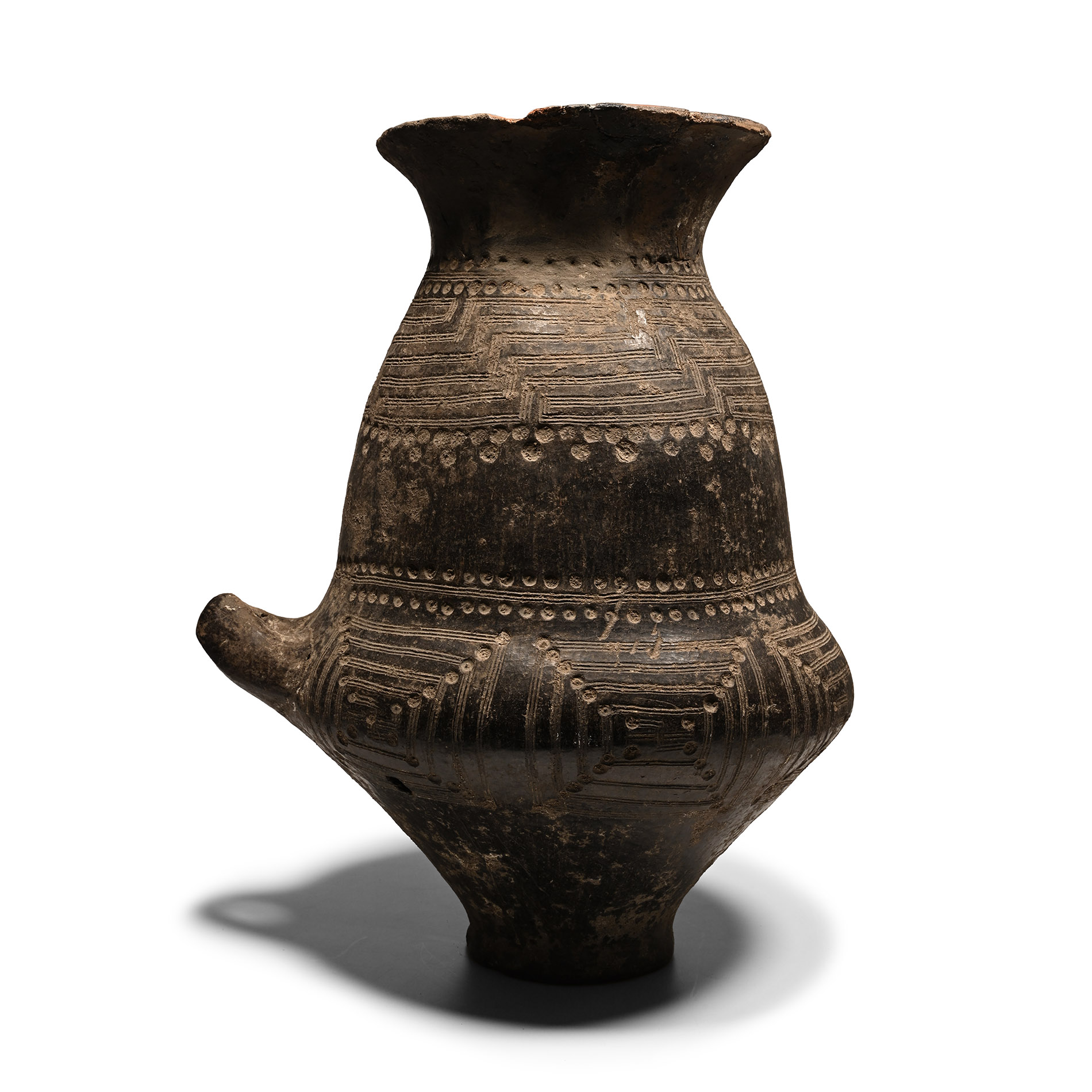
Villanovan Black-Glazed Vase
9TH-8TH CENTURY B.C.
16 1/4 in. (4.5 kg, 41 cm).
Biconical impasto body with broad flaring rim, bell-shaped upper section with bands of incised geometric decoration and impressed roundels, lower section tiered and sharply funicular with narrow flat base, a lateral upturned loop handle; small hole beneath the carination, rim partly restored.
ProvenanceEx Feu Dr. Gonik Et/Ou Feu Me Wirth, Genève.
European private collection.
Accompanied by an academic report by Dr Raffaele D'Amato.
This lot has been checked against the Interpol Database of stolen works of art and is accompanied by search certificate number no.12205-222203.
Cf. similar in the British Museum under accession number Eu1987,Q.11; a similar vase-urn in the Walters Art Museum, accession no.48.1872.
CONDITIONTimeLine Auctions follows a vetting process to ensure the authenticity and legality of all items, reinforcing our commitment to integrity and responsible trading. Each antiquity, antique, and coin lot undergoes thorough examination by a vetting committee of at least ten external specialists, professional trade association members, scientists, and archaeologists: Our Vetting Process
AUCTIONS:
TimeLine is a leading auction house specialising in antiquities, ancient art, collectables, natural history, coins, medals, and books. Our auctions offer museums, collectors, historians, and enthusiasts the opportunity to acquire unique and historically significant pieces.
LOT 0046
Villanovan Black-Glazed Vase
Estimate £1,800 - 2,400€2,090 - 2,780 (for guidance only)$2,430 - 3,240 (for guidance only)
-
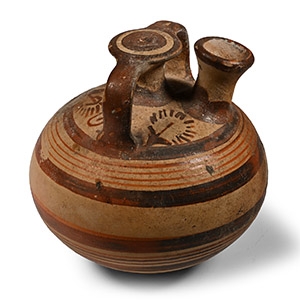
Mycenaean Terracotta Stirrup Jar
14th-13th century B.C.Sold for (Inc. bp): £1,170
Comprising a squat body, slender waisted spout and neck and similar central stem with two flanking handles; painted geometric ornament composed of concentric bands and clusters of blossom to the shoulder. 144 grams, 94 mm
Robert Hecht Jr, New York, 2004. Acquired by the present owner from the above. -
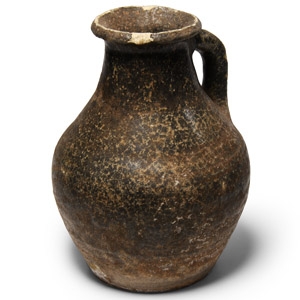
Parthian Glazed Ceramic Jug
1st century B.C.-1st century A.D.Estimate: £120 - 170 (+bp*)
Opening Bid: £67
Speckled glaze; deep shoulder with chamfered rim and strap handle. 776 grams, 16.5 cm high
Acquired by the vendor's father on the UK art market, before 1990. -
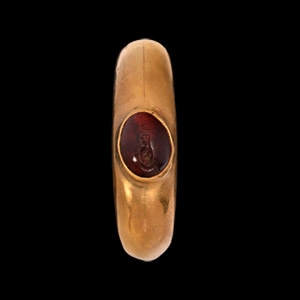
Hellenistic Osiris Canopus Gemstone in Gold Ring
2nd century B.C.Sold for (Inc. bp): £975
Hollow-formed shank with cell above, inset garnet cabochon with intaglio figure of Osiris Canopus. 5.05 grams, 27.35 mm overall, 18.25 mm internal diameter (approximate size British L, USA 5 3/4, Europe 11.24, Japan 10)
Ex H. Norry collection, 1980s-1990s.
