
Loading, please wait...
LOT 0275
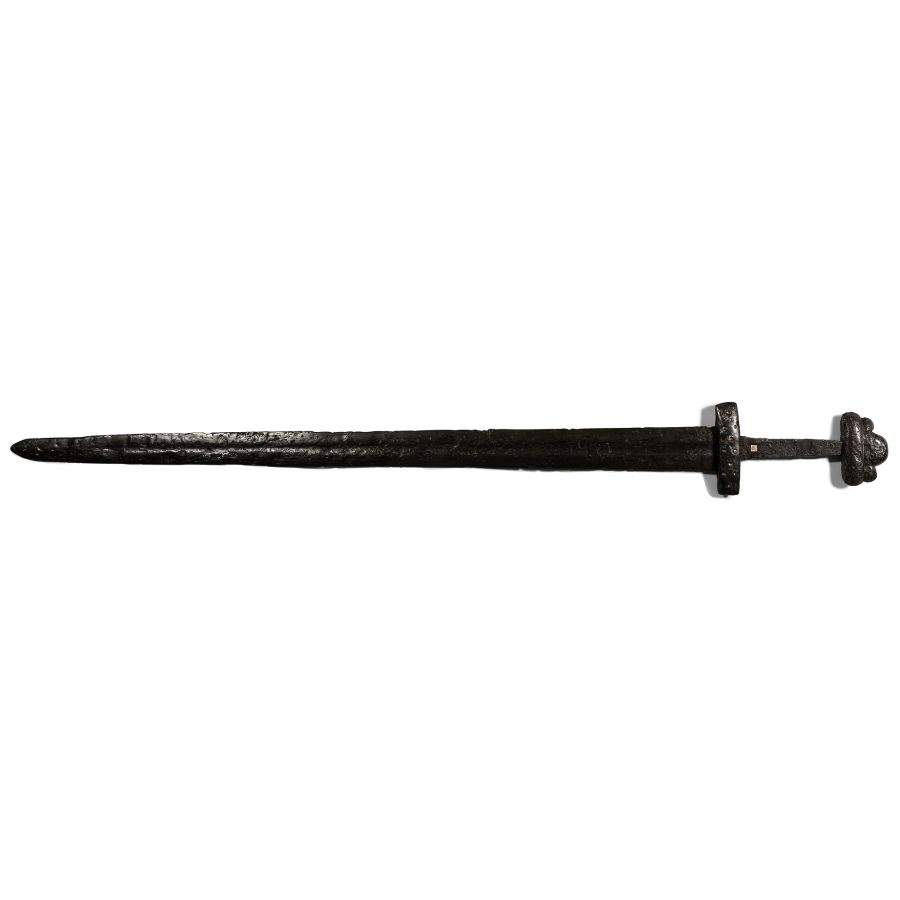
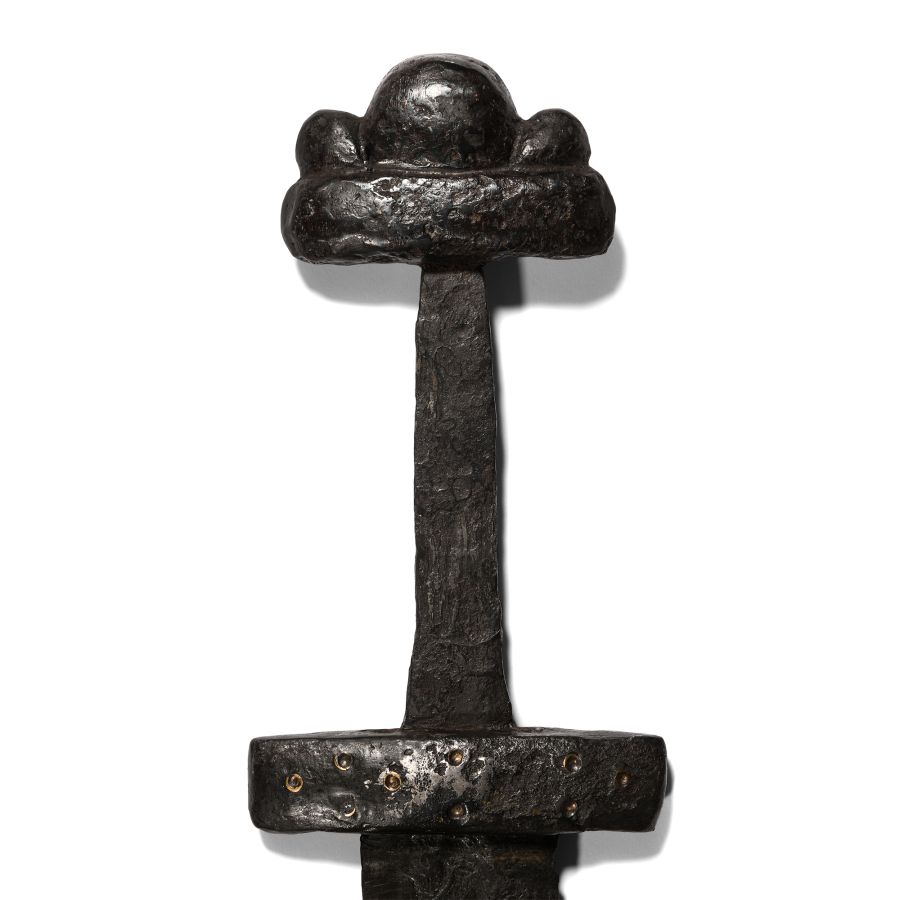
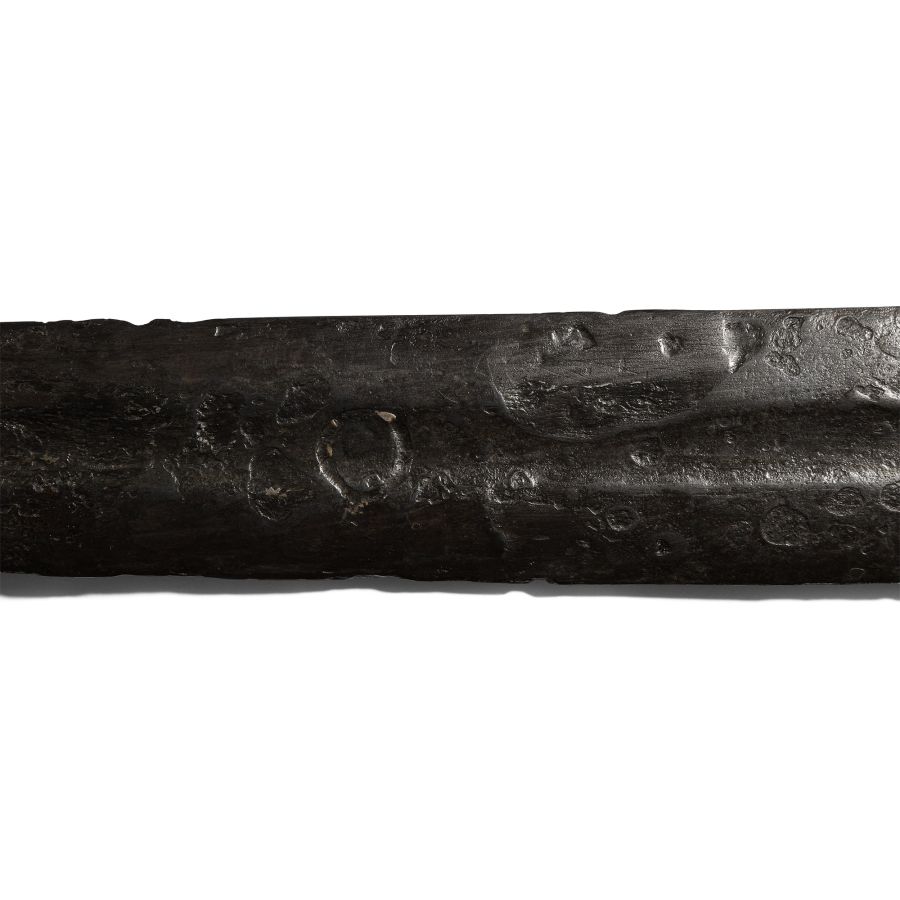
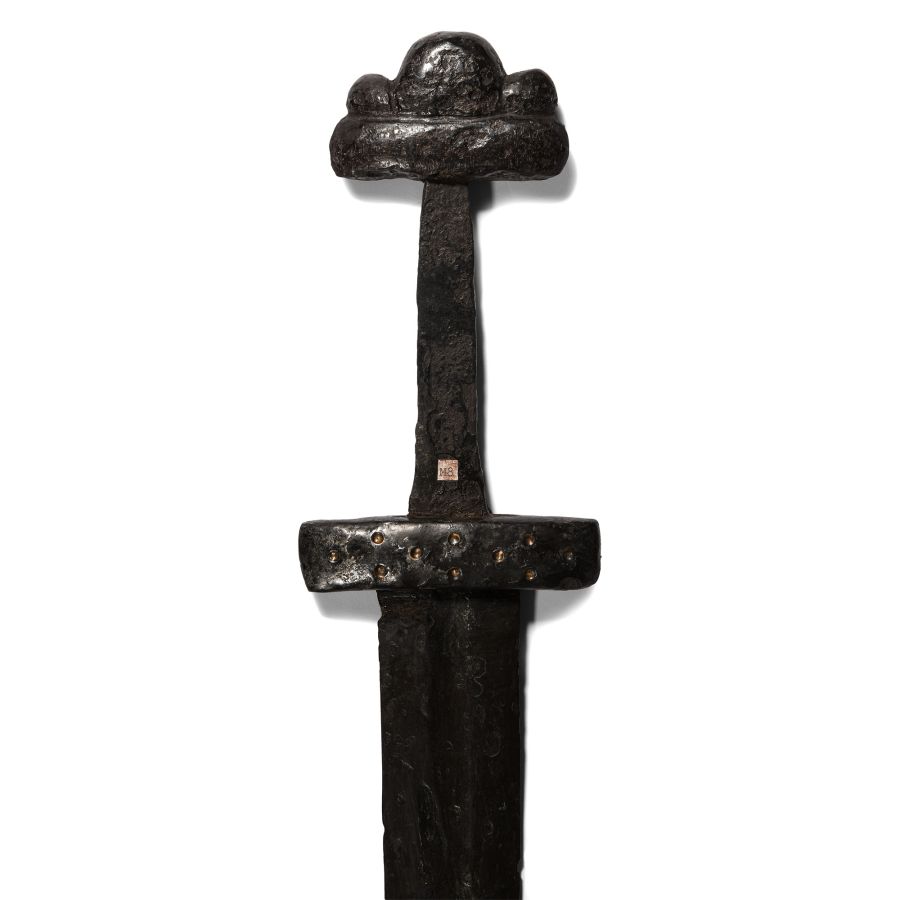
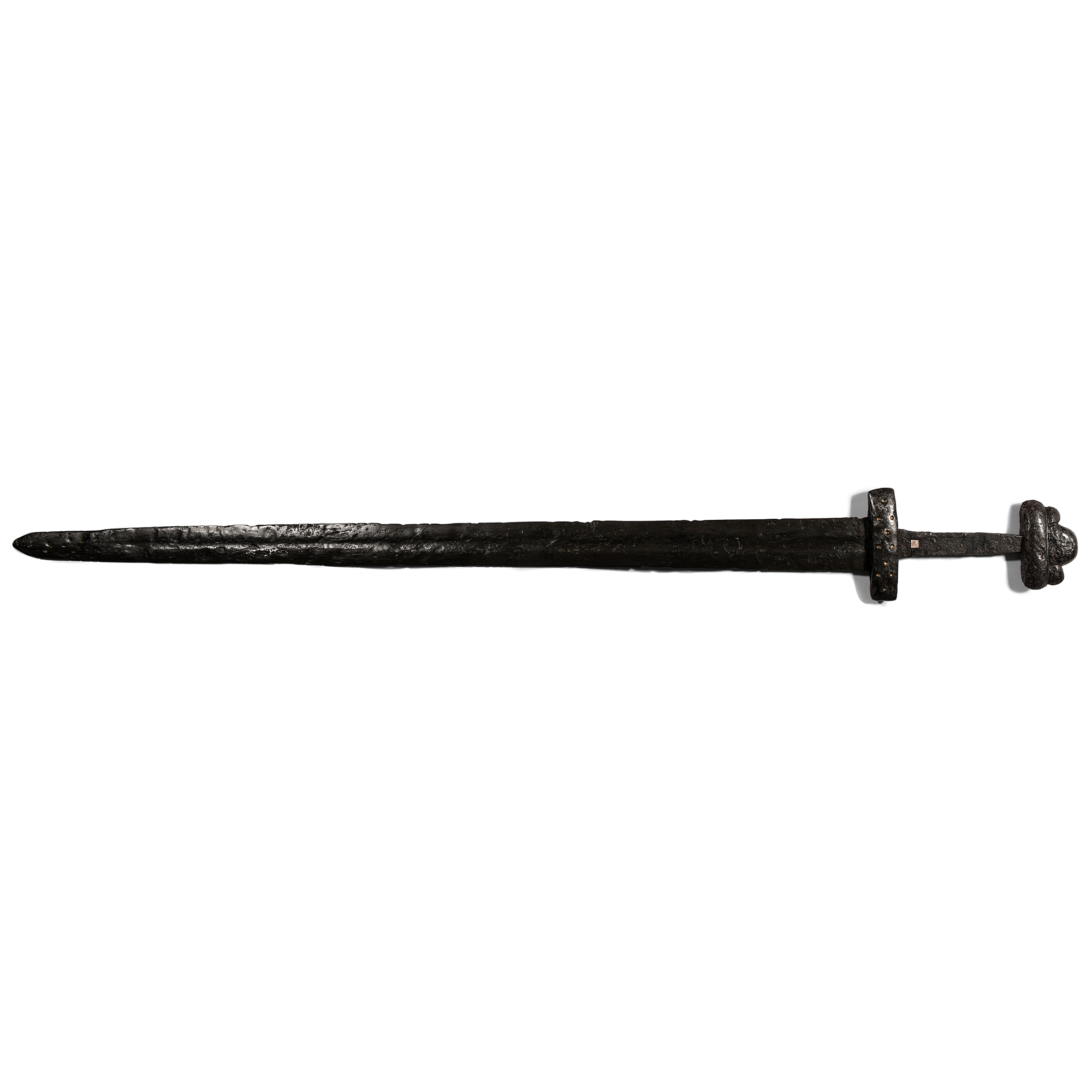
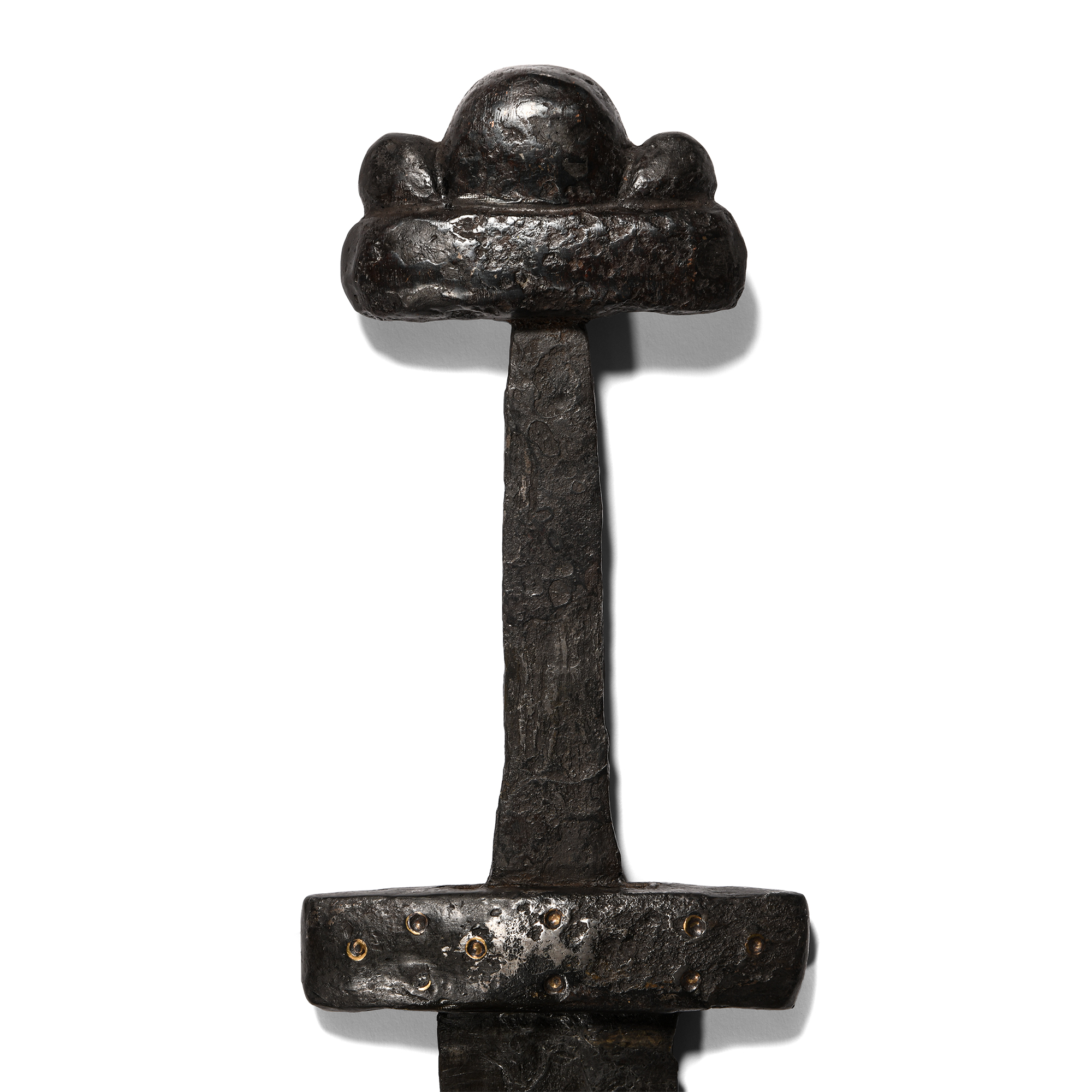
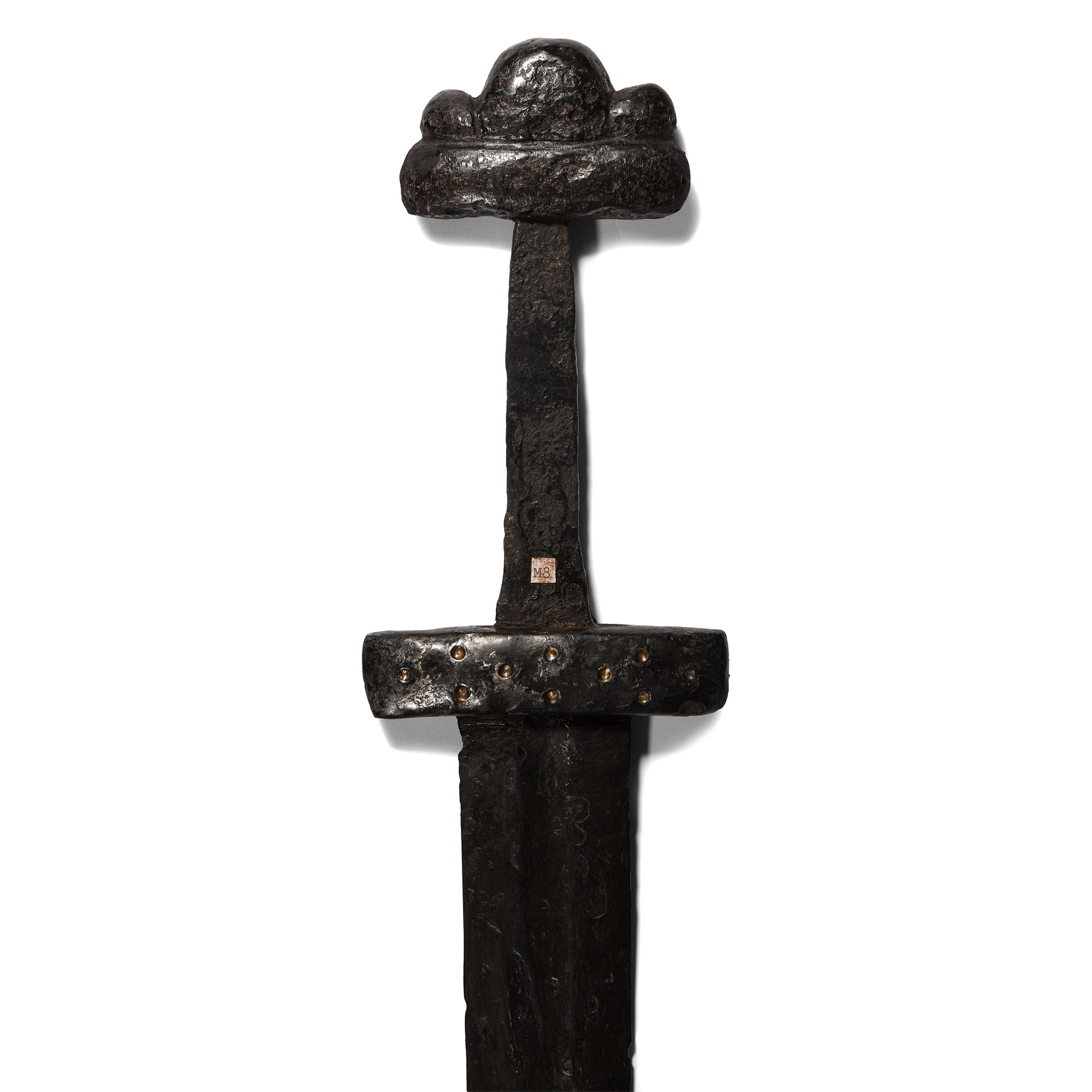
Viking Sword with Inlaid Cross and Orb Mark
CIRCA 10TH-11TH CENTURY A.D.
36 1/2 in. (752 grams, 93 cm).
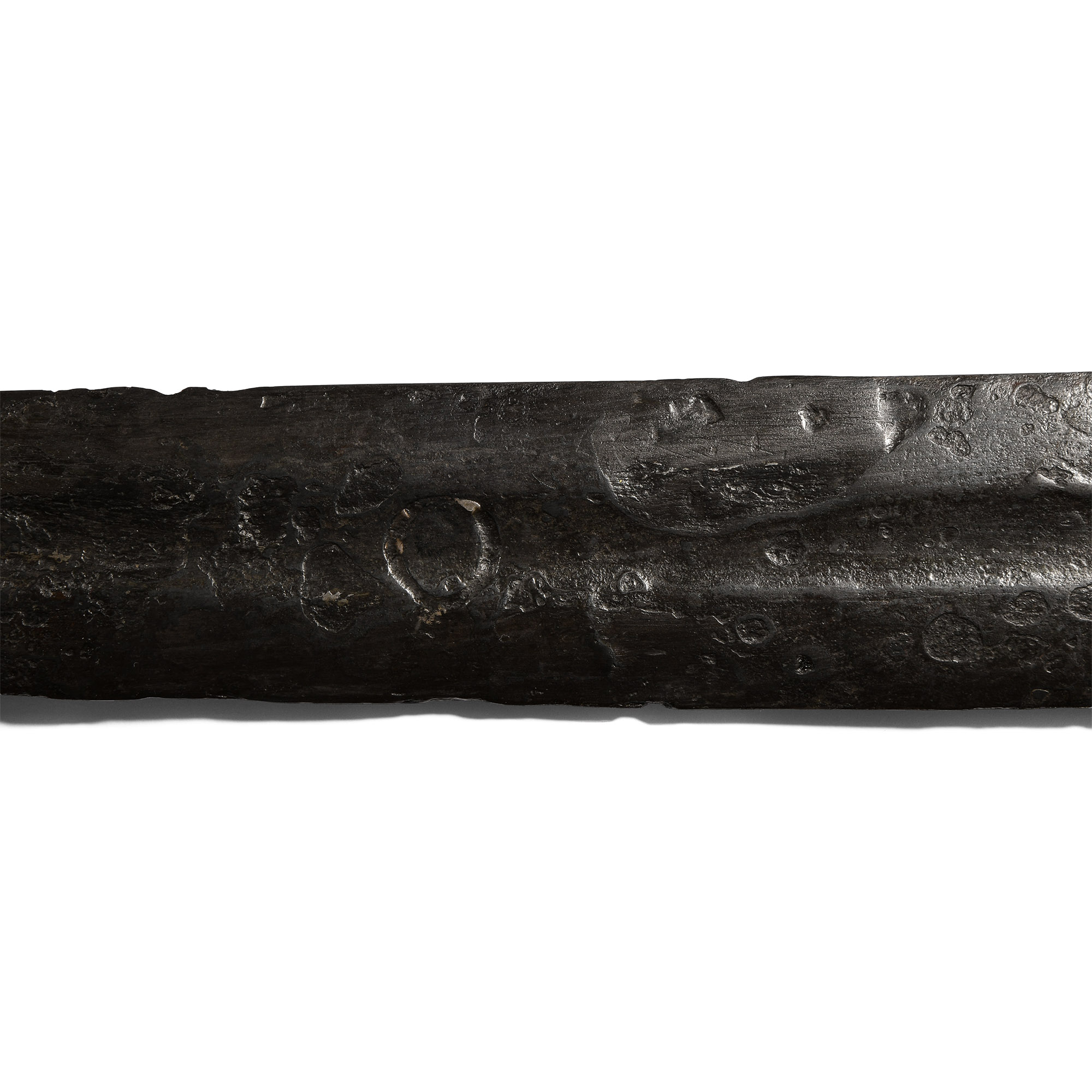
With three-lobe pommel and decorated guard; the blade 45mm wide at the upper end, gently tapering with fuller to both faces, rounded tip, indented ring to one face with silver inlay, scaphoid-section lower guard with two rows of shallow pellets to each face gilt or latten inlay; flat tapering tang; pommel of Petersen's Type S with traces of vertical inlaid wire.
ProvenanceFrom the family collection of a London gentleman; formed in the late 1940s-1950s; thence by descent.
Accompanied by metallurgic analytical report number 114366/569, written by metallurgist Dr Brian Gilmour of the Research Laboratory for Archaeology and the History of Art, University of Oxford.
Accompanied by an academic report by Dr Raffaele D’Amato.
This lot has been checked against the Interpol Database of stolen works of art and is accompanied by a search certificate number no.12020-214090.
Exhibited at Harwich Museum, Harwich, Essex, UK, 14th March-9th June 2024; accompanied by a copy of a photograph of the artefact on display.
LiteratureSee Petersen, J., De Norske Vikingsverd, Oslo, 1919; Oakeshott, R.E., The Archaeology of the weapons, London, 1960; Peirce, I., Swords of the Viking Age, Suffolk, 2002; Hjardar, K. & Vike, V., Vikings at war, Oxford-Philadelphia, 2016, pp.169-170, for the type; the pommel finds good parallels in various similar Viking age specimens, like the sword from Mixnam’s pit, Chertsey, today at the Chertsey Museum (Peirce, 2002, pp.98ff.).
CONDITIONTimeLine Auctions follows a vetting process to ensure the authenticity and legality of all items, reinforcing our commitment to integrity and responsible trading. Each antiquity, antique, and coin lot undergoes thorough examination by a vetting committee of at least ten external specialists, professional trade association members, scientists, and archaeologists: Our Vetting Process
AUCTIONS:
TimeLine is a leading auction house specialising in antiquities, ancient art, collectables, natural history, coins, medals, and books. Our auctions offer museums, collectors, historians, and enthusiasts the opportunity to acquire unique and historically significant pieces.
-
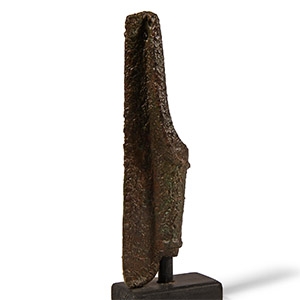
Western Asiatic Bronze Side-Blade Axehead
2nd-1st millennium B.C.Estimate: £300 - 400 (+bp*)
Opening Bid: £150
Comprising a tapering tubular socket with integral reinforcing strap, broad blade developing directly from the shank. 477 grams total, 22 cm high including stand
From London, Mayfair gallery, 1990s. -
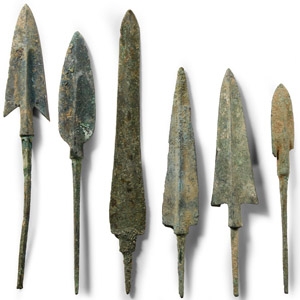
Luristan Bronze Arrowhead
Circa 13th-7th century B.C.Sold for (Inc. bp): £169
Including barbed, leaf-shaped and other types, all tanged. 196 grams total, 13-17.7 cm
Acquired 1980-2015. Ex Abelita family collection. -
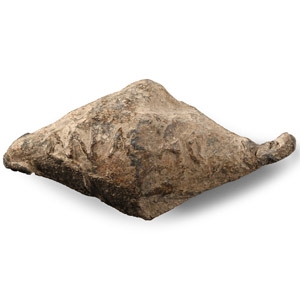
Roman 'Pompey the Great' Lead Slingshot
1st century B.C.Sold for (Inc. bp): £286
Biconical lead slingshot (glans) with inscription in Latin letters 'CN' (Cneius) 'MAG' (Magnus) on one side, and 'IMP' for 'IMPERATOR' (victorious general) to the other side, i.e Gnaeus Pompeius Magnus Imperator (Pompey the Great the victorious general). 75 grams, 51 mm
From a Spanish collection. From the collection of a London antiquarian. Accompanied by an academic paper by military specialist Dr Raffaele D'Amato, dated 4th May 2022 and titled 'Roman Res Publica - Lead Slingshots (glandes) of Caesarian Age - 45 B.C circa'. Accompanied by a printed copy of the Spanish cultural export licence 2022/07273.
The shot (Völling type 1C) is marked with the abbreviated name of Gnaeus Pompey; it was used in quantity at the Battle of Monda (or Munda) against Julius Caesar, 17th March 45 BC. The projectiles were made of different materials: lead (glandes) or in pottery or stone (lapides missiles). Sometimes they were signed with the name of the general, like our specimen.
