
Loading, please wait...
LOT 0307
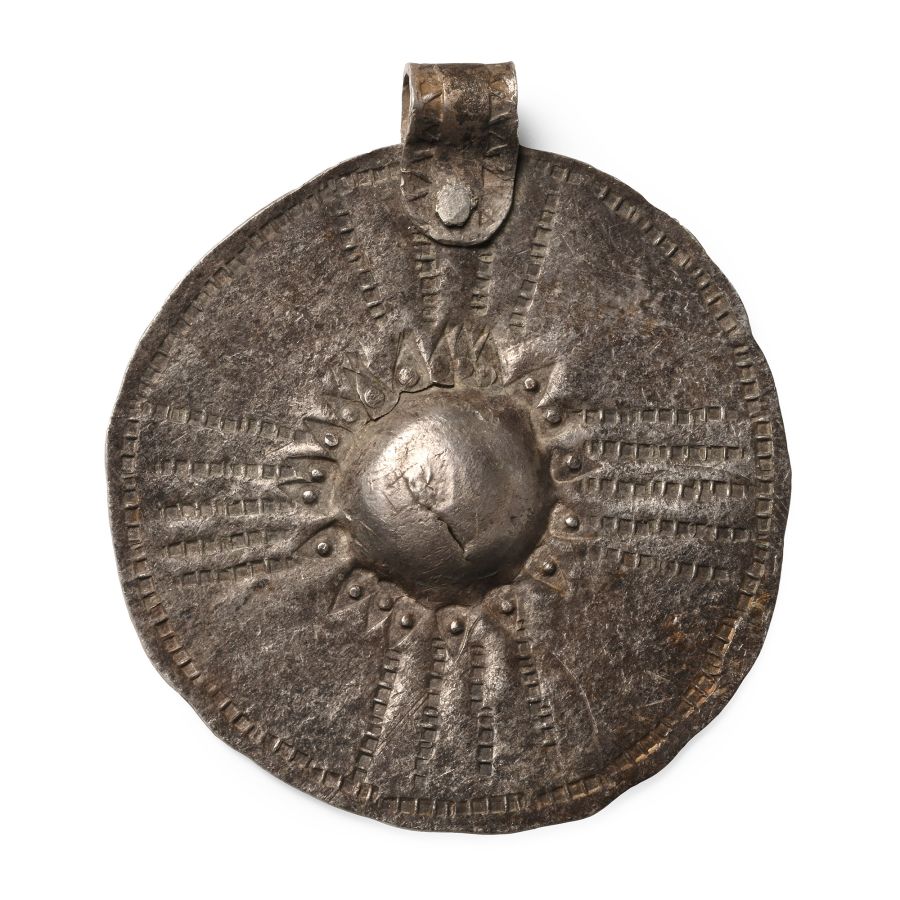
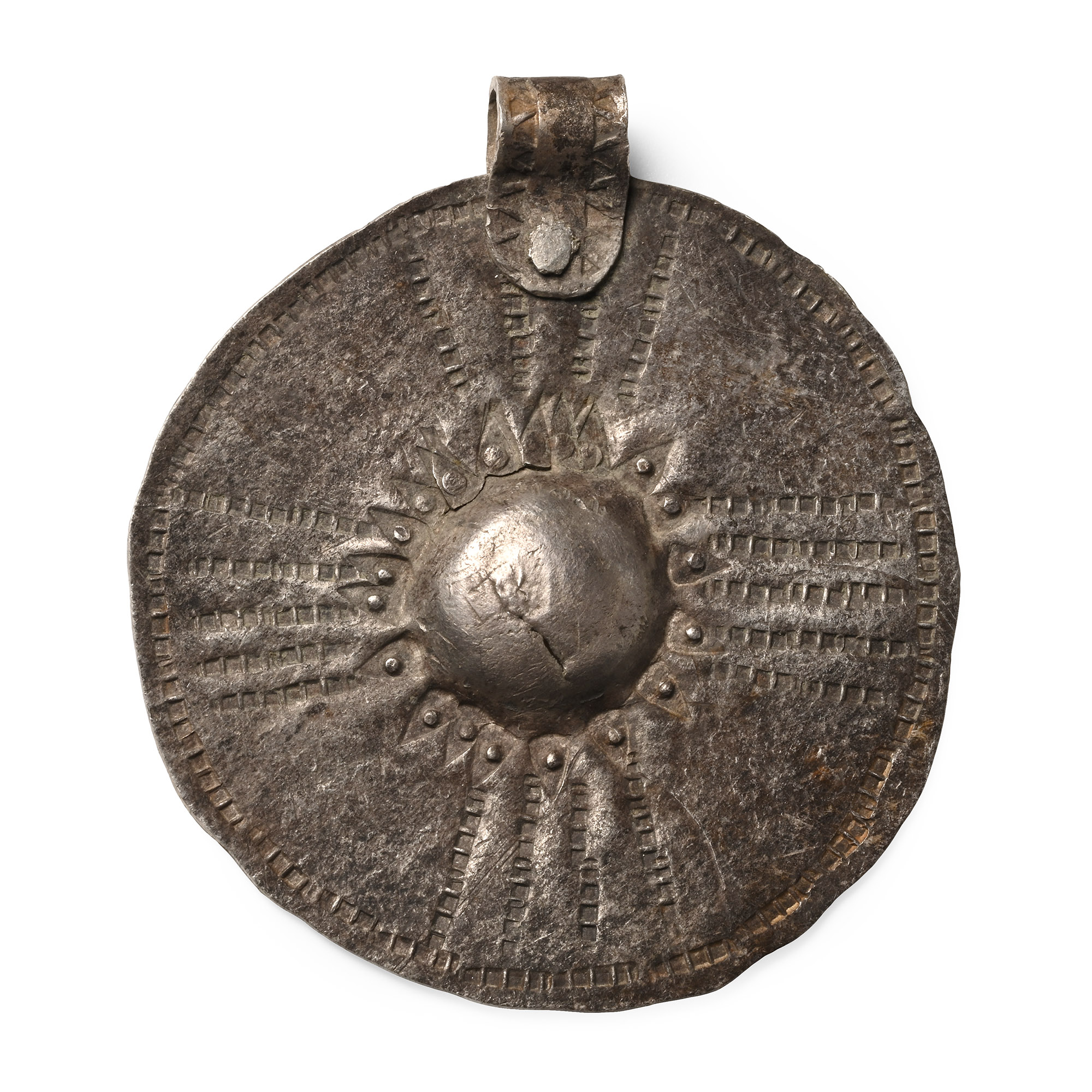
Viking Silver Stamped Shield Pendant
8TH-10TH CENTURY A.D.
1 3/4 in. (6.38 grams, 46 mm).
A horse harness pendant executed in repoussé technique, a dome to the centre with punched annulets and other details; applied loop.
ProvenanceFrom the private collection of a London gentleman, from his grandfather's collection formed before the early 1970s.
CONDITIONTimeLine Auctions follows a vetting process to ensure the authenticity and legality of all items, reinforcing our commitment to integrity and responsible trading. Each antiquity, antique, and coin lot undergoes thorough examination by a vetting committee of at least ten external specialists, professional trade association members, scientists, and archaeologists: Our Vetting Process
AUCTIONS:
TimeLine is a leading auction house specialising in antiquities, ancient art, collectables, natural history, coins, medals, and books. Our auctions offer museums, collectors, historians, and enthusiasts the opportunity to acquire unique and historically significant pieces.
-
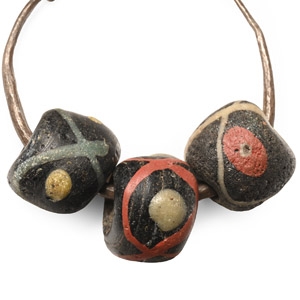
Viking Silver Necklace Pendant with Mosaic Beads
9th-11th century A.D.Sold for (Inc. bp): £156
Bronze wire loop with ends twisted around the shank, three mosaic glass beads. 11.6 grams, 43 mm
From the private collection of a London gentleman, from his grandfather's collection formed before the early 1970s. -

Scandinavian Viking Bronze Box Brooch
9th-10th century A.D.Estimate: £1,500 - 2,000 (‡+bp*)
Opening Bid: £750
Featuring a squat cylindrical body, ornate cruciform motif to upper face, zoomorphic panels to the side wall; hollow-formed; remains of pin lug and catchplate to reverse. 93 grams, 53 mm
From the collection of a North American gentleman, formed in the 1990s. -
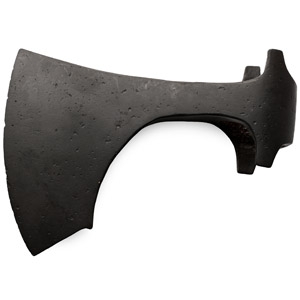
Viking Age Iron Socketted Bearded Axehead
Circa 10th-11th century A.D.Sold for (Inc. bp): £598
With slender ridged blade and chin to the lower edge, round socket with rectangular flanges, flattened rear edge; professionally cleaned, conserved, and restored. 788 grams, 17.5 cm
Cleaned, conserved and restored.
From the family collection of a South East London collector; formerly acquired in the late 1950s.
The type appears to be related to the Y-type of Viking axes. Slavic battle-axes also came into use in Scandinavia, especially in the eastern part of Gotland, Sweden and Denmark. The old Norse word Taparöx probably come from Topor, the Slavic word for axe. Eastern axes are also characterised by an almost completely round hole for the shaft.
