
Loading, please wait...
LOT 1643
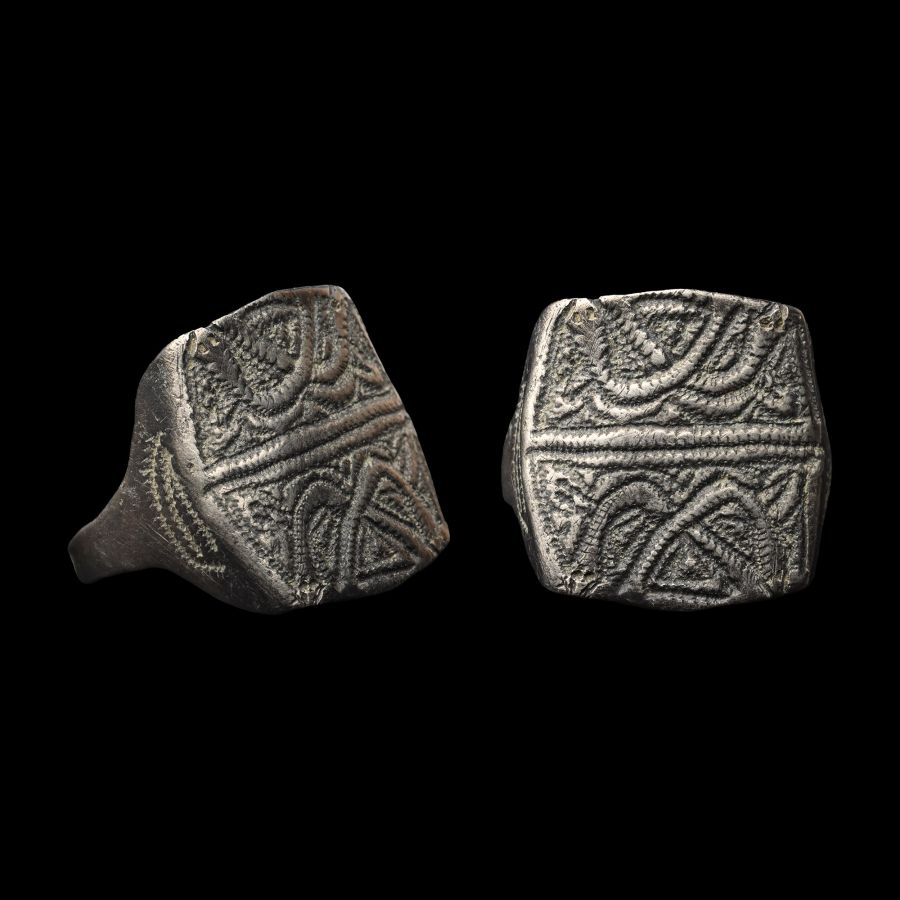
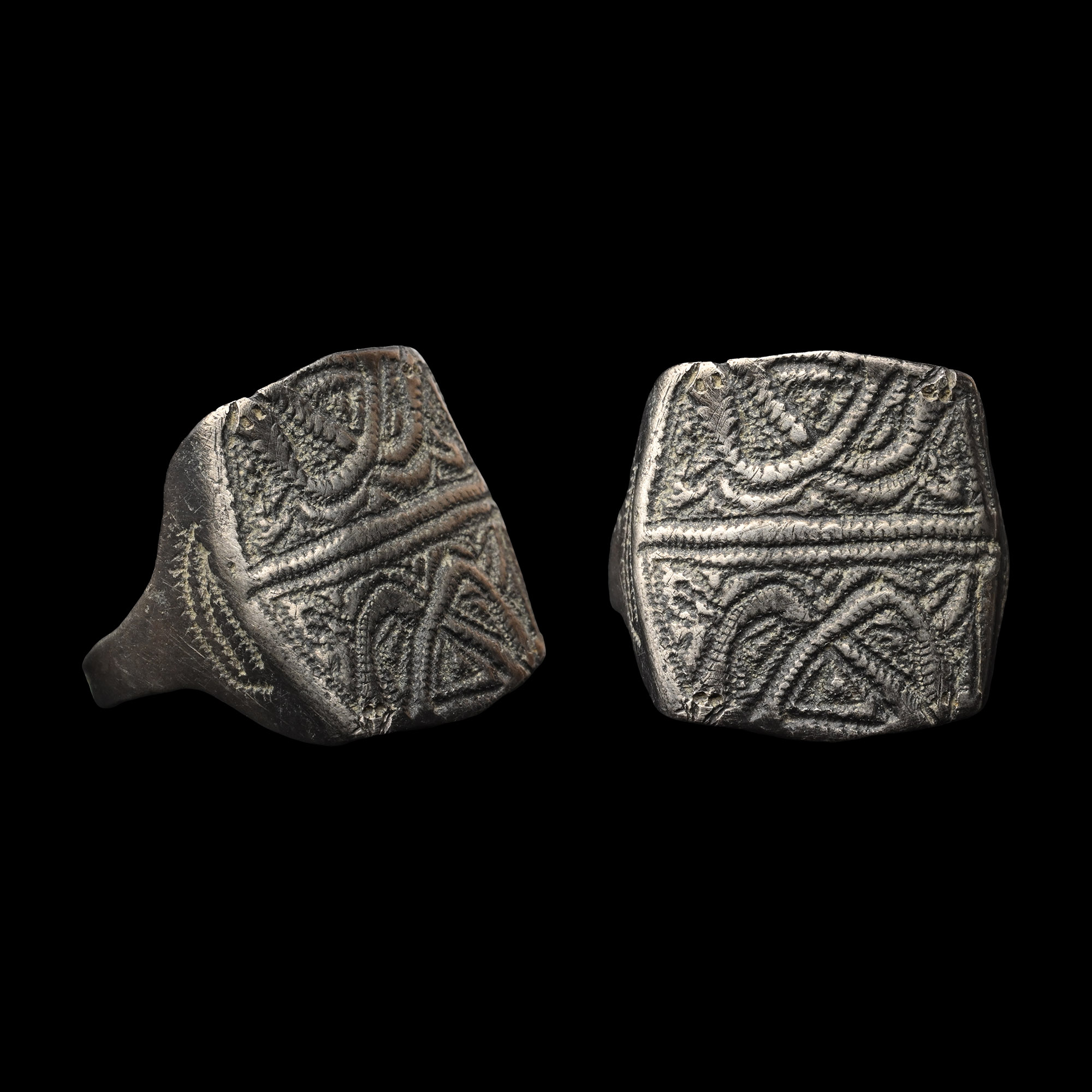
Viking Silver Ring with Snakes
10TH-12TH CENTURY A.D.
3/4 in. (2.75 grams, 20.01 mm overall, 17.73 mm internal diameter (approximate size British O, USA 7, Europe 14.98, Japan 14)).
With large square plaque, low-relief design of serpents entwined on a pounced field. [No Reserve]
ProvenanceFrom the private collection of a London gentleman, from his grandfather's collection formed before the early 1970s.
LiteratureCf. Arbman, H., Birka I: Die Gräber, Uppsala, 1940, pl.111(4), for type.
CONDITIONTimeLine Auctions follows a vetting process to ensure the authenticity and legality of all items, reinforcing our commitment to integrity and responsible trading. Each antiquity, antique, and coin lot undergoes thorough examination by a vetting committee of at least ten external specialists, professional trade association members, scientists, and archaeologists: Our Vetting Process
AUCTIONS:
TimeLine is a leading auction house specialising in antiquities, ancient art, collectables, natural history, coins, medals, and books. Our auctions offer museums, collectors, historians, and enthusiasts the opportunity to acquire unique and historically significant pieces.
-
.jpg)
Viking Age Bronze Sword Scabbard Chape Collection
10th-12th century A.D.Sold for (Inc. bp): £780
Comprising: a small and narrow type (Paulsen's Gruppe I 2, Untergruppe d) with an openwork panel to each face filled by a cross-shaped motif with curved cross-bar, and a dentilled upper edge to the mouth; a tongue-shaped type (Paulsen's Gruppe I 1) with an openwork centre and Ringerike style bird formed with looped bands, pellets to the pinions, a triangular in plan head joined to the inner faces of the ropework border forming the upper edge of the chape, with a wolf's head at the apex and stepped knop finial (apex and lower end of the chape damaged); two of the same type (Gruppe I 1) with a pair of scrolls in the central void and a 'knot' to the apex', one with ropework detailing and a wolf's head; a broad D-shaped plaque with a plain reverse plate riveted in place, guilloche band to the outer edge and interlaced vines to the centre. 118 grams total, 46-75 mm
From the collection of a North American gentleman, formed in the 1990s.
The chape with the dentilled upper edge bears a cross motif on which only the curvature of the cross-piece indicates its origin in the raven/eagle figure found more commonly on this type; as its ornament has developed a long way from its original form, it should be dated to the 11 or 12th century. The D-shaped plaque with the plain reverse is not in Paulsen's typology but appears to be derived from the smaller types in his Gruppe VII. -
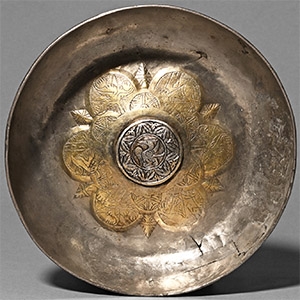
Scandinavian Silver Bowl with Embossed Centre
Circa 13th century A.D.Estimate: £4,000 - 6,000 (+bp*)
Opening Bid: £2,000
Dipping bowl, raised from a single sheet of silver, decorated with an incised rosette to the underside with central omphalos; rolled and everted rim; inner face with repoussé rosette, each petal with a stylised beast reserved on a pounced field; later applied central rosette with acanthus border, tondo with repoussé wyvern rampant. 134 grams, 15.5 cm
Acquired on the UK art market. Private collection, London. This lot has been checked against the Interpol Database of stolen works of art and is accompanied by search certificate number no.12978-244536. -
.jpg)
Viking Age Bronze Fire Steel with Figure and Animals
8th-10th century A.D.Estimate: £400 - 600 (+bp*)
Opening Bid: £160
With openwork bifacial handle depicting central standing figure with arms outstretched towards the necks of two flanking rampant beasts; iron blade beneath; Finno-Ugric type. 58 grams, 60 mm
From the private collection of a London gentleman, from his grandfather's collection formed before the early 1970s. This lot is accompanied by an illustrated lot declaration signed by the Head of the Antiquities Department, Dr Raffaele D'Amato.
