
Loading, please wait...
LOT 1735
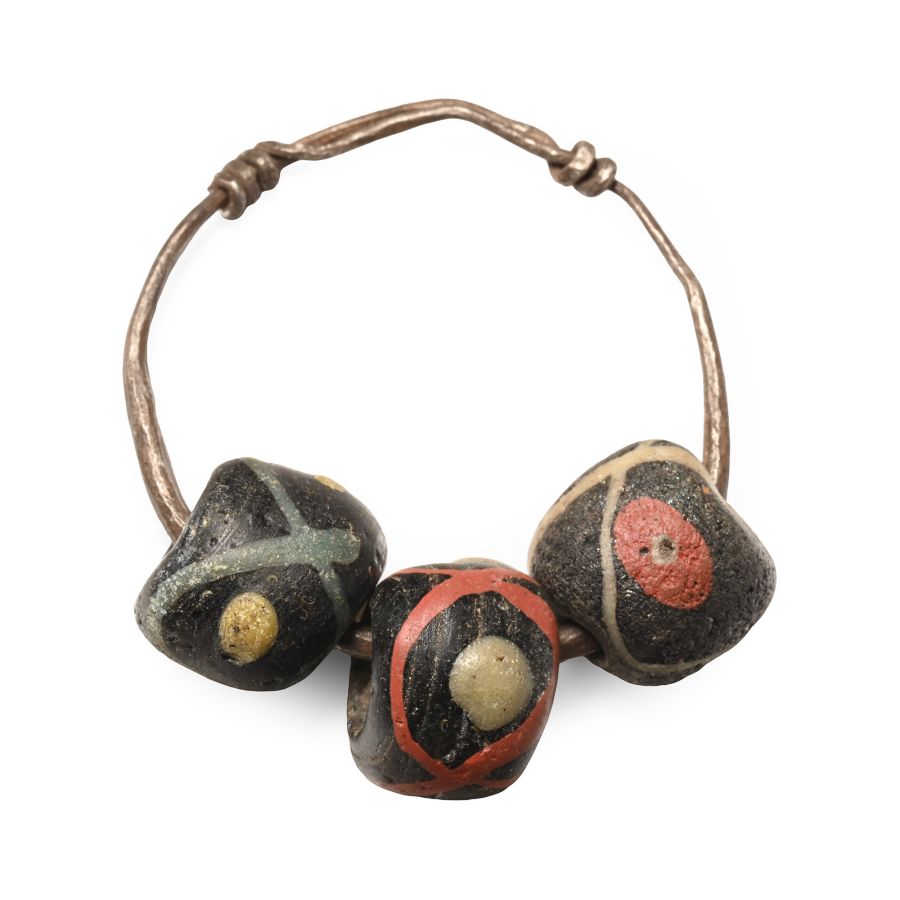
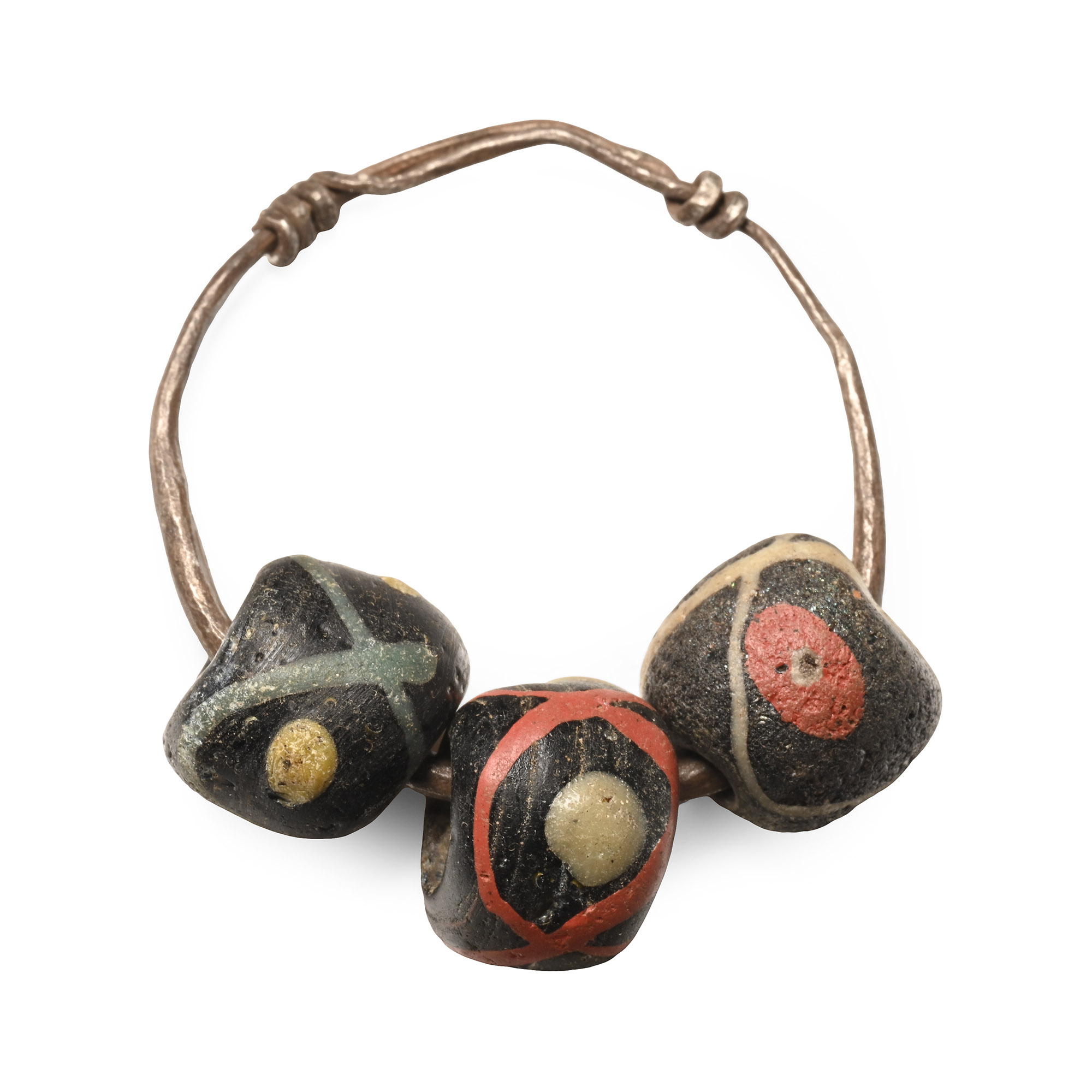
Viking Silver Necklace Pendant with Mosaic Beads
9TH-11TH CENTURY A.D.
1 5/8 in. (11.6 grams, 43 mm).
Bronze wire loop with ends twisted around the shank, three mosaic glass beads. [No Reserve]
ProvenanceFrom the private collection of a London gentleman, from his grandfather's collection formed before the early 1970s.
LiteratureCf. Arbman, H., Birka I: Die Gräber, Uppsala, 1940, pl.104.
CONDITIONTimeLine Auctions follows a vetting process to ensure the authenticity and legality of all items, reinforcing our commitment to integrity and responsible trading. Each antiquity, antique, and coin lot undergoes thorough examination by a vetting committee of at least ten external specialists, professional trade association members, scientists, and archaeologists: Our Vetting Process
AUCTIONS:
TimeLine is a leading auction house specialising in antiquities, ancient art, collectables, natural history, coins, medals, and books. Our auctions offer museums, collectors, historians, and enthusiasts the opportunity to acquire unique and historically significant pieces.
-
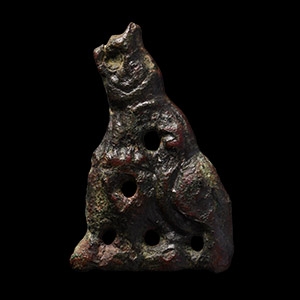
Viking Bronze Howling Beast Mount
11th century A.D.Sold for (Inc. bp): £117
Formed as an openwork seated wolf with long curled tail, head raised and mouth open; similar to Class A, Type 11A. 10.6 grams, 33 mm
Found near Norwich, Norfolk, UK. -
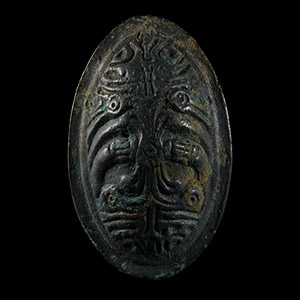
Viking Age Bronze Tortoise Brooch with Ravens
9th-10th century A.D.Sold for (Inc. bp): £702
With domed elliptical body and narrow flange, high-relief palmette ornament and omega-shaped panels and opposed ravens with curved beaks. 62.6 grams, 80 mm
From the collection of a North American gentleman, formed in the 1990s.
The silvery appearance of the brooch is probably due to a high proportion of tin in the bronze alloy. -
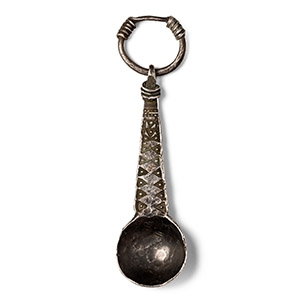
Viking Stamped Silver Spoon with Loop
8th-10th century A.D.Sold for (Inc. bp): £520
Comprising a broad shallow bowl and a flat triangular handle with stamped triangle ornament; suspension loop with coiled ends. 11.3 grams, 90 mm
From the private collection of a London gentleman, from his grandfather's collection formed before the early 1970s.
