
Loading, please wait...
LOT 1425
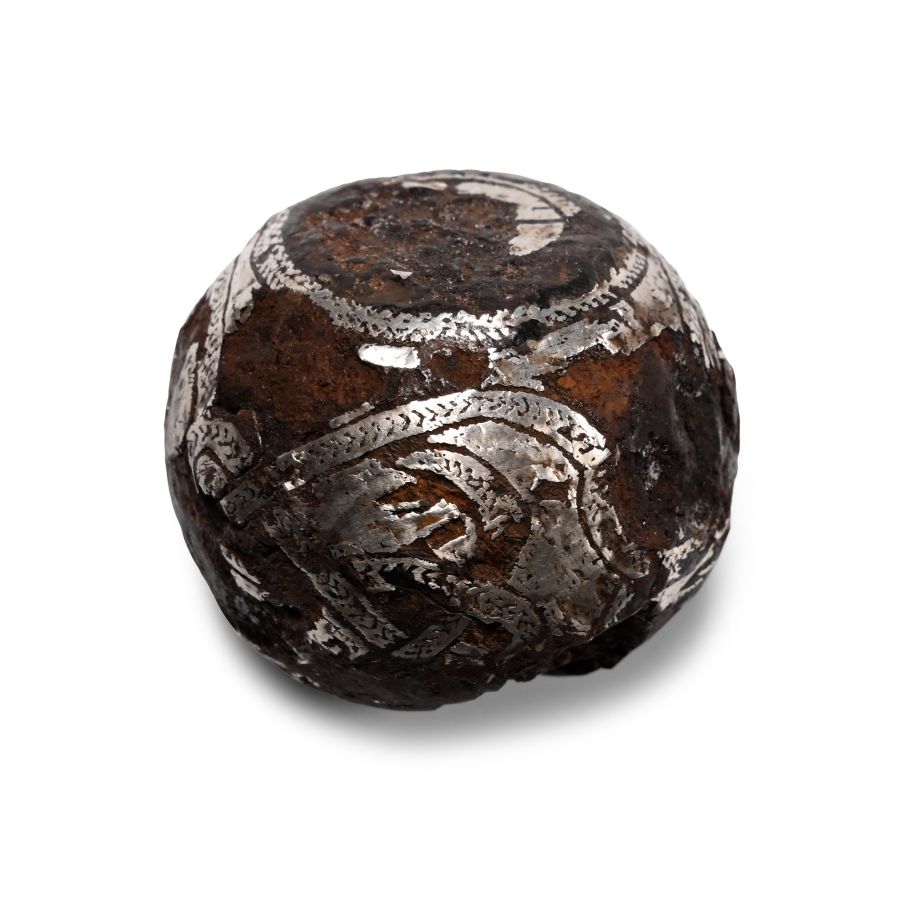
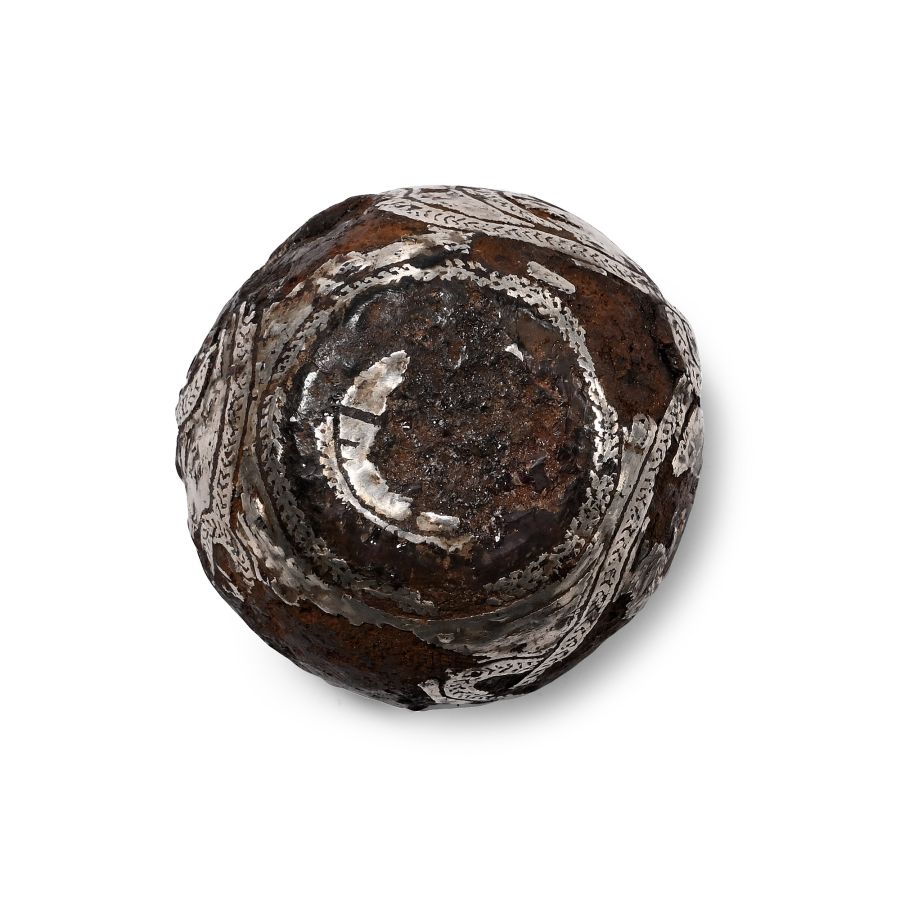
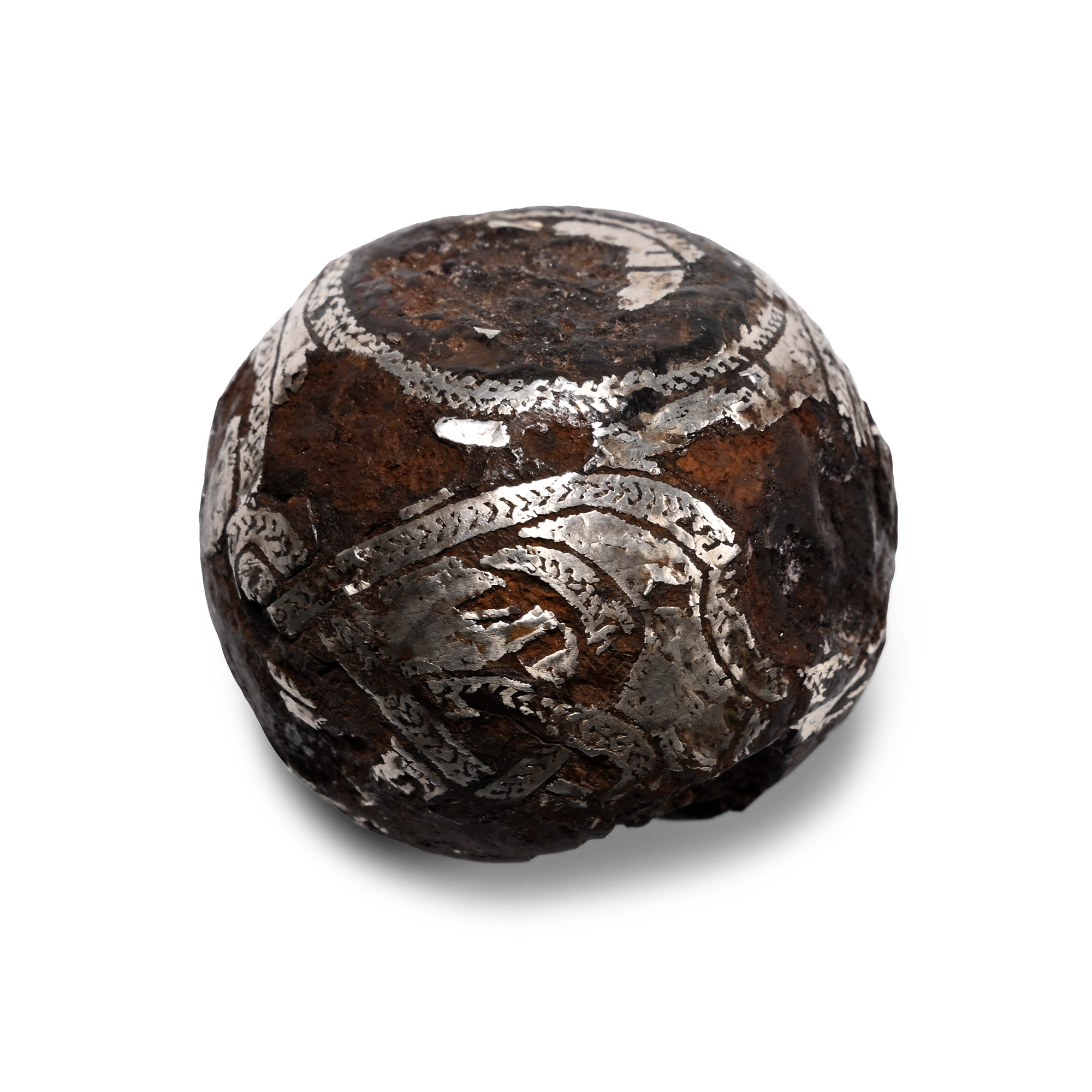
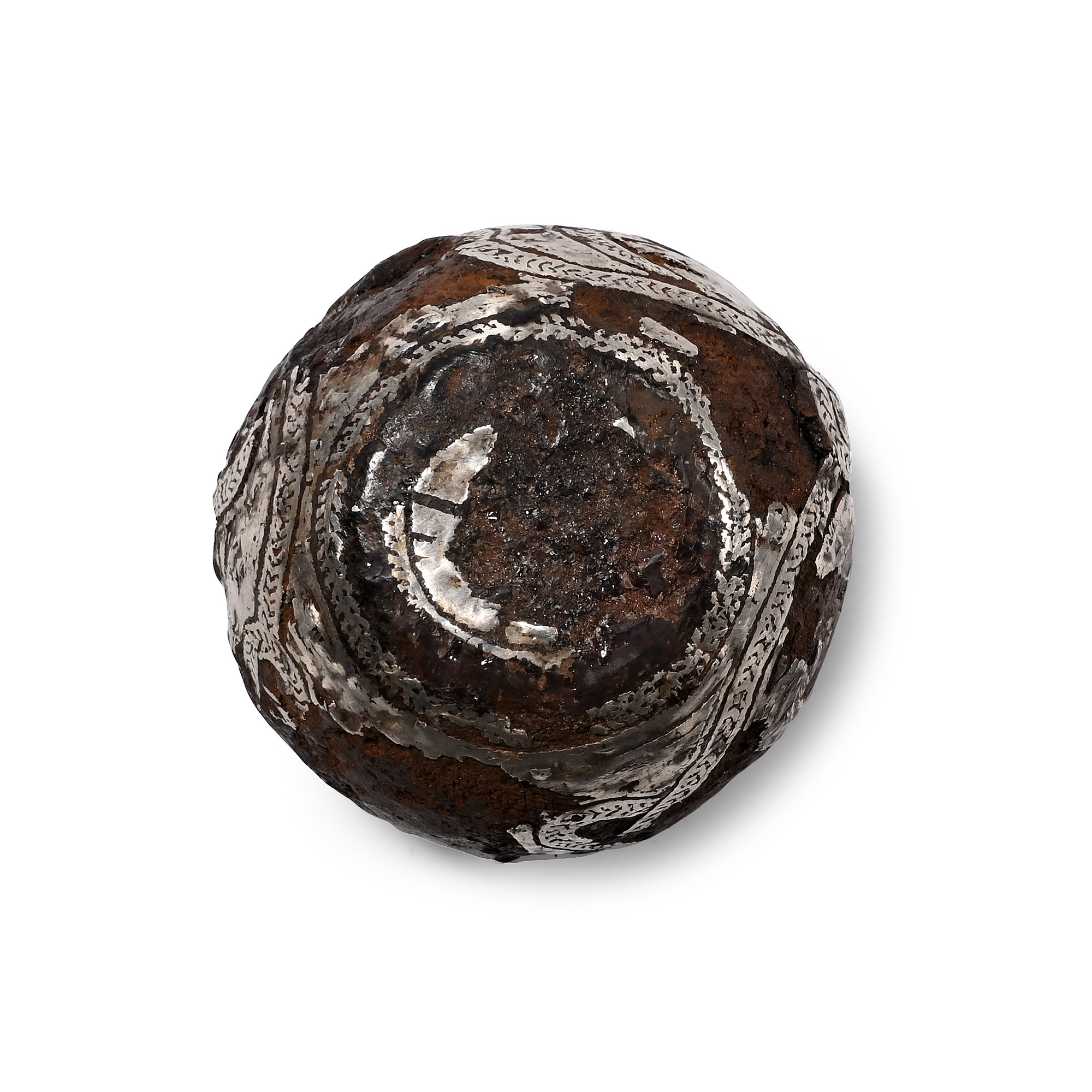
Viking Silver Inlaid Iron Weight
9TH-11TH CENTURY A.D.
1 1/2 in. (176 grams, 38 mm).
Polyhedral weight bearing Insular Style inlaid decoration in the form of serpentine creatures in tondos, on a silver inlaid background. [No Reserve]
ProvenancePrivate collection formed in Europe in the 1980s.
Westminster collection, central London, UK.
This lot is accompanied by an illustrated lot declaration signed by the Head of the Antiquities Department, Dr Raffaele D'Amato.
Cf. similar weights in de Wilde, R., Weights, Scales and Pawns of Ancient Civilizations, 2017, p.172; cf. also for the type, Reynolds, A., Webster, L., Early Medieval Art and Archaeology in the Northern World, Studies in Honour of James Graham-Campbell, The Northern World, North Europe and Baltic c.400-1700 A.D., Peoples, Economies and Cultures, Leiden-Boston, 2013, p.303, type 6.
FootnotesThese weights were adopted by the Vikings from Middle Eastern examples and appear to have become a typical weight standard for traders. They are, in archaeology, an important form of evidence for the Viking commerce. Many of them, like those found in Ireland and of Arabic type, suggest a standardised system of weights in different areas.
CONDITIONTimeLine Auctions follows a vetting process to ensure the authenticity and legality of all items, reinforcing our commitment to integrity and responsible trading. Each antiquity, antique, and coin lot undergoes thorough examination by a vetting committee of at least ten external specialists, professional trade association members, scientists, and archaeologists: Our Vetting Process
AUCTIONS:
TimeLine is a leading auction house specialising in antiquities, ancient art, collectables, natural history, coins, medals, and books. Our auctions offer museums, collectors, historians, and enthusiasts the opportunity to acquire unique and historically significant pieces.
-
Western Asiatic Stone Macehead
3rd-2nd millennium B.C.Sold for (Inc. bp): £169
With plain globular body, circular short shaft expanding to a circular flat base. 386 grams, 83 mm
From the collection of a London, UK, gentleman, 1990s. This lot is accompanied by an illustrated lot declaration signed by the Head of the Antiquities Department, Dr Raffaele D’Amato. This lot is accompanied by an illustrated lot declaration signed by the Head of the Antiquities Department, Dr Raffaele D'Amato. -
.jpg)
Turco-Mongol 'Greek Fire' Ceramic Fire Bomb or Hand Grenade
13th-15th century A.D.Sold for (Inc. bp): £130
A hollow vessel with cylindrical body, short neck and domed mouth, impressed herringbone decoration to the body; intended to be filled with explosive liquid and a wick, and used as a hand grenade. 452 grams, 18 cm
From an important specialist collection, London, UK, 1990s onwards. Accompanied by an academic paper by military specialist Dr Raffaele D'Amato, dated 15 July 2019 and titled 'Eastern Roman Empire - Greek Fire Bomb or Hand Grenade (μεσαίον kακάβιον) 9th-11th century AD'. This lot is accompanied by an illustrated lot declaration signed by the Head of the Antiquities Department, Dr Raffaele D'Amato.
Apart from the use of siphons or manual flame-throwers called cheirosiphona, special corps of Roman soldiers employed terracotta grenades, in the form of small jars, abundantly evidenced in archaeological excavations. They were called μεσαία kακαβιά or κυτροκακάβια where the former had a bulbous shape and the latter a more cylindrical form. -
.jpg)
Viking Iron Sword with Bronze Hilt of Petersen Type L
11th-13th century A.D.Sold for (Inc. bp): £6,240
A 'Curonian' sword comprising a straight blade with a narrow and long tang, showing signs of employment on the edges; boat-shaped bronze cross guard with Jellinge style decoration of circles and crosses; rivetted seven-lobed pommel with an upper guard showing similar ornament. 689 grams, 81.5 cm
Private collection formed in Europe in the 1980s. Westminster collection, central London, UK. This lot has been checked against the Interpol Database of stolen works of art and is accompanied by search certificate number no.12618-235588. This lot has been cleared against the Art Loss Register database, and is accompanied by an illustrated lot declaration signed by the Head of the Antiquities Department, Dr Raffaele D'Amato.
The sword, with its seven-lobed pommel and its guards finds good parallels with Baltic swords used by Prussian, Curonians, Estonian and Lithuanian pagan warriors; clear parallels can be seen in Kazakevičius 1996, figs.62-63 (fig.2) and Tomsons, 2012, fig.2 (Fig.3),3,7. The Curonian swords of this type, sometimes with animal head decoration on the lower guard, were widespread and used in the Eastern Baltic lands from 10th to 13th century.
