
Loading, please wait...
LOT 1445
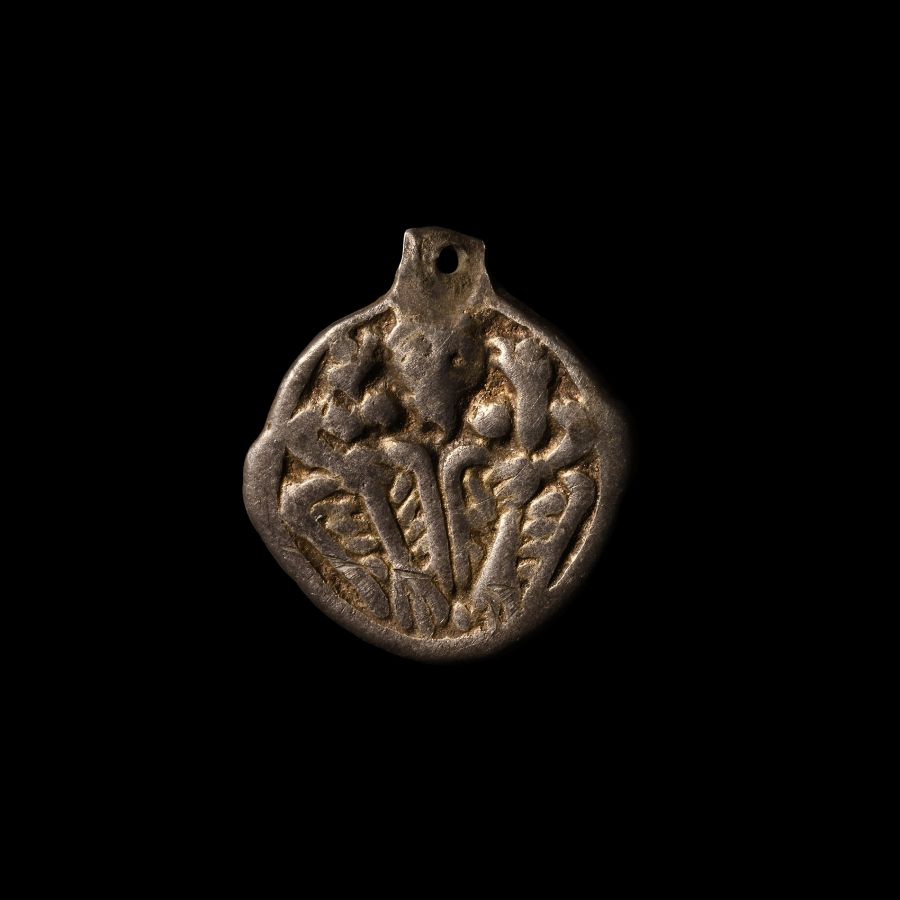
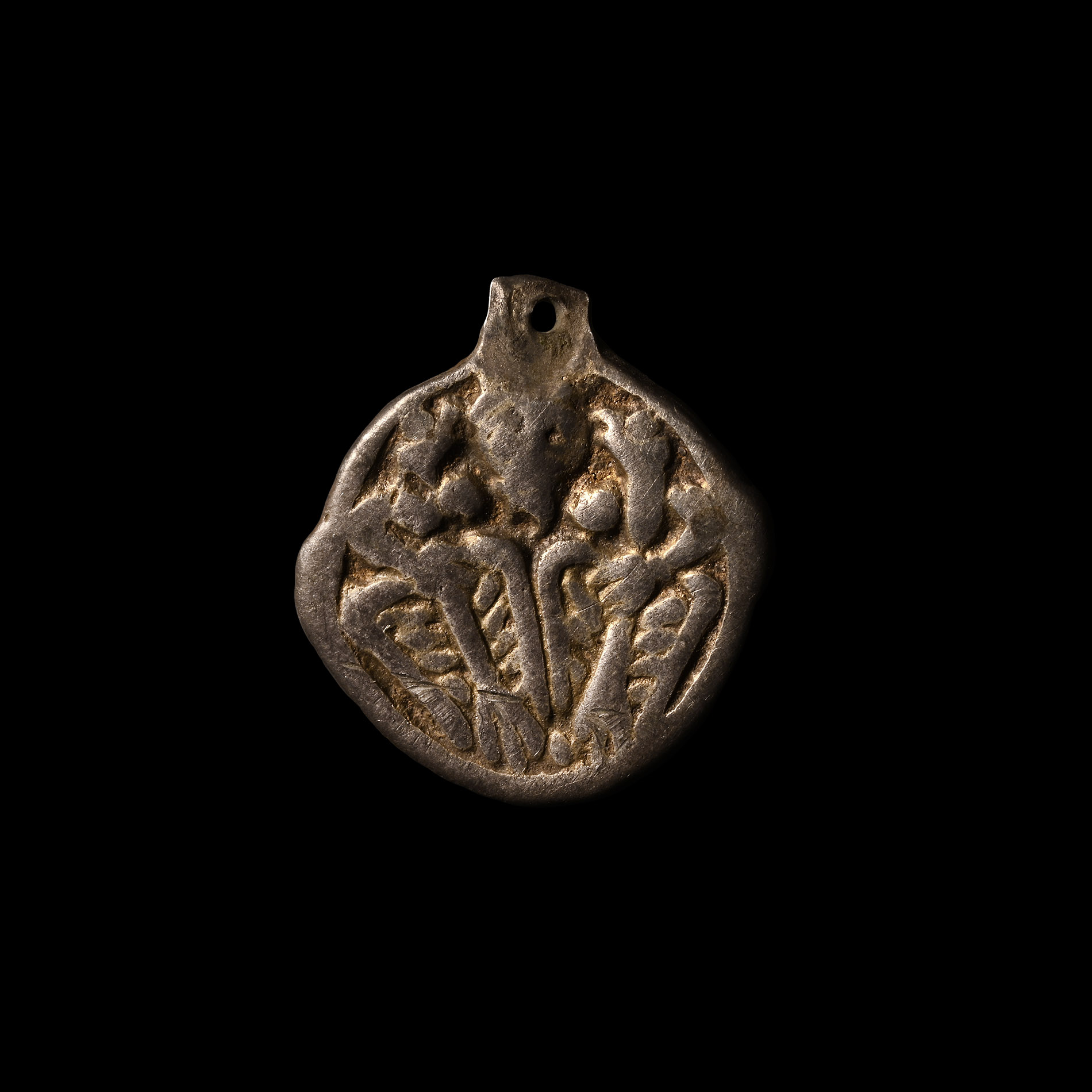
Viking Silver-Gilt Pendant with Odin Gripping Two Ravens
9TH-10TH CENTURY A.D.
3/4 in. (2.8 grams, 20 mm).
Border enclosing a low-relief image of a male facing mask between two birds embraced at the necks; with integral loop. [No Reserve]
ProvenanceFrom the collection of a North American gentleman, formed in the 1990s.
LiteratureCf. Hammond, B. M., British Artefacts Volume 2 - Middle Saxon and Viking, p.57, item 1.5.3-f.; cf. Korshyn, V.E., Yazcheskye Priveski Drevnei Rusi X-XIV Vekov, Moscow, 2013, item M.2.02.
CONDITIONTimeLine Auctions follows a vetting process to ensure the authenticity and legality of all items, reinforcing our commitment to integrity and responsible trading. Each antiquity, antique, and coin lot undergoes thorough examination by a vetting committee of at least ten external specialists, professional trade association members, scientists, and archaeologists: Our Vetting Process
AUCTIONS:
TimeLine is a leading auction house specialising in antiquities, ancient art, collectables, natural history, coins, medals, and books. Our auctions offer museums, collectors, historians, and enthusiasts the opportunity to acquire unique and historically significant pieces.
LOT 1445
Viking Silver-Gilt Pendant with Odin Gripping Two Ravens
Sold for (Inc. bp): £293
-
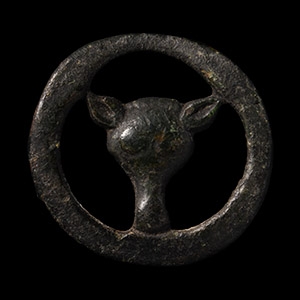
Viking Age Bronze Wolf-Head Strap Distributor
9th-12th century A.D.Sold for (Inc. bp): £315
Comprising an outer ring with wolf mask in low relief at the centre. 3.4 grams, 26 mm
Ex property of an American collector; acquired 1980-2000. -
.jpg)
Viking Age Glass Bead Necklace with Bronze Pendants
9th-11th century A.D. or laterSold for (Inc. bp): £234
Mainly composed of restrung drawn glass annular and oblate beads, and cruciform, discoid and lunate pendants. 58 grams, 60 cm long
From the collection of a North American gentleman, formed in the 1990s. -
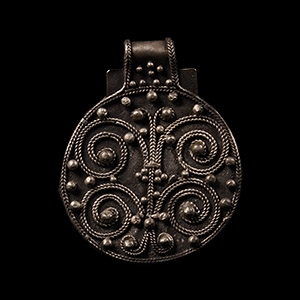
Viking Age Silver Filigree Pendant
9th-11th century A.D.Sold for (Inc. bp): £624
Flat disc with integral suspension loop, applied granules and filigree ropework detailing. 5.57 grams, 40 mm
Private collection formed in Europe in the 1980s. Westminster collection, central London, UK.
