
Loading, please wait...
LOT 1350
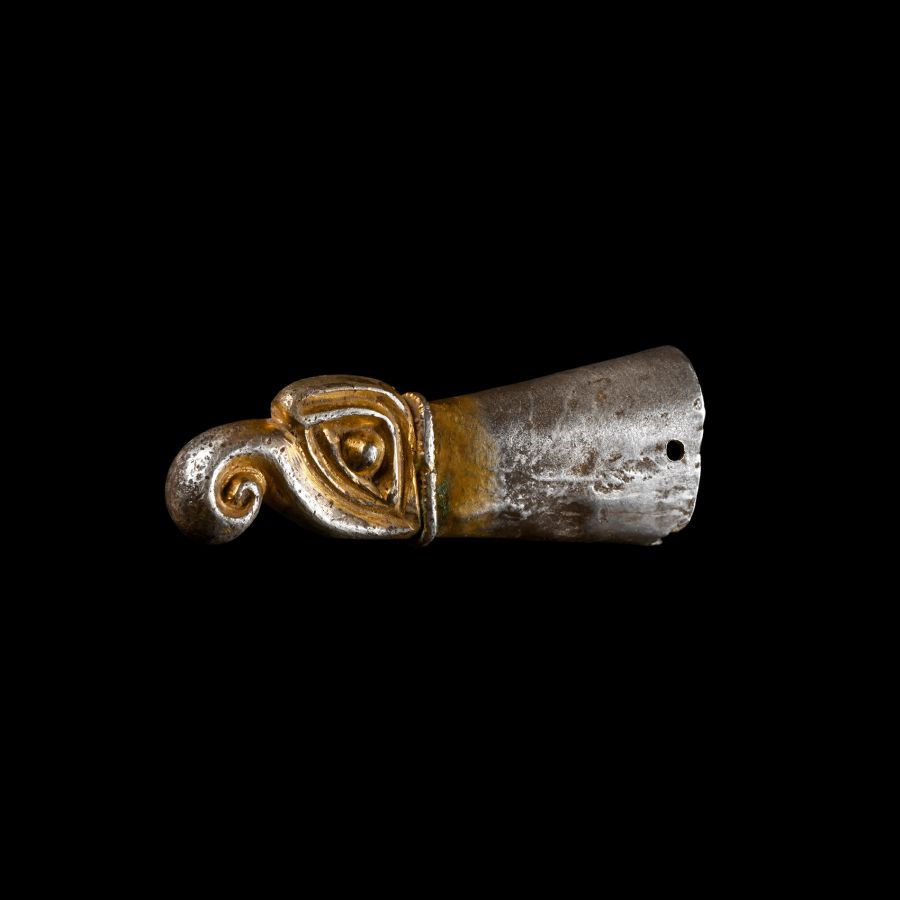
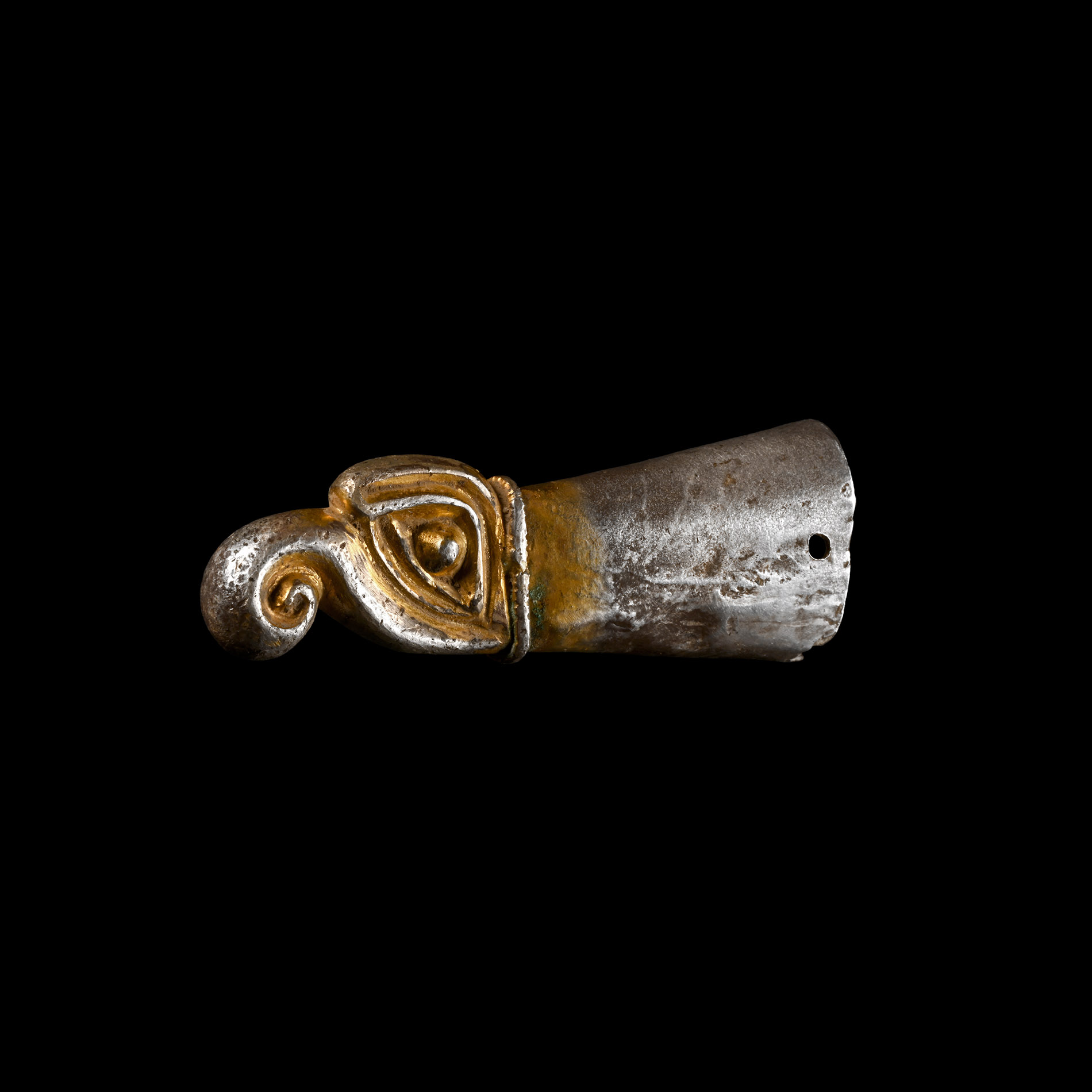
Viking Silver-Gilt Drinking Horn Terminal
CIRCA 7TH-9TH CENTURY A.D.
2 in. (14.5 grams, 50 mm).
Comprising a tapering sleeve and stylised bird-head with scrolled beak and angled bar above the eye; pierced in two places. [No Reserve]
ProvenanceAcquired in the early 1970s.
Ex property of a Surrey, UK, collector.
Cf. the mount shows stylistic parallels with PAS record no.LEIC-1DCF5E; for similarly shaped drinking horns with eagle design, see the drinking horm from Taplow burial mound, British Musuem, museum number 1883,1214.19.
FootnotesThe decorative style of the terminal bears resemblance to the Trewhiddle style, dated to the ninth to early tenth centuries, although it seems a more simplified version of the Taplow Horn terminals. Zoomorphic terminals on Trewhiddle style strap ends bear very similar circular ears containing chevron motifs, and panels of decoration on the brow.
CONDITIONTimeLine Auctions follows a vetting process to ensure the authenticity and legality of all items, reinforcing our commitment to integrity and responsible trading. Each antiquity, antique, and coin lot undergoes thorough examination by a vetting committee of at least ten external specialists, professional trade association members, scientists, and archaeologists: Our Vetting Process
AUCTIONS:
TimeLine is a leading auction house specialising in antiquities, ancient art, collectables, natural history, coins, medals, and books. Our auctions offer museums, collectors, historians, and enthusiasts the opportunity to acquire unique and historically significant pieces.
-
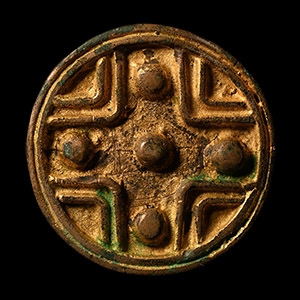
Viking Age Gilt Bronze Disc Brooch with Cross
9th-12th century A.D.Sold for (Inc. bp): £65
In relief with angled borders and five pellets to the interior representing the Five Wounds of Christ; remains of pin lug and catchplate to reverse. 23.7 grams, 37 mm
From the collection of a North American gentleman, formed in the 1990s. -
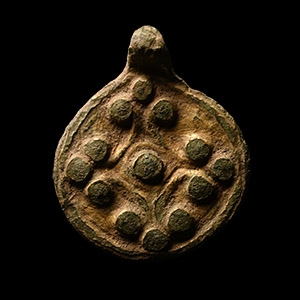
Viking Age Gilt Bronze Pendant with Lobed Cross
9th-11th century A.D.Sold for (Inc. bp): £72
Composed of raised pellets, integral suspension loop. 7.29 grams, 33 mm
From the collection of a North American gentleman, formed in the 1990s. -
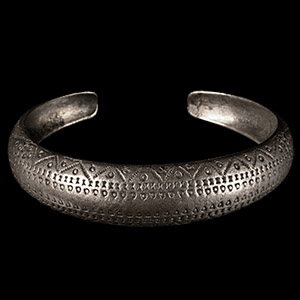
Viking Age Silver Stamp-Decorated Bracelet
9th-10th century A.D.Sold for (Inc. bp): £338
Comprising a C-section penannular hoop with convex outer face and stamp-decorated decoration in zones including pellets, opposed triangles, segmented bars. 24.4 grams, 67 mm
From the collection of a North American gentleman, formed in the 1990s.
