
Loading, please wait...
_900x900.jpg "Viking Silver-Gilt Bronze Boar's Head Brooch")
_200x200.jpg "Viking Silver-Gilt Bronze Boar's Head Brooch")
_900x900.jpg "Viking Silver-Gilt Bronze Boar's Head Brooch")
_200x200.jpg "Viking Silver-Gilt Bronze Boar's Head Brooch")
_900x900.jpg "Viking Silver-Gilt Bronze Boar's Head Brooch")
_200x200.jpg "Viking Silver-Gilt Bronze Boar's Head Brooch")
.jpg "Viking Silver-Gilt Bronze Boar's Head Brooch")
.jpg "Viking Silver-Gilt Bronze Boar's Head Brooch")
.jpg "Viking Silver-Gilt Bronze Boar's Head Brooch")
LOT 0391
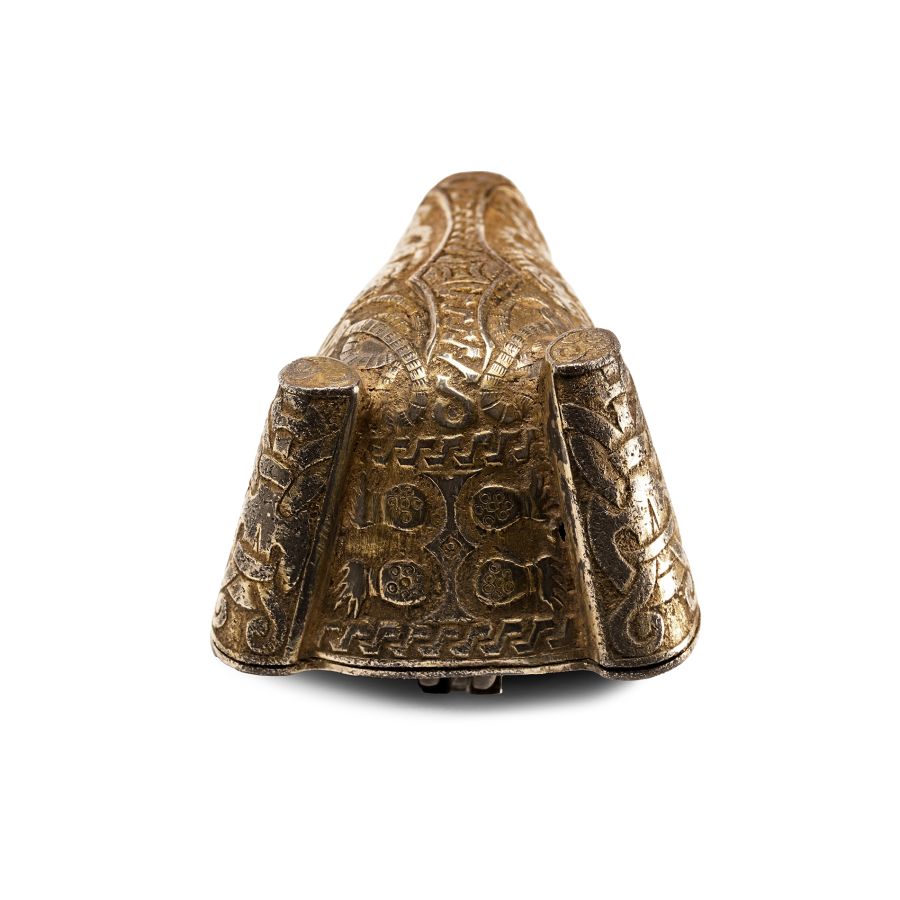
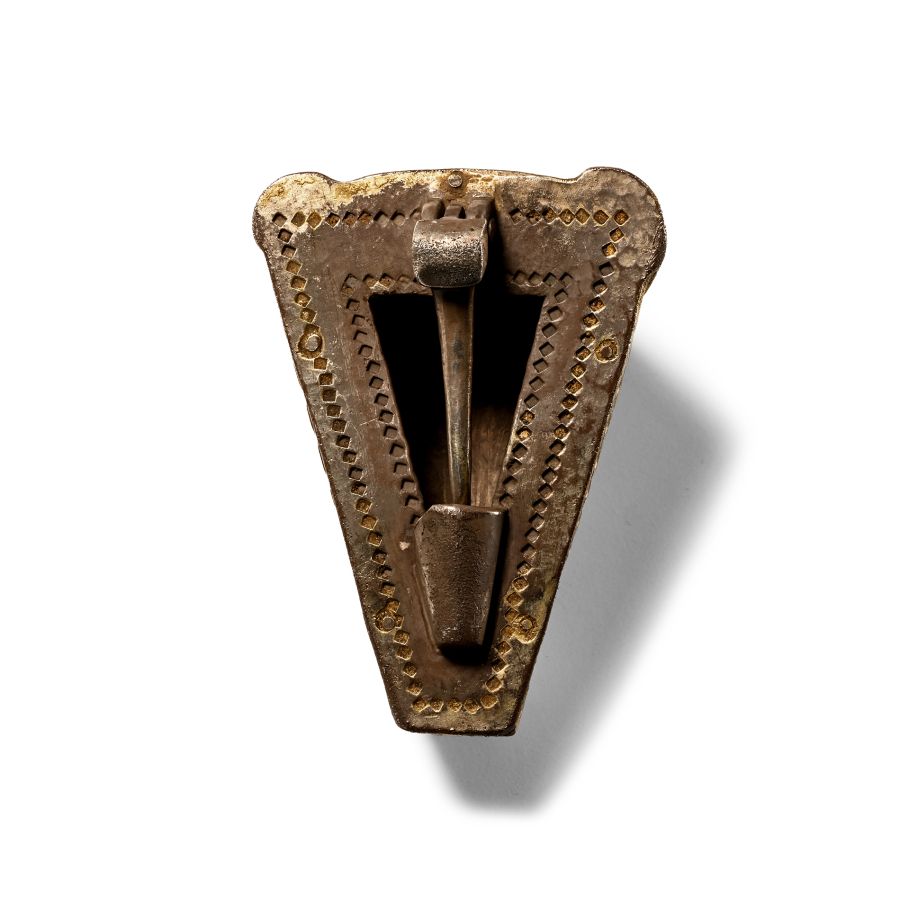
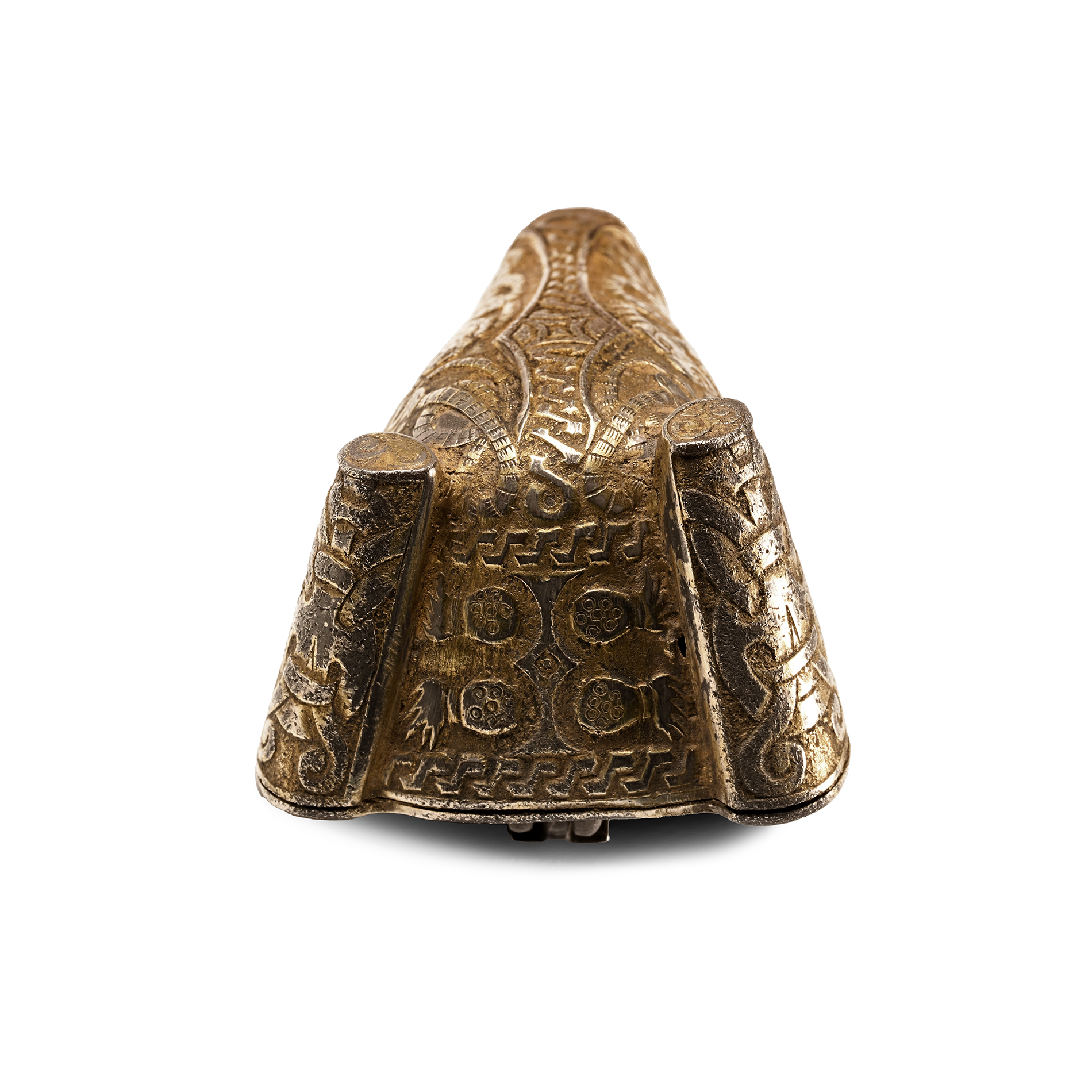
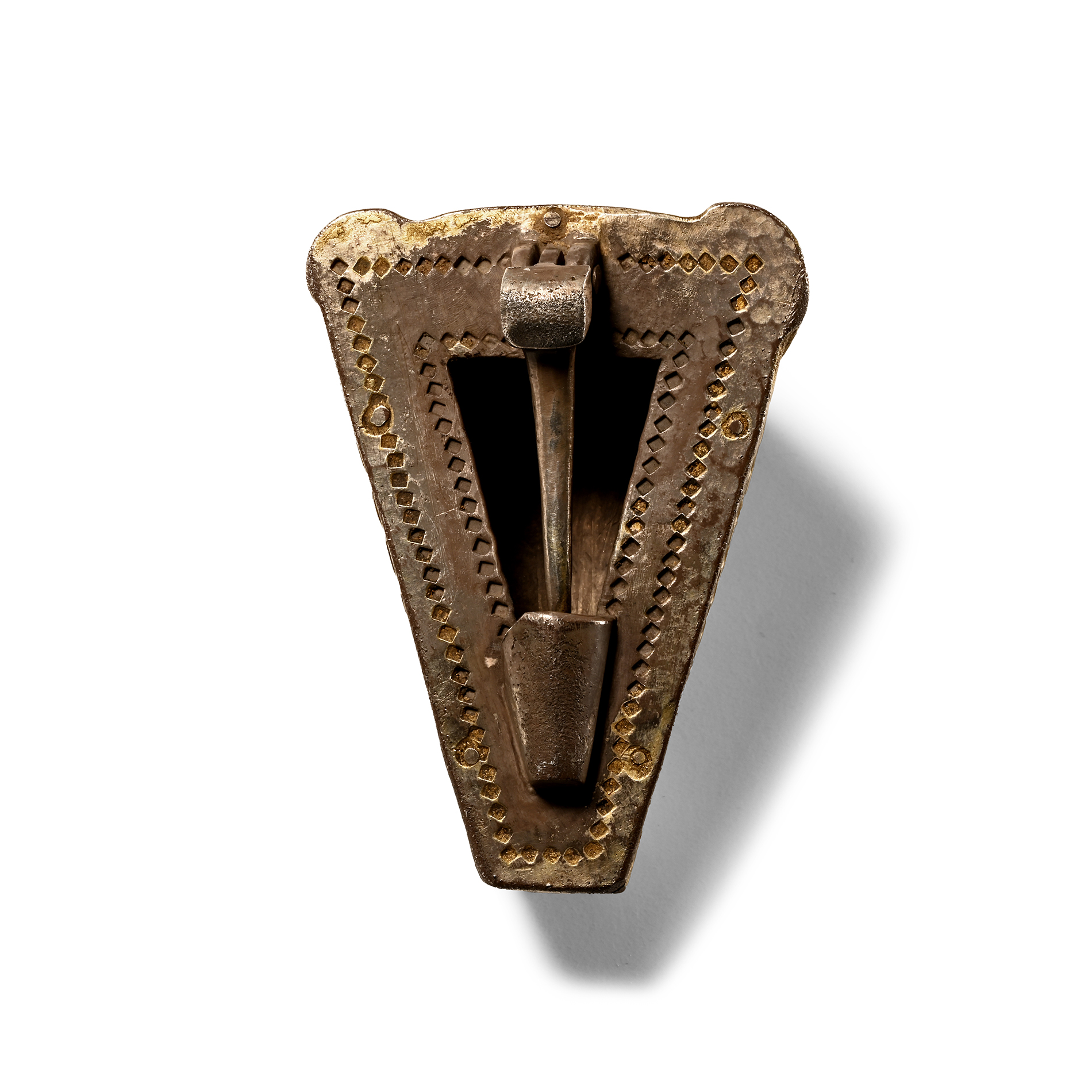
Viking Silver-Gilt Bronze Boar's Head Brooch
CIRCA 9TH-11TH CENTURY A.D.
2 1/2 in. (141 grams, 66 mm).
Richly decorated and with an applied backplate; the body of the brooch formed as a hollow-cast case with upstanding ears and a slightly 'clubbed' end to the muzzle with a narrow median raised band separating the face into two panels; both those and the upper panel (between the 'ears') decorated with interlaced ornament in low relief depicting serpents locked in combat, their bodies dramatically entwined; on the rear panel four 'lower arm and hand' motifs, radiating from a central lozenge with pellet; rectangular guilloche to the lower borders, muzzle-band, rear panel and median upper band; Jellinge Style scrollwork to the outer and upper faces of the conical 'ears'; a hinged pin to the underside with curved shield, applied plate to the underside with two bands of punched lozenge decoration.
ProvenancePrivate collection, New York, USA.
with Artemis Gallery, Colorado, USA, 15 February 2018, no.58.
Private American collection, New York, USA.
This lot has been checked against the Interpol Database of stolen works of art and is accompanied by search certificate no.12073-211003.
Cf. MacGregor, A. et al., A Summary Catalogue of the Continental Archaeological Collections, Oxford, 1997, item 3.20; an earlier and much plainer example is in the collection of the Metropolitan Museum of Art, New York, under reference 1992.59.3.
FootnotesBox-shaped hollow animal-head brooches were created on the island of Gotland, Sweden, although they have been found in other parts of the Viking world. They were made to be worn in pairs high on the chest of women's 'hangerok' apron-dresses with chains and swags of beads suspended between them. They are found in women's burials alongside utility items such as a knife or tweezers, and formed part of the costume of females from prosperous families. This example shows exceptionally fine decoration and would have been a treasured item, denoting the wealth and status of the family of the woman who wore it.
CONDITIONTimeLine Auctions follows a vetting process to ensure the authenticity and legality of all items, reinforcing our commitment to integrity and responsible trading. Each antiquity, antique, and coin lot undergoes thorough examination by a vetting committee of at least ten external specialists, professional trade association members, scientists, and archaeologists: Our Vetting Process
AUCTIONS:
TimeLine is a leading auction house specialising in antiquities, ancient art, collectables, natural history, coins, medals, and books. Our auctions offer museums, collectors, historians, and enthusiasts the opportunity to acquire unique and historically significant pieces.
-
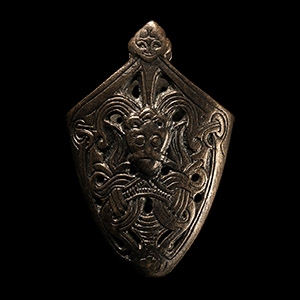
Viking Age Silver Sword Chape with Interlaced Design
Circa 9th-10th century A.D.Sold for (Inc. bp): £1,690
With heater-shaped body and trefoil to the apex with lobe detailing, openwork Borre Style design to the body with three-band mesh design, facing mask with lobes to the upper edge, pellet eyes and moustache. 46.80, 62.38 mm.
Ex property of a professional collector; acquired before 1990.
The image seems to be a mixture of the two Scandinavian styles 'Borre' and 'Jellinge'. They belong to the style of 'German four legged beast' in Animal style from the Baltic Sea region, according to P. Paulsen's classification. The recent discoveries of similar chapes in the Balkans suggest their employment from the Varangian Guard of Byzantium in 10th century A.D. -
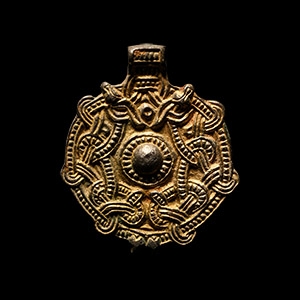
Viking Age Scandinavian Silver-Gilt Pendant with Interlaced Beasts
Circa 10th century A.D.Sold for (Inc. bp): £780
Discoid with integral loop; obverse with applied filigree Terslev ornament of three radiating looped knots and interstitial loops, boss to the centre. 13.9 grams, 42 mm
Private collection formed in Europe in the 1980s. Westminster collection, central London, UK. -
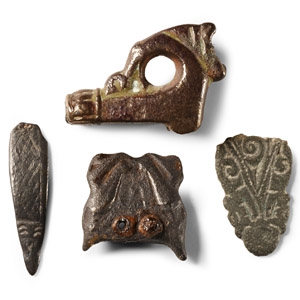
Viking and Saxon Artefact Group
8th-11th century A.D.Sold for (Inc. bp): £59
Including a narrow beast-head strap-end, a military strap-end fragment, a stirrup mount and looped fitting. 49.9 grams total, 26-40 mm
Acquired since the 1970s. From the private collection of a Surrey, UK, gentleman.
