
Loading, please wait...
LOT 0319
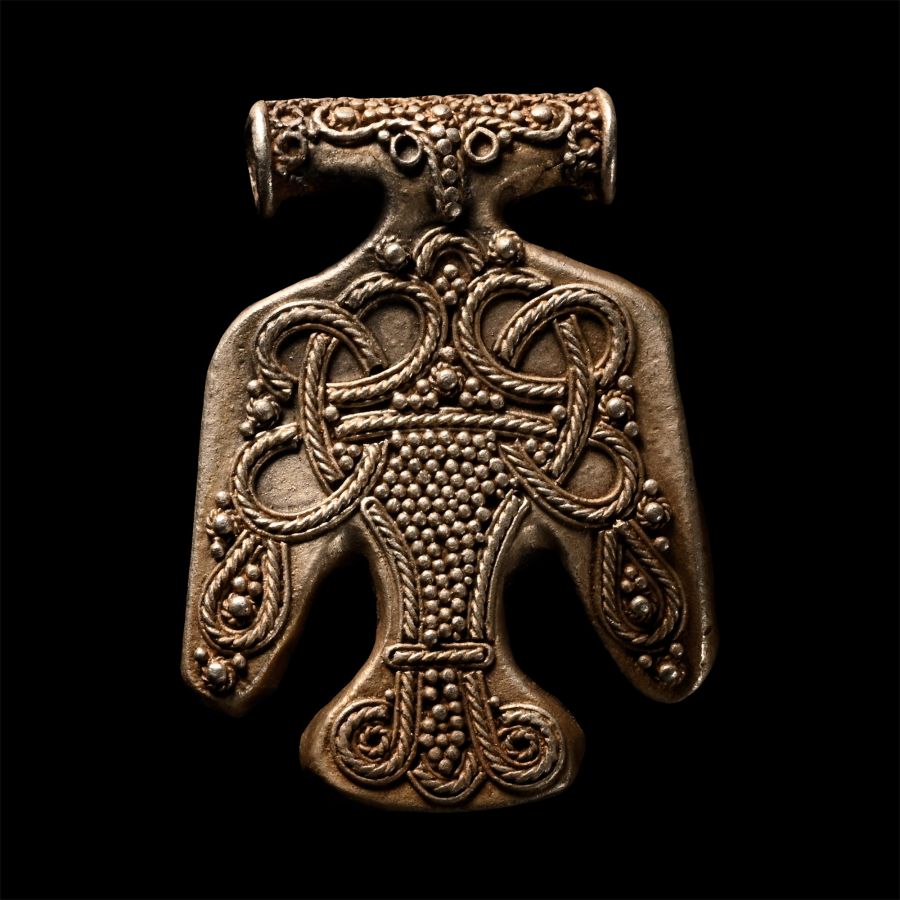
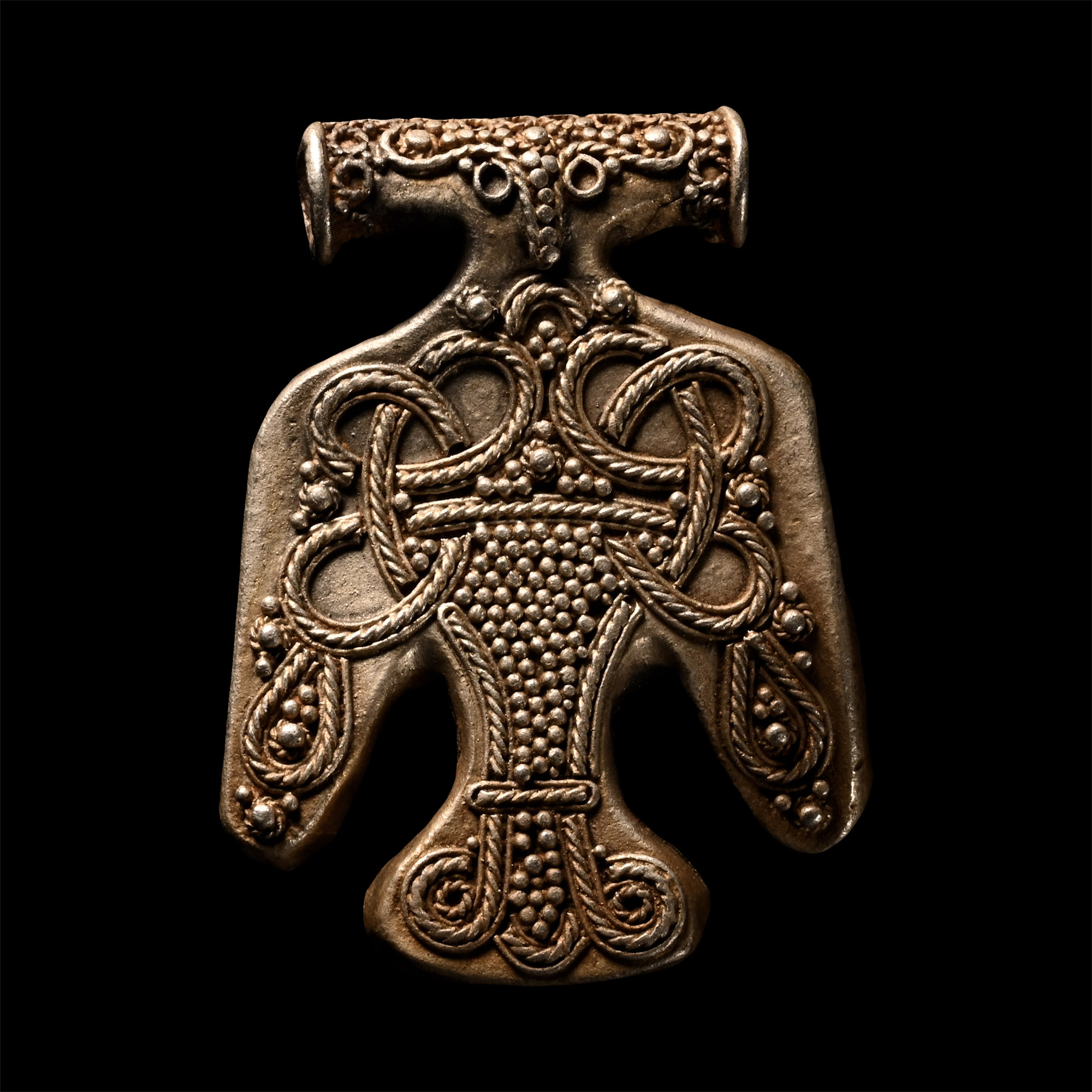
Viking Silver Filigree Bird Pendant
9TH-11TH CENTURY A.D.
1 3/8 in. (5.62 grams, 36 mm).
Hollow-formed with aviform body, applied filigree loops with granulated detailing, integral tubular bale with stylised face. [No Reserve]
ProvenancePrivate collection formed in Europe in the 1980s.
Westminster collection, central London, UK.
This lot has been checked against the Interpol Database of stolen works of art and is accompanied by search certificate number no.12986-243346.
Cf. Magnus, B., Men, Gods and Masks in Nordic Iron Age Art, Volume 1, Köln, 2003, item 227, for similar type.
CONDITIONTimeLine Auctions follows a vetting process to ensure the authenticity and legality of all items, reinforcing our commitment to integrity and responsible trading. Each antiquity, antique, and coin lot undergoes thorough examination by a vetting committee of at least ten external specialists, professional trade association members, scientists, and archaeologists: Our Vetting Process
AUCTIONS:
TimeLine is a leading auction house specialising in antiquities, ancient art, collectables, natural history, coins, medals, and books. Our auctions offer museums, collectors, historians, and enthusiasts the opportunity to acquire unique and historically significant pieces.
-
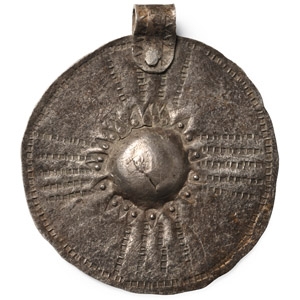
Viking Silver Stamped Shield Pendant
8th-10th century A.D.Sold for (Inc. bp): £468
A horse harness pendant executed in repoussé technique, a dome to the centre with punched annulets and other details; applied loop. 6.38 grams, 46 mm
From the private collection of a London gentleman, from his grandfather's collection formed before the early 1970s. -
.jpg)
Viking Age Gilt Bronze Boar's Head Brooch
10th-11th century A.D.Estimate: £600 - 800 (‡+bp*)
Opening Bid: £300
Retaining an articulate pin to reverse and geometric detailing to each face. 37 grams, 48 mm
From the collection of a North American gentleman, formed in the 1990s. -
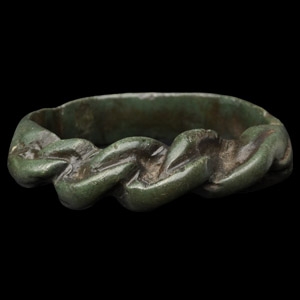
Viking Bronze Pseudo Interlaced Ring
9th-11th century A.D.Sold for (Inc. bp): £111
With thick braided bezel of three wires, flat butted reverse. 4.70 grams, 23.81 mm overall, 19.34 mm internal diameter (approximate size British N, USA 6 1/2, Europe 13.72, Japan 13)
From the private collection of a London gentleman, from his grandfather's collection formed before the early 1970s.
