
Loading, please wait...
LOT 0277
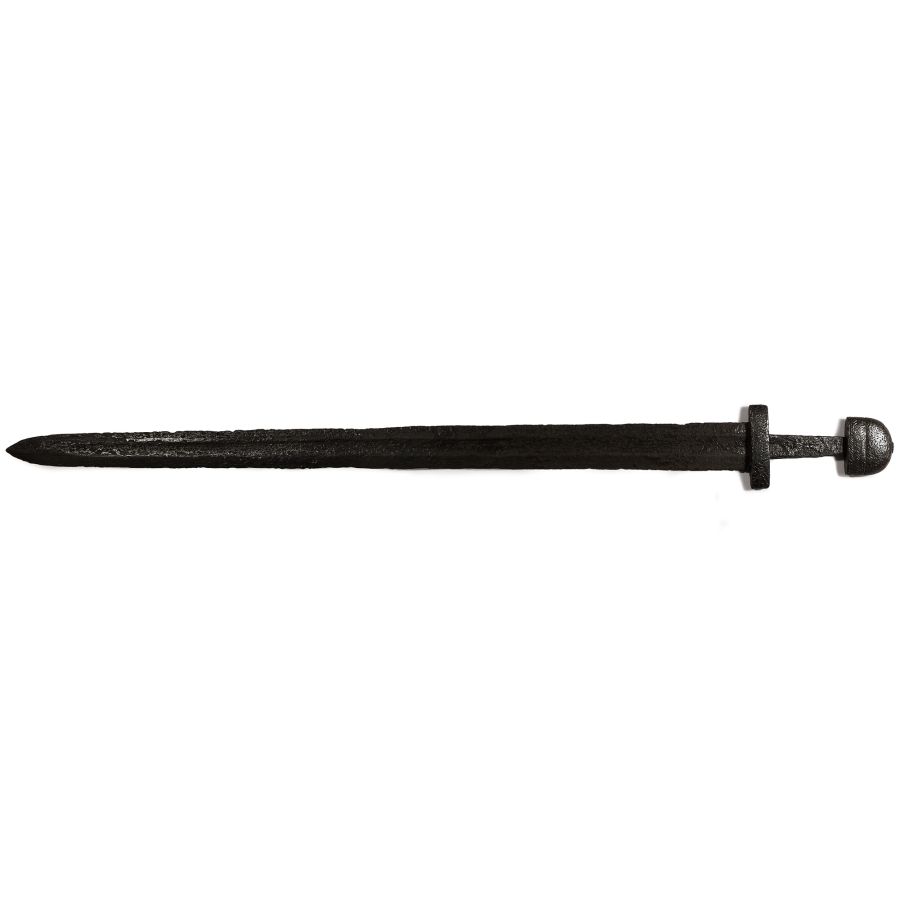
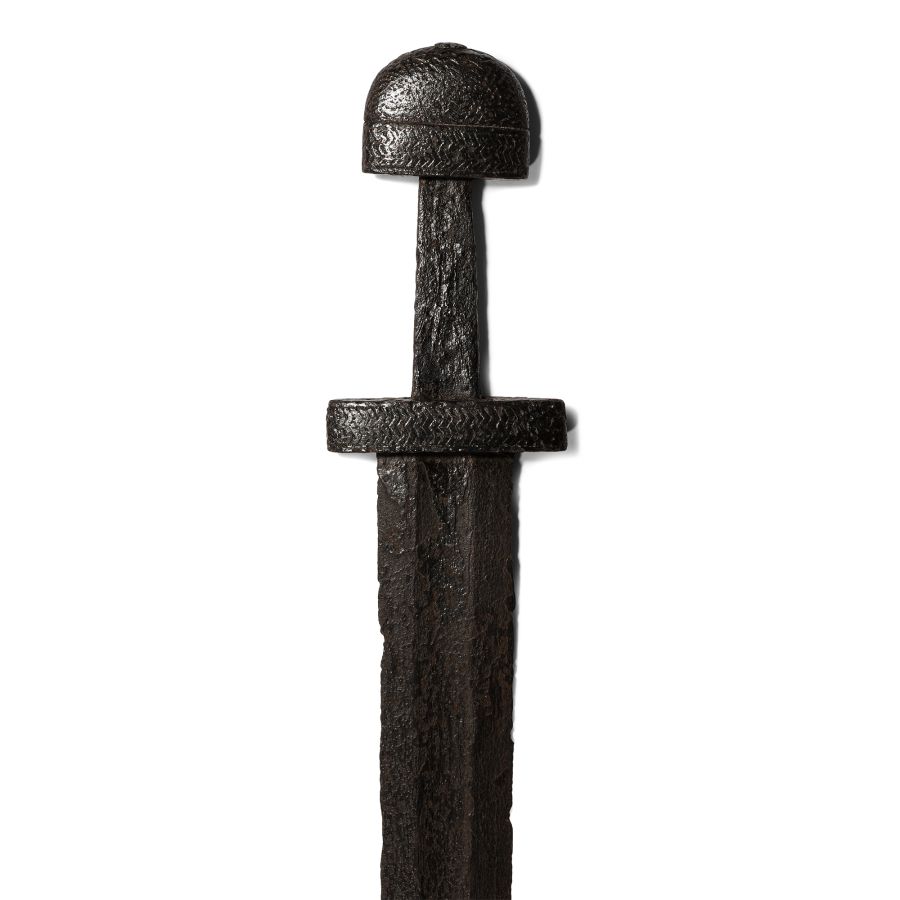
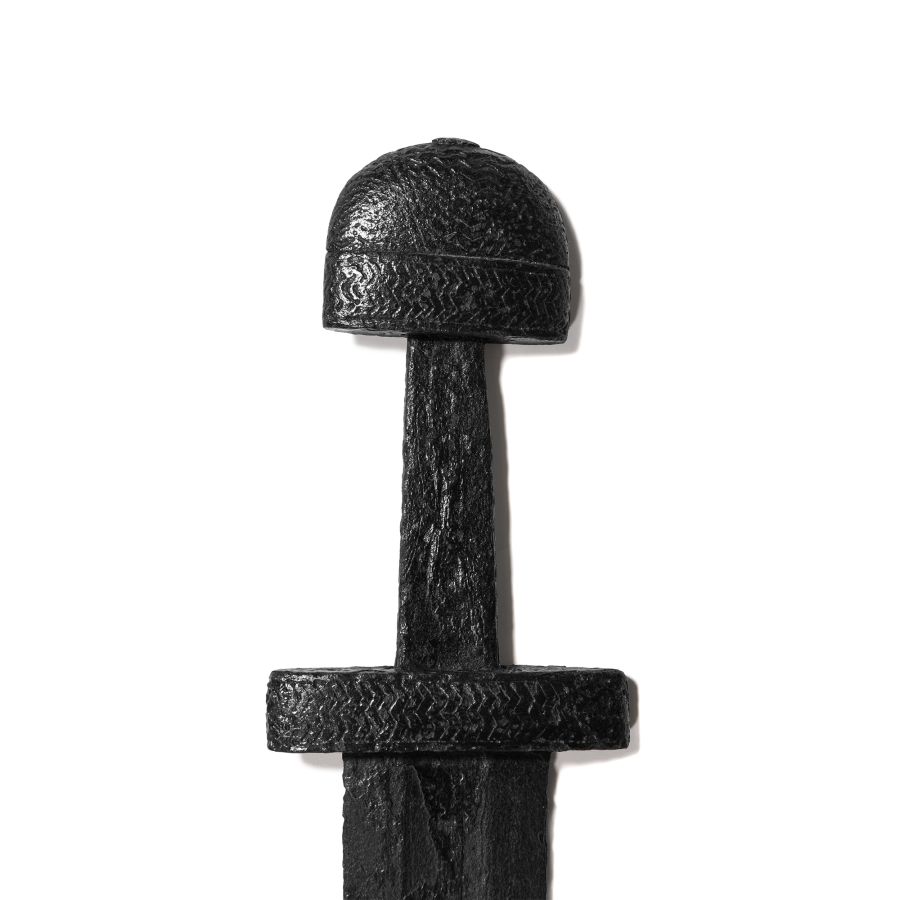
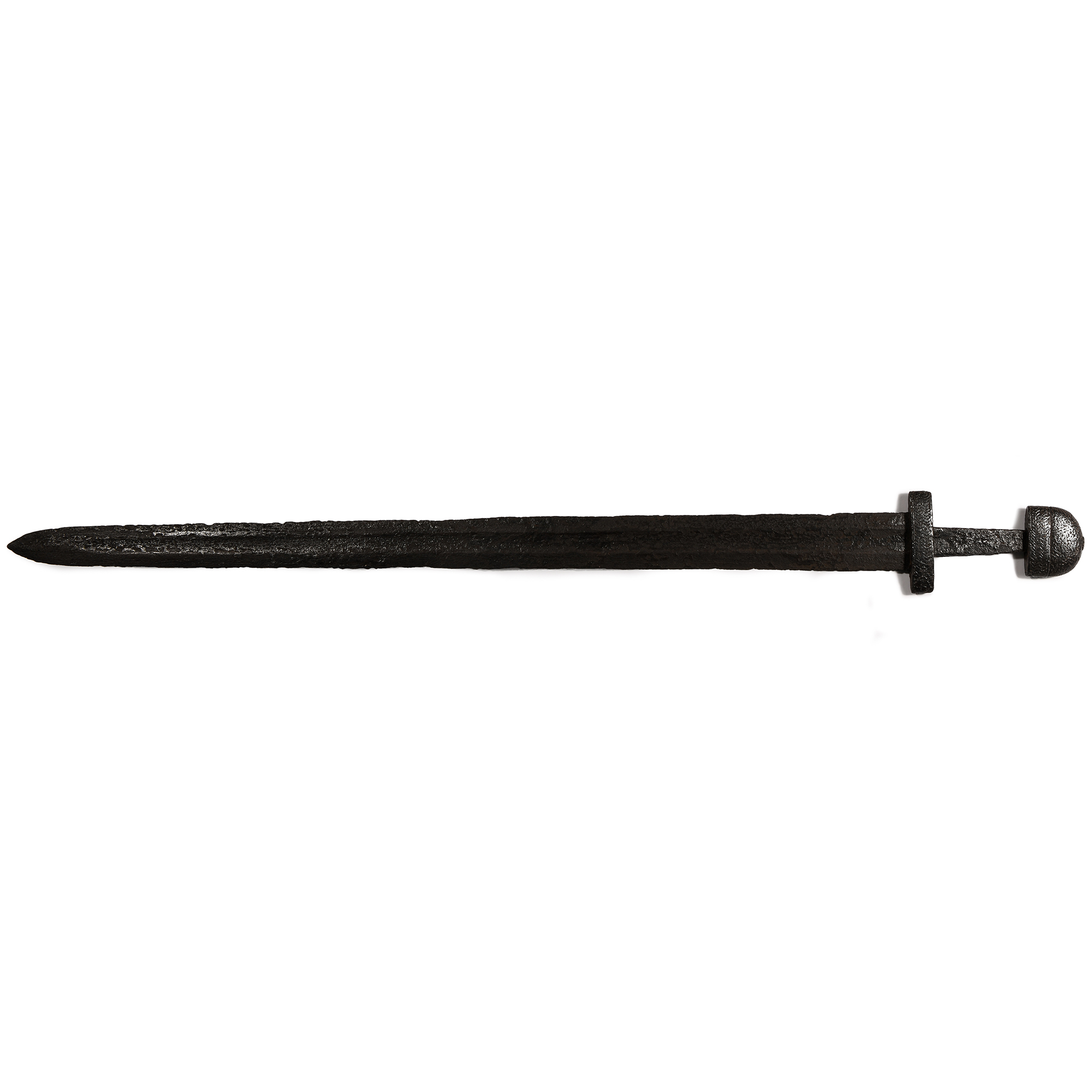
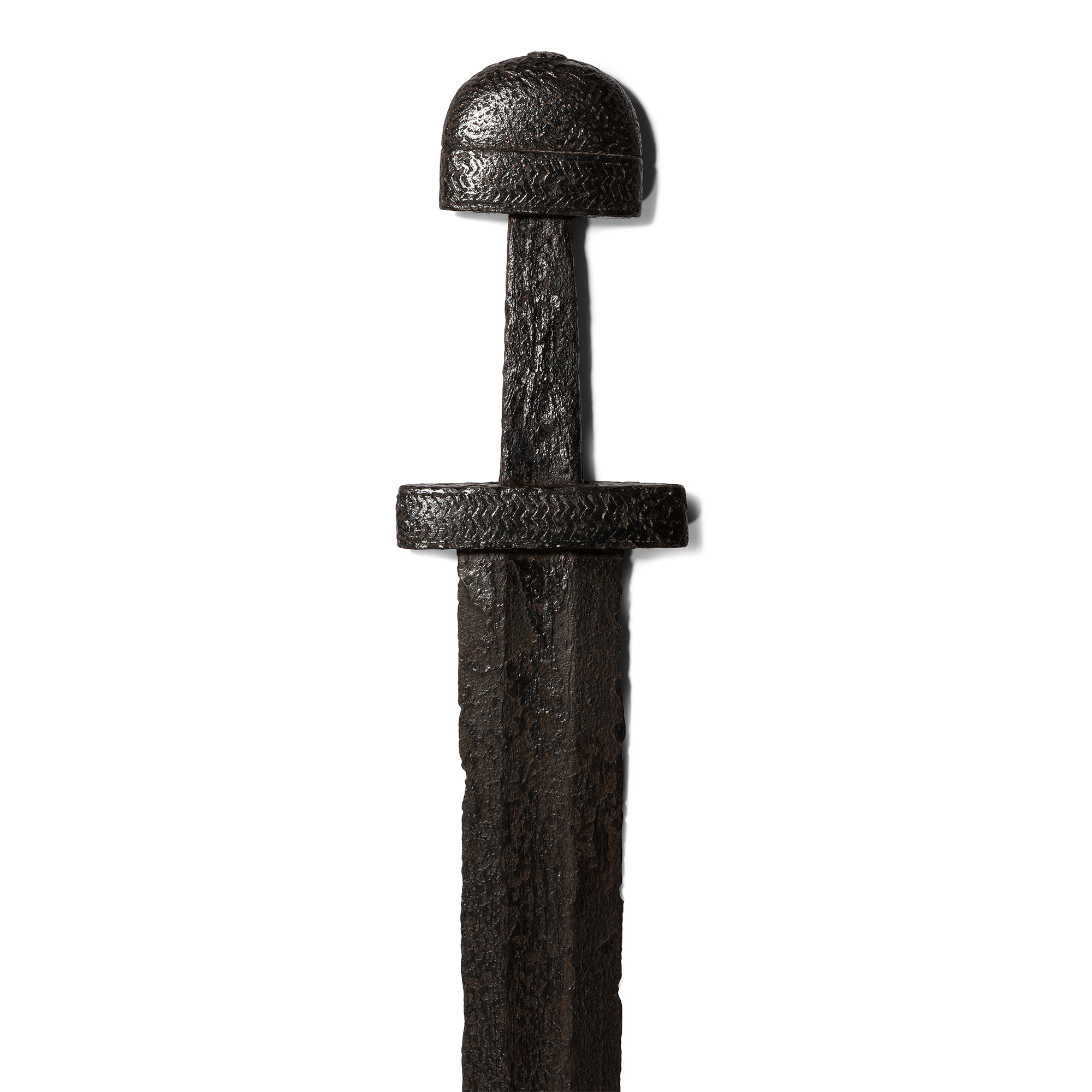
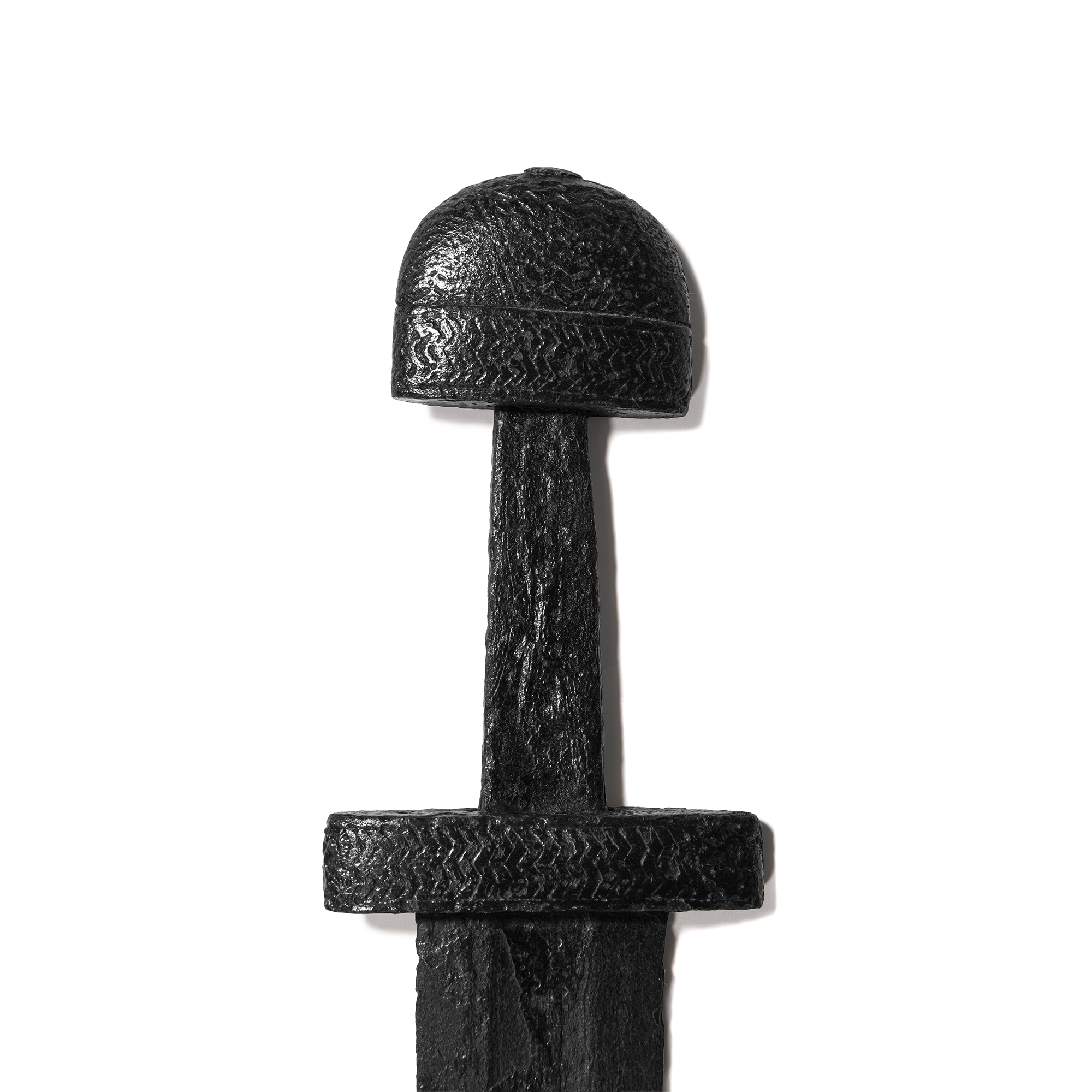
Viking Peterson Type X Sword with Inlaid Hilt
CIRCA 10TH-11TH CENTURY A.D.
37 in. (1.25 kg, 94 cm).
With pattern-welded double-edged blade, showing well-defined shallow fullers and wide cutting edges, the fullers occupying not less than one third of the entire width and running to a point about 19 cm from the tip; massive, simply decorated hilt; the pommel, as well as the cross-guard, with visible zig-zag patterns; the pommel of solid tea-cosy type, divided into two sections by a well marked groove, the bottom being the larger, the curved top portion of the pommel further divided into three lobes; traces of inlay visible on the pommel and on the cross-guard.
ProvenanceAcquired on the European art market in the 1990s.
From the property of a Suffolk collector.
See Petersen, J., De Norske Vikingesverd, Oslo, 1919; Oakeshott, R.E., The Archaeology of the weapons, London,1960; Jakobsson, Krigarideologi och vikingatida svardstypologi, Stockholm, 1992; Peirce, I., Swords of the Viking Age, Suffolk, 2002; this sword finds good parallels in various similar Viking age specimens. A very similar sword can be found in the Musée de l'Armée, Paris (inv. no. JPO 2253, s. Peirce, 2002, pp.118-119); another has been sold at Christie's London, Antique Arms and Armour, 16 December 2002, lot 46; another similar specimen can be seen at the Museum of Cluny.
FootnotesThe blade shows in its central section, and on both cutting edges, the blodiձa style pattern-welding through the central portion of the blade (Oakeshott, 1960, fig.70). The fine pattern-welded blade patterns of Viking swords are the blodiձa (Blood-Eddy) and 'ann' (rows of mown hay) known from Norse poetry.
CONDITIONTimeLine Auctions follows a vetting process to ensure the authenticity and legality of all items, reinforcing our commitment to integrity and responsible trading. Each antiquity, antique, and coin lot undergoes thorough examination by a vetting committee of at least ten external specialists, professional trade association members, scientists, and archaeologists: Our Vetting Process
AUCTIONS:
TimeLine is a leading auction house specialising in antiquities, ancient art, collectables, natural history, coins, medals, and books. Our auctions offer museums, collectors, historians, and enthusiasts the opportunity to acquire unique and historically significant pieces.
-
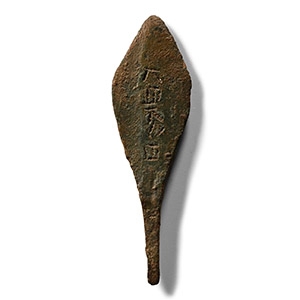
Phoenician Bronze Arrowhead with Inscription
Circa 12th-11th century B.C.Sold for (Inc. bp): £3,640
With incised text to the midrib on one face, less well-defined characters to the reverse. 9.2 grams, 63 mm
From the collection of a gentleman, acquired on the London art market in the 1990s.
The arrowhead seems to carry a Proto-Aramaic or Phoenician inscription like many arrows found in the Levant and Israel. They are usually reporting proper names like ‘Suwar, retainer of Abday’. As far as the function of these arrowheads is concerned, we know that the name inscribed on them was the owner's because successive owner's names were incised on two palimpsest examples. The letters engraved upon our arrow seem to be in the Phoenician alphabet and read ḤŞ’Ḥ’ (arrow of…) on the reverse, and ’Š I Š Q (?) (man of…) on the obverse. -
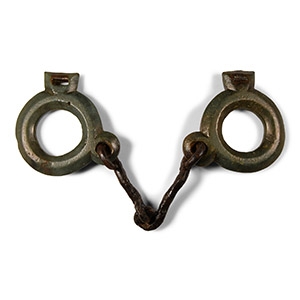
Roman Bronze and Iron Military Horse Bit
2nd-3rd century A.D.Sold for (Inc. bp): £364
Comprising a pair of curved iron bars linked at the centre, loop at each outer end attached to a substantial flat-section ring with lateral lug pierced to accept a strap. 377 grams, 26 cm
From the private collection of a London gentleman, from his grandfather's collection formed before the early 1970s. -
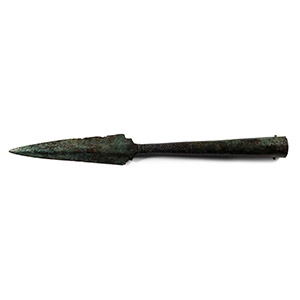
Elamite Socketted Spearhead
1st millennium B.C.Estimate: £300 - 400 (+bp*)
Opening Bid: £167
With tapering split socket, stepped shoulders and two-edged triangular head; pronounced midrib, bands of low-relief chevron and braid detailing, attachment pin. 180 grams, 28 cm
From a Mayfair, London, gallery, 1990s.
