
Loading, please wait...
LOT 1729
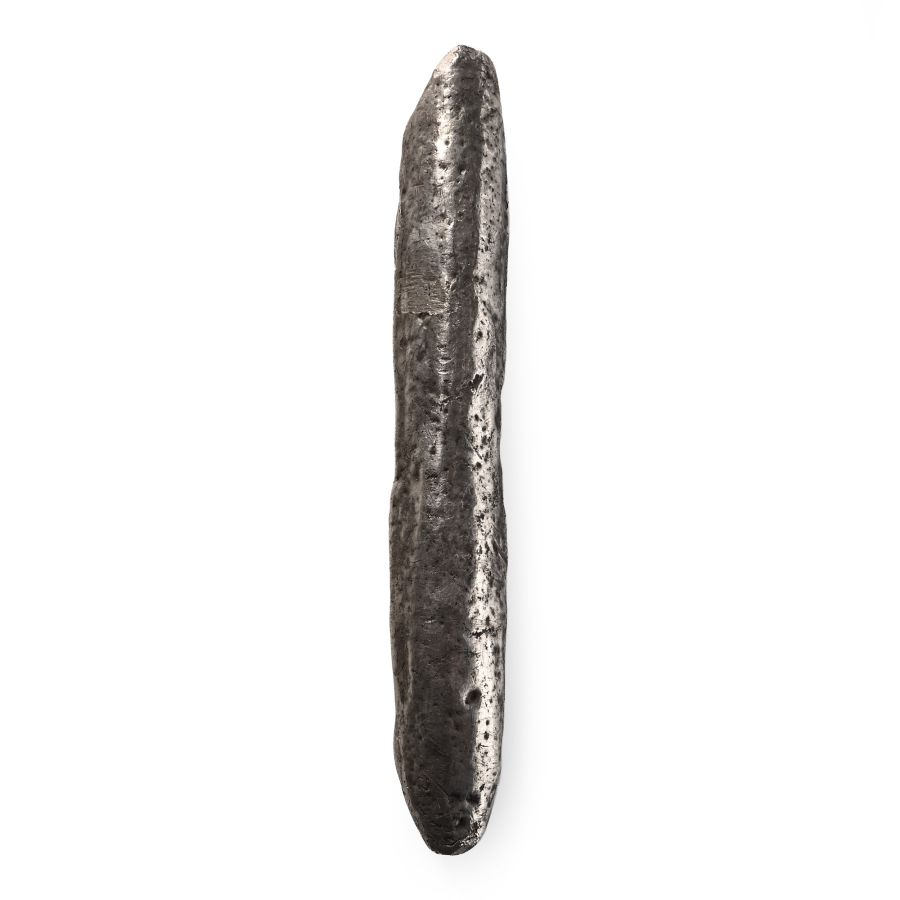
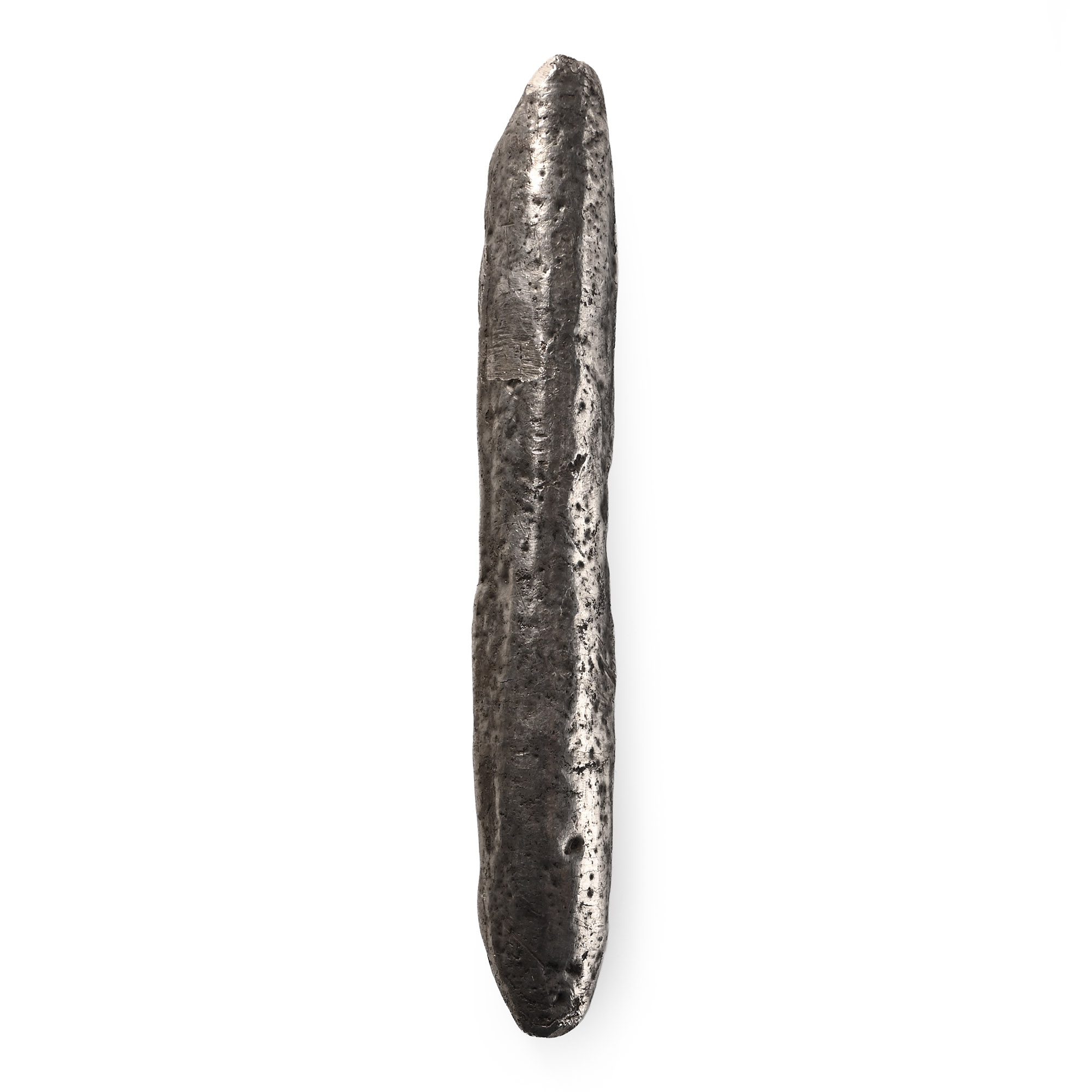
Viking Period Silver Trade Ingot
CIRCA 800-1000 A.D.
3 3/4 in. (84 grams, 97 mm).
Sub-rectangular in plan and ovate in section, tapering to a rounded point at each end, some areas hammered flat in antiquity and displaying numerous striations and casting bubbles, nine triangular peck marks along the flat underside, but otherwise undecorated. [No Reserve]
ProvenanceFrom a private Tyneside collection, formed since the early 2000s.
Accompanied by a copy of a previous illustrated catalogue sheet.
Cuerdale Viking silver hoard from Lancashire which includes similar long, narrow examples and was deposited circa 905-910 (J. Graham-Campbell, 2011, The Cuerdale Hoard and related Viking-Age silver and gold from Britain and Ireland in the British Museum, London, pl. 3, 1: 17-18).
CONDITIONTimeLine Auctions follows a vetting process to ensure the authenticity and legality of all items, reinforcing our commitment to integrity and responsible trading. Each antiquity, antique, and coin lot undergoes thorough examination by a vetting committee of at least ten external specialists, professional trade association members, scientists, and archaeologists: Our Vetting Process
AUCTIONS:
TimeLine is a leading auction house specialising in antiquities, ancient art, collectables, natural history, coins, medals, and books. Our auctions offer museums, collectors, historians, and enthusiasts the opportunity to acquire unique and historically significant pieces.
-
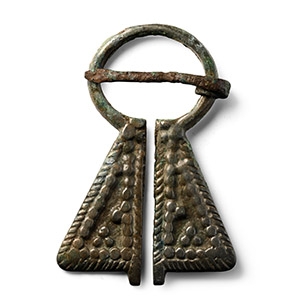
Viking Inspired Bronze Omega Brooch
Mordvinian, 12th-14th century A.D.Sold for (Inc. bp): £46
Decoration to the trapezoidal plates with raised pellets and braided borders. 16 grams, 56 mm
Property of a North West London, UK, gallery; formerly in a 1980s collection. From the property of a late Lincolnshire, UK, gentleman. -
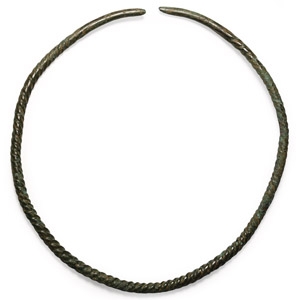
Viking Period Twisted Bronze Neck Torc
10th-13th century A.D.Sold for (Inc. bp): £195
Penannular neck torc with tapering terminals. 84 grams, 17 cm
Acquired on the European art market in the 1980s, and thence by descent. From an important private family collection of arms and armour. -
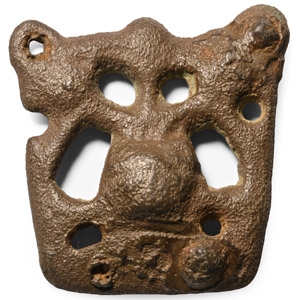
Anglo-Scandinavian Viking Bronze Stirrup Apex Mount
11th century A.D.Sold for (Inc. bp): £39
Of Williams's Class B Type 3 Group 1 with openwork plaque, bear-head beneath two opposed wolf-heads, angled ledge with ferrous fixing studs. 27.36 grams, 39 mm
Found Suffolk, UK.
