
Loading, please wait...
LOT 1469
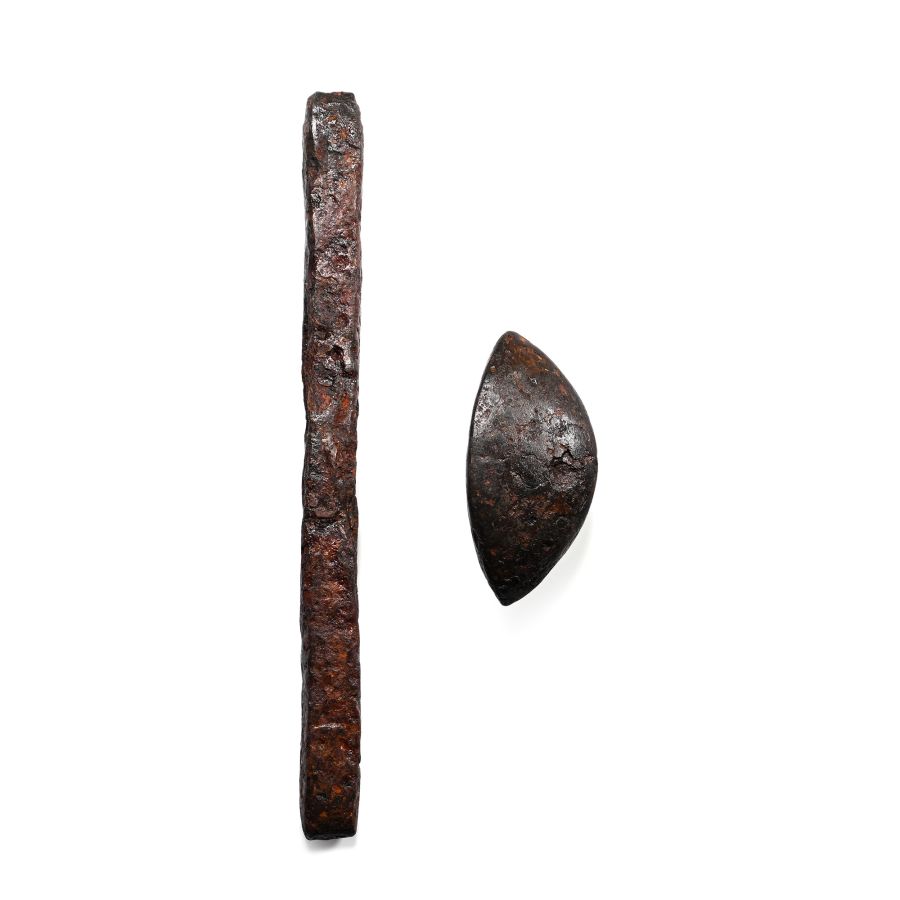
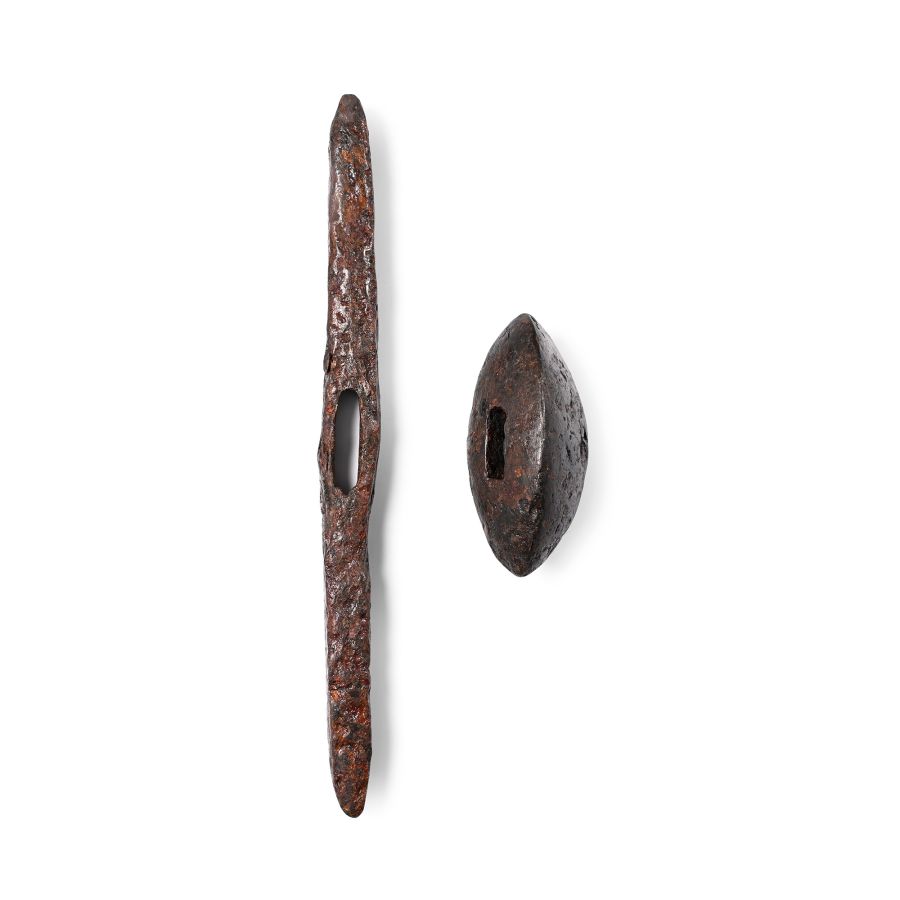
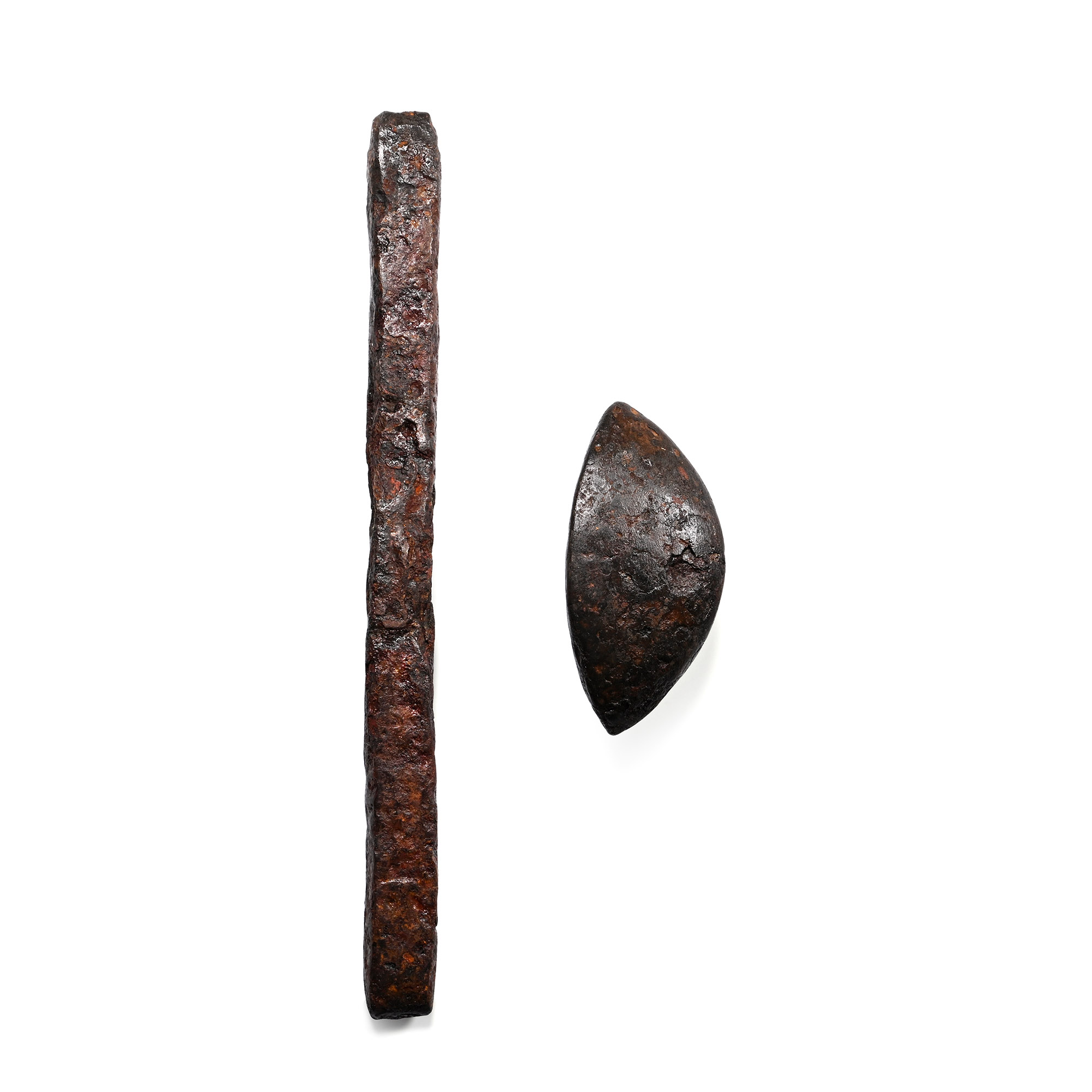
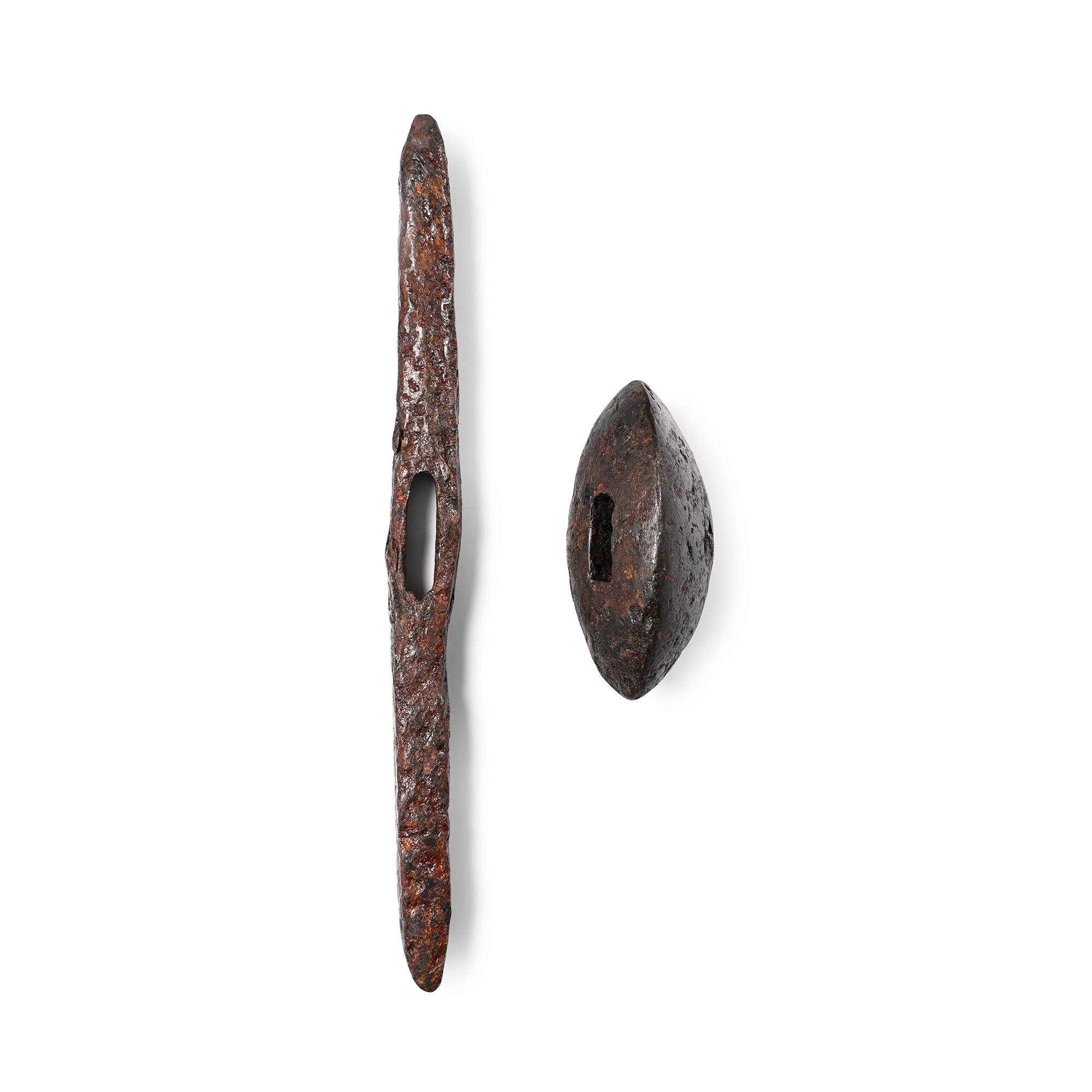
Viking Period Iron Sword Brazil Nut Pommel and Cross Guard
11TH-12TH CENTURY A.D.
2 1/2 - 7 1/4 in. (330 grams total, 6.5-18.3 cm).
Comprising: pommel scaphoid in plan with biconvex profile, slot to underside to accept the tang (no corresponding hole at the top); lower guard rectangular in section with broad slot to lower face, rounded ends; Oakeshott type B / Geibig type 14 and 18. [2]
ProvenanceFrom the private family collection of a lady, UK; acquired in Germany mid 20th century.
This lot is accompanied by an illustrated lot declaration signed by the Head of the Antiquities Department, Dr Raffaele D'Amato.
See Oakeshott, E., Records of the Medieval Sword, Woodbridge, 1991.
CONDITIONTimeLine Auctions follows a vetting process to ensure the authenticity and legality of all items, reinforcing our commitment to integrity and responsible trading. Each antiquity, antique, and coin lot undergoes thorough examination by a vetting committee of at least ten external specialists, professional trade association members, scientists, and archaeologists: Our Vetting Process
AUCTIONS:
TimeLine is a leading auction house specialising in antiquities, ancient art, collectables, natural history, coins, medals, and books. Our auctions offer museums, collectors, historians, and enthusiasts the opportunity to acquire unique and historically significant pieces.
LOT 1469
Viking Period Iron Sword Brazil Nut Pommel and Cross Guard
Sold for (Inc. bp): £572
-
.jpg)
Luristan Bronze Dagger
13th-6th century B.C.Sold for (Inc. bp): £468
Double-edged triangular blade, integral hilt with lateral flanges with remains of bone handle. 196 grams, 31 cm
From the estate of a deceased gentleman, Surrey, UK, 1980s. This lot is accompanied by an illustrated lot declaration signed by the Head of the Antiquities Department, Dr Raffaele D'Amato.
The dirk belongs to the type III in the Medvedskaya classification, used in Near East from the 13th to the 6th century B.C. The type is the 32a of the Maxwell-Hyslop study. -
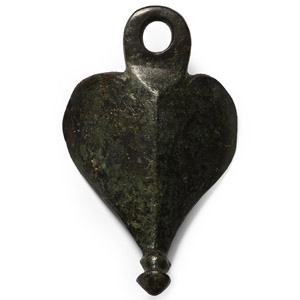
Roman Horse Harness Phalera
1st-4th century A.D.Sold for (Inc. bp): £72
Of carinated profile with pierced lug above and knop finial. 97 grams, 95 mm
Ex German art market, 2000s. Acquired from an EU collector living in London. From the collection of a Surrey, UK, gentleman. This lot is accompanied by an illustrated lot declaration signed by the Head of the Antiquities Department, Dr Raffaele D’Amato. This lot is accompanied by an illustrated lot declaration signed by the Head of the Antiquities Department, Dr Raffaele D'Amato. -
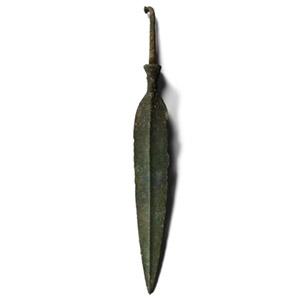
Large Luristan Bronze Spearhead
Late 3rd millennium B.C.Sold for (Inc. bp): £117
Leaf-shaped blade with pronounced midrib and thick neck, flared base, square-section tang with stud. 504 grams, 41cm
Ex London art market, 1980-1990s. This lot is accompanied by an illustrated lot declaration signed by the Head of the Antiquities Department, Dr Raffaele D'Amato.
The type belongs to the category of tripartite lances with long pointed biconvex blade and single bevelled tang. In this typology the blade, of rhomboidal section, is usually well balanced. The stem, medium or short, is widened at its base and forms a fairly clean stop. Elements of shaft of a similar spear found at Tepe Hissar has allowed to reconstruct the length of the spear reaching up to 1.40 m.
