
Loading, please wait...
LOT 1611
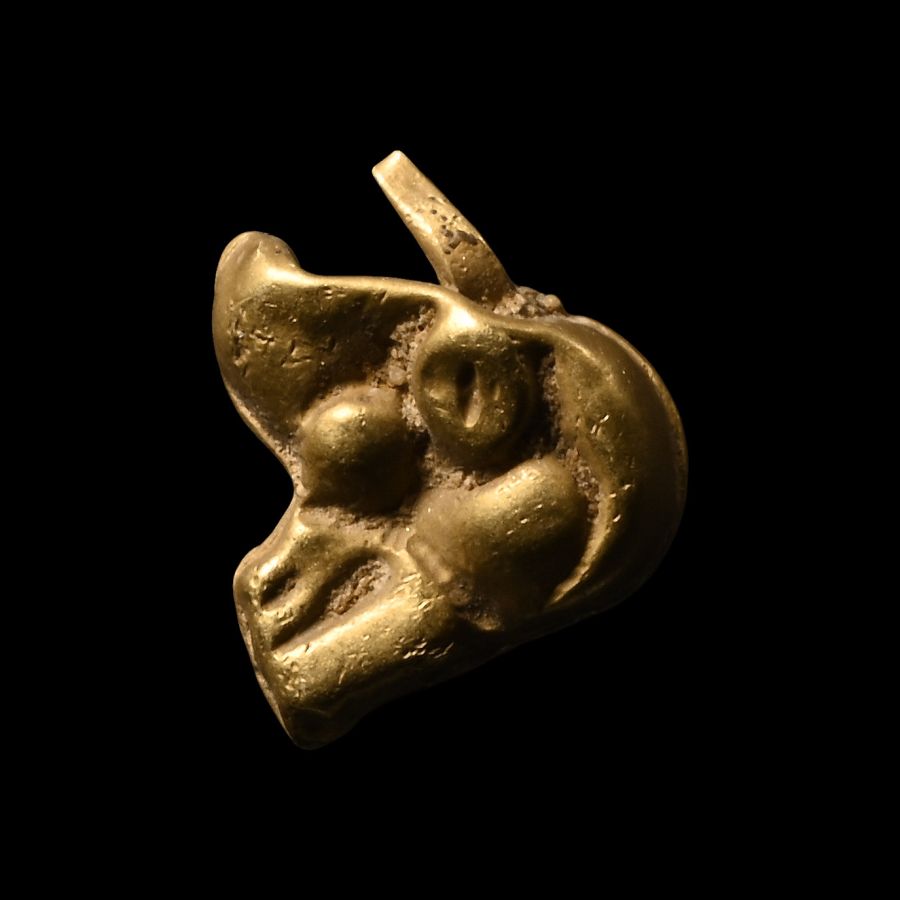
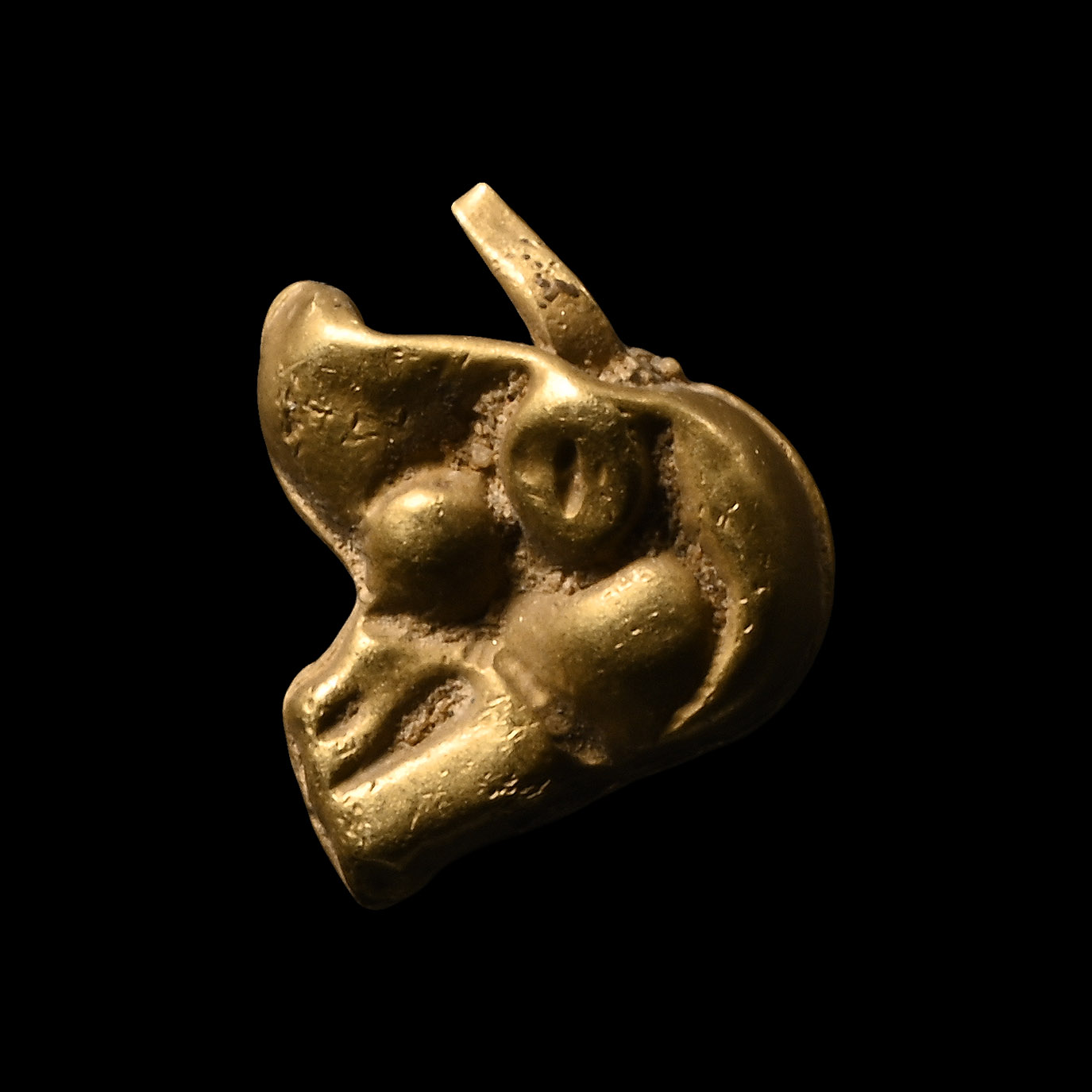
Viking Period Gold Animal-Head Pendant
CIRCA 9TH-11TH CENTURY A.D.
3/8 in. (0.54 grams, 9 mm).
Hollow-formed with repoussé detailing to both faces. [No Reserve]
ProvenanceFrom a late Japanese specialist collector, 1970-2000s.
CONDITIONTimeLine Auctions follows a vetting process to ensure the authenticity and legality of all items, reinforcing our commitment to integrity and responsible trading. Each antiquity, antique, and coin lot undergoes thorough examination by a vetting committee of at least ten external specialists, professional trade association members, scientists, and archaeologists: Our Vetting Process
AUCTIONS:
TimeLine is a leading auction house specialising in antiquities, ancient art, collectables, natural history, coins, medals, and books. Our auctions offer museums, collectors, historians, and enthusiasts the opportunity to acquire unique and historically significant pieces.
-
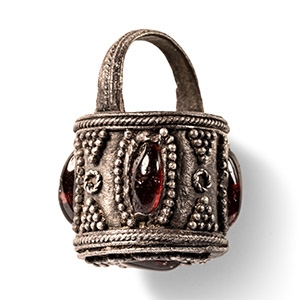
Pre Viking Scandinavian Silver Aroma Bucket Pendant with garnets
Circa 4th-7th century A.D.Sold for (Inc. bp): £546
With braided wire handle, applied wire bands to the rim, granulation to the sidewall and base, five cells each set with a cabochon garnet. 3.02 grams, 19 mm
Private collection formed in Europe in the 1980s. Westminster collection, central London, UK.
Pendants in the form of miniature buckets have been found in a number of pagan Anglo-Saxon and Viking contexts and are generally made of bronze or iron, with gold examples being rare; three gold examples were found with the hoard from Hoen, Norway. Bronze bucket amulets have been found at Driffield in Yorkshire, and Vimose bog in Denmark, among other places. In form they represent wooden buckets bound with bronze or iron bands which have been found in Anglo-Saxon and Viking graves and are believed to have held mead or ale and were used to replenish the cups from which warriors drank. As amulets they probably represent the ecstatic power of alcoholic drink and the role of women as the dispensers of these precious beverages. -

Viking Silver-Gilt Bronze Boar's Head Brooch
Circa 9th-11th century A.D.Sold for (Inc. bp): £3,575
Richly decorated and with an applied backplate; the body of the brooch formed as a hollow-cast case with upstanding ears and a slightly 'clubbed' end to the muzzle with a narrow median raised band separating the face into two panels; both those and the upper panel (between the 'ears') decorated with interlaced ornament in low relief depicting serpents locked in combat, their bodies dramatically entwined; on the rear panel four 'lower arm and hand' motifs, radiating from a central lozenge with pellet; rectangular guilloche to the lower borders, muzzle-band, rear panel and median upper band; Jellinge Style scrollwork to the outer and upper faces of the conical 'ears'; a hinged pin to the underside with curved shield, applied plate to the underside with two bands of punched lozenge decoration. 141 grams, 66 mm
Private collection, New York, USA. with Artemis Gallery, Colorado, USA, 15 February 2018, no.58. Private American collection, New York, USA. This lot has been checked against the Interpol Database of stolen works of art and is accompanied by search certificate no.12073-211003.
Box-shaped hollow animal-head brooches were created on the island of Gotland, Sweden, although they have been found in other parts of the Viking world. They were made to be worn in pairs high on the chest of women's 'hangerok' apron-dresses with chains and swags of beads suspended between them. They are found in women's burials alongside utility items such as a knife or tweezers, and formed part of the costume of females from prosperous families. This example shows exceptionally fine decoration and would have been a treasured item, denoting the wealth and status of the family of the woman who wore it. -

Viking Age Silver Triagular Pendant Group
Circa 9th-11th century A.D.Sold for (Inc. bp): £78
Large pendant with repoussé ring-and-dot and herringbone ornament; suspension rings with the ends coiled about the shank. 9.05 grams total, 26-50 mm
Property of the vendor's grandfather, thence by family descent, circa 1985. From the private collection of a New York, USA gentleman.
