
Loading, please wait...
LOT 0305
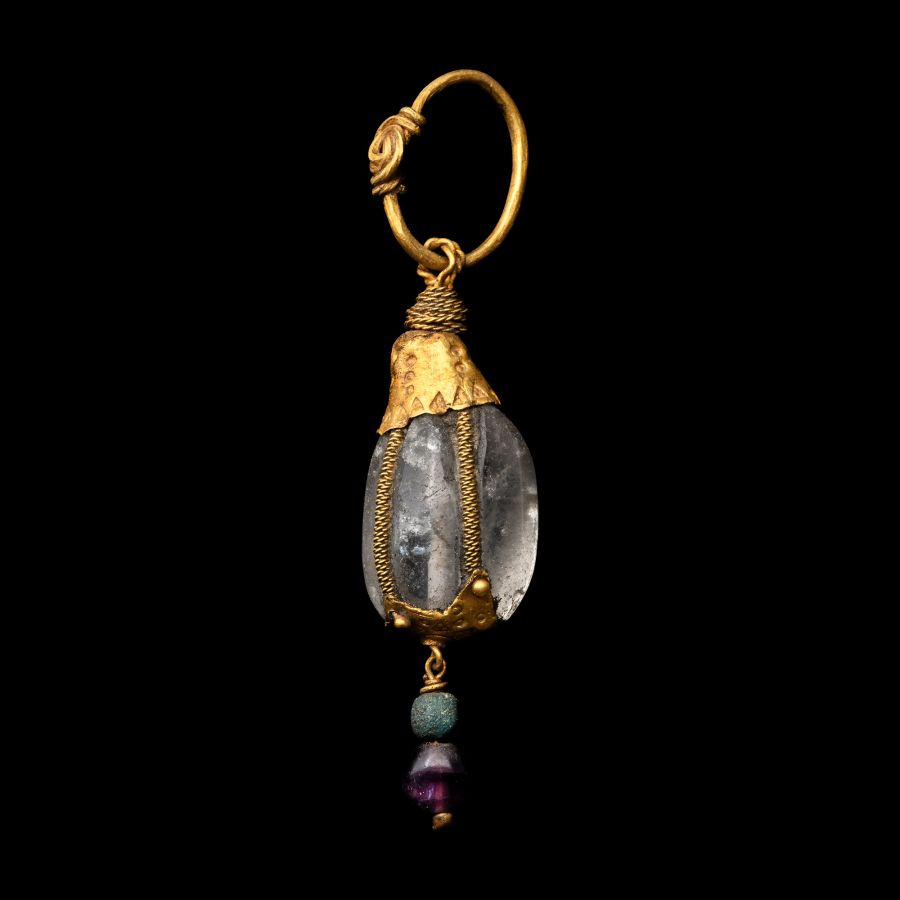
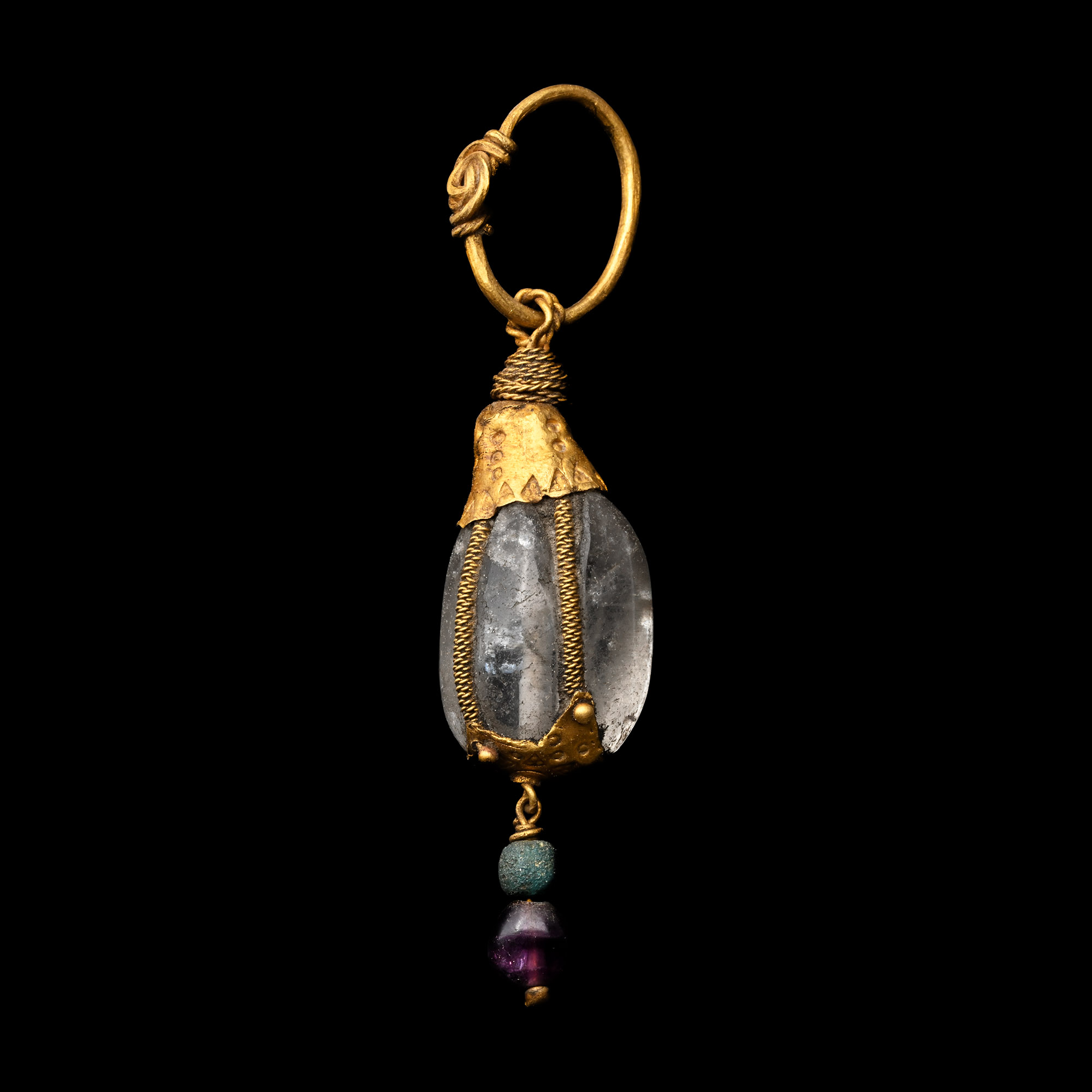
Viking Period Gold and Crystal Pendant with Bead Drop
CIRCA 10TH-12TH CENTURY A.D.
3 1/8 in. (21.69 grams, 79 mm).
Irregular barrel-shaped crystal with lozengiform gold base, braided strip from each arm extending to the bell-shaped cap with punched pellet and triangle motifs; braided filigree collar and loop, thick gold rod suspension loop; underside with short dangle, amethyst and glass beads. [No Reserve]
ProvenancePrivate collection formed in Europe in the 1980s.
Westminster collection, central London, UK.
This lot has been checked against the Interpol Database of stolen works of art and is accompanied by search certificate number no.12932-245386.
Cf. Arbman, H., Birka I: Die Gräber, Uppsala, 1940, pl.279(3).
FootnotesIn Birka grave 1148B, a similar piece was found in a warrior cremation grave. It was a fragment of a grey slate whetstone, with a rivetted, groove-decorated bronze fitting, which ends in a bronze carrying ring. These items were worn as pendants.
CONDITIONTimeLine Auctions follows a vetting process to ensure the authenticity and legality of all items, reinforcing our commitment to integrity and responsible trading. Each antiquity, antique, and coin lot undergoes thorough examination by a vetting committee of at least ten external specialists, professional trade association members, scientists, and archaeologists: Our Vetting Process
AUCTIONS:
TimeLine is a leading auction house specialising in antiquities, ancient art, collectables, natural history, coins, medals, and books. Our auctions offer museums, collectors, historians, and enthusiasts the opportunity to acquire unique and historically significant pieces.
LOT 0305
Viking Period Gold and Crystal Pendant with Bead Drop
Sold for (Inc. bp): £2,600
-
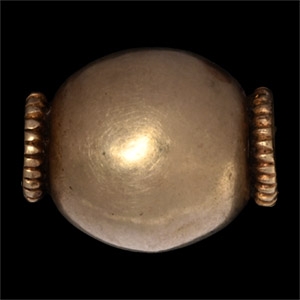
Scandinavian Pre-Viking Gold Bead
Circa 6th century A.D.Sold for (Inc. bp): £247
Spherical with beaded collar to each opening. 1.99 grams, 14 mm
From the private collection of a London gentleman, from his grandfather's collection formed before the early 1970s. This lot is accompanied by an illustrated lot declaration signed by the Head of the Antiquities Department, Dr Raffaele D'Amato. -
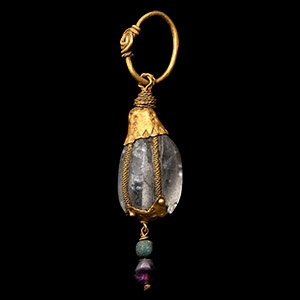
Viking Period Gold and Crystal Pendant with Bead Drop
Circa 10th-12th century A.D.Sold for (Inc. bp): £2,600
Irregular barrel-shaped crystal with lozengiform gold base, braided strip from each arm extending to the bell-shaped cap with punched pellet and triangle motifs; braided filigree collar and loop, thick gold rod suspension loop; underside with short dangle, amethyst and glass beads. 21.69 grams, 79 mm
Private collection formed in Europe in the 1980s. Westminster collection, central London, UK. This lot has been checked against the Interpol Database of stolen works of art and is accompanied by search certificate number no.12932-245386.
In Birka grave 1148B, a similar piece was found in a warrior cremation grave. It was a fragment of a grey slate whetstone, with a rivetted, groove-decorated bronze fitting, which ends in a bronze carrying ring. These items were worn as pendants. -
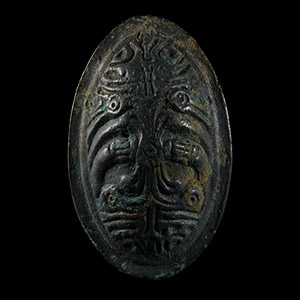
Viking Age Bronze Tortoise Brooch with Ravens
9th-10th century A.D.Sold for (Inc. bp): £702
With domed elliptical body and narrow flange, high-relief palmette ornament and omega-shaped panels and opposed ravens with curved beaks. 62.6 grams, 80 mm
From the collection of a North American gentleman, formed in the 1990s.
The silvery appearance of the brooch is probably due to a high proportion of tin in the bronze alloy.
