
Loading, please wait...


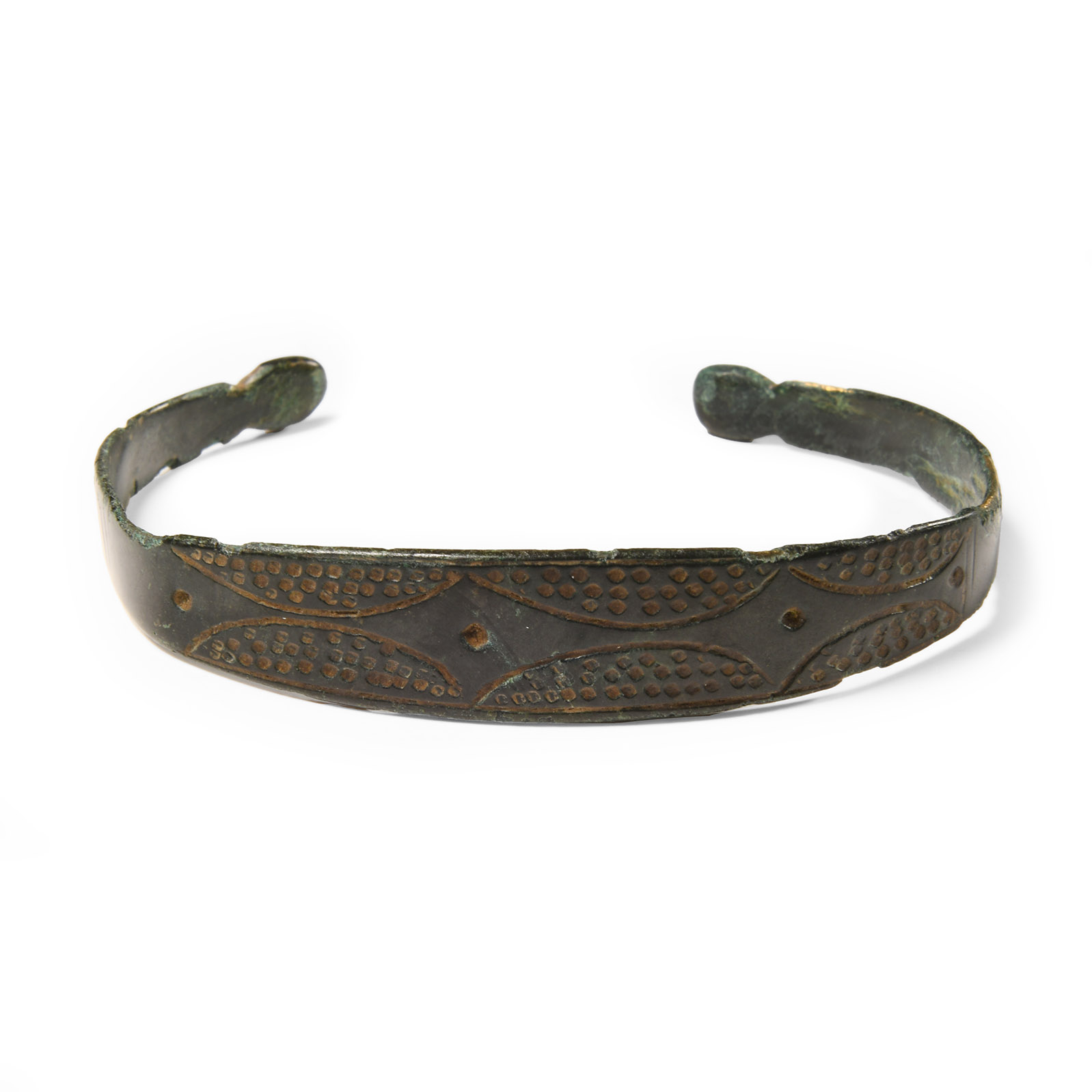
LOT 1710
Viking Period Decorated Bronze Bracelet
CIRCA 9TH-11TH CENTURY A.D.
2 3/8 in. (8.9 grams, 61 mm).
Flat-section ellipsoid plaque with reserved scooped panels on a chased field, knop finials. [No Reserve]
ProvenanceUK private collection before 2000.
Acquired on the UK art market.
Property of a London gentleman.
TimeLine Auctions follows a vetting process to ensure the authenticity and legality of all items, reinforcing our commitment to integrity and responsible trading. Each antiquity, antique, and coin lot undergoes thorough examination by a vetting committee of at least ten external specialists, professional trade association members, scientists, and archaeologists: Our Vetting Process
AUCTIONS:
TimeLine is a leading auction house specialising in antiquities, ancient art, collectables, natural history, coins, medals, and books. Our auctions offer museums, collectors, historians, and enthusiasts the opportunity to acquire unique and historically significant pieces.
-
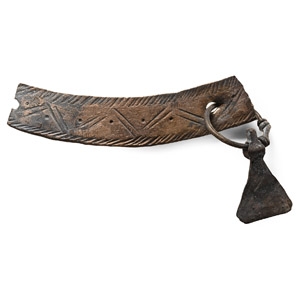
Viking Age Silver Torc Section with Axehead Pendant
9th-11th century A.D.Sold for (Inc. bp): £78
Curved flat-section fragment with hatched edges and incised bilinear running zigzag motif, pierced to accept a suspension ring with miniature axehead dangle bearing a ring-and-dot motif and hatched borders. 6.27 grams, 65 mm
From a collection acquired on the UK art market from various auction houses and collections mostly before 2000. From an important Cambridgeshire estate; thence by descent. -
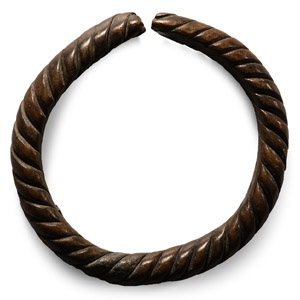
Viking Age Twisted Bronze Bracelet
Circa 9th-11th century A.D.Sold for (Inc. bp): £78
Formed from three round-section rods twisted around each other; clubbed ends. 97.9 grams, 72 mm
Private collection, Arundel, West Sussex, UK, 1975-late 1990s. -
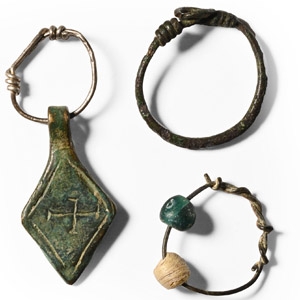
Viking Period Bronze and Silver Artefact Collection
8th-11th century A.D.Sold for (Inc. bp): £52
Comprising: silver wire finger ring; silver wire loop with lozenge pendant, impressed cross potent; wire earring with two seed beads. 4.46 grams total, 19-37 mm
Property of the vendor's grandfather, thence by family descent, circa 1985. From the private collection of a New York, USA gentleman.
