
Loading, please wait...
LOT 1631
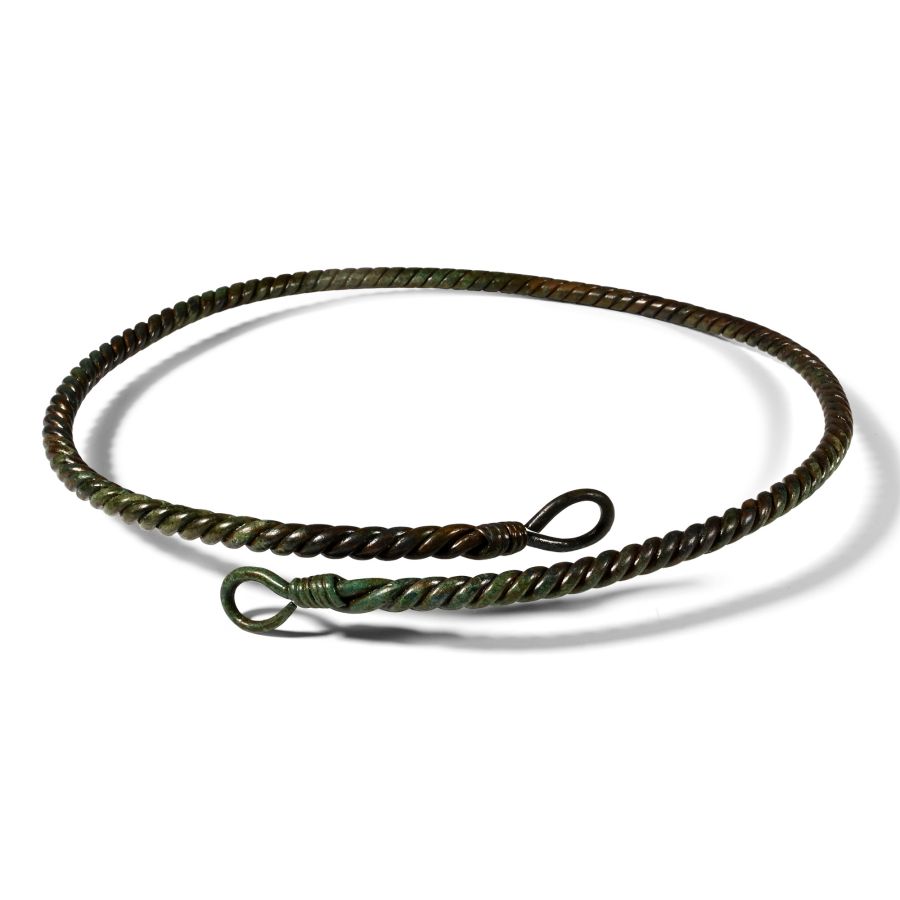
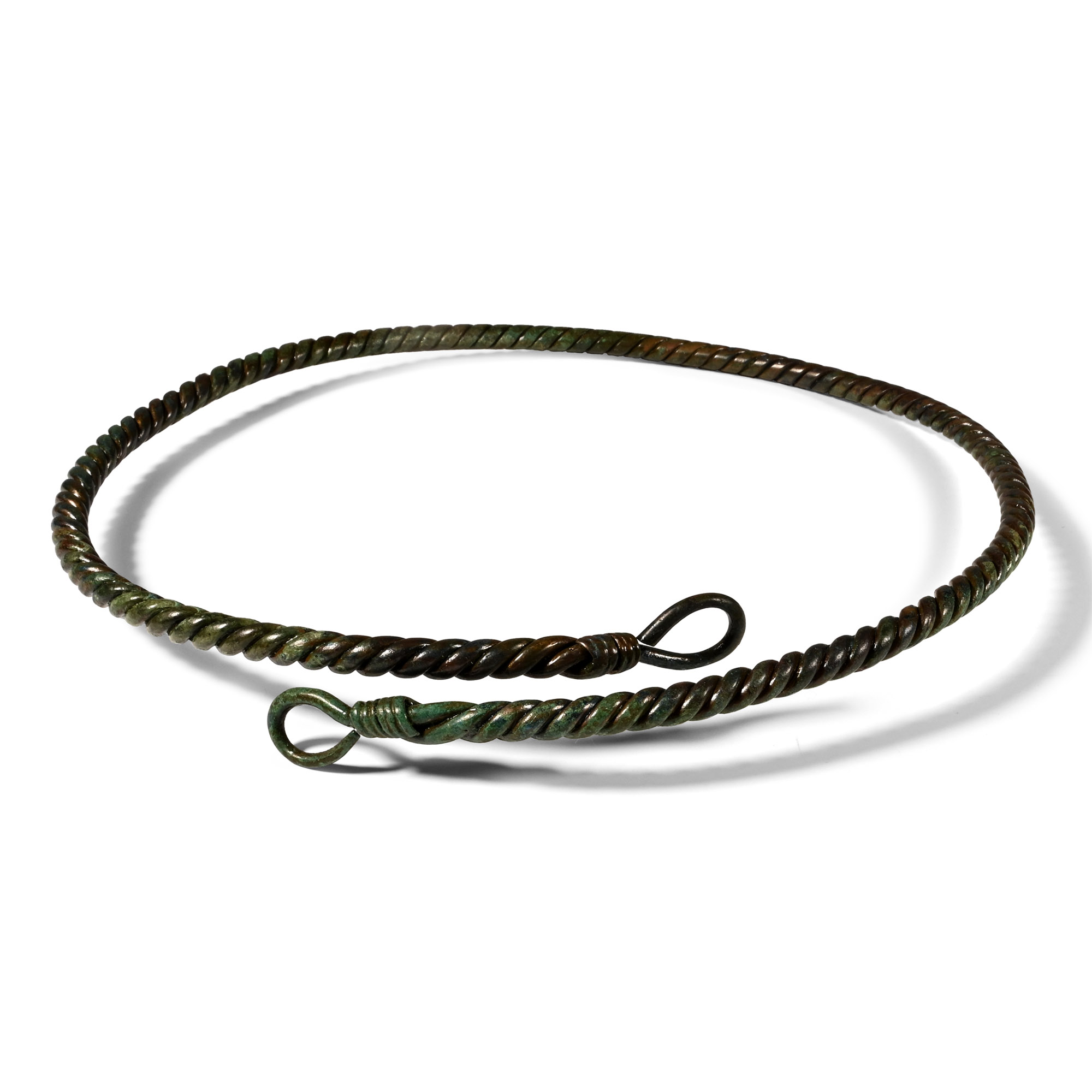
Viking Period Bronze Twisted Neck Torc with Looped Terminals
9TH-12TH CENTURY A.D.
9 7/8 in. (350 grams, 25 cm).
Formed of two twisted thick rods with overlapping arms and loop terminals.
ProvenanceFrom the private collection of a London gentleman, from his grandfather's collection formed before the early 1970s.
This lot is accompanied by an illustrated lot declaration signed by the Head of the Antiquities Department, Dr Raffaele D'Amato.
Cf. Sedov, B.B., Finno-Ugri i Balti v Epokhi Srednevekovija, Moscow, 1987, p.309, item 32; see Sedov, B.B., Finno-Ugri i Balti v Epokhi Srednevekovija, Moscow, 1987, LXI, 32; XCII, 19, for similar items.
CONDITIONTimeLine Auctions follows a vetting process to ensure the authenticity and legality of all items, reinforcing our commitment to integrity and responsible trading. Each antiquity, antique, and coin lot undergoes thorough examination by a vetting committee of at least ten external specialists, professional trade association members, scientists, and archaeologists: Our Vetting Process
AUCTIONS:
TimeLine is a leading auction house specialising in antiquities, ancient art, collectables, natural history, coins, medals, and books. Our auctions offer museums, collectors, historians, and enthusiasts the opportunity to acquire unique and historically significant pieces.
LOT 1631
Viking Period Bronze Twisted Neck Torc with Looped Terminals
Sold for (Inc. bp): £312
-
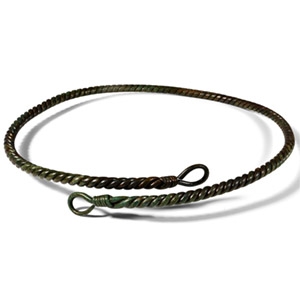
Viking Period Bronze Twisted Neck Torc with Looped Terminals
9th-12th century A.D.Sold for (Inc. bp): £312
Formed of two twisted thick rods with overlapping arms and loop terminals. 350 grams, 25 cm
From the private collection of a London gentleman, from his grandfather's collection formed before the early 1970s. This lot is accompanied by an illustrated lot declaration signed by the Head of the Antiquities Department, Dr Raffaele D'Amato. -
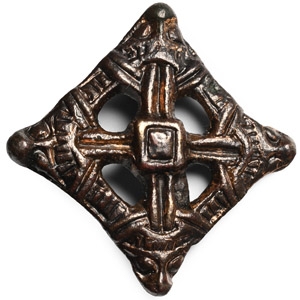
Viking Gilt Bronze Brooch with Beast Heads
9th-11th century A.D.Sold for (Inc. bp): £247
Lozengiform in plan with central cross, the arms with beast-heads, central rectangular boss; remains of pin-lugs and catchplate to the reverse. 7.38 grams, 25 mm
Private collection formed in Europe in the 1980s. Westminster collection, central London, UK. This lot is accompanied by an illustrated lot declaration signed by the Head of the Antiquities Department, Dr Raffaele D'Amato. -
.jpg)
Viking Age Bronze Twisted Bracelet with Flattened Terminals
9th-12th century A.D.Sold for (Inc. bp): £156
Two rods tightly twisted and curved into a penannular shape with tapering finials, the bracelet hammered on each side into a square section. 42 grams, 70 mm
From a Sussex, UK, private collection; acquired 1980s-1990s. This lot is accompanied by an illustrated lot declaration signed by the Head of the Antiquities Department, Dr Raffaele D'Amato.
