
Loading, please wait...
LOT 1675
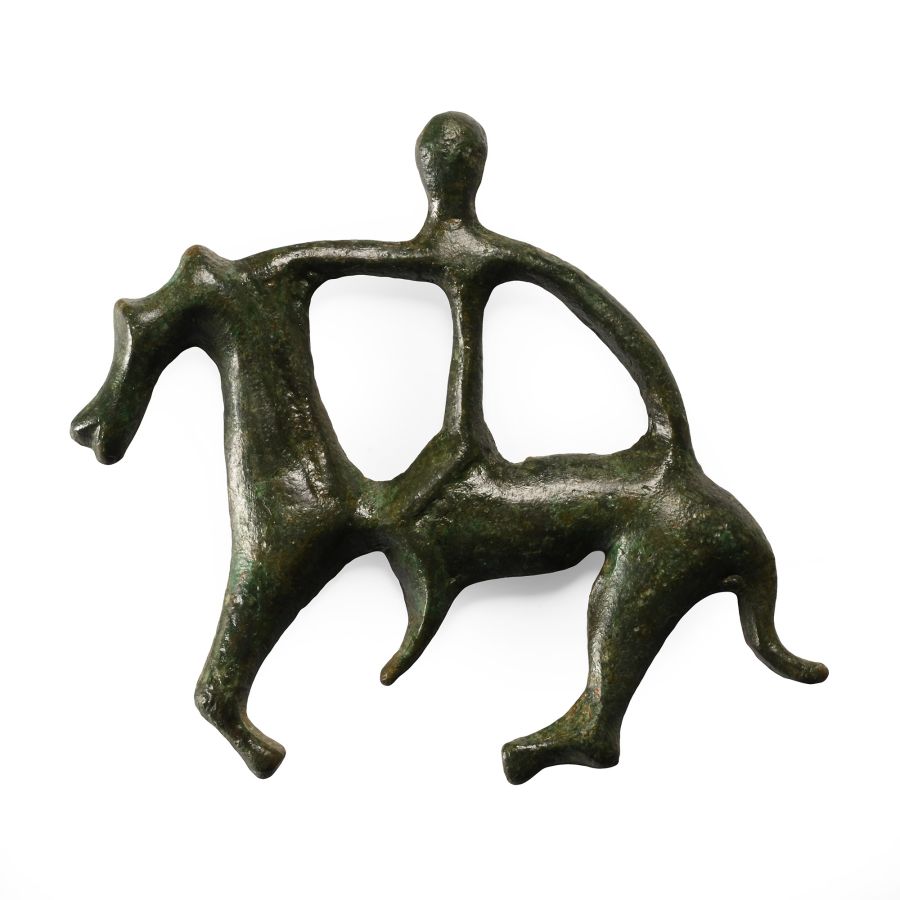
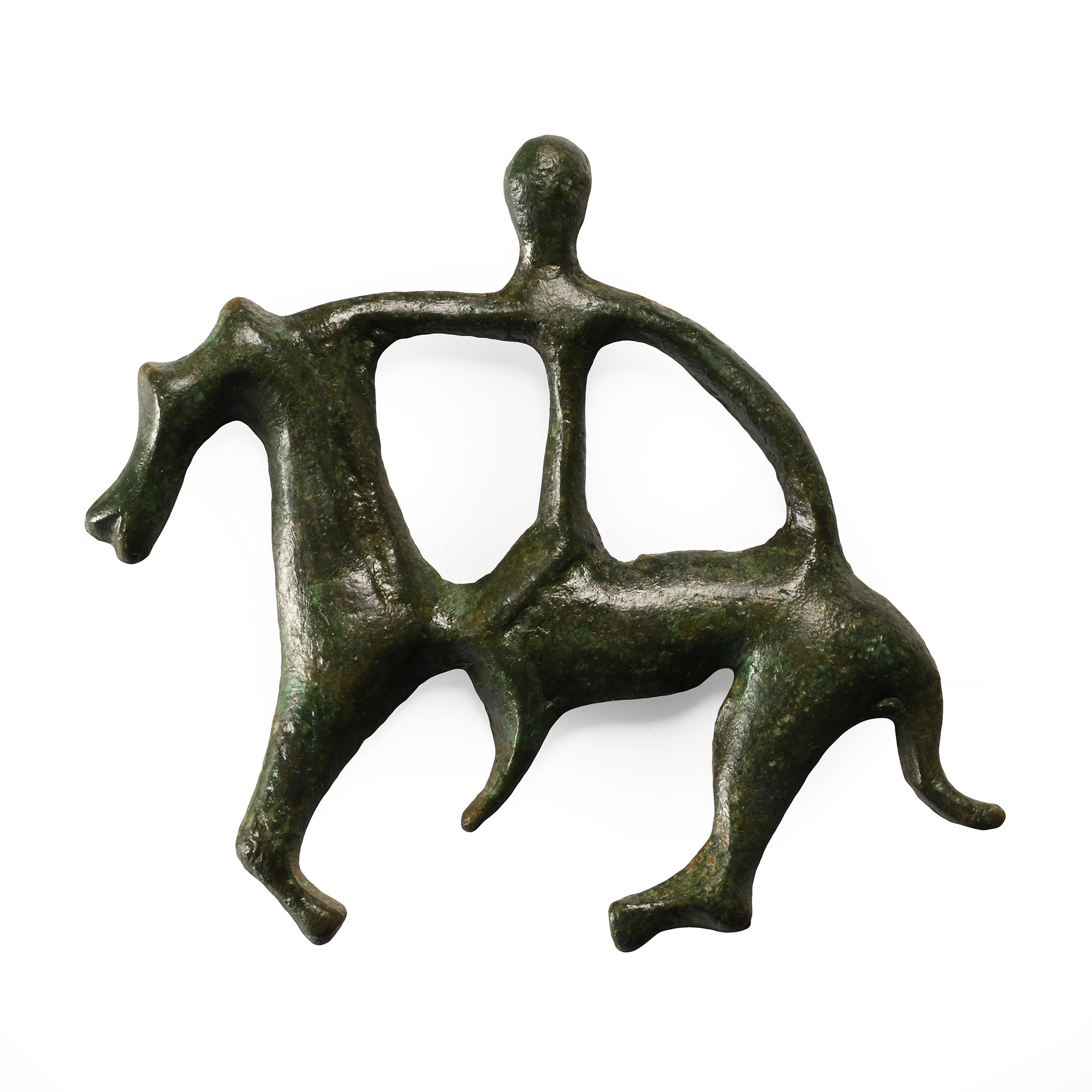
Viking Period Bronze Horseman Appliqué
11TH-12TH CENTURY A.D.
2 3/8 in. (14.91 grams, 60 mm).
Convex in section with hollow reverse, rider with one hand gripping the horse's mane and the other on its rump; Finno-Ugrian type. [No Reserve]
ProvenanceFrom the private collection of a London gentleman, from his grandfather's collection formed before the early 1970s.
This lot is accompanied by an illustrated lot declaration signed by the Head of the Antiquities Department, Dr Raffaele D'Amato.
Cf. Sedov, B.B., Finno-Ugri i Balti v Epokhi Srednevekovija, Moscow, 1987, pl.XX (2), for type.
CONDITIONTimeLine Auctions follows a vetting process to ensure the authenticity and legality of all items, reinforcing our commitment to integrity and responsible trading. Each antiquity, antique, and coin lot undergoes thorough examination by a vetting committee of at least ten external specialists, professional trade association members, scientists, and archaeologists: Our Vetting Process
AUCTIONS:
TimeLine is a leading auction house specialising in antiquities, ancient art, collectables, natural history, coins, medals, and books. Our auctions offer museums, collectors, historians, and enthusiasts the opportunity to acquire unique and historically significant pieces.
-
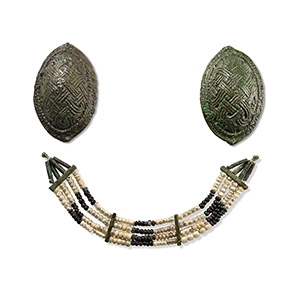
Scandinavian Viking Jellinge Style Bronze Oval Brooch Set
9th-11th century A.D.Estimate: £1,000 - 1,400 (+bp*)
Opening Bid: £500
Comprising: two elliptical bronze tortoise brooches, each domed with low-relief ornament of an interlaced panel, wide flange with bead detailing; catch, pin-hinge and pendant attachment bar to the reverse; three swags of graduated beads (restrung) - long tubular corrugated beads in pearlescent white flanking individual black seed beads, with spacer bar and wire coils to each end. 149 grams total, 7.7-20 cm
From the private collection of a London gentleman, from his grandfather's collection formed before the early 1970s. This lot is accompanied by an illustrated lot declaration signed by the Head of the Antiquities Department, Dr Raffaele D'Amato. -
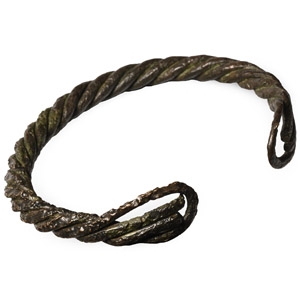
Viking Age Bronze Twisted Bracelet
9th-12th century A.D.Sold for (Inc. bp): £234
Formed of four round-section twisted rods, looped finials. 22.8 grams, 65 mm
Ex German art market, 2000s. Acquired from an EU collector living in London. From the collection of a Surrey, UK, gentleman. This lot is accompanied by an illustrated lot declaration signed by the Head of the Antiquities Department, Dr Raffaele D'Amato. -
.jpg)
Frankish Silver-Gilt S-Shaped Bird Brooch with Garnets
5th-6th century A.D.Sold for (Inc. bp): £3,120
S-shaped plate brooch formed with a profile bird-head finial at each end with inset garnet cabochon eye, hatched panels and inlaid garnet cloisons; pin-lugs and catch to reverse. 7.58 grams, 30 mm
Private collection formed in Europe in the 1980s. Westminster collection, central London, UK. This lot has been cleared against the Art Loss Register database, and is accompanied by an illustrated lot declaration signed by the Head of the Antiquities Department, Dr Raffaele D'Amato.
During the mid-sixth century the S-brooch, along with the disc brooch, became popular. These were made primarily of gilded silver embellished with garnet inlays or in garnet cloisonné. Early forms of S-shaped brooches appear in graves in Scandinavia throughout the fifth century and in Europe during the first decades of the sixth century, and reached the height of their popularity during the latter half of that time. They were widespread across Europe and are found in central and western Europe, Italy, Scandinavia and Anglo-Saxon England. They generally take the form of an S-shaped body with heads at either end facing in opposite directions. The heads are generally depicted as birds but examples are known of unidentified animals with splayed open jaws, possibly dragons or wolves. The use of the head imagery is consistent with the aesthetic tendencies associated with the northern, Pagan Germanic world.
