
Loading, please wait...
LOT 1653
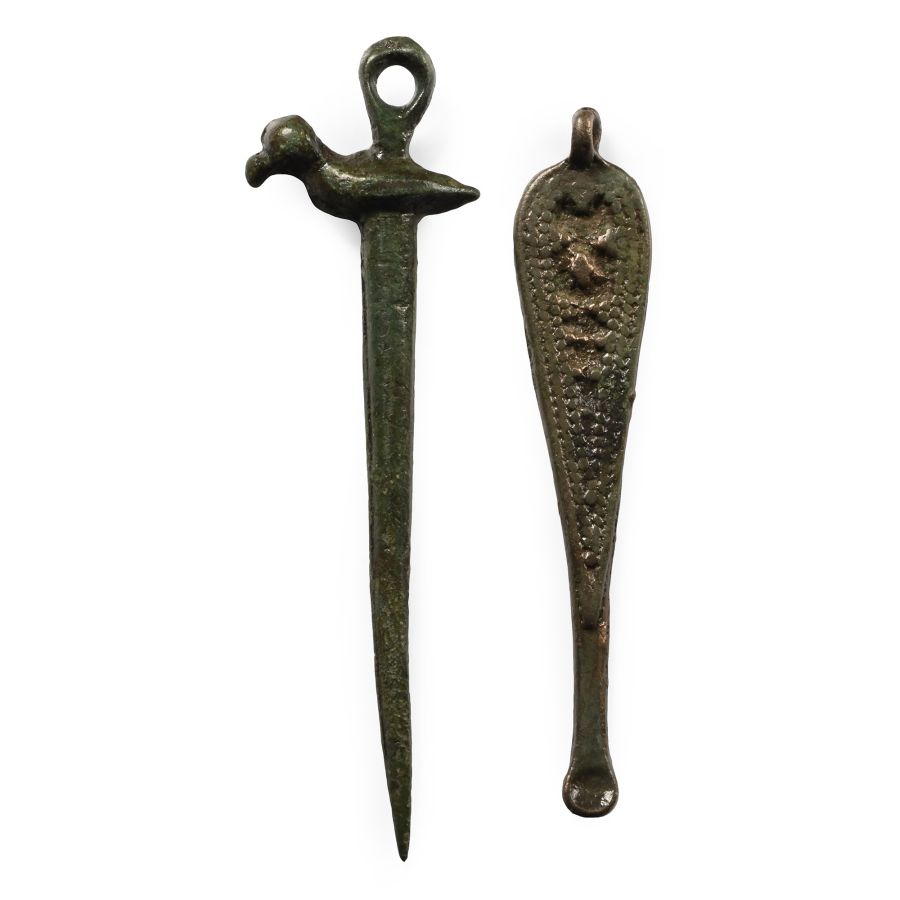
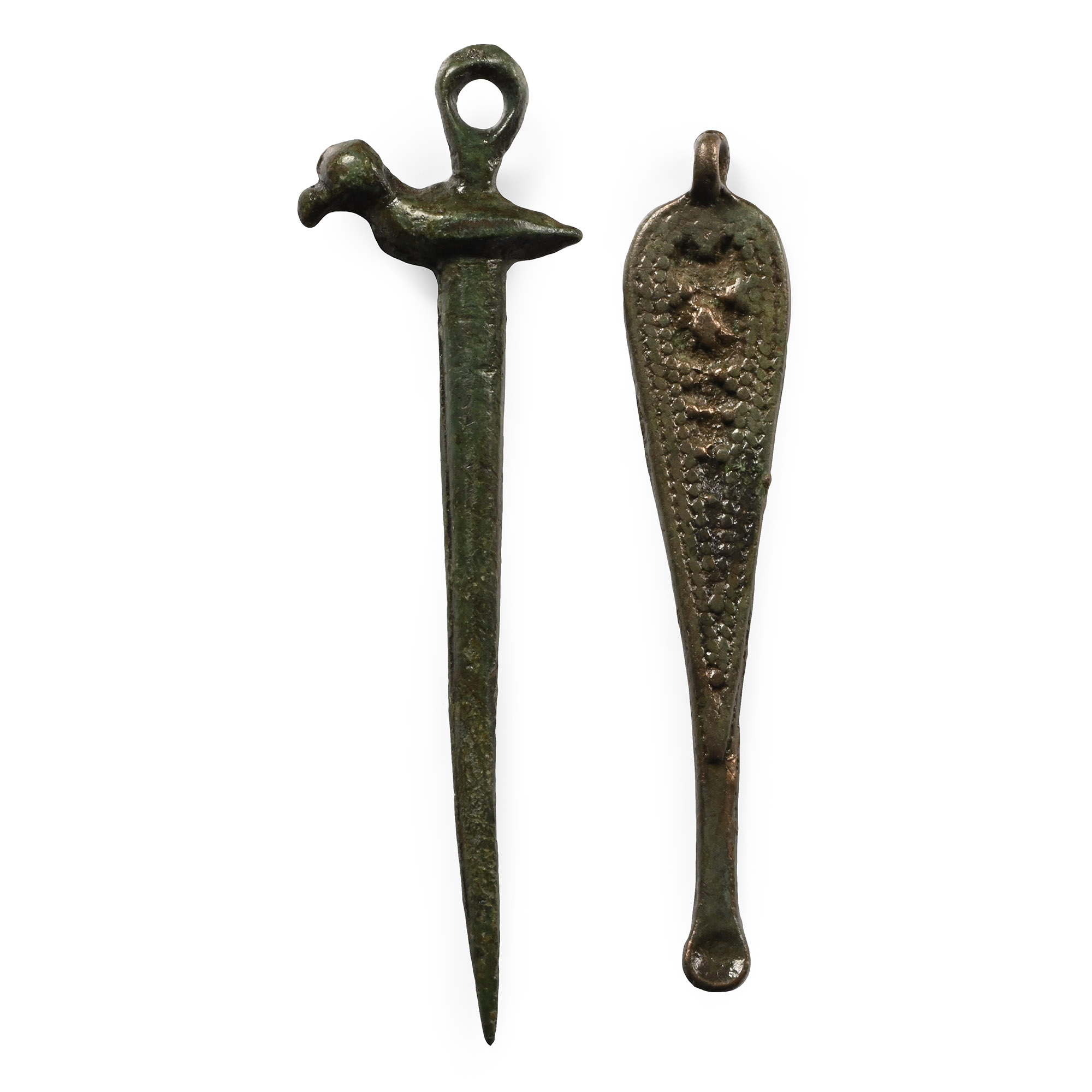
Viking Period Bronze Ear Scoop and Pin Group
10TH-12TH CENTURY A.D.
2 1/2 - 3 in. (15.8 grams total, 65-75 mm).
Comprising: a pin with tapering shank and bird finial with loop above; an ear scoop with rounded bowl and wide teardrop-shaped looped handle with granulation. [2, No Reserve]
ProvenanceFrom the private collection of a London gentleman, from his grandfather's collection formed before the early 1970s.
This lot is accompanied by an illustrated lot declaration signed by the Head of the Antiquities Department, Dr Raffaele D'Amato.
TimeLine Auctions follows a vetting process to ensure the authenticity and legality of all items, reinforcing our commitment to integrity and responsible trading. Each antiquity, antique, and coin lot undergoes thorough examination by a vetting committee of at least ten external specialists, professional trade association members, scientists, and archaeologists: Our Vetting Process
AUCTIONS:
TimeLine is a leading auction house specialising in antiquities, ancient art, collectables, natural history, coins, medals, and books. Our auctions offer museums, collectors, historians, and enthusiasts the opportunity to acquire unique and historically significant pieces.
-
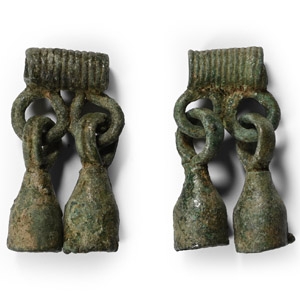
Viking Age Bronze Double Bell Pendant Group
Circa 9th-11th century A.D.Sold for (Inc. bp): £59
Each comprising a tubular bead with ribbing to the outer face, suspension loops each supporting a bottle-shaped dangle. 16 grams total, 39 mm each
UK gallery, early 2000s. This lot is accompanied by an illustrated lot declaration signed by the Head of the Antiquities Department, Dr Raffaele D'Amato.
The presence of a similar bell pendant in grave 735 of the Birka Necropolis, where a warrior and his horse were also buried, could lead to the belief that such pendants were part of the horse's harness. This was a very common custom in the Mediterranean world, which could also have been adopted by the Vikings. -
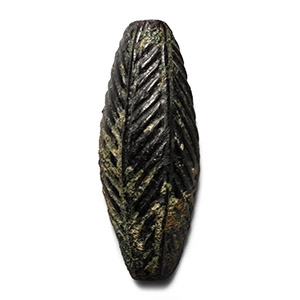
Viking Bronze Trade Weight
9th-11th century A.D.Sold for (Inc. bp): £59
Plano-convex in section and lentoid in plan with herringbone detailing to obverse. 5.34 grams, 25 mm
Found near York, Yorkshire, UK, in 2007. From an old Yorkshire, UK, collection. This lot is accompanied by an illustrated lot declaration signed by the Head of the Antiquities Department, Dr Raffaele D'Amato. -
.jpg)
Viking Age Bronze Twisted Bracelet with Hatched Terminals
9th-12th century A.D.Sold for (Inc. bp): £117
Two rods tightly twisted and curved into a penannular shape, hammered flat towards the ends, each terminal with heavily hatched design to the outer edge. 80 grams, 80 mm
3 1/8 in.
From a Sussex, UK, private collection; acquired 1980s-1990s. This lot is accompanied by an illustrated lot declaration signed by the Head of the Antiquities Department, Dr Raffaele D'Amato.
