
Loading, please wait...
LOT 0333
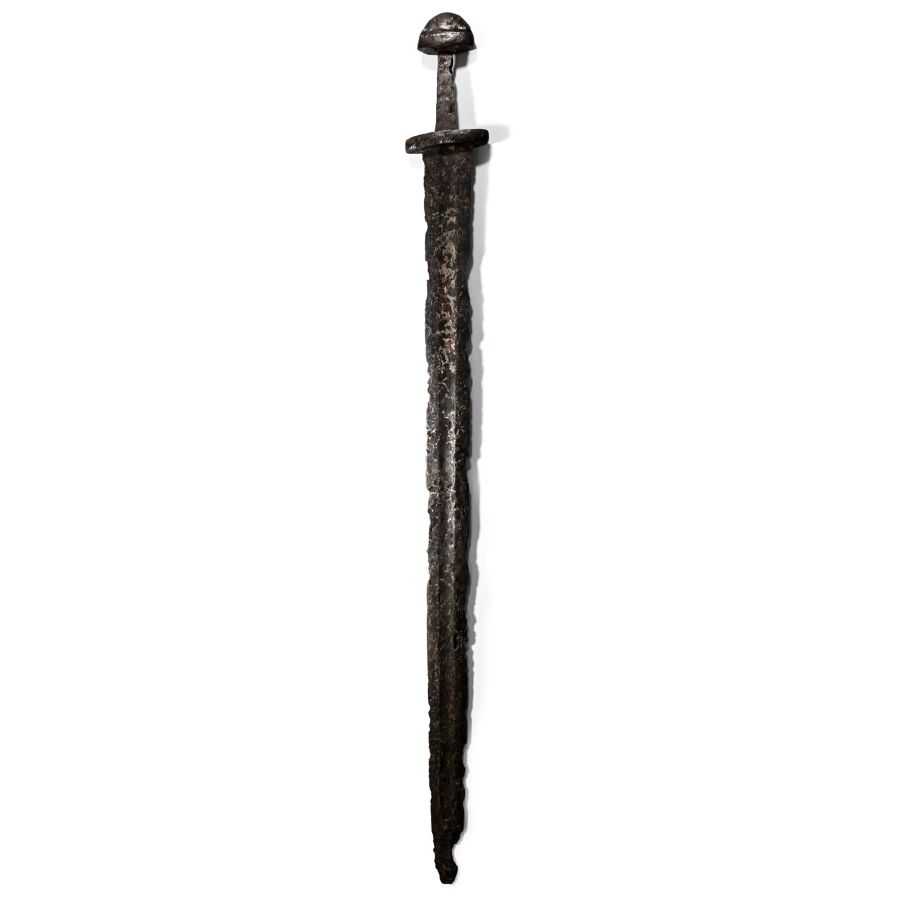
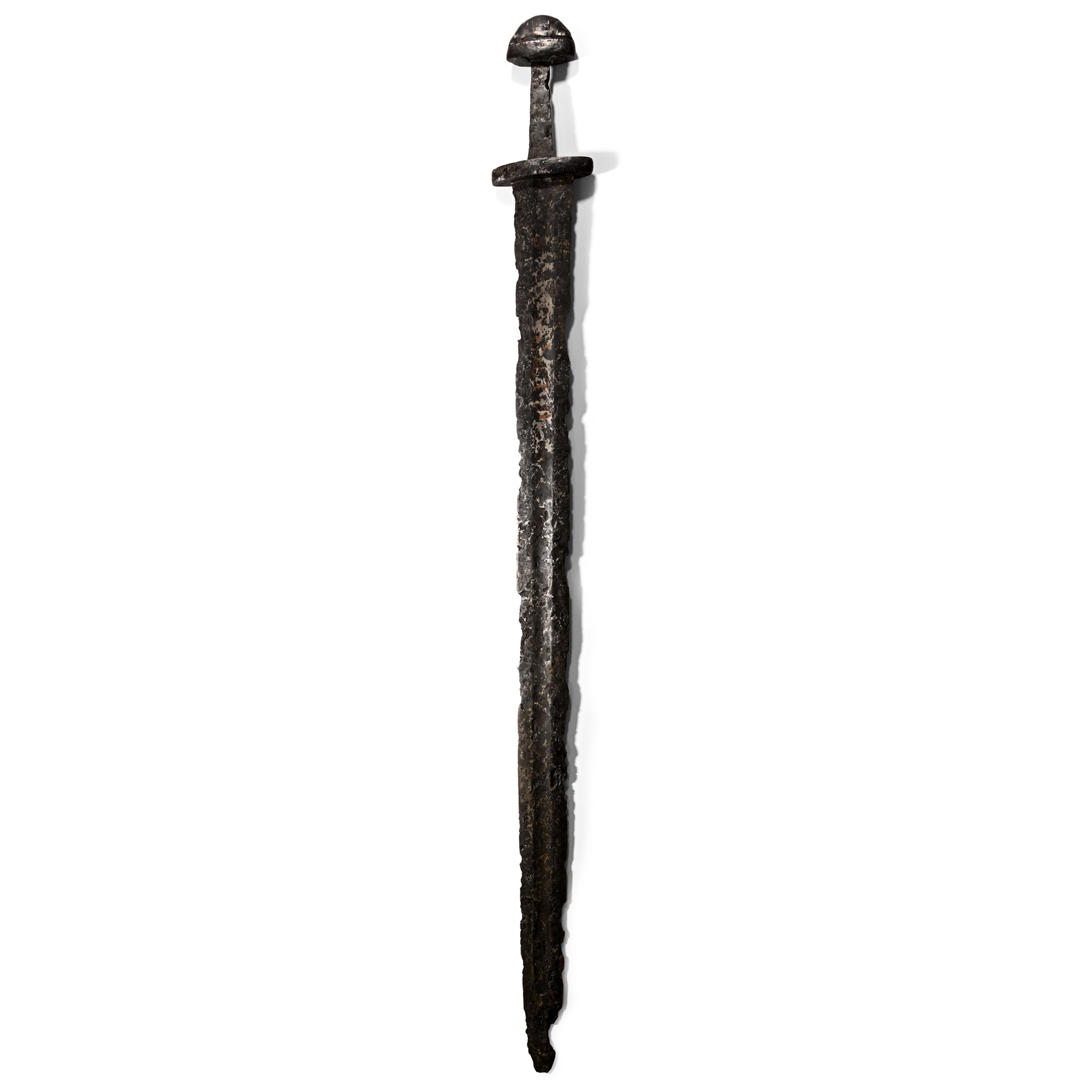
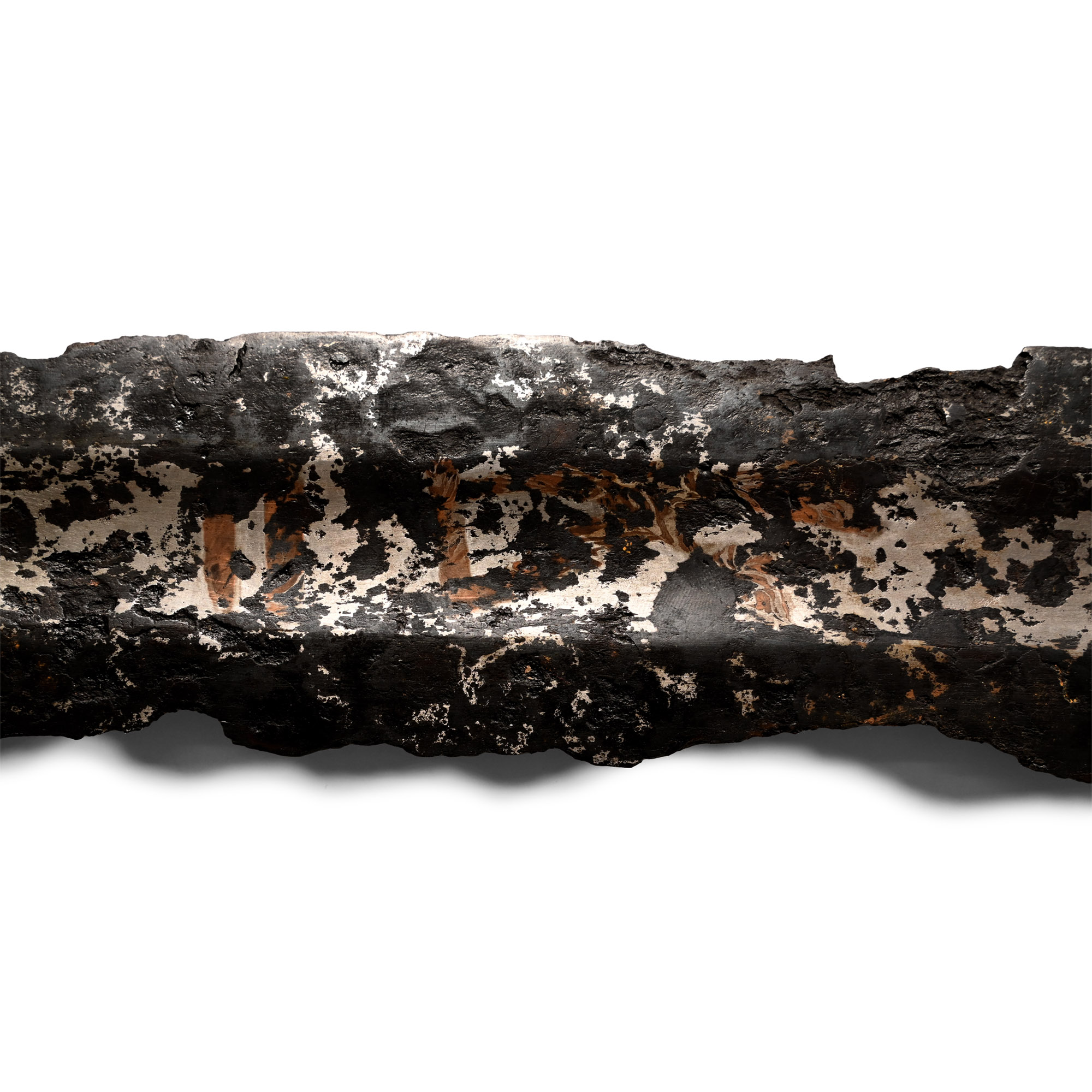
Viking Iron 'ULFBERH+T' Silver and Laten Inlaid Sword
9TH-11TH CENTURY A.D.
38 1/2 in. (1.1 kg, 98 cm).
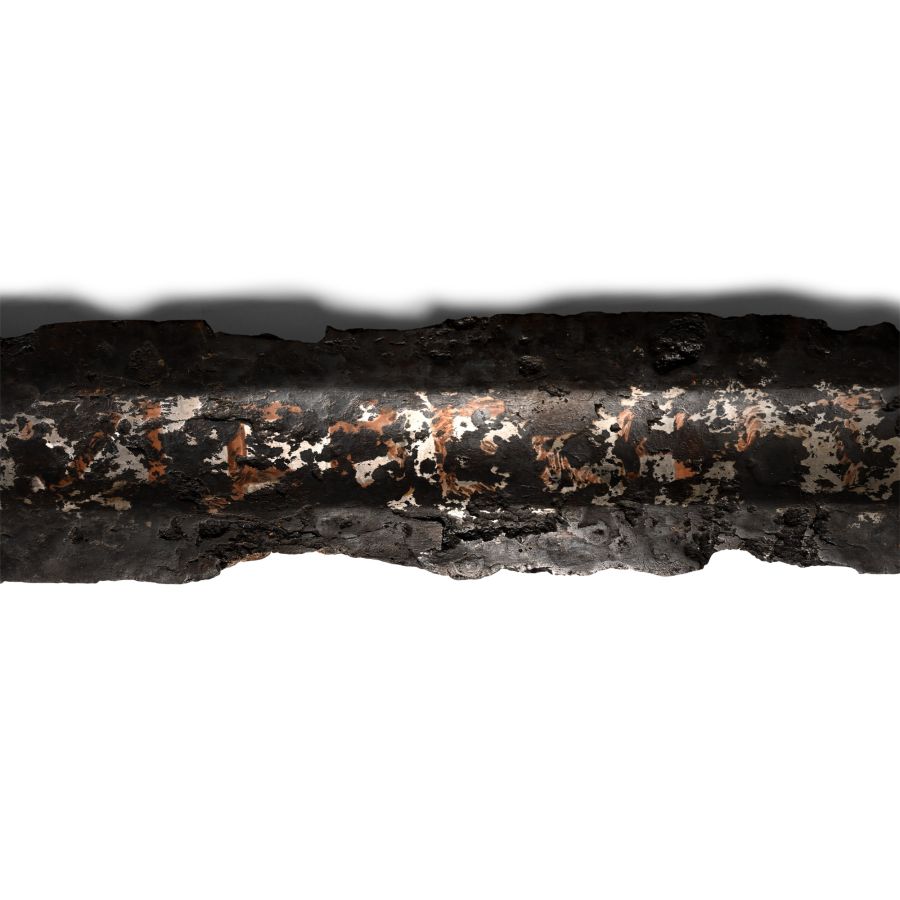
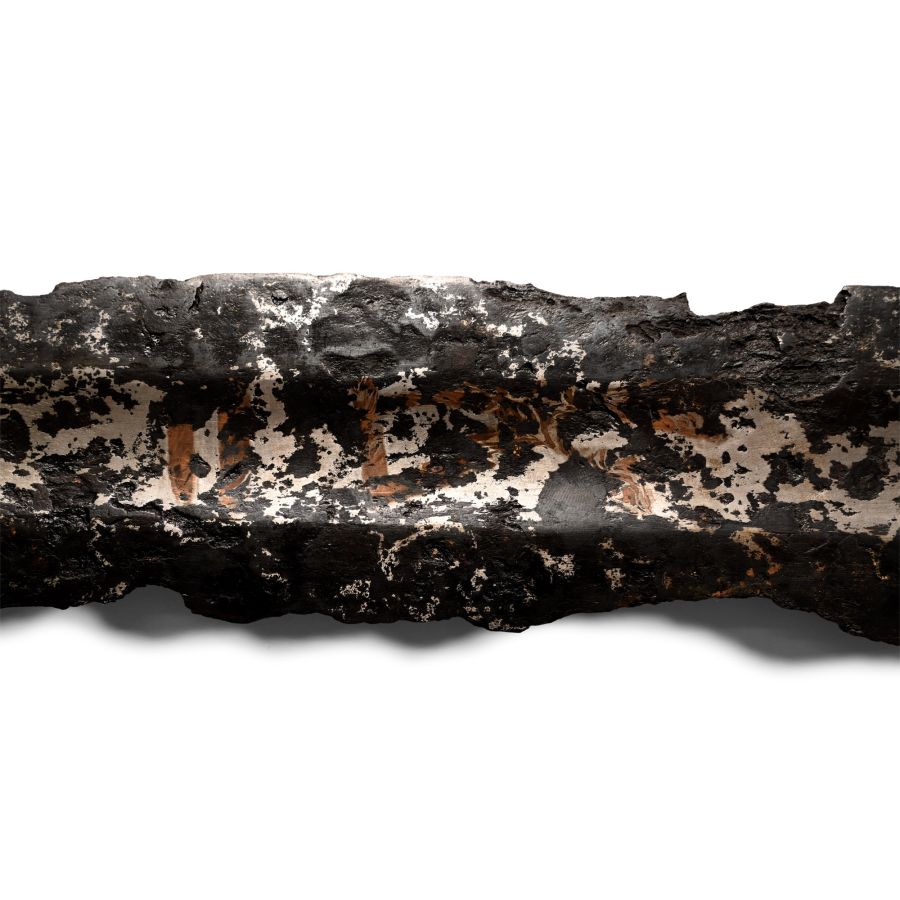
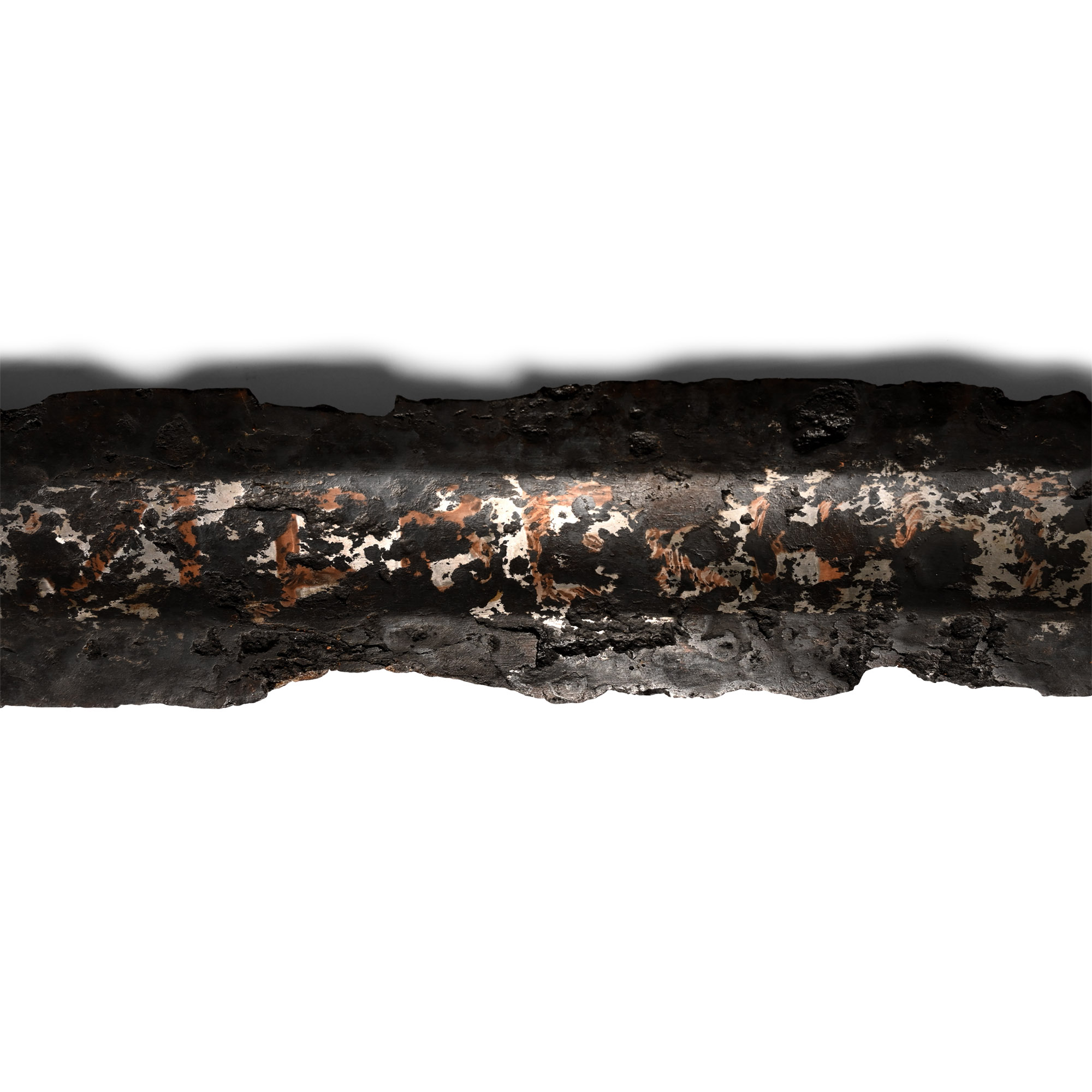
A double-edged Petersen Type X sword, tapering blade with shallow fullers and wide cutting edges, the fuller bearing an inlaid inscription of 'ULFBERH+T' to one side and remains of 'II IXI' (or an interlace pattern) to the other side; the lower and upper-guards, as well as the pommel inlaid with vertical lines of silver and copper, the pommel of tea-cosy type divided into section with well-marked lines. [No Reserve]
ProvenancePrivate collection formed in Europe in the 1980s.
Westminster collection, central London, UK.
Accompanied by an academic report by Dr Raffaele D’Amato.
This lot has been checked against the Interpol Database of stolen works of art and is accompanied by search certificate number no. 12617-235587.
This lot has been cleared against the Art Loss Register database, and is accompanied by an illustrated lot declaration signed by the Head of the Antiquities Department, Dr Raffaele D'Amato.
Cf. Petersen, J., De Norske Vikingsverd, Oslo, 1919; Oakeshott, R.E., The Archaeology of the weapons, London, 1960; Jakobsson, M., Krigarideologi och vikingatida svardstypologi, Stockholm, 1992; Peirce, I., Swords of the Viking Age, Suffolk, 2002; the sword finds good parallels in various similar Viking age specimens, a similar sword is in the Musée de l'Armée, Paris (inv. no. JPO 2253, s. Peirce, 2002, pp. 118-119); for the inscriptions see Peirce, 2002, pl.III, lett.2bc.
CONDITIONTimeLine Auctions follows a vetting process to ensure the authenticity and legality of all items, reinforcing our commitment to integrity and responsible trading. Each antiquity, antique, and coin lot undergoes thorough examination by a vetting committee of at least ten external specialists, professional trade association members, scientists, and archaeologists: Our Vetting Process
AUCTIONS:
TimeLine is a leading auction house specialising in antiquities, ancient art, collectables, natural history, coins, medals, and books. Our auctions offer museums, collectors, historians, and enthusiasts the opportunity to acquire unique and historically significant pieces.
LOT 0333
Viking Iron 'ULFBERH+T' Silver and Laten Inlaid Sword
Sold for (Inc. bp): £16,900
-
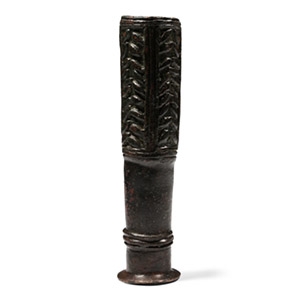
Large Luristan Bronze Gorz
Early 2nd millennium B.C.Sold for (Inc. bp): £364
Of tapering cylindrical form with flange to socket, the upper body displaying vertical columns of chevrons between plain bands. 374 grams, 14.5 cm
Acquired in the 1990s. Ex Abelita family collection. This lot is accompanied by an illustrated lot declaration signed by the Head of the Antiquities Department, Dr Raffaele D'Amato.
This gorz mace head belongs to the category of truncheon-shaped mace heads, a type developed on the Iranian plateau during the Bronze Age, used by Elamite and Luristan warriors since the 3rd millennium B.C. This category of objects was also interpreted as a part of a shaft or cudgel, but most scholars agree on the interpretation of use as a mace. -
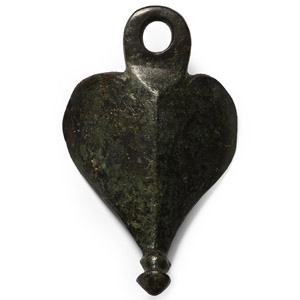
Roman Horse Harness Phalera
1st-4th century A.D.Sold for (Inc. bp): £72
Of carinated profile with pierced lug above and knop finial. 97 grams, 95 mm
Ex German art market, 2000s. Acquired from an EU collector living in London. From the collection of a Surrey, UK, gentleman. This lot is accompanied by an illustrated lot declaration signed by the Head of the Antiquities Department, Dr Raffaele D’Amato. This lot is accompanied by an illustrated lot declaration signed by the Head of the Antiquities Department, Dr Raffaele D'Amato. -
.jpg)
Marlik Bronze Spearhead
14th-10th century B.C.Sold for (Inc. bp): £195
With rounded shoulders and square-section mid-rib running to the tip; short tang. 280 grams, 38.5 cm
Acquired 1980-2015. Ex Abelita family collection. This lot is accompanied by an illustrated lot declaration signed by the Head of the Antiquities Department, Dr Raffaele D’Amato. This lot is accompanied by an illustrated lot declaration signed by the Head of the Antiquities Department, Dr Raffaele D'Amato.
The blade belongs to the type VI of Marlik spearheads according to the Khorasani classification, with a long blade and a short tang, slightly rounded shoulders and pronounced midrib. Such spearheads have been excavated from the Marlik Royal Cemetery by Dr Negahban in Tomb 15, Trench XIII G.
