
Loading, please wait...
LOT 0260
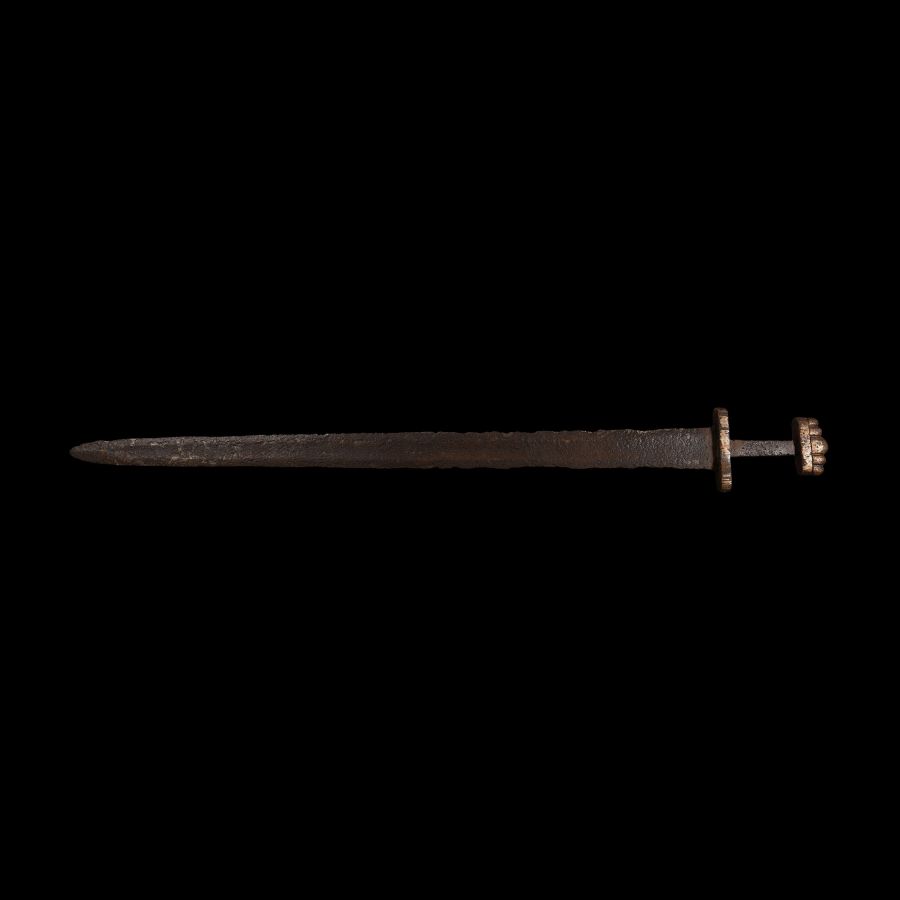
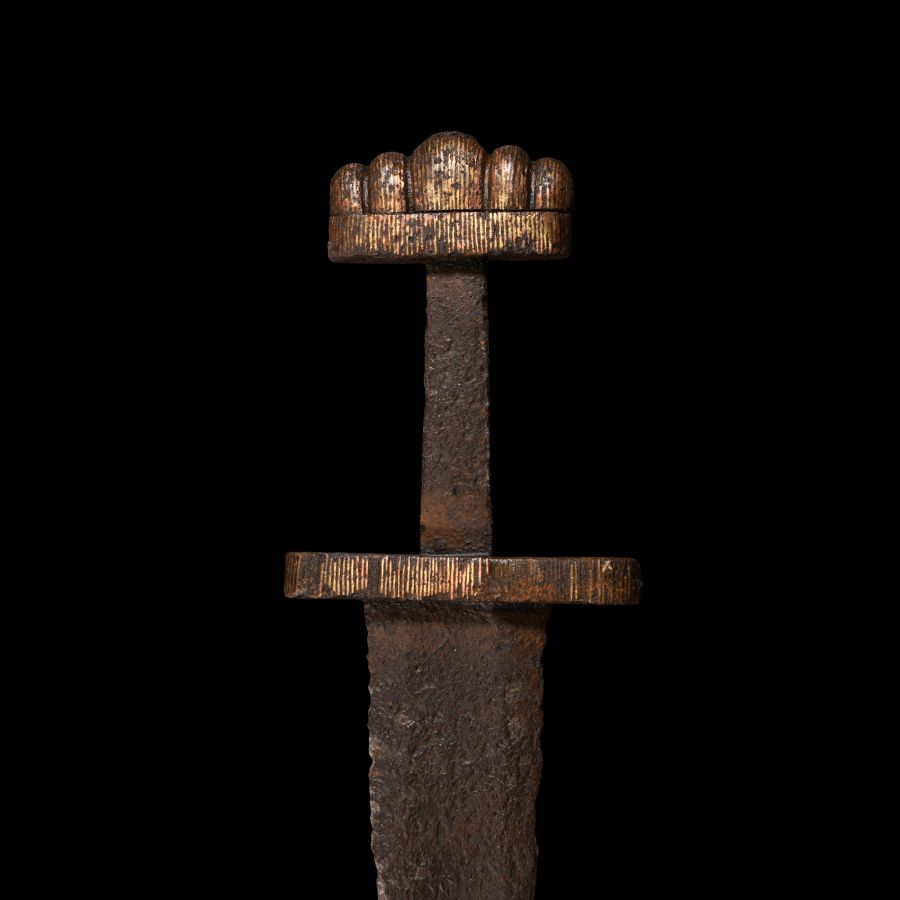
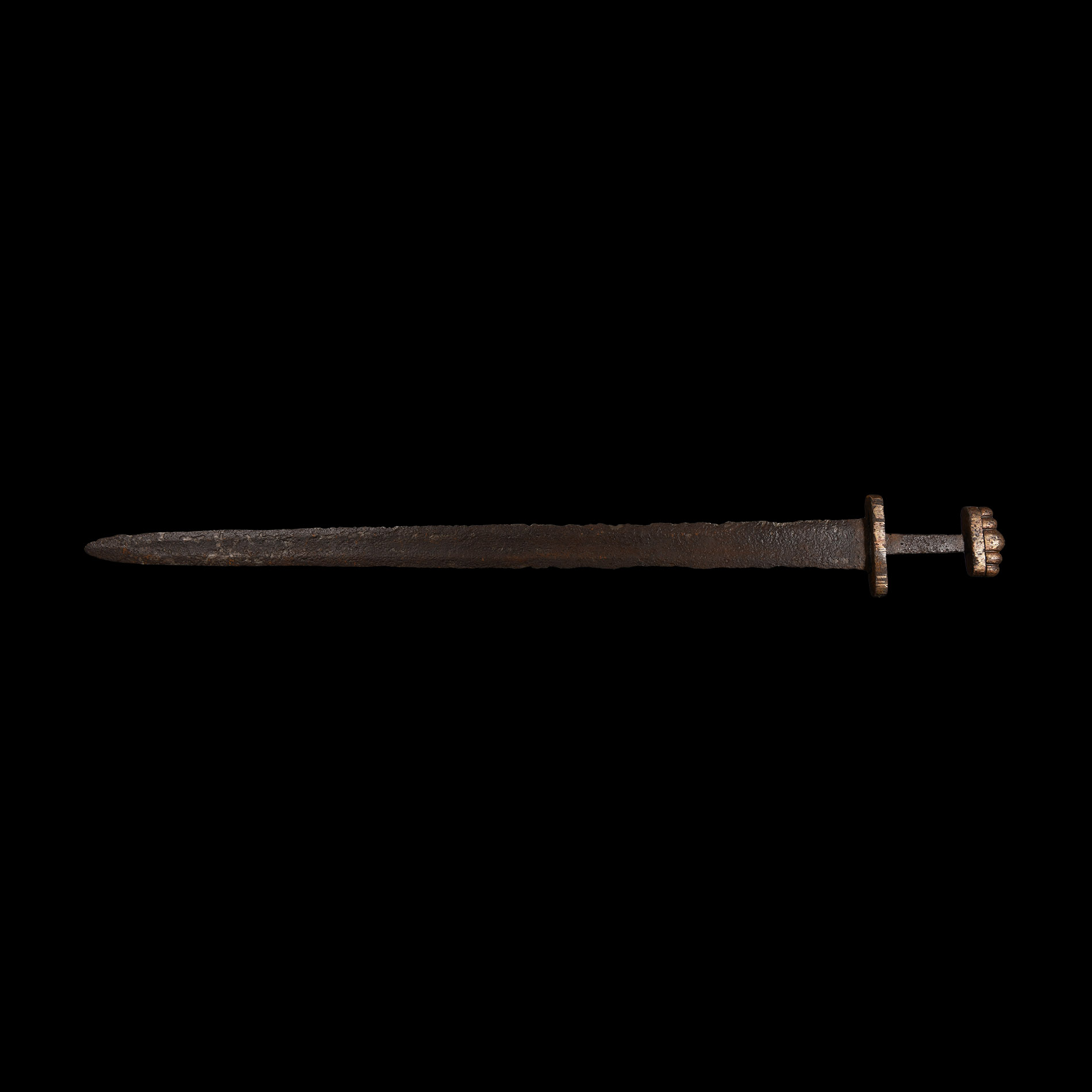
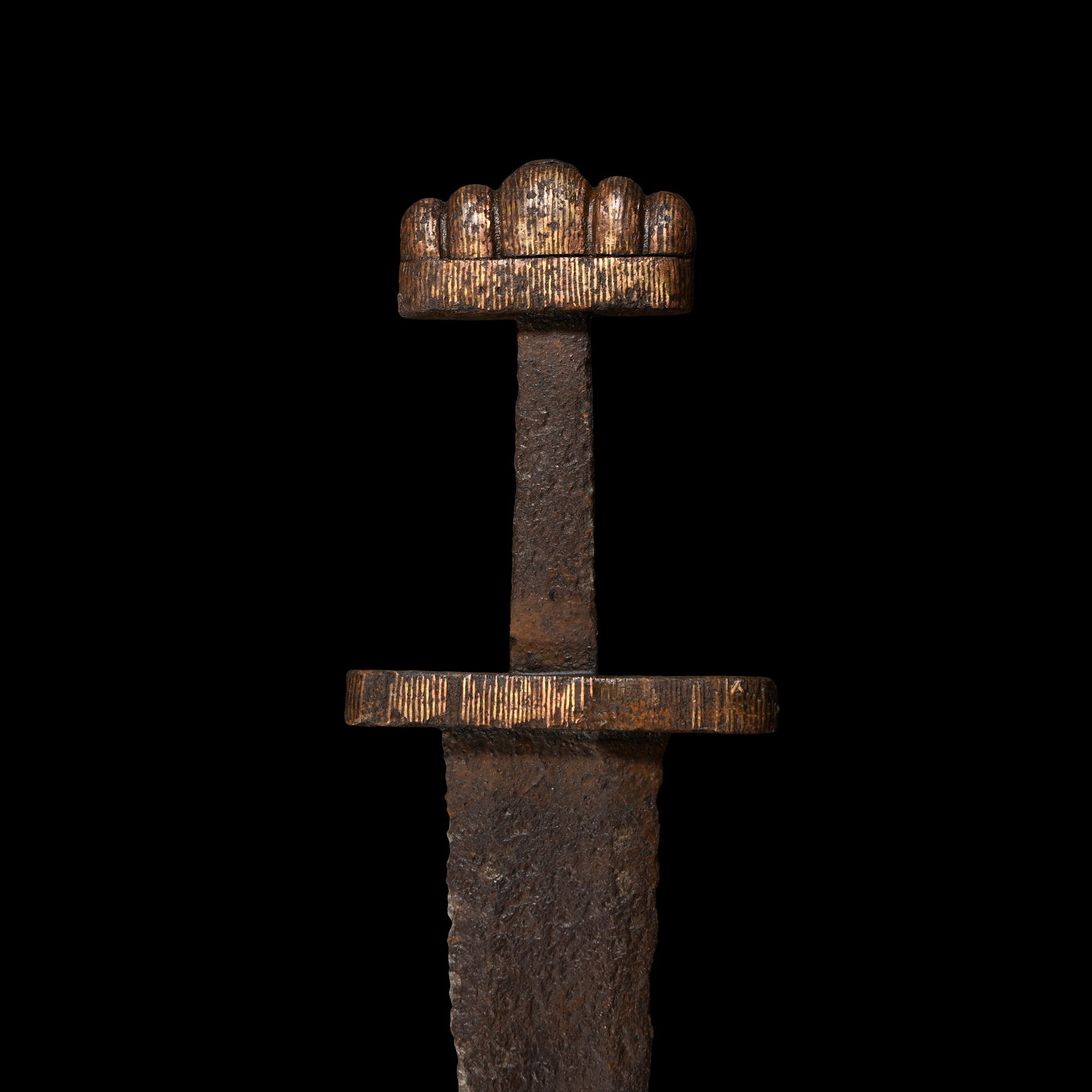
Viking Iron Sword with Inlaid Hilt
8TH-10TH CENTURY A.D.
35 1/2 in. (1.05 kg, 90 cm).
Comprising a double-edged tapering blade showing shallow fullers and wide cutting edges; boat-shaped lower guard with inlaid vertical copper bands; the upper guard decorated in similar fashion; five-lobed pommel with deep grooves between the lobes, each lobe inlaid with copper bands.
ProvenanceAcquired 1990s-early 2000s.
East Anglian private collection.
Accompanied by an academic report by Dr Raffaele D'Amato.
This lot has been checked against the Interpol Database of stolen works of art and is accompanied by search certificate number no.11592-199910.
See Petersen, J., De Norske Vikingsverd, Oslo, 1919; Peirce, I., Swords of the Viking Age, Suffolk, 2002.
FootnotesIt is the decoration and the structure of the sword that suggest classifying it as a type H of Petersen, rather than type R which usually presents a five-lobed pommel. The copper markings are artistically consistent with archaeological examples of decorative work of Viking swords, notably with the one in Suomen Kansallismuseo, Helsinki, published by Peirce (2002, pp.6off.). The decoration, which here takes the form of vertical copper lines, is striped as on the Helsinki specimen.
CONDITIONTimeLine Auctions follows a vetting process to ensure the authenticity and legality of all items, reinforcing our commitment to integrity and responsible trading. Each antiquity, antique, and coin lot undergoes thorough examination by a vetting committee of at least ten external specialists, professional trade association members, scientists, and archaeologists: Our Vetting Process
AUCTIONS:
TimeLine is a leading auction house specialising in antiquities, ancient art, collectables, natural history, coins, medals, and books. Our auctions offer museums, collectors, historians, and enthusiasts the opportunity to acquire unique and historically significant pieces.
-
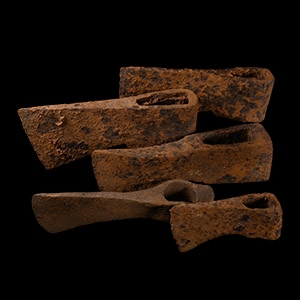
Medieval and Later Iron Axehead Collection
14th-18th century A.D.Sold for (Inc. bp): £117
Including socketted heads of various types, each with a convex cutting edge. 4.27 kg total, 12-19.2 cm
Acquired 1990s-early 2000s. East Anglian private collection. -
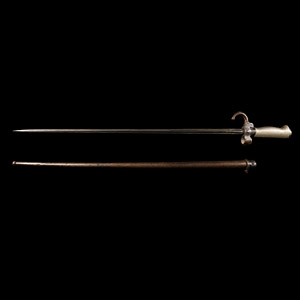
French Lebel 1886 Model 'Rosalie' Epee Bayonet with Scabbard
19th-20th century A.D.Sold for (Inc. bp): £52
Sword bayonet for use with the 8 mm M1886 Lebel rifle; fitted with 'German silver' grip scales; original scabbard. 532 grams, 65 cm
Property of a Luton, UK gentleman, by inheritance.
Known affectionately as “Rosalie” to French troops, the M1886 was the French mainstay during WWI and many were still in service at the Fall of France in 1940. The Lebel also saw extensive use worldwide by native troops in the French colonies. The M1886 introduced the distinctive cruciform blade, which remained a feature of most French bayonets until 1956. This example was made in 1890 at the Manufacture D'Armes St. Etienne (MAS). The scabbard was made by Manufacture Nationale d'Armes de Châtellerault (MAC). This is an early example that escaped later modifications, retaining its long blade, quillon, and raised round press stud. The silver-alloy grip is removable. -
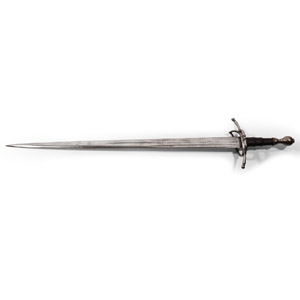
German Hand-And-A-Half Bastard Sword
15th century A.D.Sold for (Inc. bp): £4,680
Comprising a straight, flat triple fuller, double edged and tapering blade engraved with imperial orb sign, Passau wolf mark dated 15th century and 'DIGN LAGDIGNLA', with steel hilt comprising of down-turned quillons with ball finials and single ring outer defence, the bars of round section; matching inner defence bar with matching decoration to the quillons, spherical pommel rebound leather grip with original 'Turk's heads' to top and bottom but worn. 1.46 kg, 1.05 m
Acquired from Military Swords Ltd, UK, 2017. The Kusmirek Collection, UK. Accompanied by a copy of an invoice. This lot has been checked against the Interpol Database of stolen works of art and is accompanied by search certificate no.203964.
