
Loading, please wait...
LOT 1513
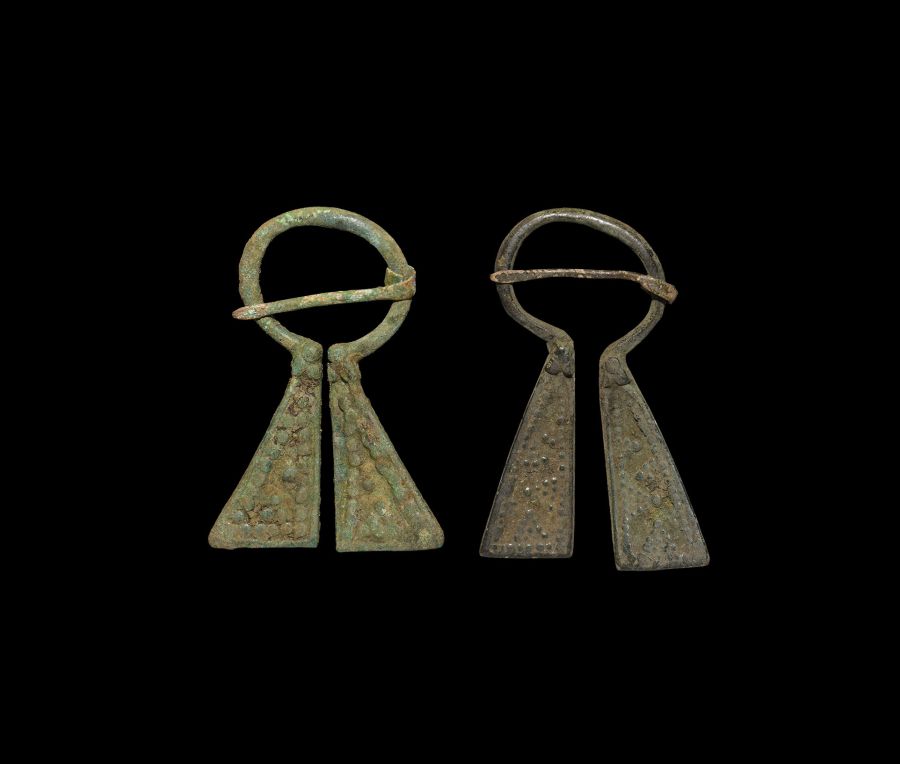
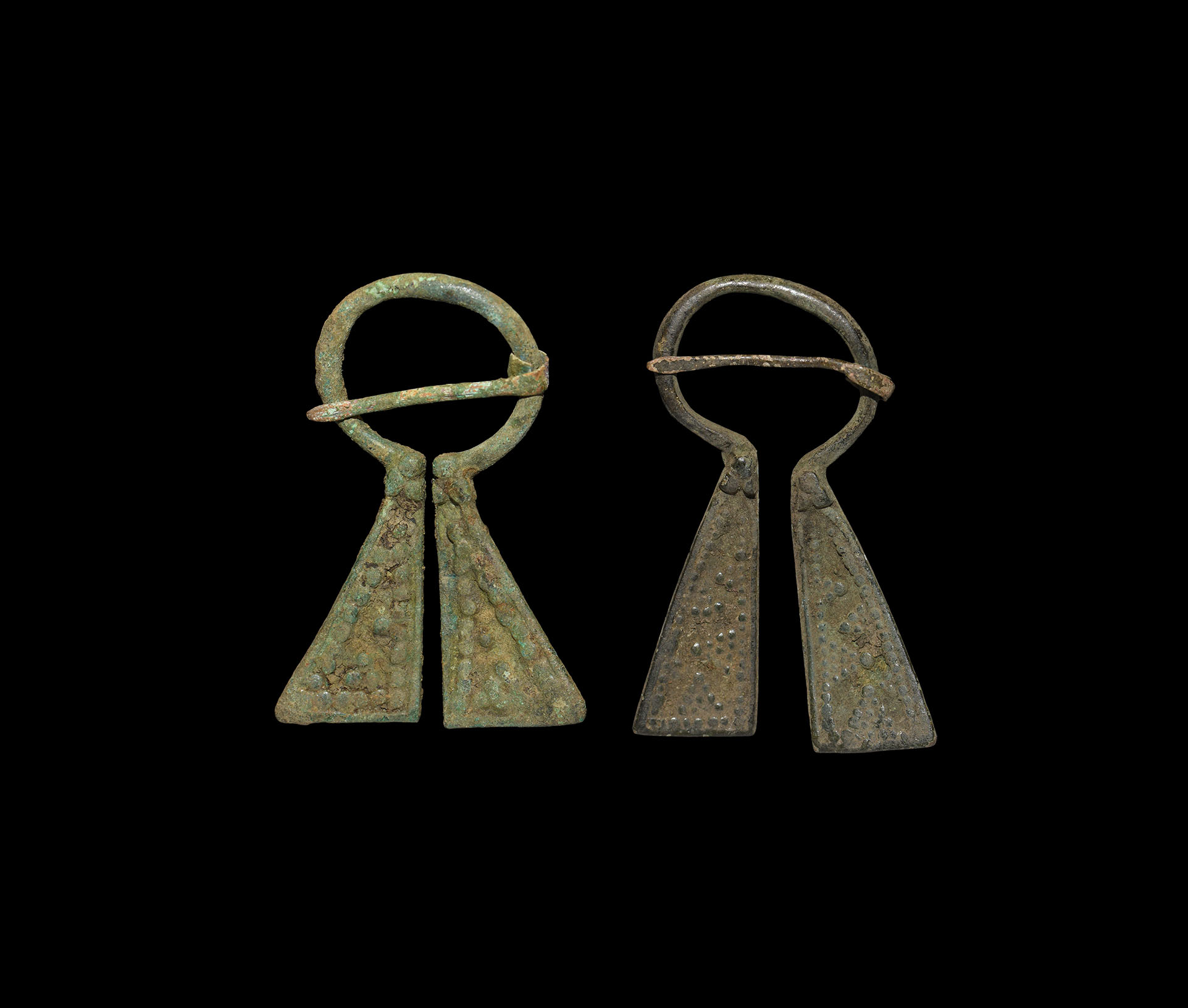
Viking Inspired Bronze Omega Brooch Pair
12TH-15TH CENTURY A.D.
2 in. (24 grams total, 53-55 mm).
Of penannular form, each with trapezoidal flanges with faux granule decoration. [2, No Reserve]
ProvenanceAcquired 1990-2000.
From an old Suffolk collection.
TimeLine Auctions follows a vetting process to ensure the authenticity and legality of all items, reinforcing our commitment to integrity and responsible trading. Each antiquity, antique, and coin lot undergoes thorough examination by a vetting committee of at least ten external specialists, professional trade association members, scientists, and archaeologists: Our Vetting Process
AUCTIONS:
TimeLine is a leading auction house specialising in antiquities, ancient art, collectables, natural history, coins, medals, and books. Our auctions offer museums, collectors, historians, and enthusiasts the opportunity to acquire unique and historically significant pieces.
-
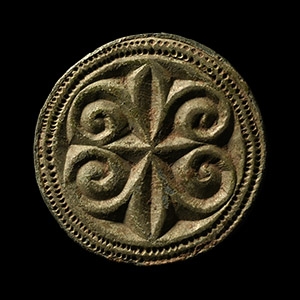
Viking Age Bronze Mount with Scrolls
9th-11th century A.D.Sold for (Inc. bp): £52
In relief with concentric pecked borders. 4.12 grams, 27 mm
From the collection of a North American gentleman, formed in the 1990s. -
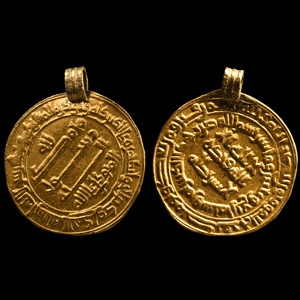
Viking Age Plundered Gold Abbasid Dinar Coin Pendant
9th-11th century A.D.Sold for (Inc. bp): £403
Formed from an Abbasid caliphate dinar coin with ribbed suspension loop above. 4.43 grams, 24 mm
Private collection, London, UK; formed 1970s-1980s. -
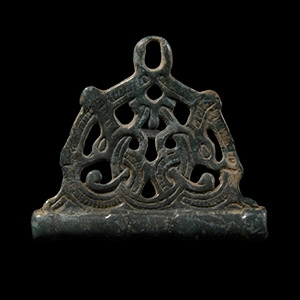
Large Viking Bronze Pendant with Entwined Dragons
9th-11th century A.D.Sold for (Inc. bp): £234
Forming an openwork body, loop to apex, tubular bar below, stylised detailing to the zoomorphs. 37.2 grams, 65 mm
From the collection of a North American gentleman, formed in the 1990s.
