
Loading, please wait...
LOT 1604
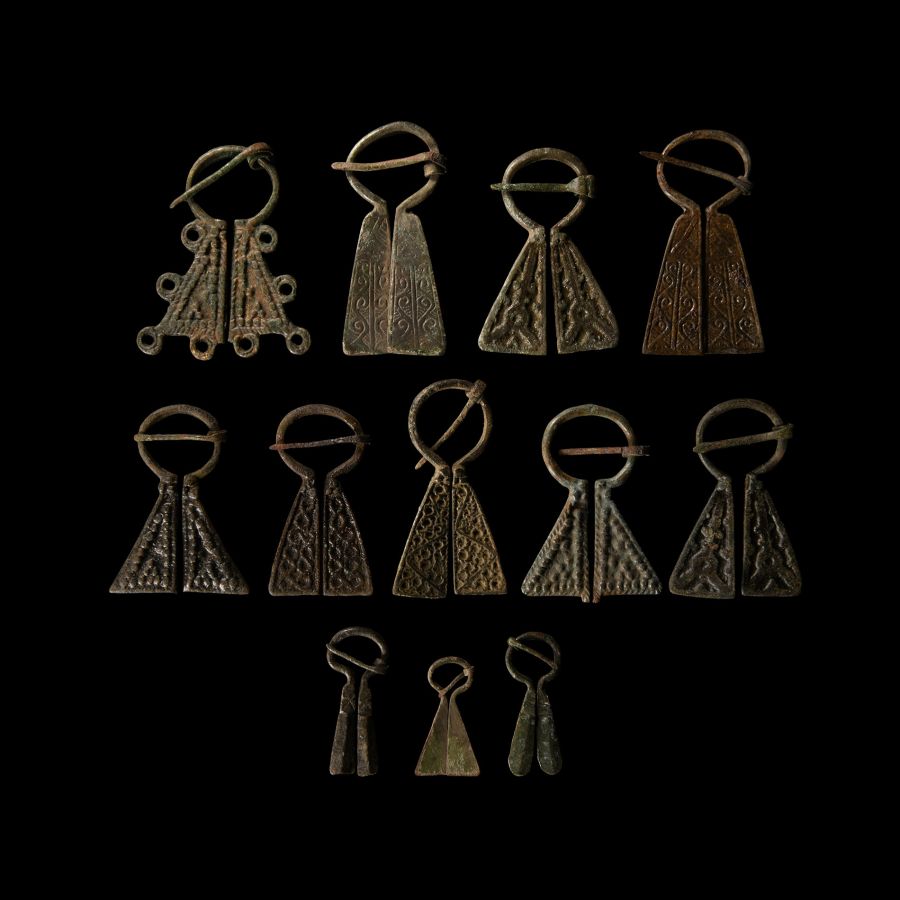
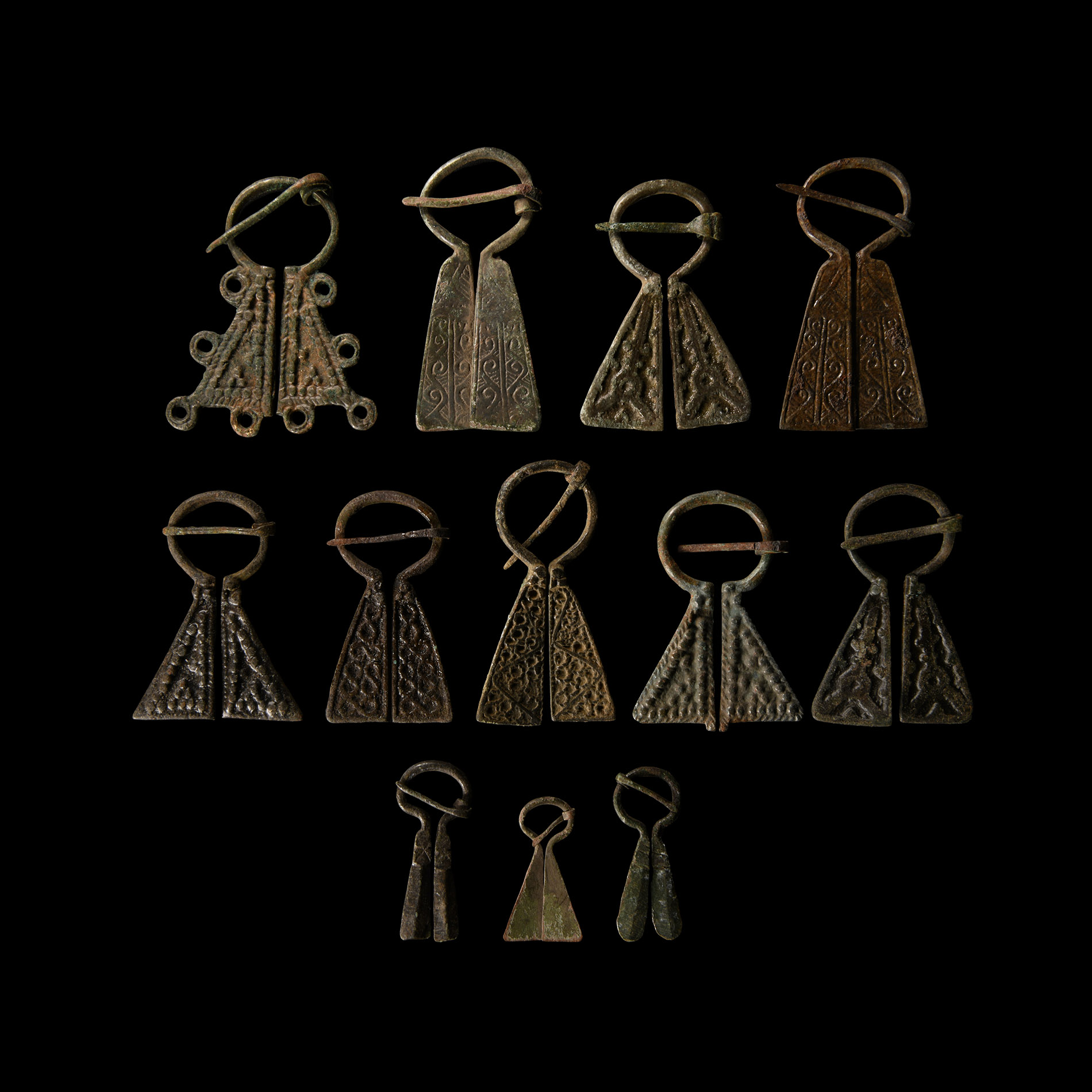
Viking Inspired Bronze Omega Brooch Collection
CIRCA 12TH-14TH CENTURY A.D.
1 1/4 - 2 1/2 in. (135 grams total, 32-64 mm).
Mostly Mordvinian type; some with punched detailing to the panels, others with moulded panels; one with row of lateral loops. [12, No Reserve]
ProvenancePrivate European collection formed before 2000.
UK art market.
Property of an Essex gentleman.
See Sedov, B.B., Finno-Ugri i Balti v Epokhi Srednevekovija, Moscow, 1987, pl.XLIV, item 11.
CONDITIONTimeLine Auctions follows a vetting process to ensure the authenticity and legality of all items, reinforcing our commitment to integrity and responsible trading. Each antiquity, antique, and coin lot undergoes thorough examination by a vetting committee of at least ten external specialists, professional trade association members, scientists, and archaeologists: Our Vetting Process
AUCTIONS:
TimeLine is a leading auction house specialising in antiquities, ancient art, collectables, natural history, coins, medals, and books. Our auctions offer museums, collectors, historians, and enthusiasts the opportunity to acquire unique and historically significant pieces.
-
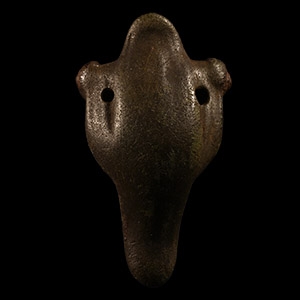
Pre-Viking Bronze Proto Boar's Head Brooch
7th-8th century A.D.Sold for (Inc. bp): £78
Formed as a keeled sub-triangular plaque, convex in profile with bulbs on the flanks extending to a short rounded projection; integral catchplate to reverse and remains of ferrous pin. 15.4 grams, 46 mm
Fine condition.
Acquired early 2000s. East Anglia, UK, collection.
This form of brooch developed from Scandinavian Iron Age forms of bow brooch with crossbar, bow and footplate; it later evolved into the standard form of boar-head brooch. -
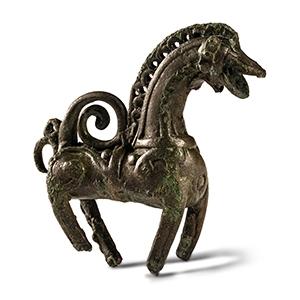
Viking Age Bronze 'Great Beast' Horse Figure
Circa 9th-11th century A.D.Estimate: £2,000 - 3,000 (+bp*)
Opening Bid: £1,000
Hollow-formed finial in the shape of a stylised horse with scrolled tail, arcading to the mane, applied strap and pellet harness detailing. 30 grams, 59 mm
From the private collection of a London gentleman, from his grandfather's collection formed before the early 1970s. This lot has been checked against the Interpol Database of stolen works of art and is accompanied by search certificate no.12078-213598. -
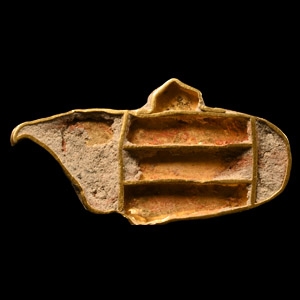
Viking Age Gold Cloisonné Animal-Shaped Pendant
Circa 9th-11th century A.D.Sold for (Inc. bp): £117
Fragment with central area divided into three rectangular cells, D-shaped cell to the end and lateral triangle, irregular scoped cell above; probably from a larger cloisonné decorative item. 0.53 grams, 20 mm
From a late Japanese specialist collector, 1970-2000s.
