
Loading, please wait...
LOT 0309
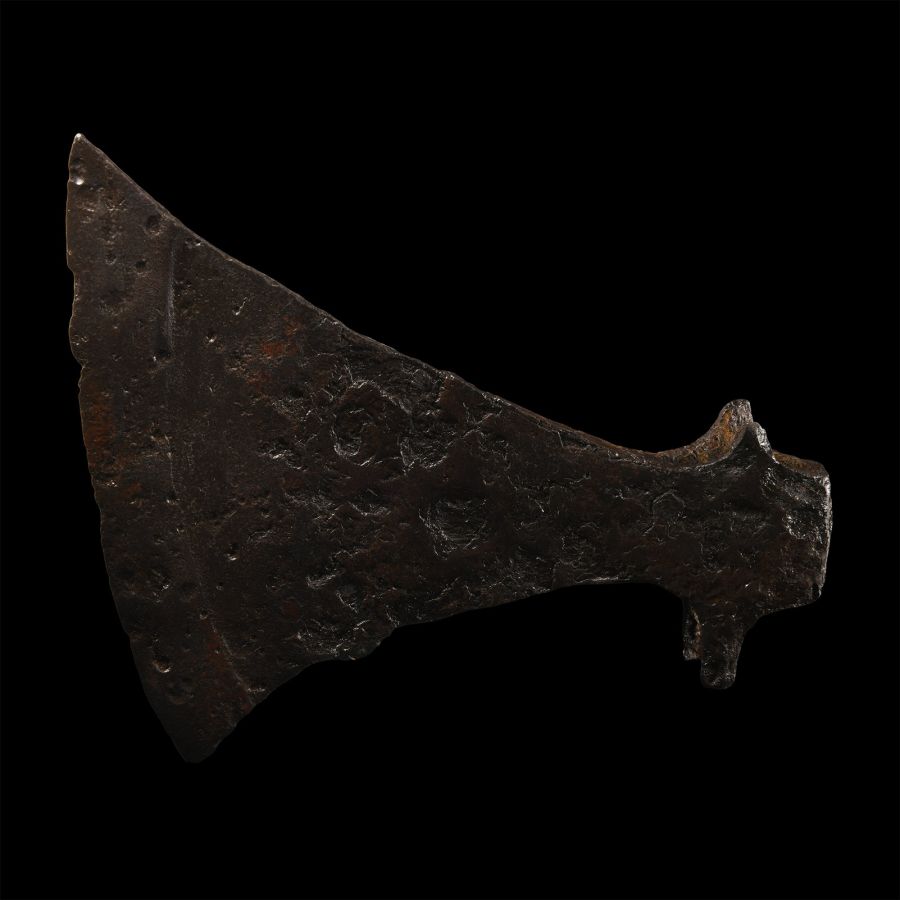
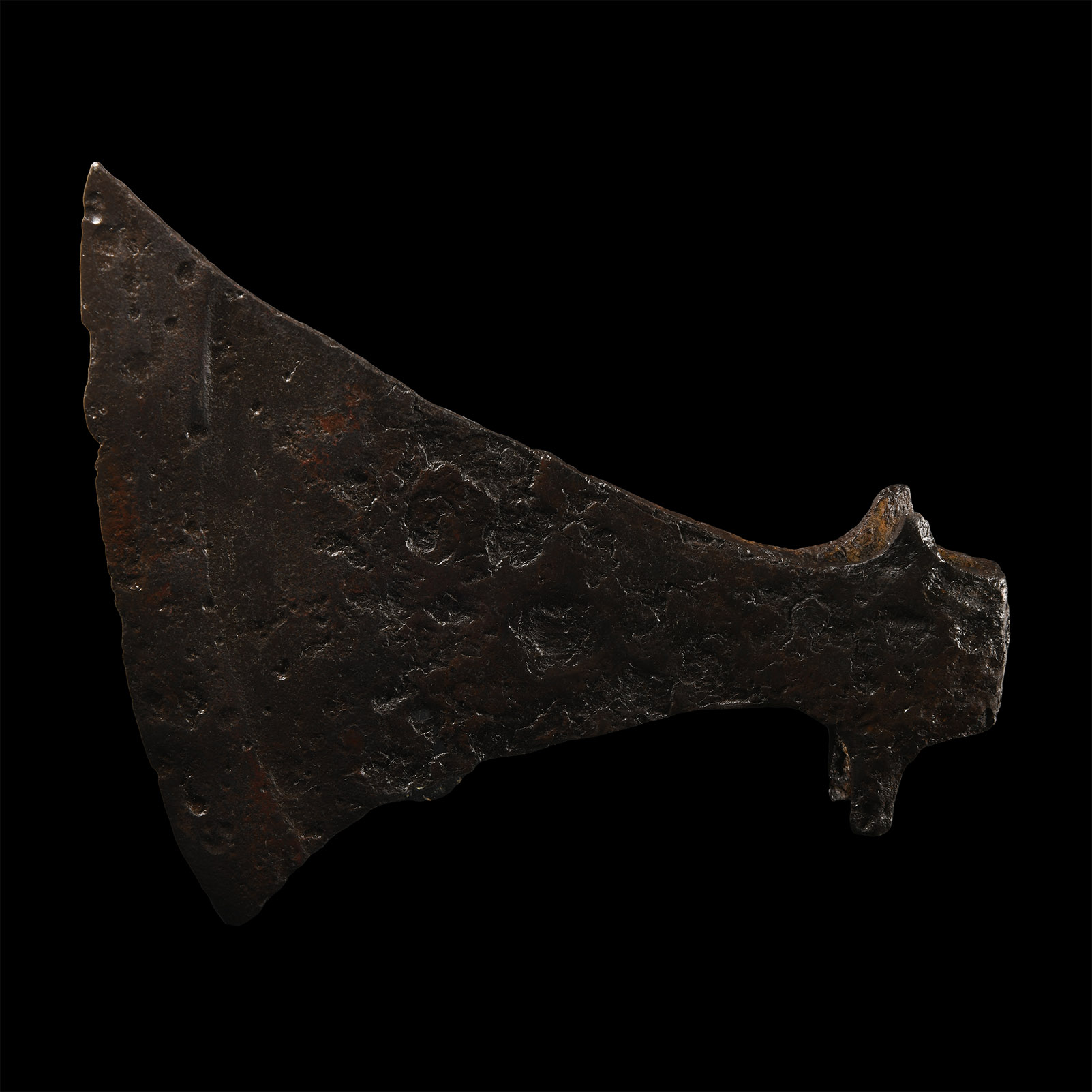
Viking Danish Iron Broad Axehead
CIRCA 9TH-11TH CENTURY A.D.
7 1/4 in. (370 grams, 18.5 cm).
Of asymmetrical profile with reinforced curved cutting edge, triangular-section socket with flanking spurs to upper and lower edges.
ProvenanceFrom the private collection of a London gentleman, from his grandfather's collection formed before the early 1970s.
PublishedExhibited at Harwich Museum, Harwich, Essex, UK, 3rd February-9th March 2024; accompanied by a copy of a photograph of the artefact on display.
LiteratureCf. Arbman, H., Birka I: Die Gräber, Uppsala, 1940, pl.14(5); Hjardar K. and Vike, V., Vikings at War, Oxford, 2016, p.162, for a similar specimen from Troms, dated 1000-1050 A.D.
CONDITIONTimeLine Auctions follows a vetting process to ensure the authenticity and legality of all items, reinforcing our commitment to integrity and responsible trading. Each antiquity, antique, and coin lot undergoes thorough examination by a vetting committee of at least ten external specialists, professional trade association members, scientists, and archaeologists: Our Vetting Process
AUCTIONS:
TimeLine is a leading auction house specialising in antiquities, ancient art, collectables, natural history, coins, medals, and books. Our auctions offer museums, collectors, historians, and enthusiasts the opportunity to acquire unique and historically significant pieces.
-
.jpg)
100 Civil War Period Lead Musket Balls
Circa 17th-18th century A.D.Sold for (Inc. bp): £65
Mixed group of lead-alloy musket and carbine balls, some with casting seam and sprue nipple. 1.71 kg total, 9-19 mm
Found Hertfordshire, UK. -
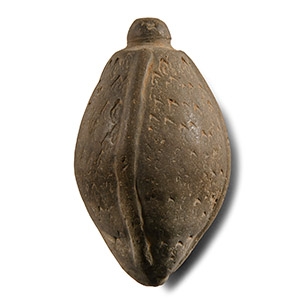
Mongol Ceramic Fire Bomb or Hand Grenade
12th-13th century A.D.Sold for (Inc. bp): £143
Piriform body with domed filler-hole, the surface divided by four long grooves united at the bottom, and pattern like scales; intended to be filled with explosive liquid and wick, used as a hand grenade. 474 grams, 14.3 cm
Acquired 1980-2015. Ex Abelita family collection. Accompanied by an academic paper by military specialist Dr Raffaele D'Amato, dated 15 July 2019 and titled 'Eastern Roman Empire - Greek Fire Bomb or Hand Grenade (μεσαίον kακάβιον) 9th-11th century AD'.
This piece was a sort of ceramic fire grenade, similar to the ones used by the Eastern Romans but of Turco-Mongol type. Apart from the use of manual flame-throwers, special corps of soldiers employed terracotta grenades, in the form of small jars, abundantly evidenced in archaeological excavations, even in Burma. -
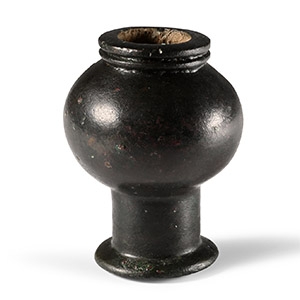
Luristan Sar-e Gorz Bronze Macehead
14th-13th century B.C.Sold for (Inc. bp): £208
With plain globular body, extended to a small raised ring encircling the top of the mace-head, circular short shaft expanding to a circular flat base. 279 grams, 70 mm high
Acquired 1980-2015. Ex Abelita family collection.
Caucasian stone and bronze maces were distinguished by modestly finished, clean processed and predominantly close-to-ball shapes (with a variety of surface finishing, ranging from the smooth, ribbed, lobular forms to the rounded with protrusions and spikes), and the Western Iranian maces, especially the Luristan ones, notable for the variety of different forms. Similar mace-heads, probably realised in Luristan, decorated the head of the sceptres of Assyrian kings like Tukulti-Ninurta I (1243-1207 B.C.).
