
Loading, please wait...
LOT 1706
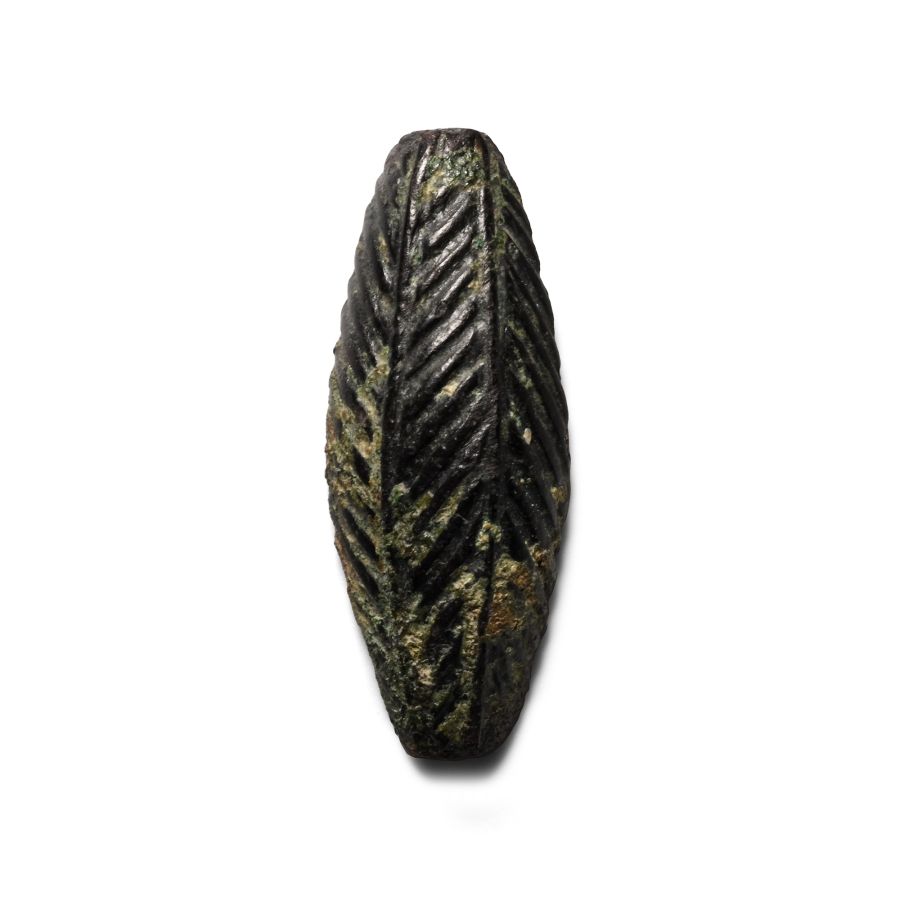
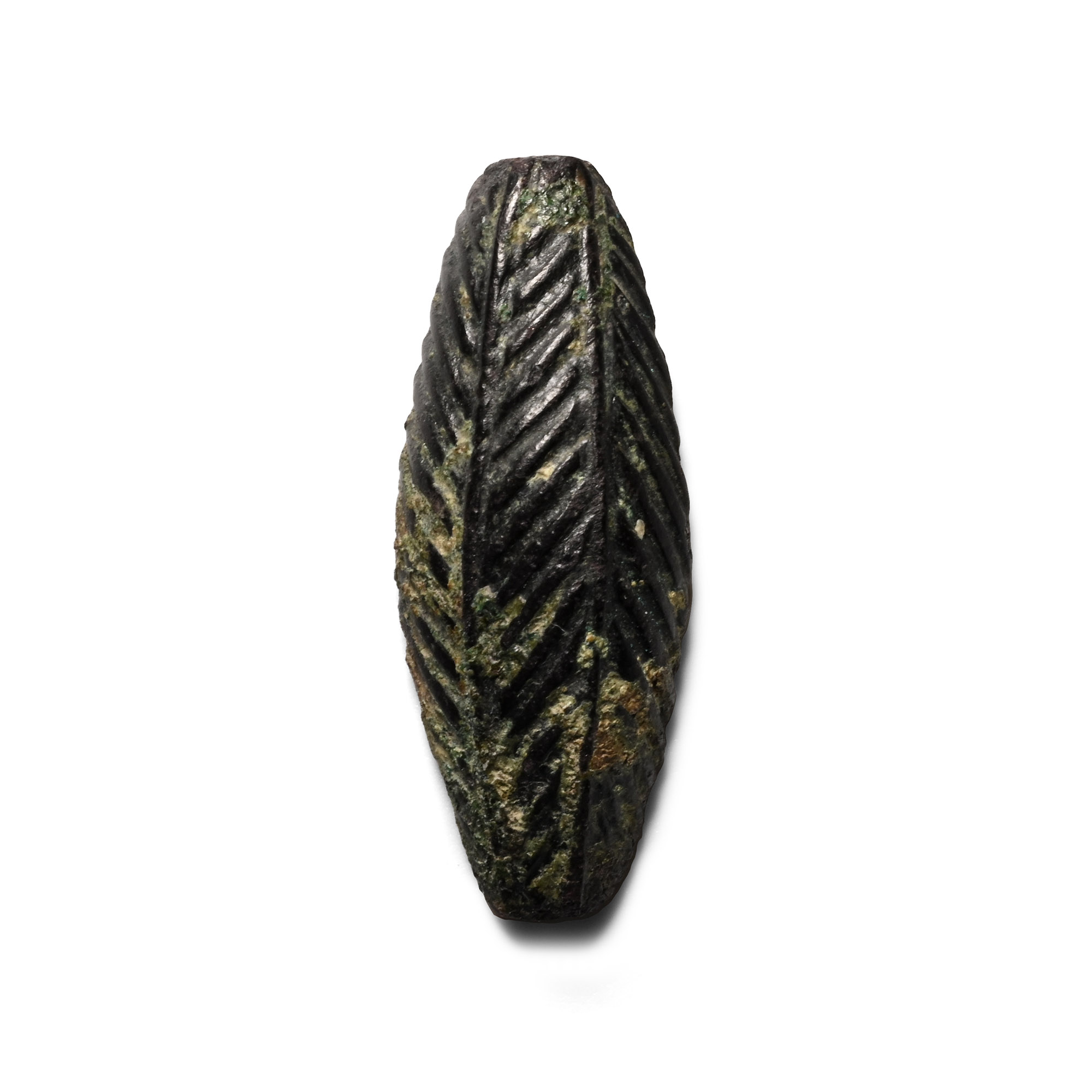
Viking Bronze Trade Weight
9TH-11TH CENTURY A.D.
1 in. (5.34 grams, 25 mm).
Plano-convex in section and lentoid in plan with herringbone detailing to obverse. [No Reserve]
ProvenanceFound near York, Yorkshire, UK, in 2007.
From an old Yorkshire, UK, collection.
This lot is accompanied by an illustrated lot declaration signed by the Head of the Antiquities Department, Dr Raffaele D'Amato.
TimeLine Auctions follows a vetting process to ensure the authenticity and legality of all items, reinforcing our commitment to integrity and responsible trading. Each antiquity, antique, and coin lot undergoes thorough examination by a vetting committee of at least ten external specialists, professional trade association members, scientists, and archaeologists: Our Vetting Process
AUCTIONS:
TimeLine is a leading auction house specialising in antiquities, ancient art, collectables, natural history, coins, medals, and books. Our auctions offer museums, collectors, historians, and enthusiasts the opportunity to acquire unique and historically significant pieces.
-

Viking Age Bronze Twisted Bracelet with Flattened Terminals
9th-12th century A.D.Sold for (Inc. bp): £156
Two rods tightly twisted and curved into a penannular shape with tapering finials, the bracelet hammered on each side into a square section. 42 grams, 70 mm
From a Sussex, UK, private collection; acquired 1980s-1990s. This lot is accompanied by an illustrated lot declaration signed by the Head of the Antiquities Department, Dr Raffaele D'Amato. -

Anglo-Scandinavian Viking Bronze Interlaced Beast Mount
11th century A.D.Sold for (Inc. bp): £416
With openwork Urnes Style design of coiled serpent with head at the lower edge, two upper coils forming the attachment loops. 2.92 grams, 22 mm
Found Doncaster, UK. This lot is accompanied by an illustrated lot declaration signed by the Head of the Antiquities Department, Dr Raffaele D'Amato.
The style of the piece is very reminiscent of a bronze Urnes Style brooch in the Nationalmuseet, Copenhagen published in Wilson, D.M. and Klindt-Jensen, O. Viking Art, London, 1968, pl.LXXIII (f). The swept curves of the tendrils which enmesh the serpent's body are a noted feature of the style, which is found also in the great Norwegian stave churches and elsewhere. -
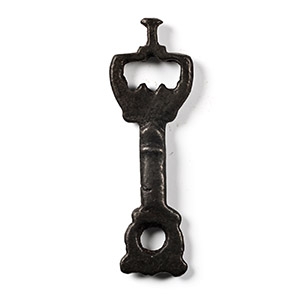
Late Anglo-Scandinavian Viking Bronze Casket Key
10th-13th century A.D.Sold for (Inc. bp): £46
For a slide lock, the shaft with an open circular projection to one end and a larger openwork rectangular projection to the other end terminating with a T-shaped extension. 7.67 grams, 54 mm
Acquired on the UK art market circa 2005. From an old North Country, UK, collection. This lot is accompanied by an illustrated lot declaration signed by the Head of the Antiquities Department, Dr Raffaele D'Amato.
There is much discussion among the scholars on such slide keys, known popularly as 'Viking' keys. According to Kevin Leahy '...they do look something like the keys that come from Viking graves and from Viking sites but I have never seen an example that had the 'T' shaped extension for the end of the bit and I can't actually see how this would have functioned in a slide lock.' An iron example was found at Coppergate in York, in a 12th to 13th century context.
