
Loading, please wait...
LOT 0322
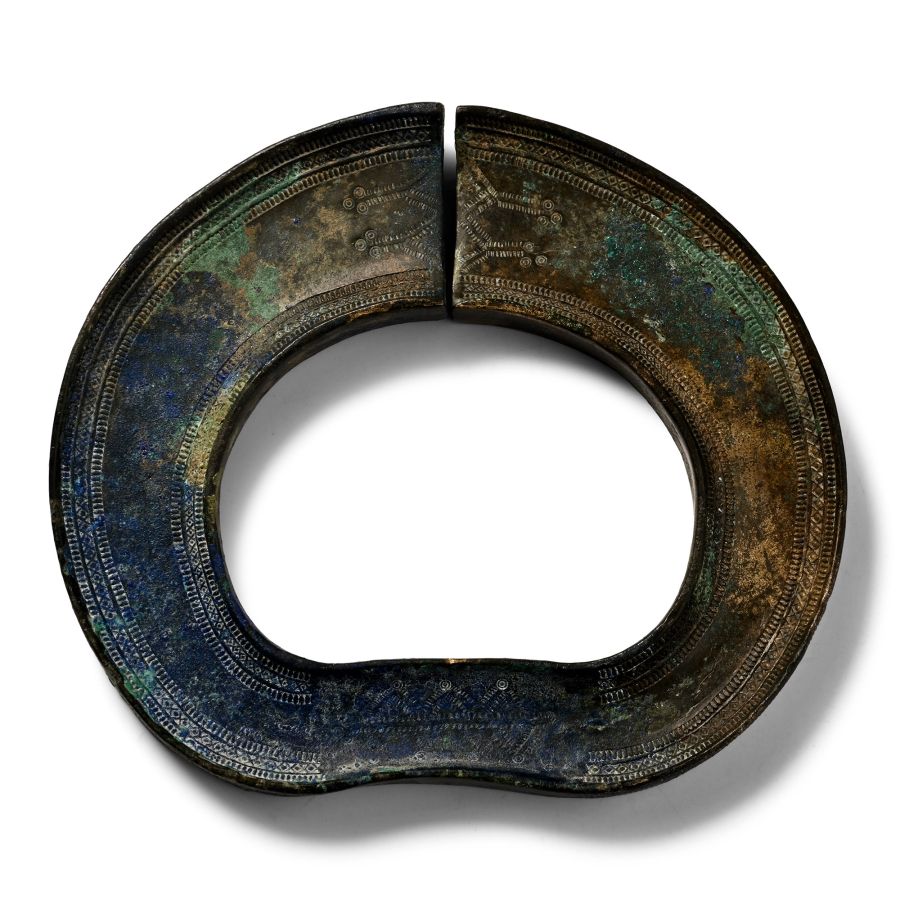
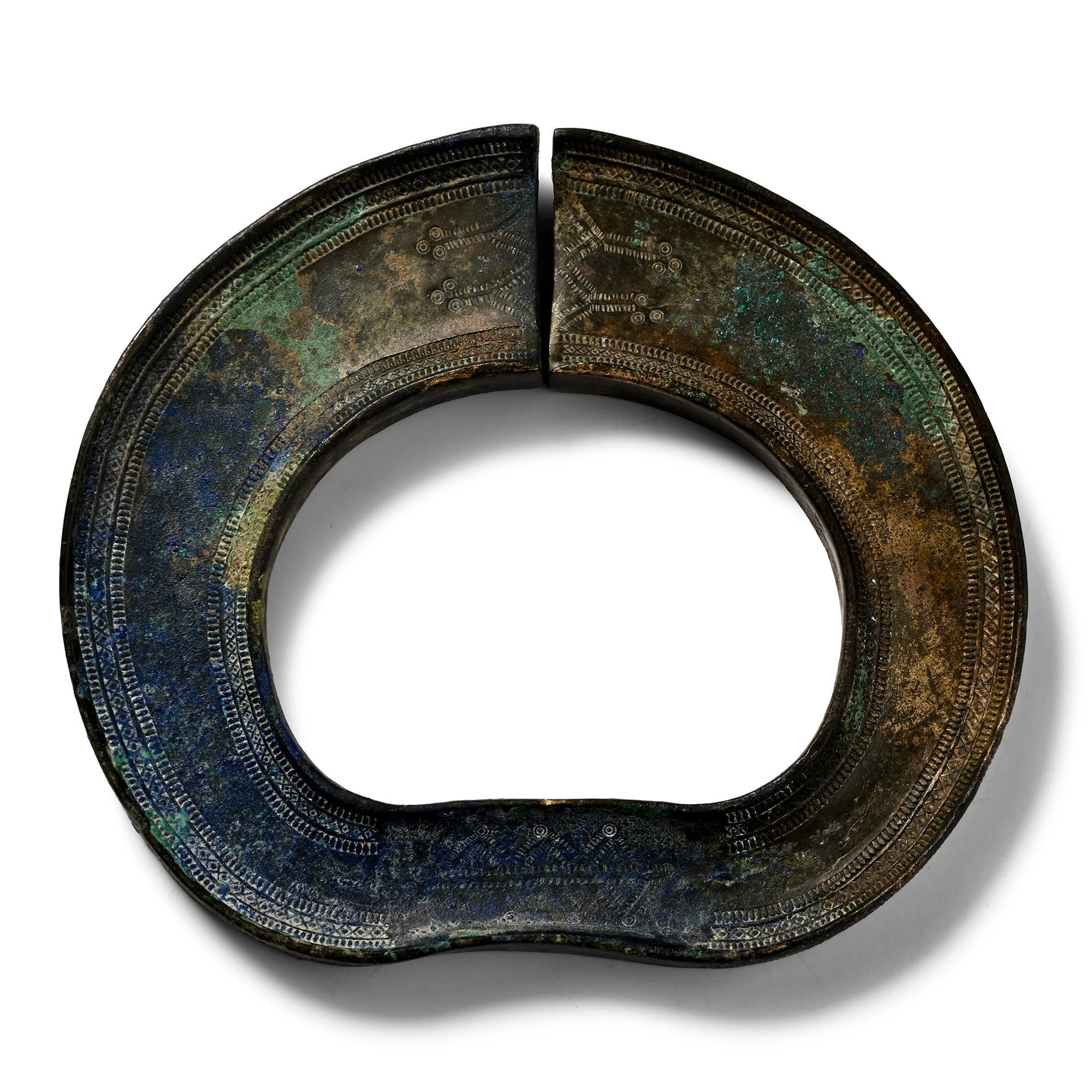
Viking Bronze Protective Armlet
9TH-10TH CENTURY A.D.
4 3/8 in. (216 grams, 11.2 cm).
Omega-shaped in plan with raised flange rim to both edges; bands of punched ornament to each face.
ProvenanceAcquired on the UK art market, 1995-2000s.
Private collection, London, UK.
Cf. The British Museum, museum number 1852,0329.194, for similar identified as Latgalian.
CONDITIONTimeLine Auctions follows a vetting process to ensure the authenticity and legality of all items, reinforcing our commitment to integrity and responsible trading. Each antiquity, antique, and coin lot undergoes thorough examination by a vetting committee of at least ten external specialists, professional trade association members, scientists, and archaeologists: Our Vetting Process
AUCTIONS:
TimeLine is a leading auction house specialising in antiquities, ancient art, collectables, natural history, coins, medals, and books. Our auctions offer museums, collectors, historians, and enthusiasts the opportunity to acquire unique and historically significant pieces.
LOT 0322
Viking Bronze Protective Armlet
Estimate £800 - 1,000€930 - 1,160 (for guidance only)$1,080 - 1,350 (for guidance only)
-
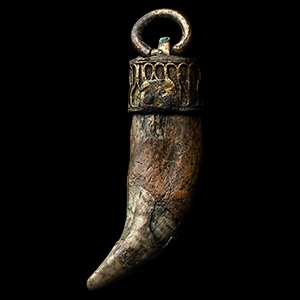
Large Viking Period Bear's Tooth Pendant
9th-12th century A.D.Sold for (Inc. bp): £1,235
A large bear's tooth set into a copper-alloy pendant setting, decorated with corded wire and a circumferential frieze of filigree loops, sturdy suspension loop to the cap. 42.5 grams, 94 mm
Acquired 1971-1972. From the collection of the vendor's father. London, UK, collector. with TimeLine Auctions, Essex, 6 September 2022, no.394. Private collection, London, UK. -
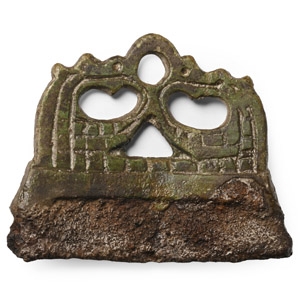
Viking Bronze Fire Steel with Dragons
Circa 10th century A.D.Sold for (Inc. bp): £124
With bronze handle formed as two opposing dragons, each biting its own tail forming the loops; iron striker below. 37.6 grams, 57 mm
From the private collection of a London gentleman, from his grandfather's collection formed before the early 1970s. -
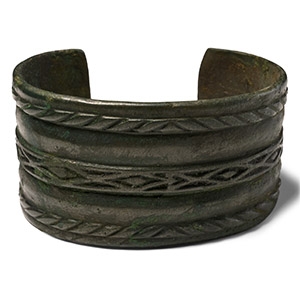
Viking Bronze Bracelet with Bear's Head Terminals
8th-10th century A.D.Sold for (Inc. bp): £650
Flat-section with low-relief reserved zigzag and longitudinal bands, each end with a bear's head and forepaws in plan. 88.7 grams, 69 mm
From the private collection of a London gentleman, from his grandfather's collection formed before the early 1970s.
