
Loading, please wait...
LOT 1688
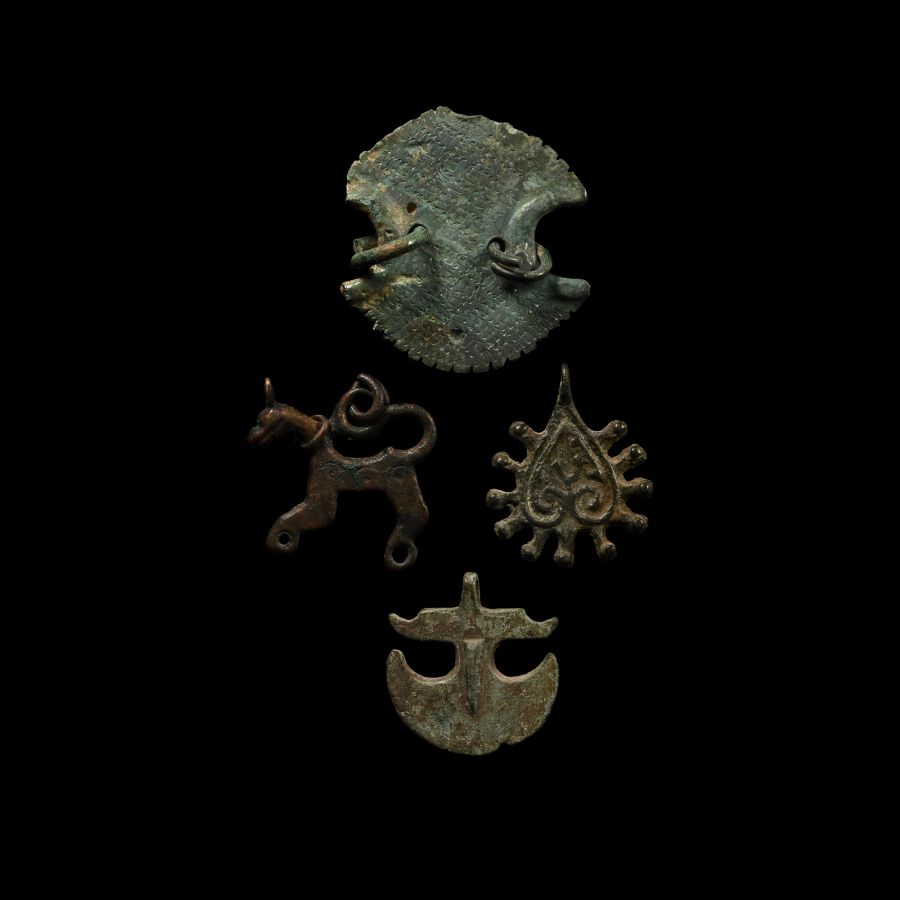
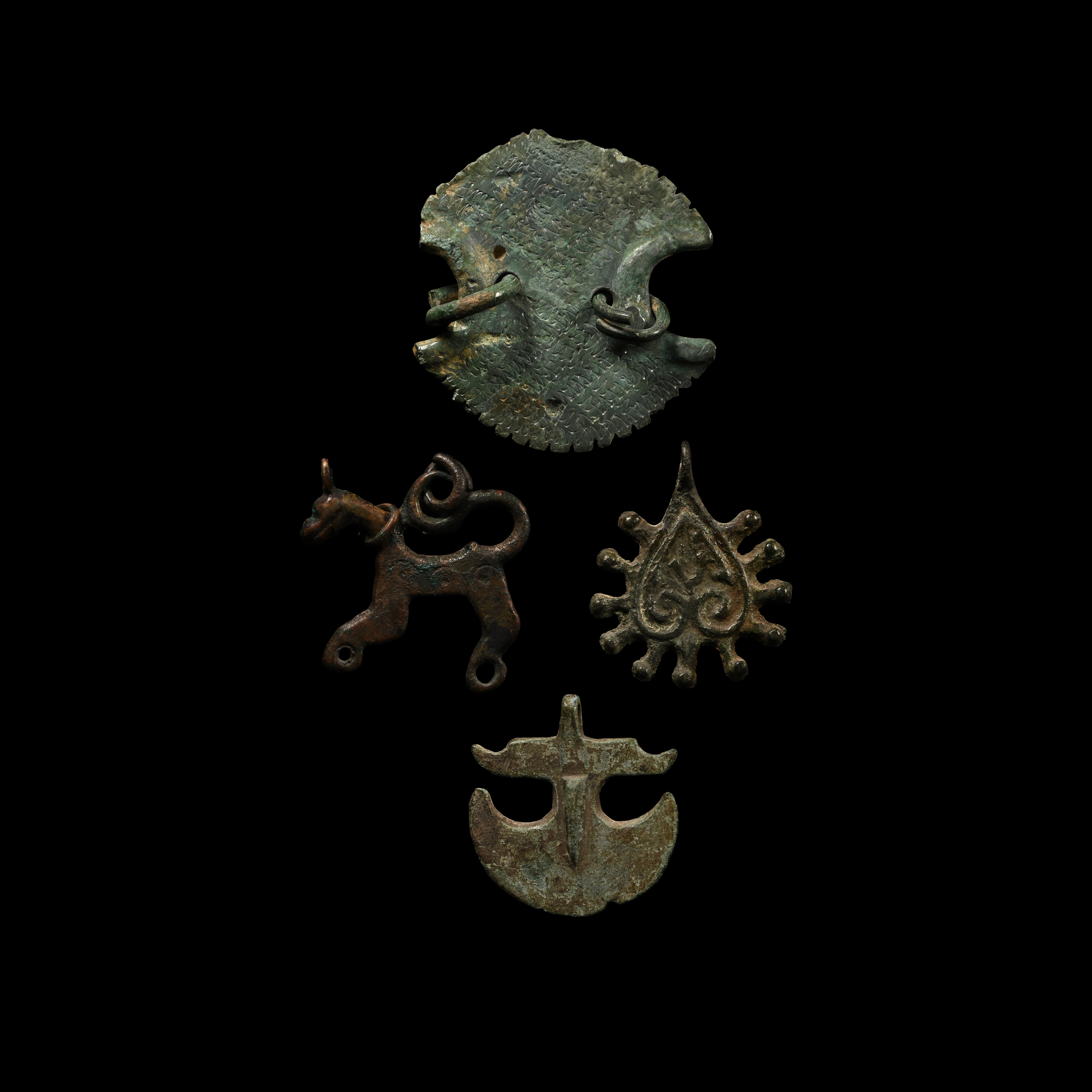
Viking Bronze Pendant Collection
EARLY 9TH-11TH CENTURY A.D.
1 1/4 - 1 3/4 in. (38.3 grams total, 31-46 mm).
Including a zoomorphic mount with pierced feet and suspension loop, and other items. [4]
ProvenanceAcquired on the London art market, 1990s.
Private collection, London.
This lot is accompanied by an illustrated lot declaration signed by the Head of the Antiquities Department, Dr Raffaele D'Amato.
TimeLine Auctions follows a vetting process to ensure the authenticity and legality of all items, reinforcing our commitment to integrity and responsible trading. Each antiquity, antique, and coin lot undergoes thorough examination by a vetting committee of at least ten external specialists, professional trade association members, scientists, and archaeologists: Our Vetting Process
AUCTIONS:
TimeLine is a leading auction house specialising in antiquities, ancient art, collectables, natural history, coins, medals, and books. Our auctions offer museums, collectors, historians, and enthusiasts the opportunity to acquire unique and historically significant pieces.
-
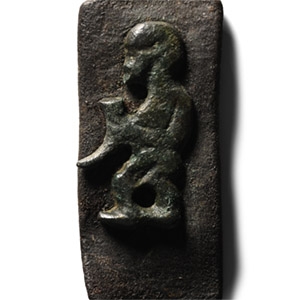
Scandinavian Pre-Viking Bronze Mount on Leather Strap Section
6th-7th century A.D.Estimate: £800 - 1,000 (+bp*)
Opening Bid: £300
Modelled in the half-round, profile figure with drinking horn, attached to a fragment of leather strap. 2.84 grams, 34 mm
From the private collection of a London gentleman, from his grandfather's collection formed before the early 1970s. This lot is accompanied by an illustrated lot declaration signed by the Head of the Antiquities Department, Dr Raffaele D'Amato. -
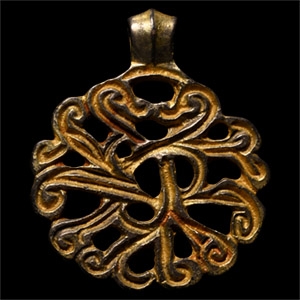
Viking Silver-Gilt Interlaced Pendant
9th-11th century A.D.Sold for (Inc. bp): £546
Openwork kolovrat pendant with fleshy tendril detailing, carinated bale. 6.12 grams, 36 mm
Private collection formed in Europe in the 1980s. Westminster collection, central London, UK. This lot is accompanied by an illustrated lot declaration signed by the Head of the Antiquities Department, Dr Raffaele D'Amato. -
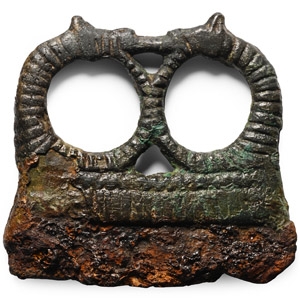
Scandinavian Viking Iron Fire Steel with Bronze Handle with Conjoined Horse Heads
9th-10th century A.D.Sold for (Inc. bp): £182
Bronze handle formed as two opposing horse-heads on ribbed necks, slot to underside to accept the verrous striker. 31 grams, 54 mm
From the private collection of a London gentleman, from his grandfather's collection formed before the early 1970s. This lot is accompanied by an illustrated lot declaration signed by the Head of the Antiquities Department, Dr Raffaele D'Amato.
