
Loading, please wait...
LOT 1617
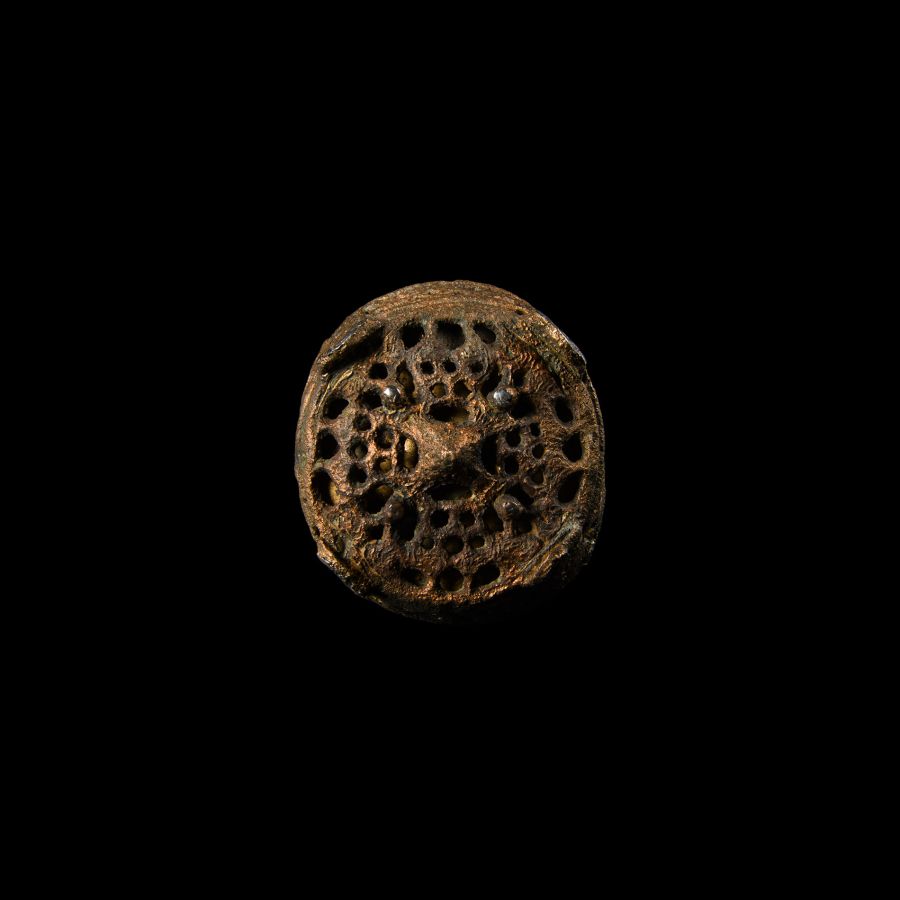
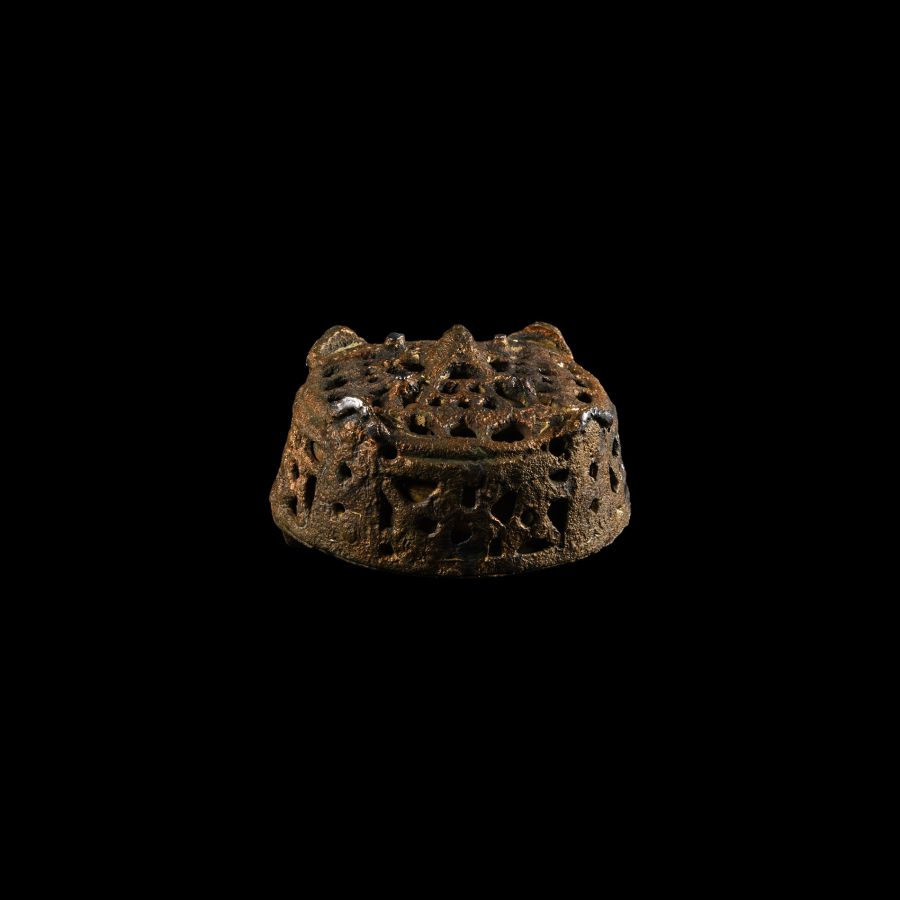
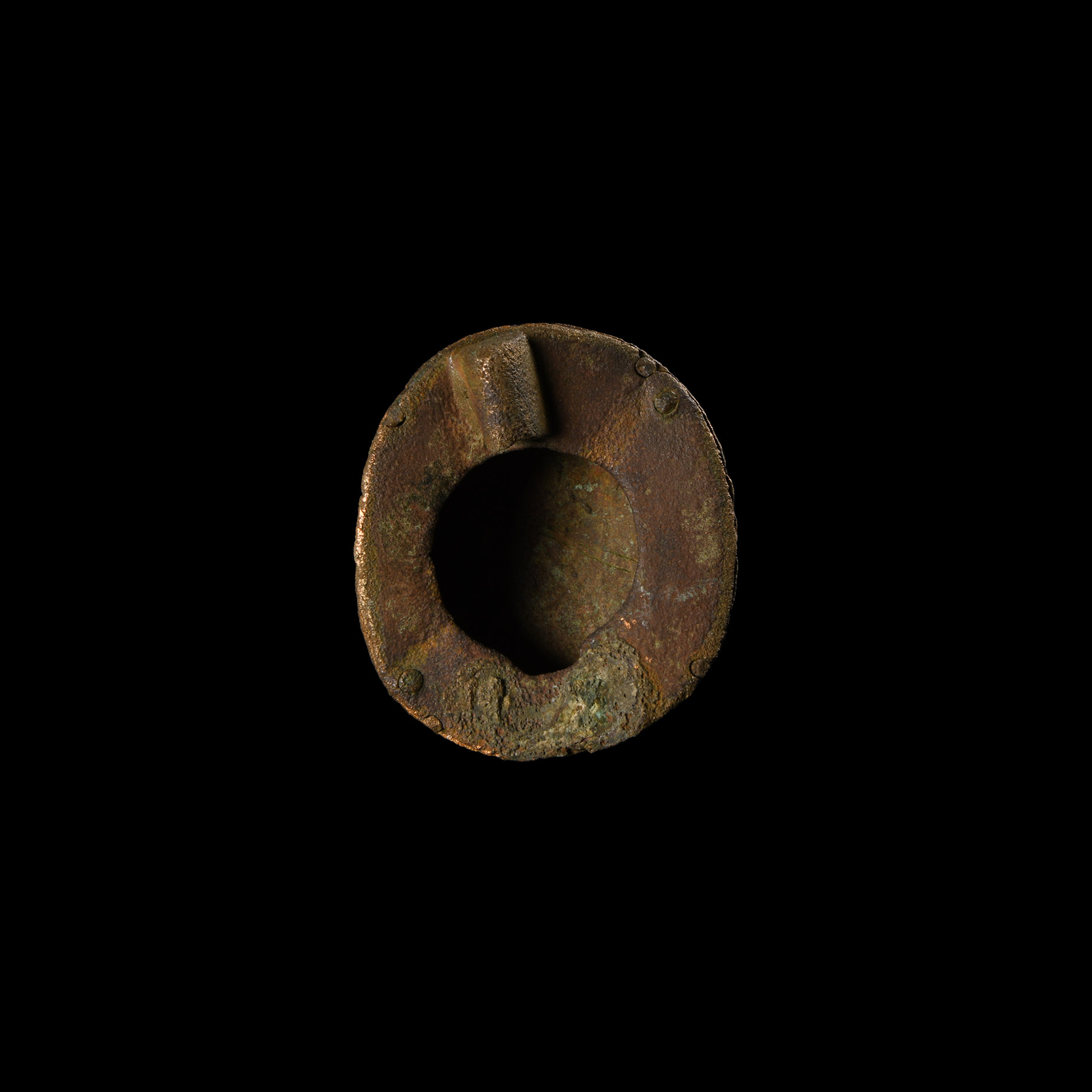
Viking Bronze Openwork Box Brooch with Silver Detailing
11TH CENTURY A.D.
2 1/8 in. (95 grams, 55 mm).
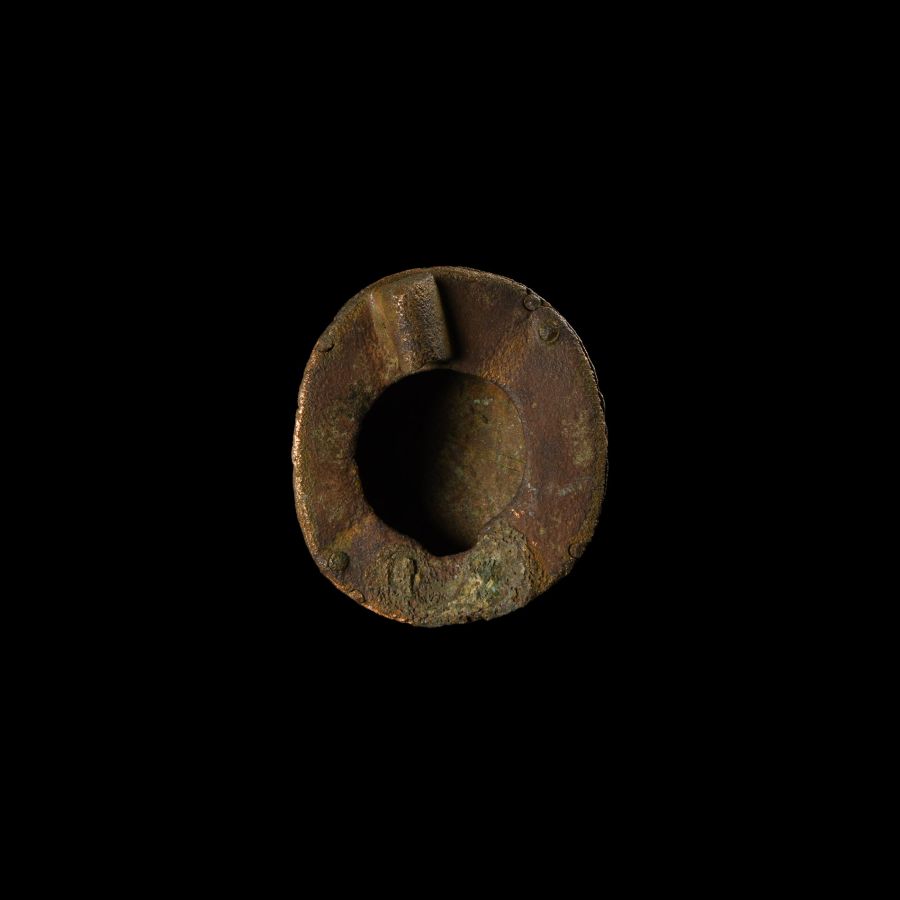
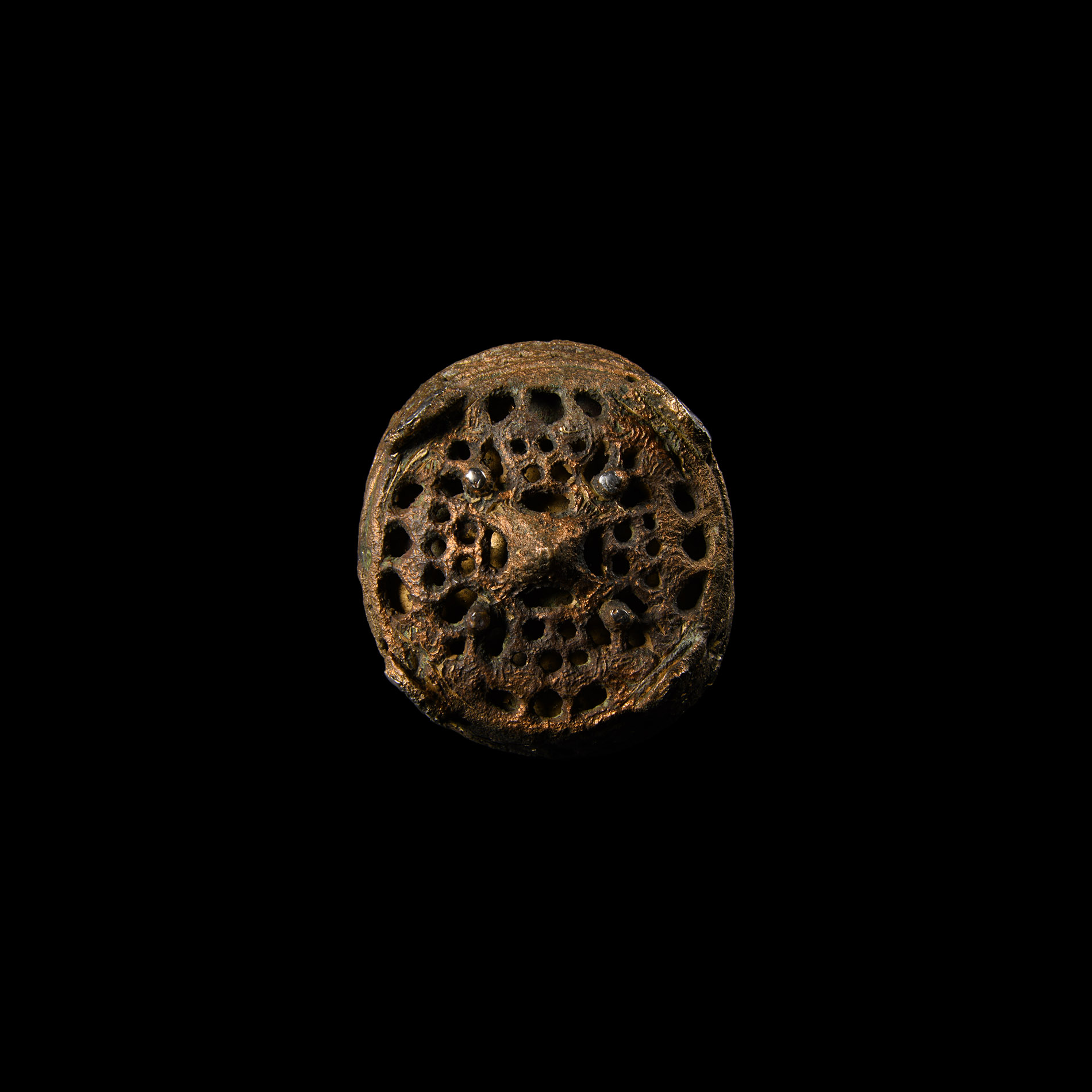
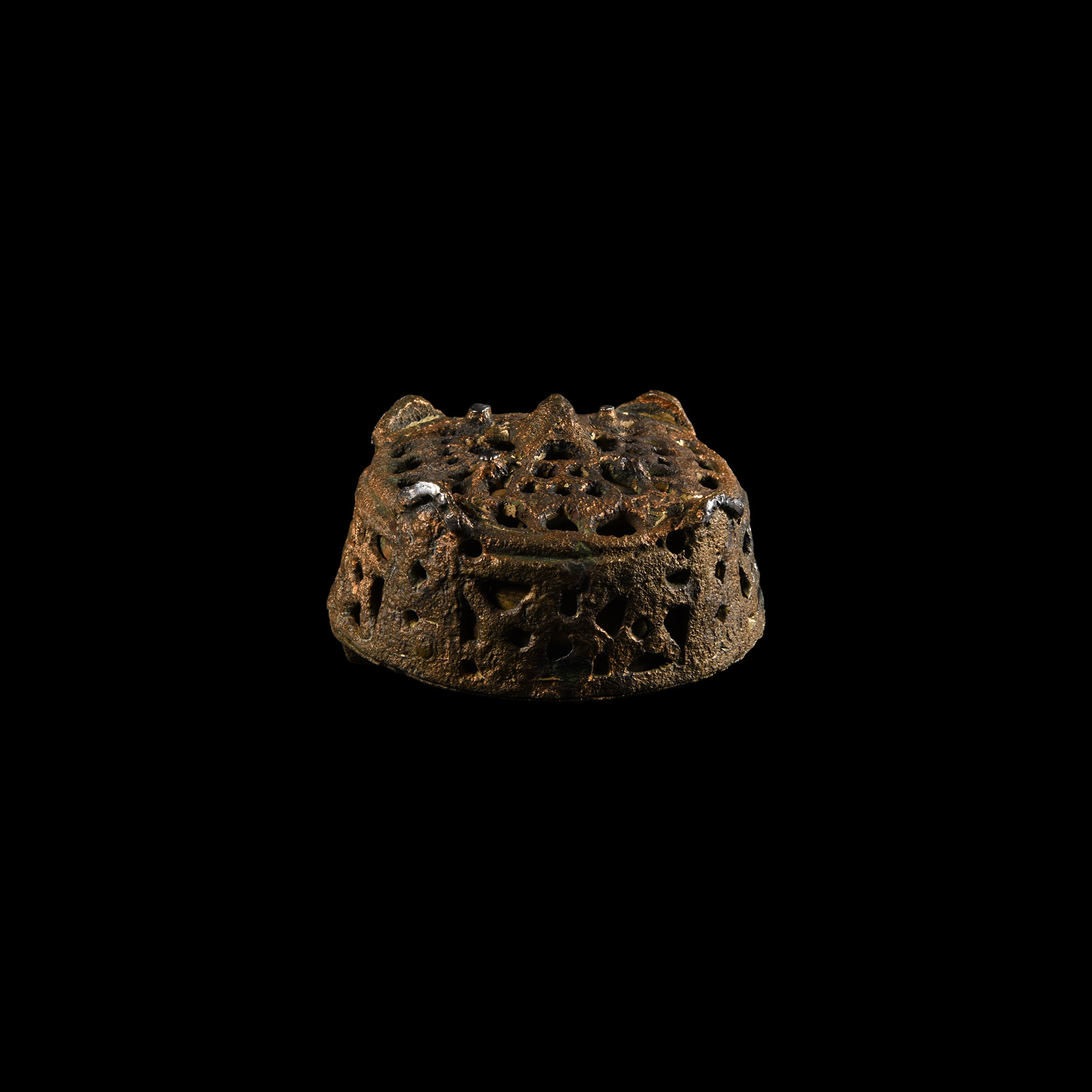
Formed as an openwork outer shell, inner container and bottom plate; the upper face with central conical boss and four small satellite bosses each with a silver surface disc; to the outer face four pierced tongue-shaped panels with D-shaped finials proud of the upper face, each with a silvered element to the upper end; the bottom plate with integral catchplate and central void, four attachment pins to the underside; the upper face and sidewall executed in Urnes style zoomorphic openwork; the inner element a plain sheet-bronze container.
ProvenanceAcquired in the 1950s.
Ex private collection, South West England.
Cf. MacGregor, A. et al., A Summary Catalogue of the Continental Archaeological Collections, Oxford, 1997, items 1.8,9, for type.
FootnotesOn the Baltic island of Gotland, high-ranking females wore 'box' (or 'drum') brooches to secure their outer garments at the shoulders. The inner container may have been used to hold small valuables.
CONDITIONTimeLine Auctions follows a vetting process to ensure the authenticity and legality of all items, reinforcing our commitment to integrity and responsible trading. Each antiquity, antique, and coin lot undergoes thorough examination by a vetting committee of at least ten external specialists, professional trade association members, scientists, and archaeologists: Our Vetting Process
AUCTIONS:
TimeLine is a leading auction house specialising in antiquities, ancient art, collectables, natural history, coins, medals, and books. Our auctions offer museums, collectors, historians, and enthusiasts the opportunity to acquire unique and historically significant pieces.
LOT 1617
Viking Bronze Openwork Box Brooch with Silver Detailing
Estimate £500 - 700€580 - 810 (for guidance only)$680 - 950 (for guidance only)
-
.jpg)
Scandinavian Viking Bronze Box Brooch
9th-10th century A.D.Estimate: £1,200 - 1,700 (‡+bp*)
Opening Bid: £600
Featuring a squat cylindrical body, ornate cruciform motif to upper face, zoomorphic panels to the side wall; hollow-formed; remains of pin lug and catchplate to reverse. 93 grams, 53 mm
From the collection of a North American gentleman, formed in the 1990s. -
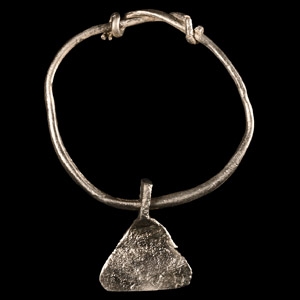
Viking Age Silver Axe-Shaped Pendant with Ring
Circa 9th-11th century A.D.Sold for (Inc. bp): £117
Suspension ring with ends wound around the shank, triangular axehead pendant. 2.21 grams, 43 mm
Property of the vendor's grandfather, thence by family descent, circa 1985. From the private collection of a New York, USA gentleman. -
.jpg)
Viking Period Silver Lunar Pendant
Circa 10th century A.D.Sold for (Inc. bp): £156
A silver crescent pendant with applied rim, recurved suspension loop with granule, three applied granules and curved band to the field; Slavic workmanship. 3.94 grams, 26 mm
Acquired in the late 1990s-2000. Property of an East London gentleman.
