
Loading, please wait...
LOT 1392
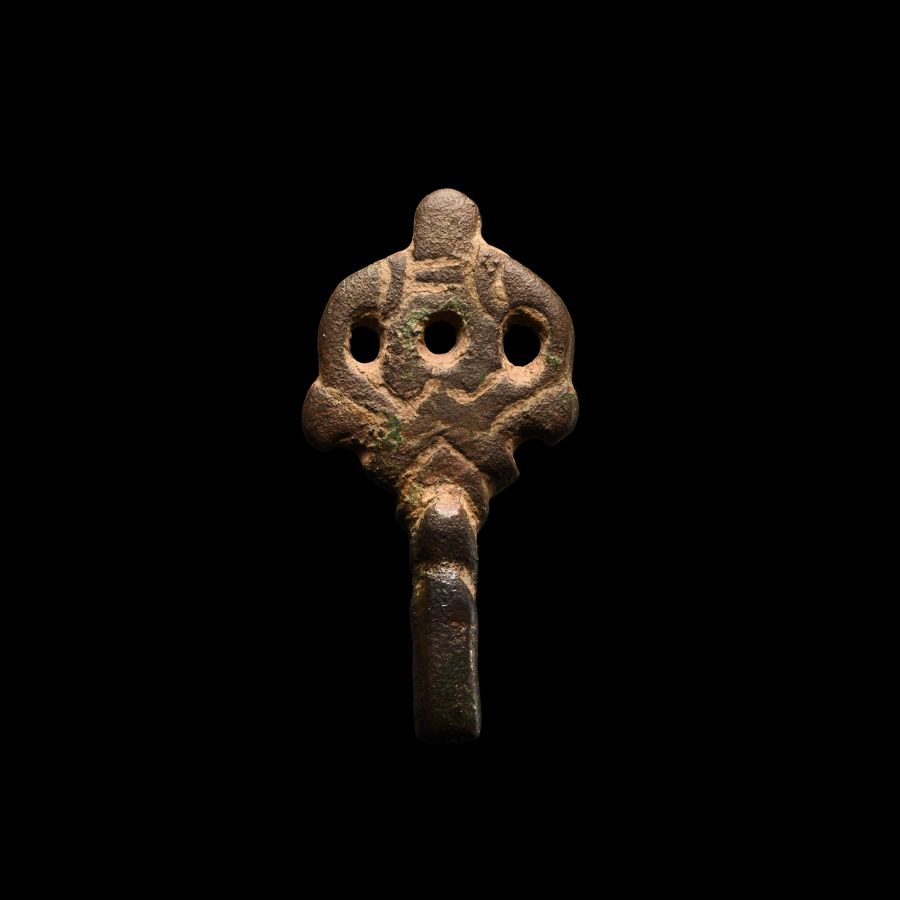
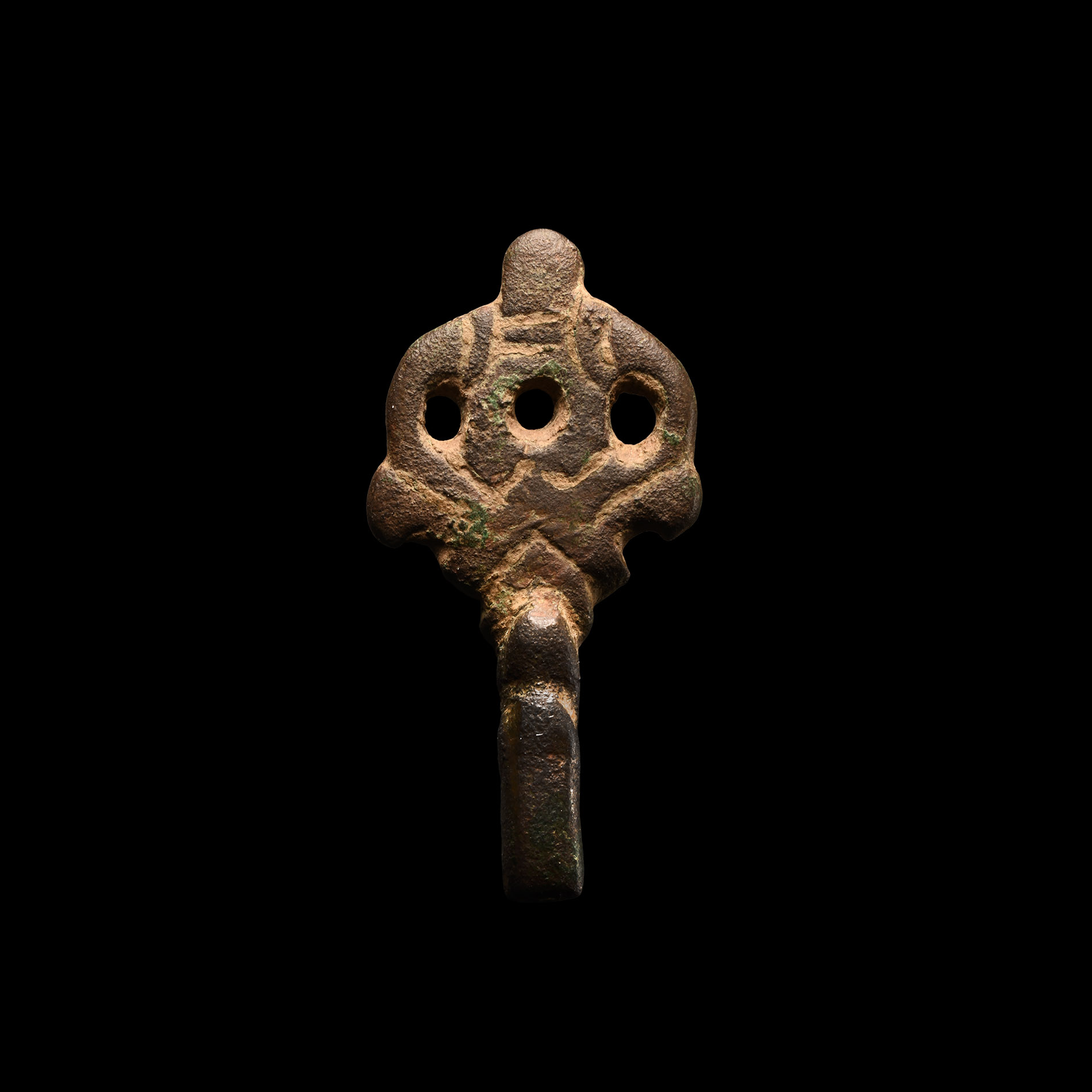
Viking Bronze Lyre Tuning Key Handle
9TH-11TH CENTURY A.D.
1 3/4 in. (12.7 grams, 45 mm).
Featuring a slotted end to the shank, D-shaped bow with openwork and low-relief ornament. [No Reserve]
ProvenanceFrom the collection of a North American gentleman, formed in the 1990s.
CONDITIONTimeLine Auctions follows a vetting process to ensure the authenticity and legality of all items, reinforcing our commitment to integrity and responsible trading. Each antiquity, antique, and coin lot undergoes thorough examination by a vetting committee of at least ten external specialists, professional trade association members, scientists, and archaeologists: Our Vetting Process
AUCTIONS:
TimeLine is a leading auction house specialising in antiquities, ancient art, collectables, natural history, coins, medals, and books. Our auctions offer museums, collectors, historians, and enthusiasts the opportunity to acquire unique and historically significant pieces.
LOT 1392
Viking Bronze Lyre Tuning Key Handle
Estimate £50 - 70€58 - 81 (for guidance only)$68 - 95 (for guidance only)
-
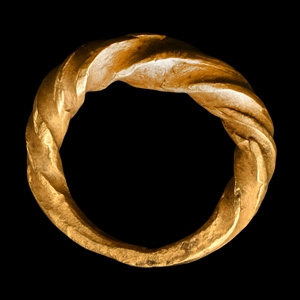
Viking Age Twisted Gold Ring
Circa 10th century A.D.Estimate: £1,800 - 2,400 (+bp*)
Opening Bid: £900
The decoratively twisted bar with a tapering, circular cross-section and butted ends fused at the underside. 6.47 grams, 20.94 mm overall, 14.41 mm internal diameter (approximate size British F, USA 2 3/4, Europe 3.67, Japan 3)
Acquired on the London art market, 1980s-1990s. -
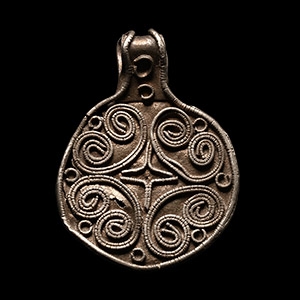
Viking Silver Filigree Pendant with Scrolled Cross
10th century A.D.Sold for (Inc. bp): £468
Within a filigree border; suspension loop above. 2.6 grams, 32 mm
From the collection of a North American gentleman, formed in the 1990s.
In the Gnezdovo Hoard, 46 beads of sheet silver, most with granulation of Slav character, others with filigree, were part of one of the greatest Viking treasure found in the East. The jewellery, most of Scandinavian or Slav character, show the great mix of style and decoration which ornamented the dress and the garments of the Vikings in the East. -
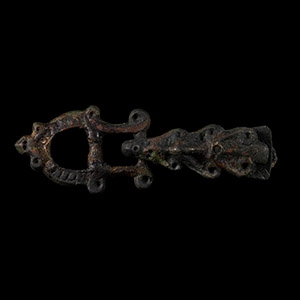
Viking Age Bronze Dragon Strap End with Loop
9th-11th century A.D.Sold for (Inc. bp): £65
Retaining attachment rivets; articulate buckle and strap end with zoomorphs in relief. 30.5 grams, 79 mm
From the collection of a North American gentleman, formed in the 1990s.
