
Loading, please wait...
LOT 1688
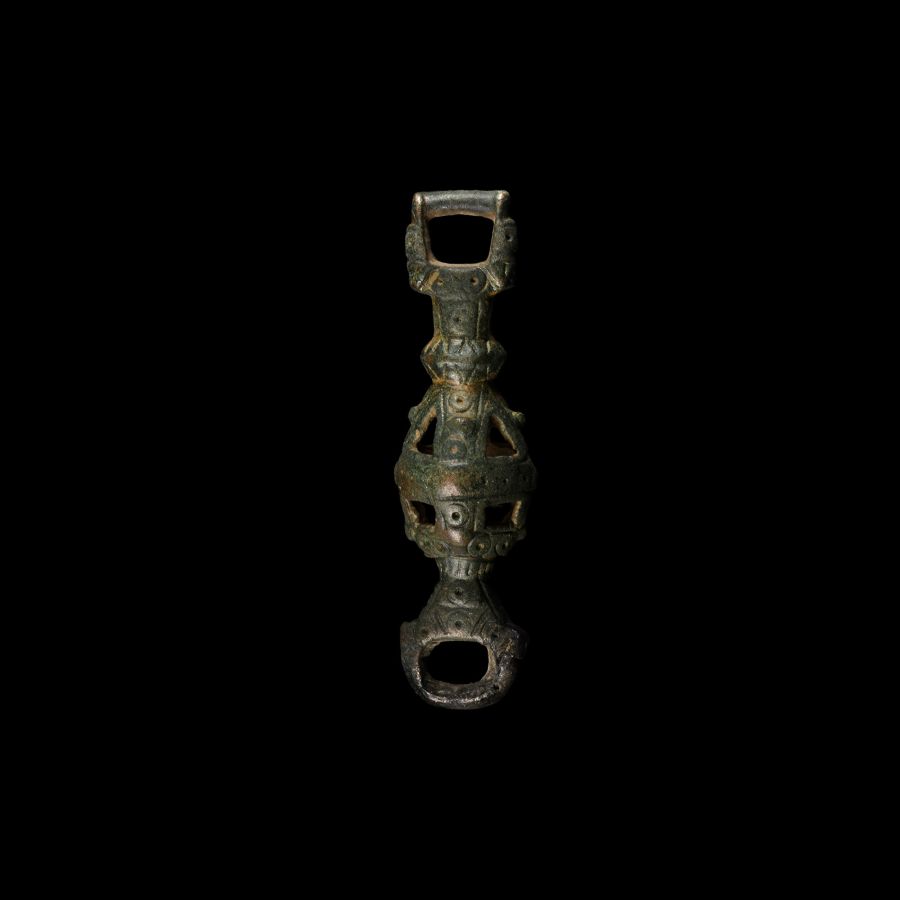
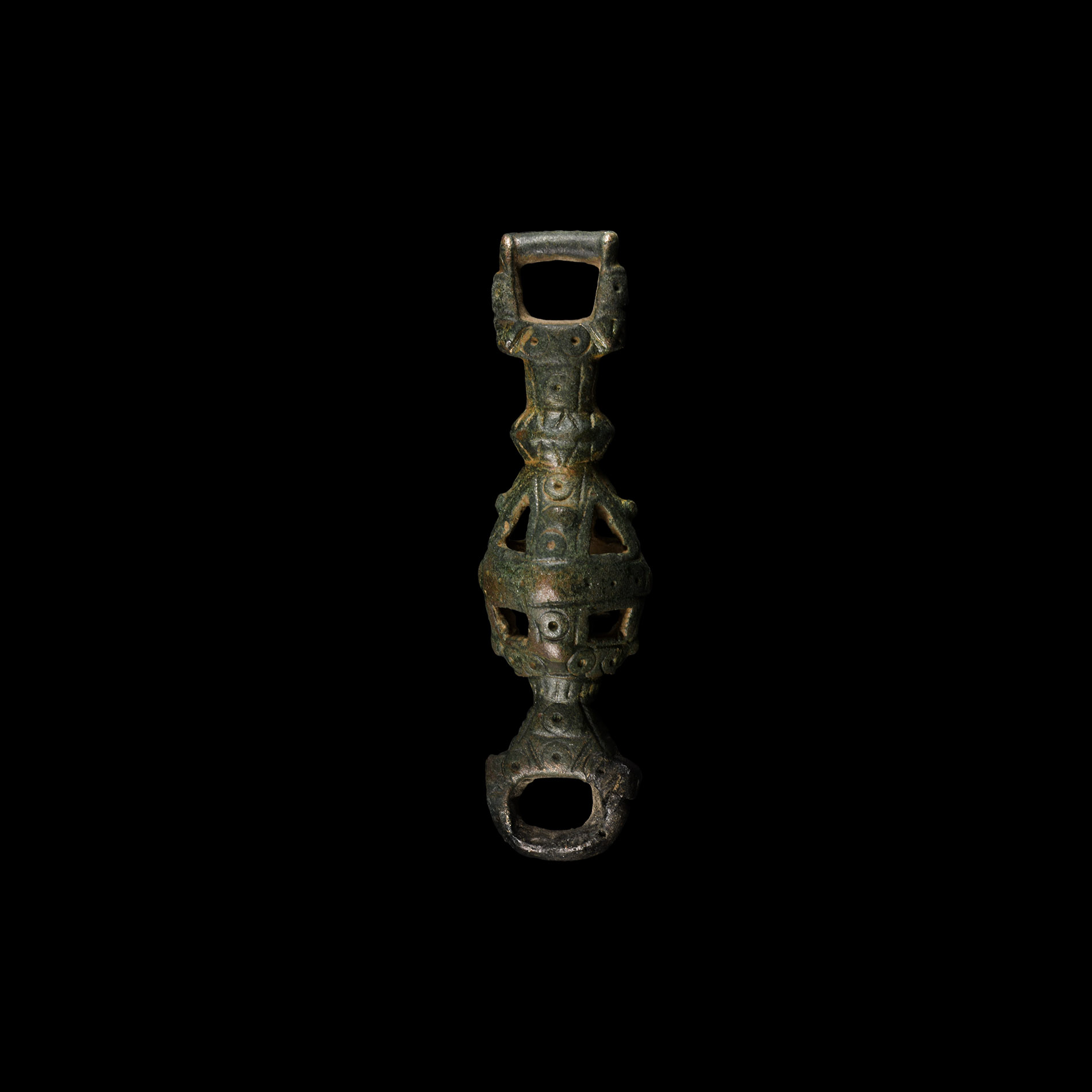
Viking Bronze Hunting Dog Leash Swivel with Bear-Head Terminals
10TH-11TH CENTURY A.D.
3 in. (45.1 grams, 77 mm).
Featuring a central openwork bulb, rod with D-shaped loop above, separate similar loop below; ring-and-dot motifs to the body, bear-head masks to the sides of the loops.
ProvenanceFound near Fakenham, Norfolk, UK, in 2006.
CONDITIONTimeLine Auctions follows a vetting process to ensure the authenticity and legality of all items, reinforcing our commitment to integrity and responsible trading. Each antiquity, antique, and coin lot undergoes thorough examination by a vetting committee of at least ten external specialists, professional trade association members, scientists, and archaeologists: Our Vetting Process
AUCTIONS:
TimeLine is a leading auction house specialising in antiquities, ancient art, collectables, natural history, coins, medals, and books. Our auctions offer museums, collectors, historians, and enthusiasts the opportunity to acquire unique and historically significant pieces.
LOT 1688
Viking Bronze Hunting Dog Leash Swivel with Bear-Head Terminals
Sold for (Inc. bp): £338
-
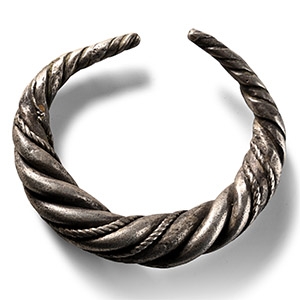
Heavy Viking Twisted Silver Bracelet
Circa 10th century A.D.Sold for (Inc. bp): £442
Penannular in form with tapering ends, ropework wire applied between the rounded rods. 128 grams, 76 mm
From the private collection of a London gentleman, from his grandfather's collection formed before the early 1970s. -
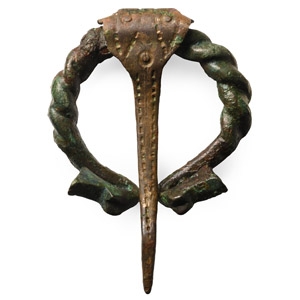
Viking Bronze Penannular Brooch with Dragon Heads
10th-12th century A.D.Sold for (Inc. bp): £416
Featuring returned dragon-head terminals and braided shank, punched decoration to the free-running pin head. 24.3 grams, 57 mm
From the private collection of a London gentleman, from his grandfather's collection formed before the early 1970s. -
.jpg)
Viking Age Decorated Bronze Broad Axehead Pendant
9th-11th century A.D.Sold for (Inc. bp): £117
Formed with a ropework band to the edge of each cheek and the socket, doubling as the suspension loop. 5.2 grams, 33 mm wide
From the private collection of a London gentleman, from his grandfather's collection formed before the early 1970s.
