
Loading, please wait...
LOT 1471
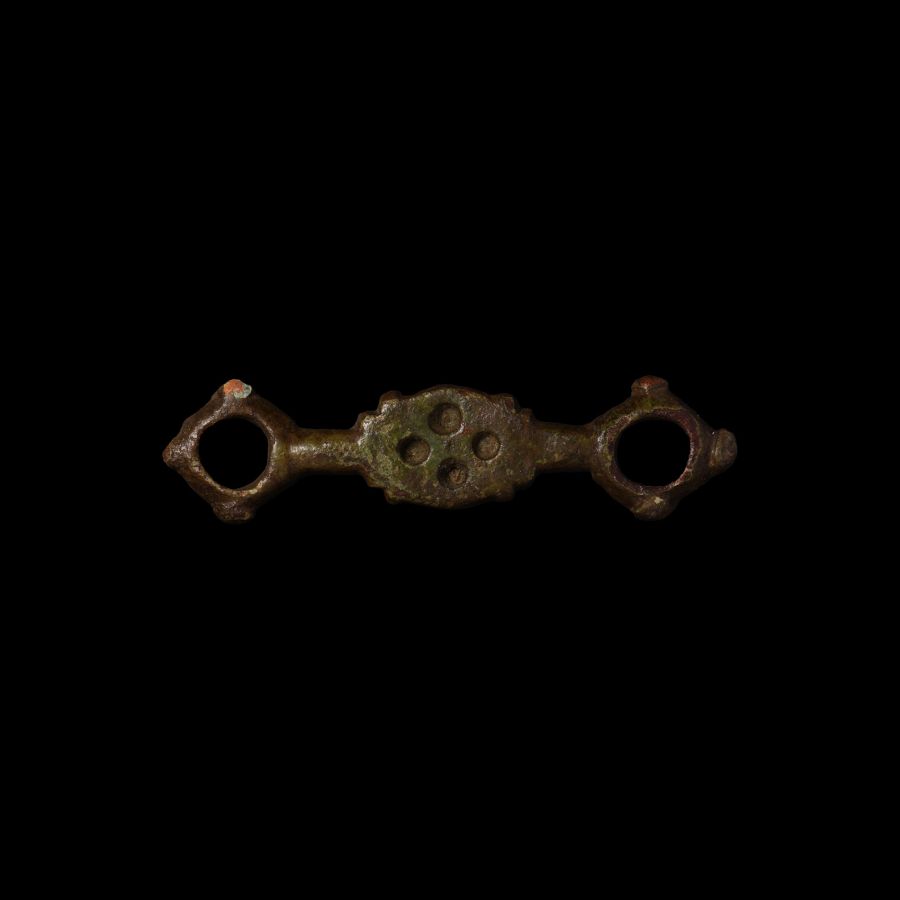
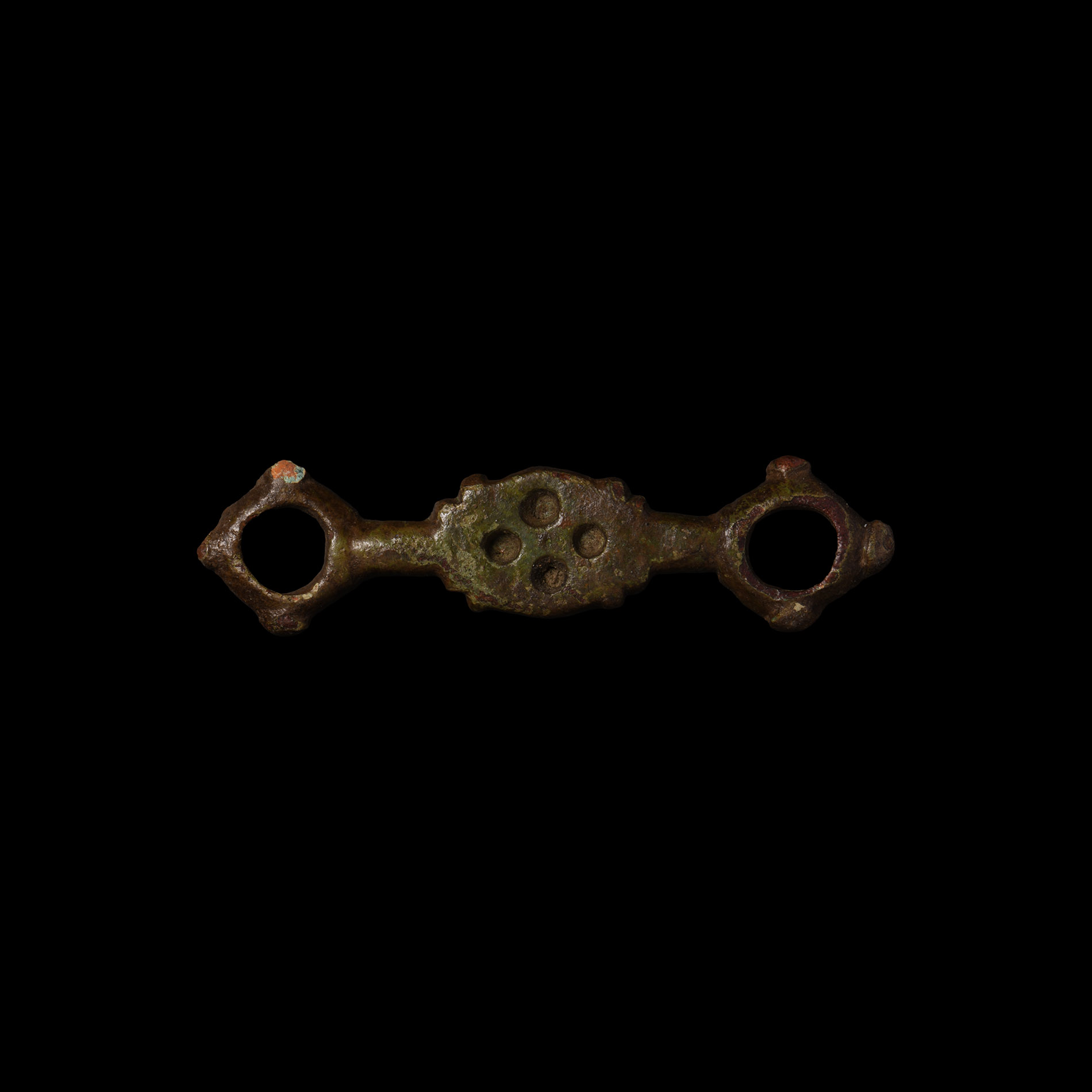
Viking Bronze Horse Harness Cheek Piece
9TH-11TH CENTURY A.D.
3 1/4 in. (26.6 grams, 83 mm).
Strap connector with rectangular panel to the middle with four bosses to each side; short bar with lozenge-shaped strap holes, knops to each point. [No Reserve]
ProvenanceFound UK.
Ex North Country collection; formed between 1970-2000.
TimeLine Auctions follows a vetting process to ensure the authenticity and legality of all items, reinforcing our commitment to integrity and responsible trading. Each antiquity, antique, and coin lot undergoes thorough examination by a vetting committee of at least ten external specialists, professional trade association members, scientists, and archaeologists: Our Vetting Process
AUCTIONS:
TimeLine is a leading auction house specialising in antiquities, ancient art, collectables, natural history, coins, medals, and books. Our auctions offer museums, collectors, historians, and enthusiasts the opportunity to acquire unique and historically significant pieces.
-
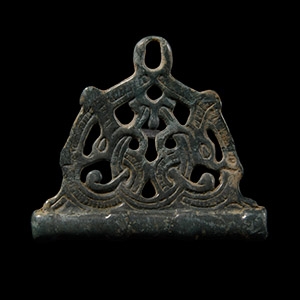
Large Viking Bronze Pendant with Entwined Dragons
9th-11th century A.D.Sold for (Inc. bp): £234
Forming an openwork body, loop to apex, tubular bar below, stylised detailing to the zoomorphs. 37.2 grams, 65 mm
From the collection of a North American gentleman, formed in the 1990s. -

Viking Bronze Casket Key
9th-11th century A.D.Sold for (Inc. bp): £59
Composed of a solid stem and two teeth to the side edge of the bit. 2.44 grams, 39 mm
From the collection of a North American gentleman, formed in the 1990s. -
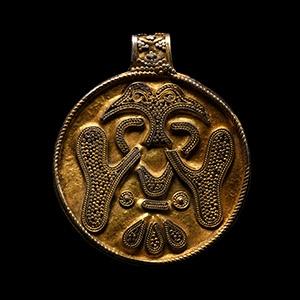
Viking Age Silver-Gilt Filigree Pendant with Conjoined Ravens
9th-11th century A.D.Sold for (Inc. bp): £5,460
The upper face decorated with a two-headed filigree raven, raised ropework border, suspension loop with pyramids of granules continuing onto the reverse. 6.26 grams, 42 mm
Private collection formed in Europe in the 1980s. Westminster collection, central London, UK. This lot has been checked against the Interpol Database of stolen works of art and is accompanied by search certificate no.203746.
Pairs of ravens were considered auspicious in medieval Scandinavian society. In pre-Christian times, two such birds were the informants of the god Odin, who relayed news of the deeds of men. They were also carrion birds, frequenting battlefields to feast on the bodies of fallen warriors.
