Loading, please wait...

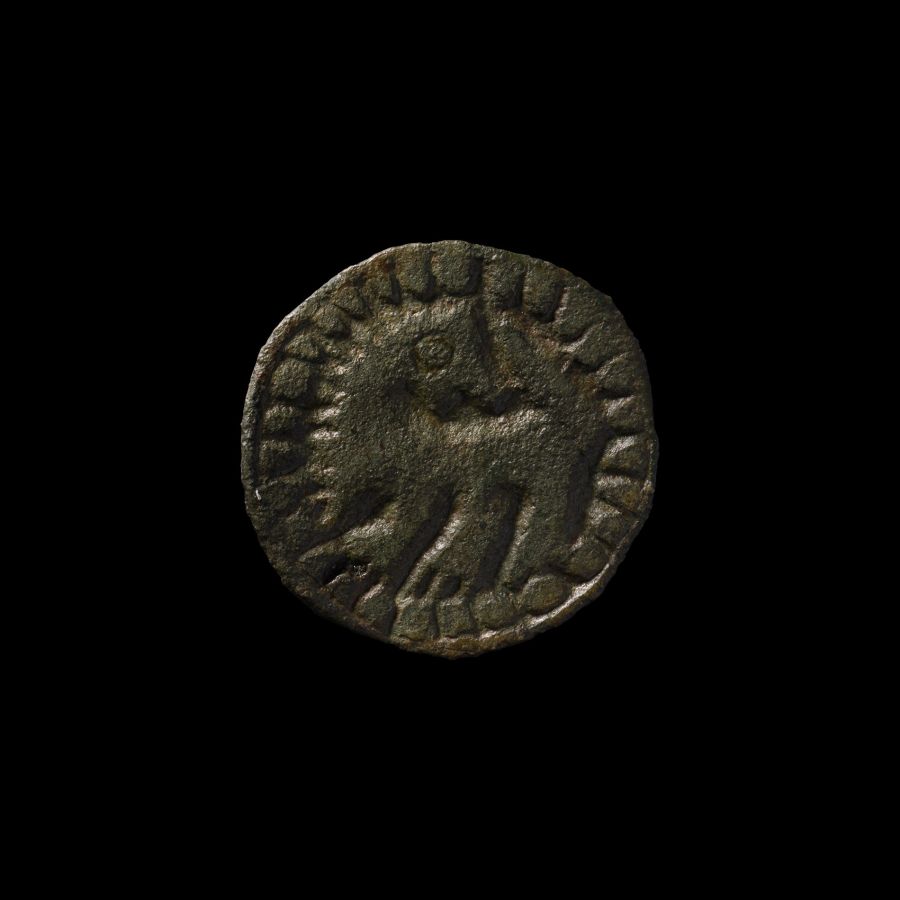
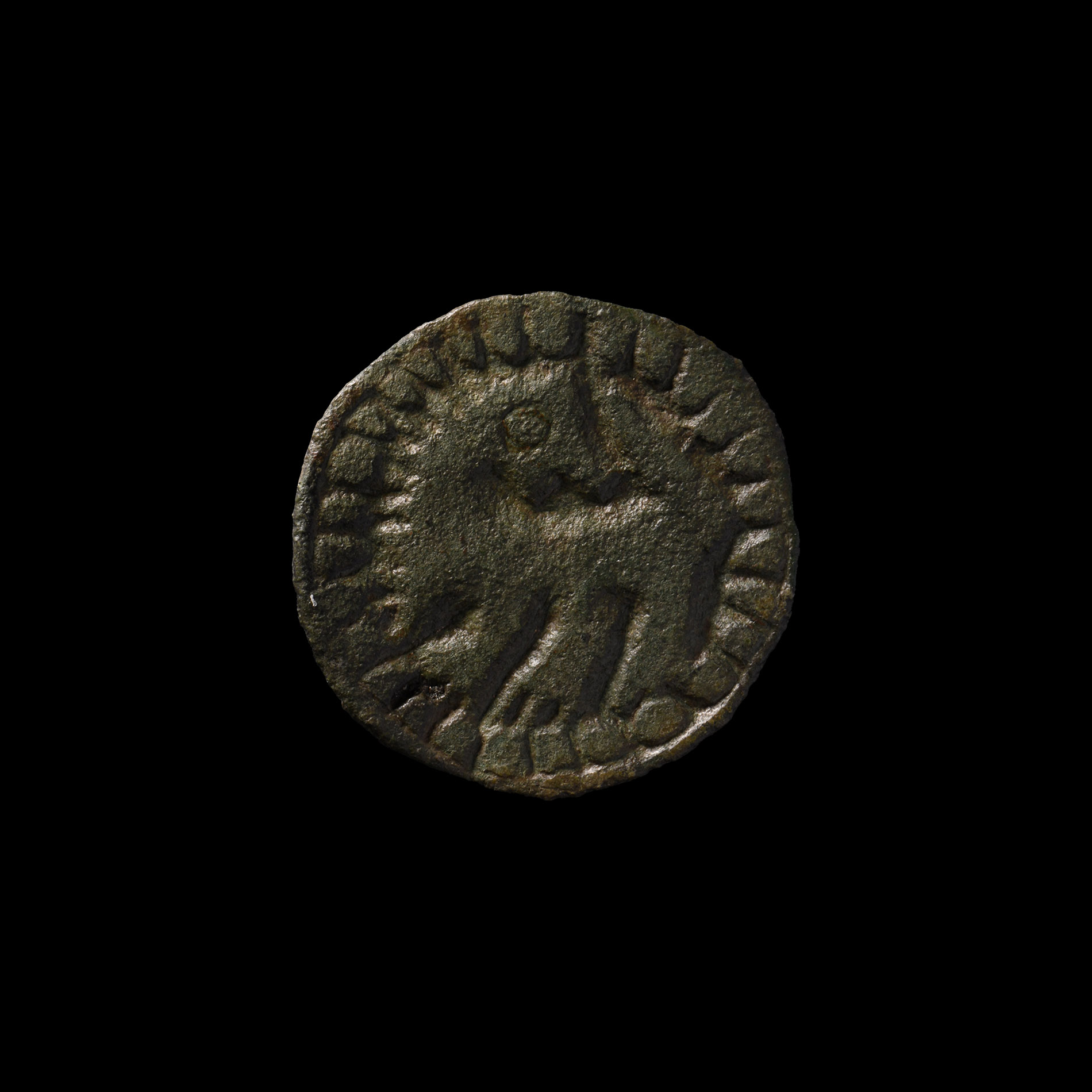
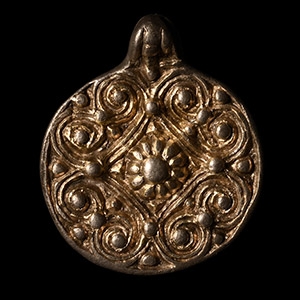
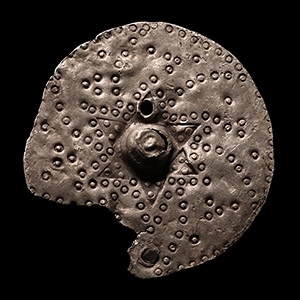
Viking Bronze Disc Brooch with Regardant Beast Viking Bronze Disc Brooch with Regardant Beast Viking Bronze Disc Brooch with Regardant Beast
Use mousewheel to zoom in and out, click to enlarge
Details

LOT 1310

Viking Bronze Disc Brooch with Regardant Beast

9TH CENTURY A.D.

1 1/8 in. (6.29 grams, 29 mm).

Displayed in low-relief with raised tail, pellet eye, radiating mane, band of pellets to the border; pin-lug and catch to the reverse. [No Reserve]

Provenance

Found Norfolk, UK.

Literature

Cf. West, S., A Corpus of Anglo-Saxon Finds From Suffolk, East Anglian Archaeology 84, Ipswich, 1998, item 10-4.

CONDITION
VETTING:

TimeLine Auctions follows a vetting process to ensure the authenticity and legality of all items, reinforcing our commitment to integrity and responsible trading. Each antiquity, antique, and coin lot undergoes thorough examination by a vetting committee of at least ten external specialists, professional trade association members, scientists, and archaeologists: Our Vetting Process


AUCTIONS:

TimeLine is a leading auction house specialising in antiquities, ancient art, collectables, natural history, coins, medals, and books. Our auctions offer museums, collectors, historians, and enthusiasts the opportunity to acquire unique and historically significant pieces.

LOT 1310

Viking Bronze Disc Brooch with Regardant Beast

Sold for (Inc. bp): £195

Print page

RELATED LOTS
  • Viking Silver-Gilt Drinking Horn Terminal
    Viking Silver-Gilt Drinking Horn Terminal
    Circa 7th-9th century A.D.

    Sold for (Inc. bp): £468

    Comprising a tapering sleeve and stylised bird-head with scrolled beak and angled bar above the eye; pierced in two places. 14.5 grams, 50 mm


    Acquired in the early 1970s. Ex property of a Surrey, UK, collector.

    The decorative style of the terminal bears resemblance to the Trewhiddle style, dated to the ninth to early tenth centuries, although it seems a more simplified version of the Taplow Horn terminals. Zoomorphic terminals on Trewhiddle style strap ends bear very similar circular ears containing chevron motifs, and panels of decoration on the brow.

    Lot Details

  • Viking Age Iron Socketted Spearhead Group
    Viking Age Iron Socketted Spearhead Group
    10th-12th century A.D.

    Sold for (Inc. bp): £156

    Comprising two short Baltic Prussian spearheads with lentoid-section lanceolate blade, short neck and tapering circular socket with single hole for attachment pin; remains of wood inside one of the shafts. 425 grams total, 26-28 cm


    Acquired 1971-1972. From the collection of the vendor's father. Property of a London, UK, collector.

    Prussian horsemen, like the Lithuanian and Livonian, were ‘light - armed’, as the Prussian documents say, yet their equipment, of sword and spear, helmet and even shirt of mail, was sufficient to enable them to hold their ground against the Teutonic forces.

    Lot Details

  • Viking Age Silver Gripping Beasts Pendant
    Viking Age Silver Gripping Beasts Pendant
    10th century A.D.

    Estimate: £1,800 - 2,400 (‡+bp*)

    Opening Bid: £1,000

    Composed of an openwork discoid body with integral T-shaped tubular loop; raised gusseted rim enclosing a pair of S-shaped beasts with billetted bodies and comma-shaped tails, enmeshed gripping paws clutching the rim and their own bodies. 12.4 grams, 43 mm


    Acquired on the European art market in the 1990s. Ex property of a German gentleman.

    Despite the long period of overlap of Borre and Jellinge art styles, there are only few examples of their fusion. The principal and most popular motif of the Borre style displays an animal with gripping paws, usually enmeshed in a circular frame, while a typical Jellinge style beast is more slender with long, S-shaped body and ribbon decoration. The most famous example of a pendant featuring a fusion of these styles was found in a hoard from Vårby (Sweden), formed as a circle with a pair of Jellinge-style beasts with ribbon-shaped bodies in profile and heads with open jaws and extended tongues; however, each is provided with gripping paws and an enmeshed body, which are typical features of the Borre style. A few examples of these pendants were also found near the important trading settlement of Gnezdovo, near Smolensk, Russia.

    Lot Details

Stay up-to-date with the latest from TimeLine Auctions by joining our mailing list