
Loading, please wait...
LOT 1661
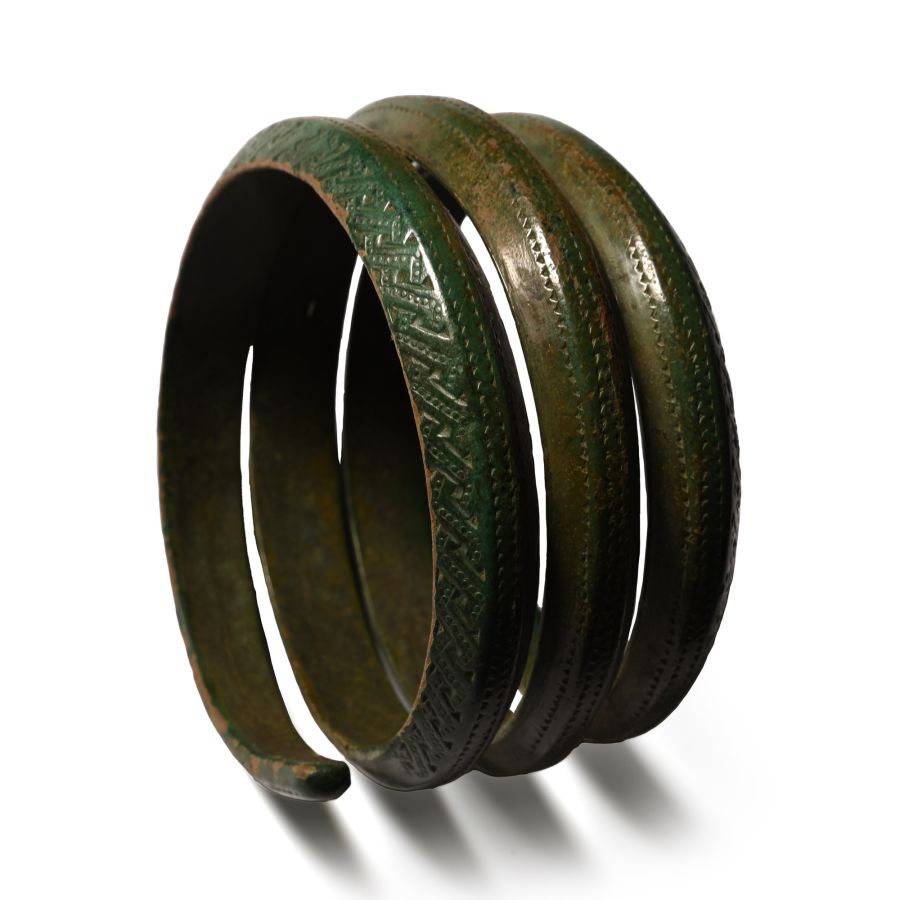
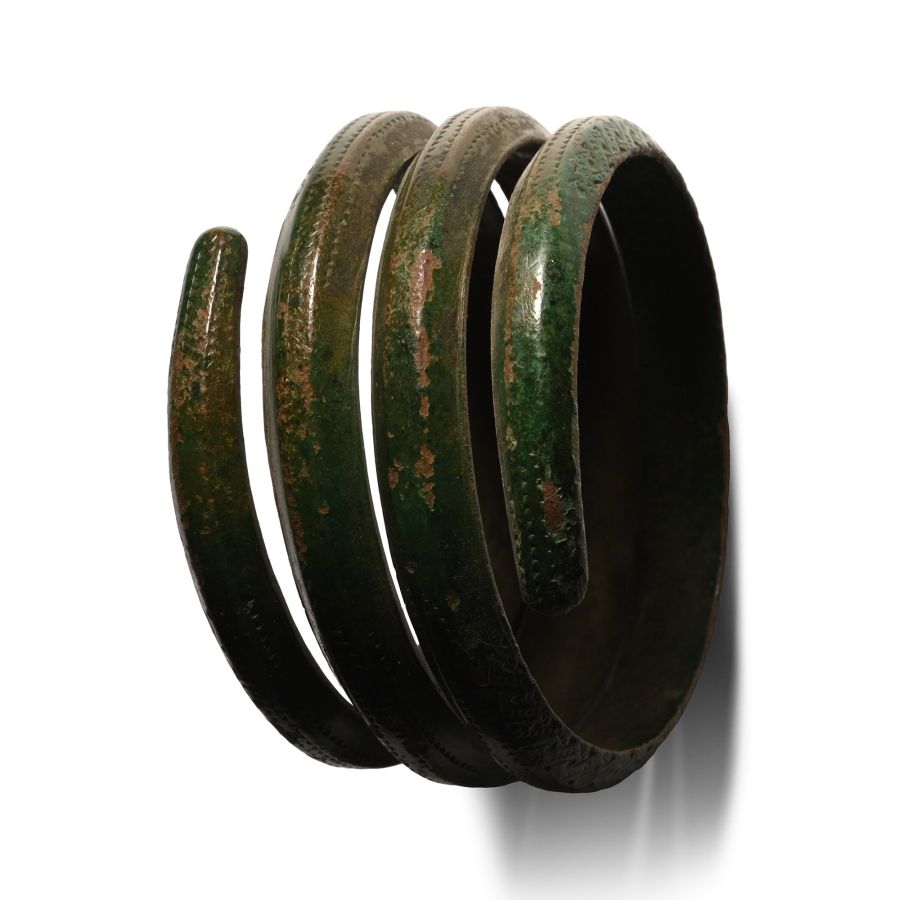
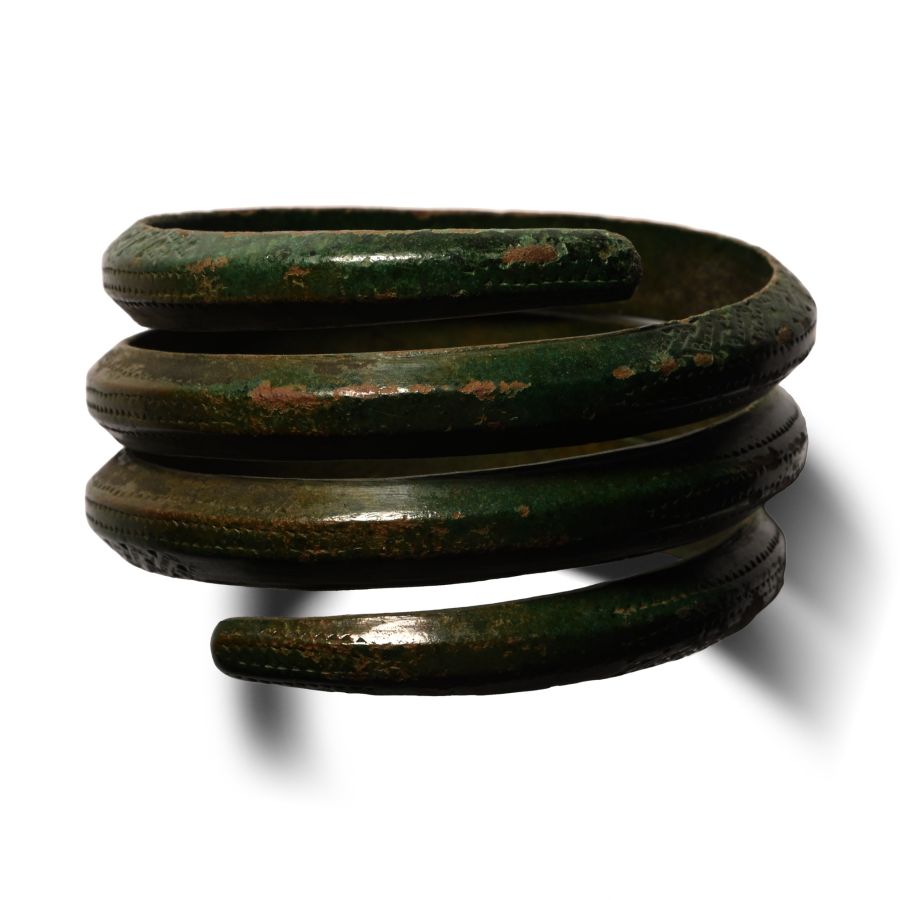
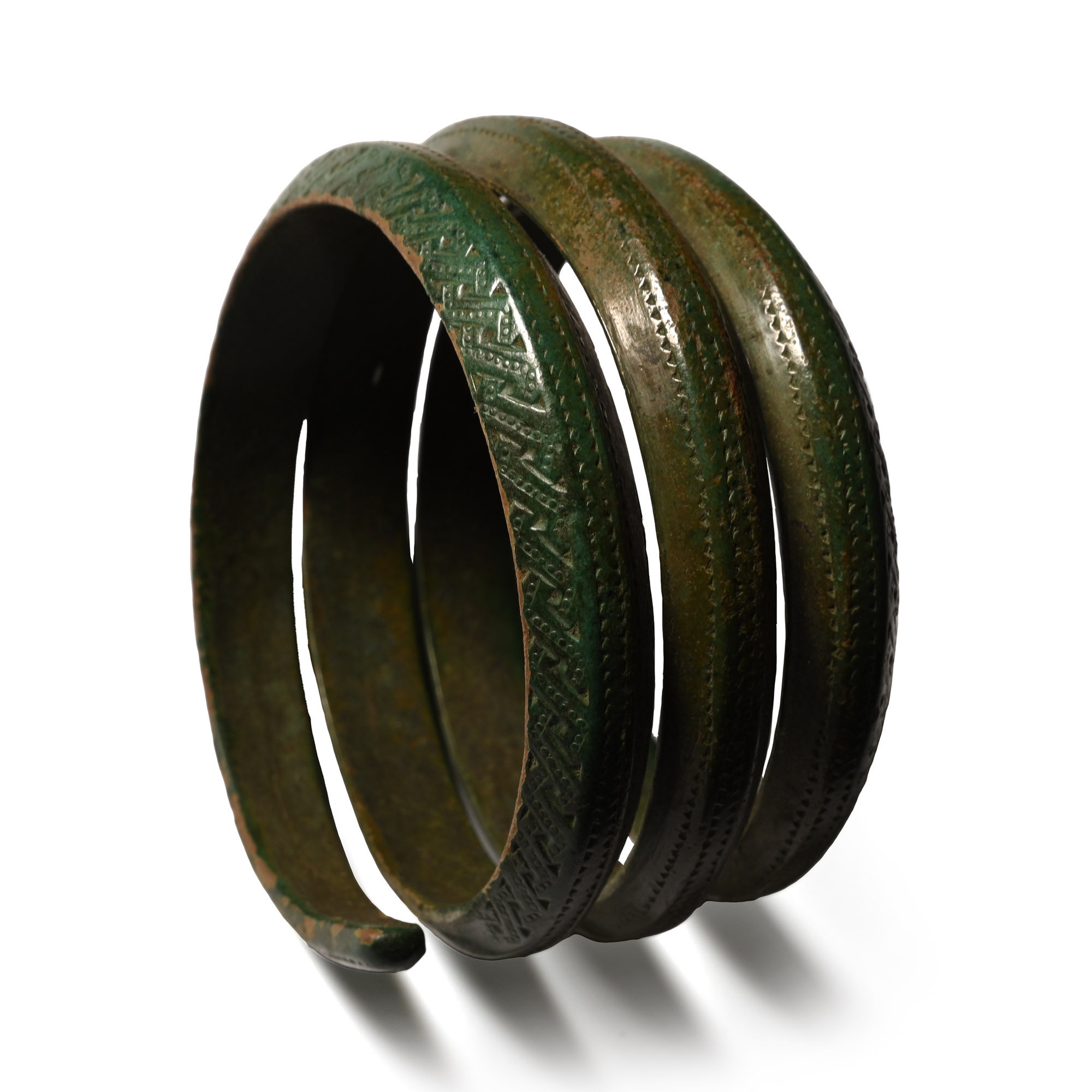
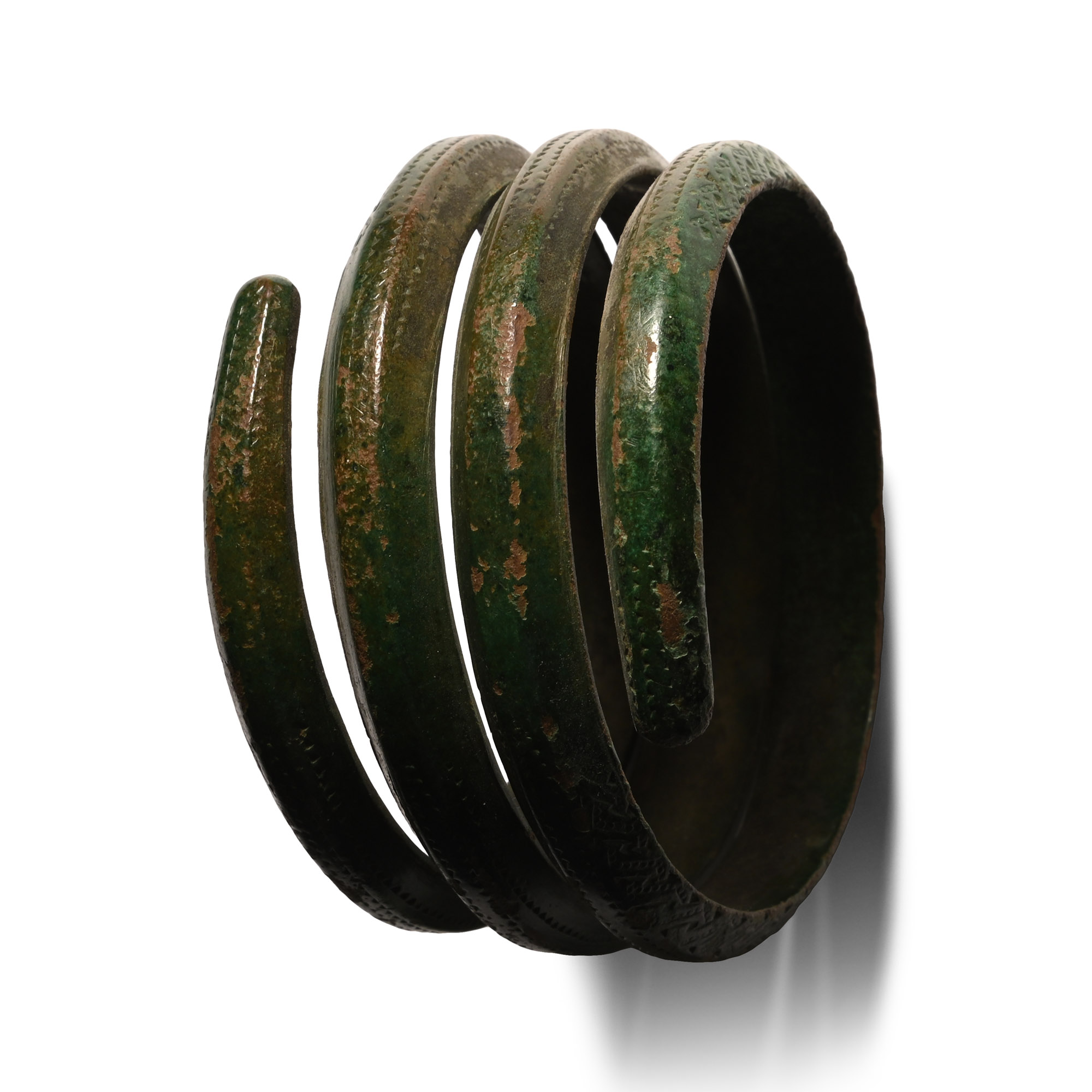
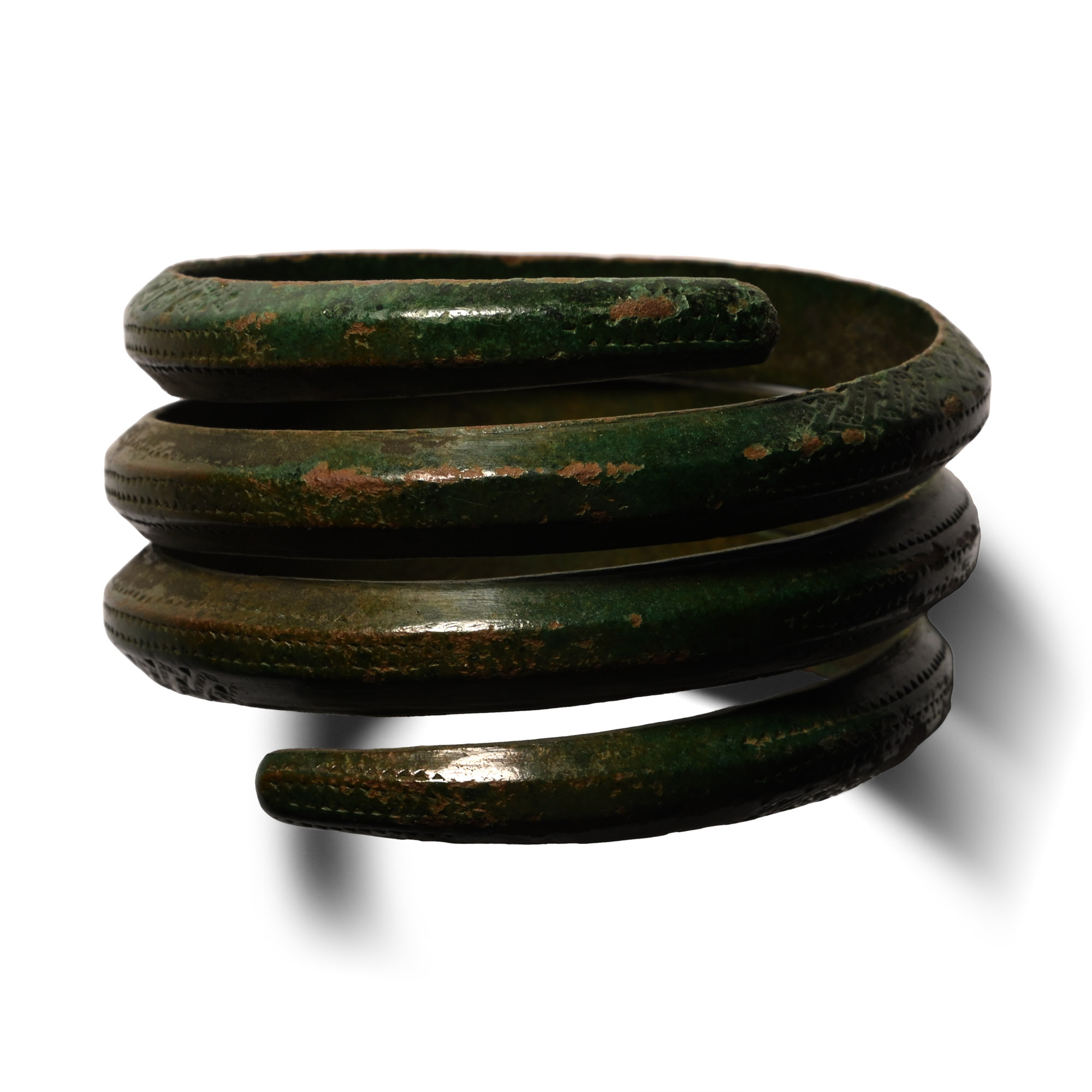
Viking Bronze Decorated Arm Bangle
9TH-11TH CENTURY A.D. OR LATER
3 1/8 in. (261 grams, 80 mm).
Comprising a substantial D-section coil with lines of punched decoration to the median facet and knotwork bands at the upper and lower sections.
ProvenanceAcquired in the 1980s.
Ex Mayfair gallery, London, UK.
Private collection, London, UK.
This lot is accompanied by an illustrated lot declaration signed by the Head of the Antiquities Department, Dr Raffaele D'Amato.
Cf. Sedov, B.B., Finno-Ugri i Balti v Epokhi Srednevekovija, Moscow, 1987, pl.III (20).
CONDITIONTimeLine Auctions follows a vetting process to ensure the authenticity and legality of all items, reinforcing our commitment to integrity and responsible trading. Each antiquity, antique, and coin lot undergoes thorough examination by a vetting committee of at least ten external specialists, professional trade association members, scientists, and archaeologists: Our Vetting Process
AUCTIONS:
TimeLine is a leading auction house specialising in antiquities, ancient art, collectables, natural history, coins, medals, and books. Our auctions offer museums, collectors, historians, and enthusiasts the opportunity to acquire unique and historically significant pieces.
-
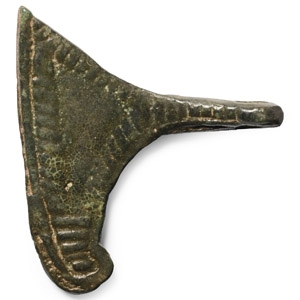
Viking Age Decorated Bronze Broad Axehead Pendant
9th-11th century A.D.Sold for (Inc. bp): £130
Formed with a ropework band to the edge of each cheek and the socket, doubling as the suspension loop. 5.2 grams, 33 mm wide
From the private collection of a London gentleman, from his grandfather's collection formed before the early 1970s. This lot is accompanied by an illustrated lot declaration signed by the Head of the Antiquities Department, Dr Raffaele D'Amato. -
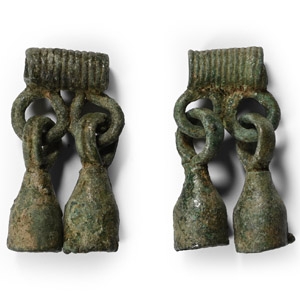
Viking Age Bronze Double Bell Pendant Group
Circa 9th-11th century A.D.Sold for (Inc. bp): £59
Each comprising a tubular bead with ribbing to the outer face, suspension loops each supporting a bottle-shaped dangle. 16 grams total, 39 mm each
UK gallery, early 2000s. This lot is accompanied by an illustrated lot declaration signed by the Head of the Antiquities Department, Dr Raffaele D'Amato.
The presence of a similar bell pendant in grave 735 of the Birka Necropolis, where a warrior and his horse were also buried, could lead to the belief that such pendants were part of the horse's harness. This was a very common custom in the Mediterranean world, which could also have been adopted by the Vikings. -
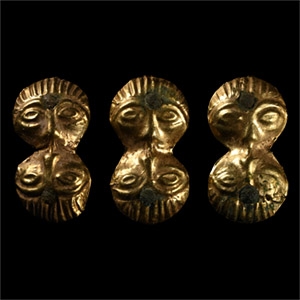
Scandinavian Pre-Viking Gold Double-Headed Mount Group
Circa 6th century A.D.Sold for (Inc. bp): £1,170
Each formed as a conjoined pair of facing masks sharing a mouth; pin to reverse. 2.48 grams total, 24.6-24.8 mm
From the private collection of a London gentleman, from his grandfather's collection formed before the early 1970s. This lot is accompanied by an illustrated lot declaration signed by the Head of the Antiquities Department, Dr Raffaele D'Amato.
