
Loading, please wait...
LOT 1730
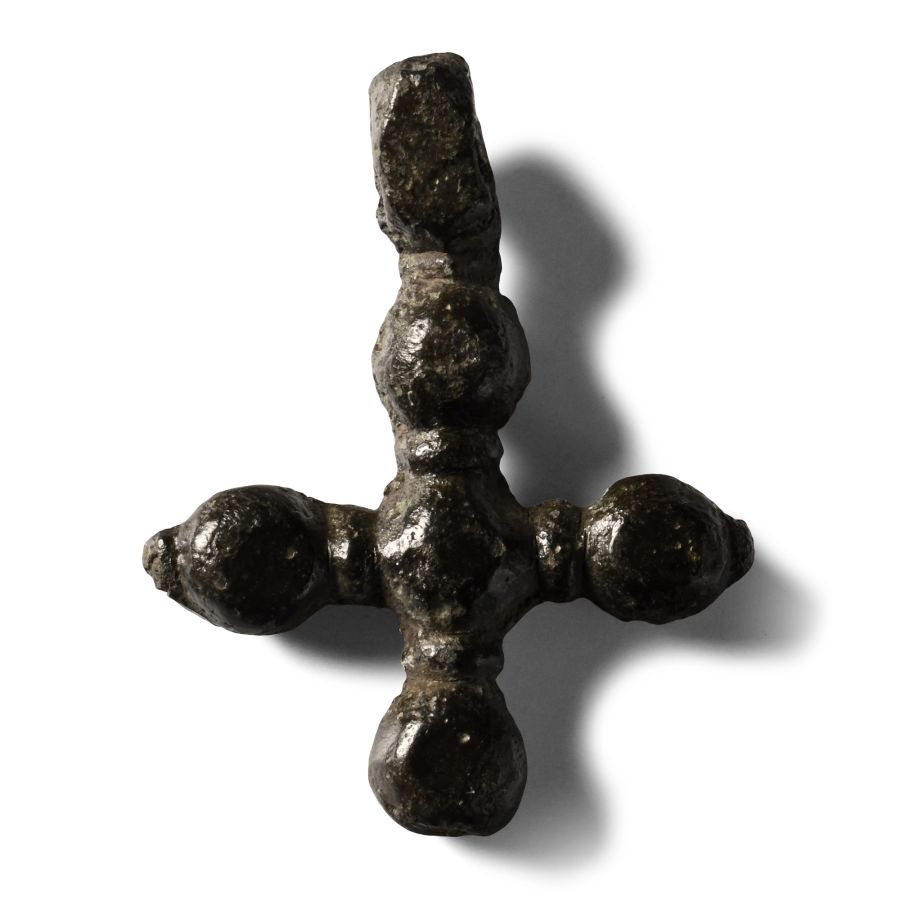
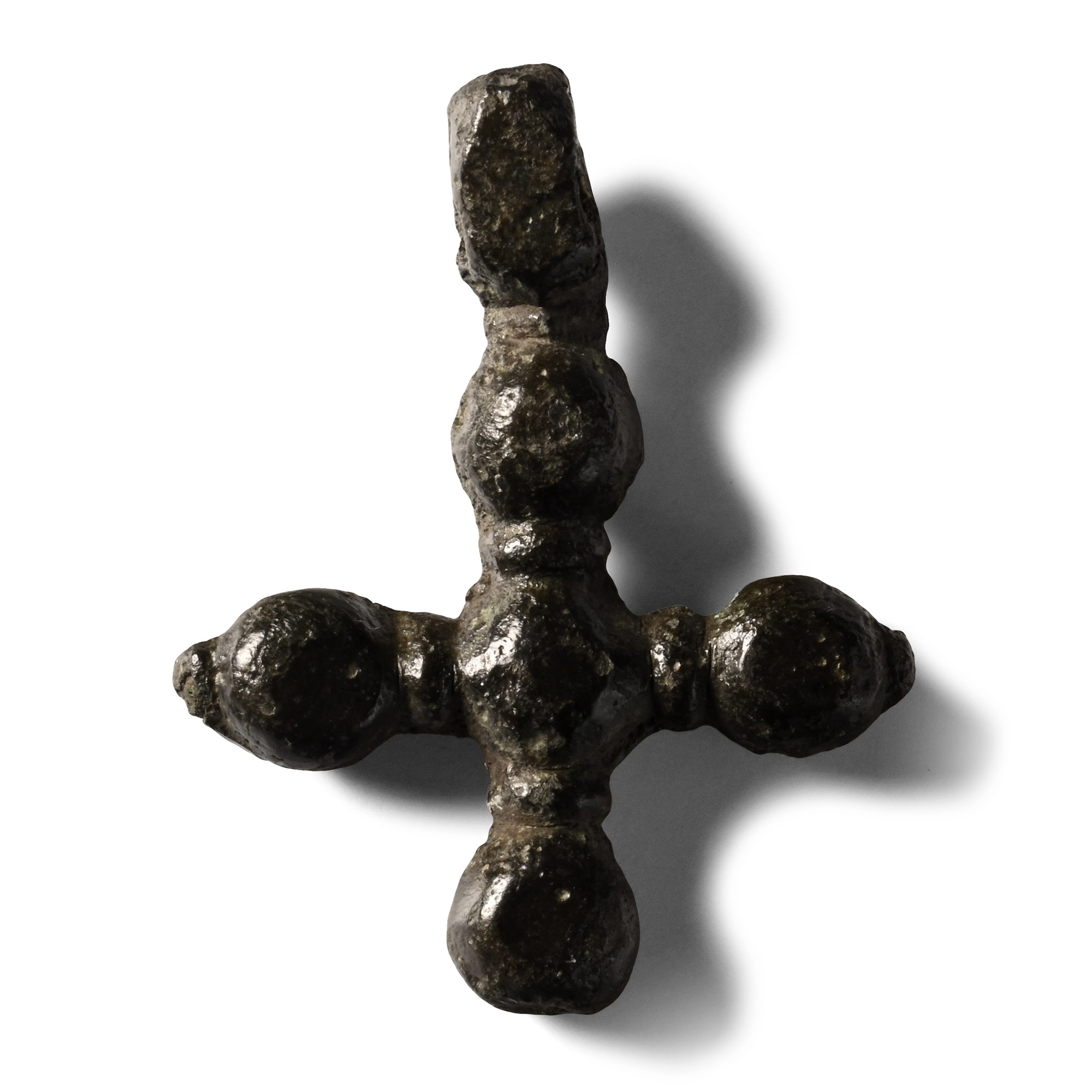
Viking Bronze Cross Pendant
8TH-10TH CENTURY A.D.
1 1/8 in. (5.59 grams, 29 mm).
Comprising a central bulb and four radiating arms each terminating in a bulb with spur finial; integral pierced lug above. [No Reserve]
ProvenanceEx David Miller, Hemel Hempstead, London, UK.
From the private collection of a West London, UK, gentleman, formed since the early 2000s.
Accompanied by a laminated dealer's ticket.
Cf. Graham-Campbell, J. & Kidd, D., The Vikings, London, 1980, item 45, for similar.
CONDITIONTimeLine Auctions follows a vetting process to ensure the authenticity and legality of all items, reinforcing our commitment to integrity and responsible trading. Each antiquity, antique, and coin lot undergoes thorough examination by a vetting committee of at least ten external specialists, professional trade association members, scientists, and archaeologists: Our Vetting Process
AUCTIONS:
TimeLine is a leading auction house specialising in antiquities, ancient art, collectables, natural history, coins, medals, and books. Our auctions offer museums, collectors, historians, and enthusiasts the opportunity to acquire unique and historically significant pieces.
-
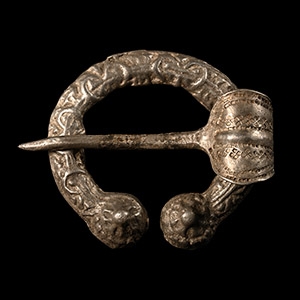
Viking Age Decorated Silver Penannular Brooch
12th century A.D.Sold for (Inc. bp): £585
Featuring domed terminals with apex granules and dense interlace and pellet decoration in relief, punched decoration to the free-running pinhead. 14.4 grams, 46 mm
From the collection of a North American gentleman, formed in the 1990s.
Penannular brooches with facetted terminals were part of the famous Kostivere hoard, found in Estonia, deposited around 1220-1230 during the wars of Estonians against the Germans and Danes. The annular brooches with animal ornaments in Urnes style were considered by the archaeologists to be definitely Scandinavian, more specifically from Gotland. -
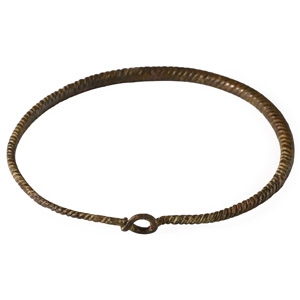
Viking Age Twisted Bronze Bracelet
Circa 9th-11th century A.D.Sold for (Inc. bp): £156
Penannular in form with hook-and-eye closure, twisted shank. 6 grams, 58 mm
Acquired on the UK art market in the late 20th century A.D. From the private collection of the late David King (1940-2024), Hoddesdon, Hertfordshire, UK. -
.jpg)
Pre-Viking Bronze Ring with Thor's Hammer and Beads
6th-8th century A.D.Sold for (Inc. bp): £520
Suspension loop with four spherical glass beads and a miniature hammer with a braided loop. 6.24 grams, 43.83 mm overall, 14.52 x 9.78 mm internal diameter (approximate size British F, USA 2 3/4, Europe 3.67, Japan 3)
From the private collection of a London gentleman, from his grandfather's collection formed before the early 1970s.
