
Loading, please wait...
LOT 1438
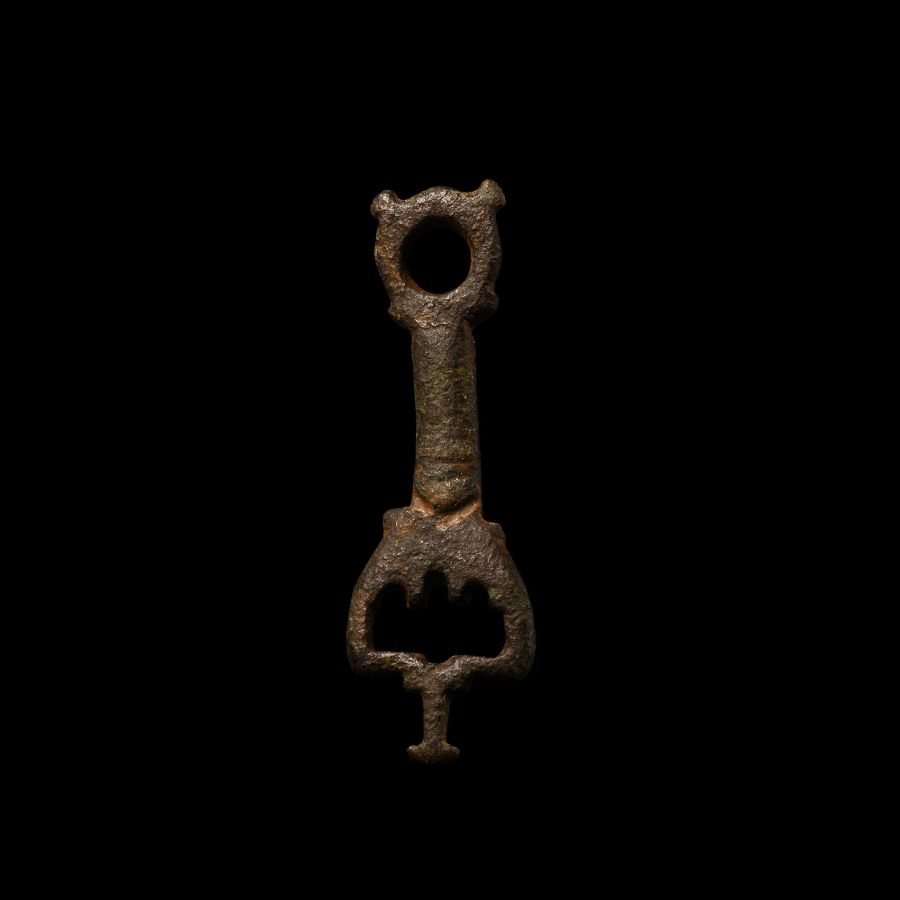
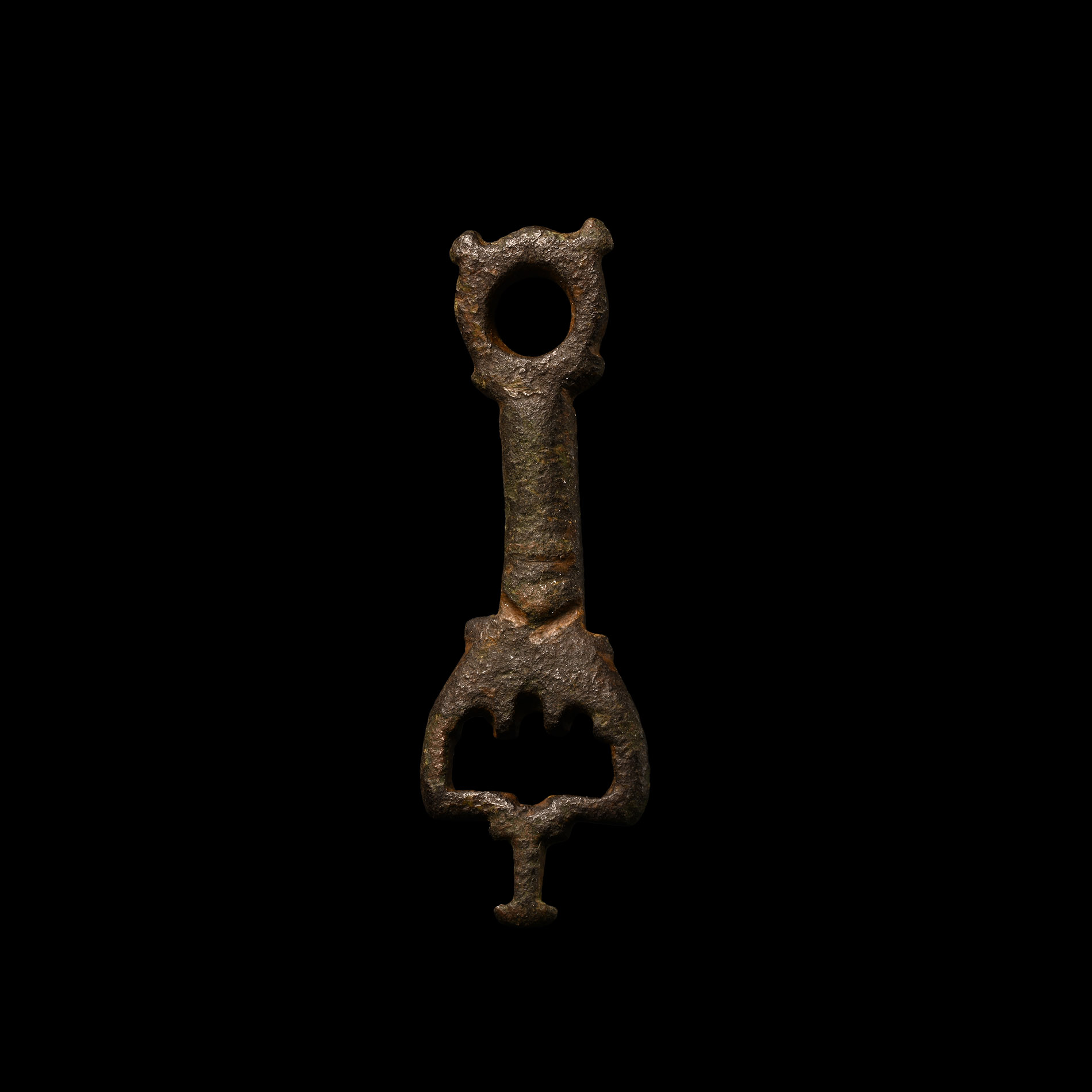
Viking Bronze Casket Key
9TH-11TH CENTURY A.D.
2 in. (8.7 grams, 53 mm).
Composed of an openwork bow, flat-section shank, voided trapezoid and T-shaped bit. [No Reserve]
ProvenanceFrom the collection of a North American gentleman, formed in the 1990s.
LiteratureCf. Lehtosalo-Hilander, P-L., Luistari I, Helsinki, 1982, p.66; Luistari II The Artefacts, Helsinki, 1982, pl.105 (24.4118).
CONDITIONTimeLine Auctions follows a vetting process to ensure the authenticity and legality of all items, reinforcing our commitment to integrity and responsible trading. Each antiquity, antique, and coin lot undergoes thorough examination by a vetting committee of at least ten external specialists, professional trade association members, scientists, and archaeologists: Our Vetting Process
AUCTIONS:
TimeLine is a leading auction house specialising in antiquities, ancient art, collectables, natural history, coins, medals, and books. Our auctions offer museums, collectors, historians, and enthusiasts the opportunity to acquire unique and historically significant pieces.
-

Viking Age Silver Inlaid Iron Strap End
9th-11th century A.D.Sold for (Inc. bp): £39
Punch-decorated with ring-and-dot motifs with shallow cells between. 45.8 grams, 44 mm
From the collection of a North American gentleman, formed in the 1990s. -
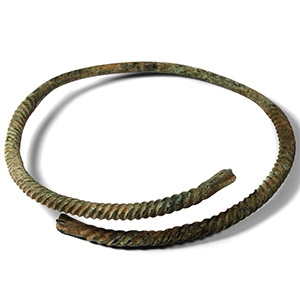
Pre-Viking Bronze Twisted Torc
Circa 8th century A.D.Sold for (Inc. bp): £117
Composed of overlapping arms and cruciform-section terminals. 265 grams, 17 cm
From the collection of a North American gentleman, formed in the 1990s. -

Viking Age Iron Socketted Spearhead Group
10th-12th century A.D.Sold for (Inc. bp): £156
Comprising two short Baltic Prussian spearheads with lentoid-section lanceolate blade, short neck and tapering circular socket with single hole for attachment pin; remains of wood inside one of the shafts. 425 grams total, 26-28 cm
Acquired 1971-1972. From the collection of the vendor's father. Property of a London, UK, collector.
Prussian horsemen, like the Lithuanian and Livonian, were ‘light - armed’, as the Prussian documents say, yet their equipment, of sword and spear, helmet and even shirt of mail, was sufficient to enable them to hold their ground against the Teutonic forces.
