
Loading, please wait...
LOT 1684
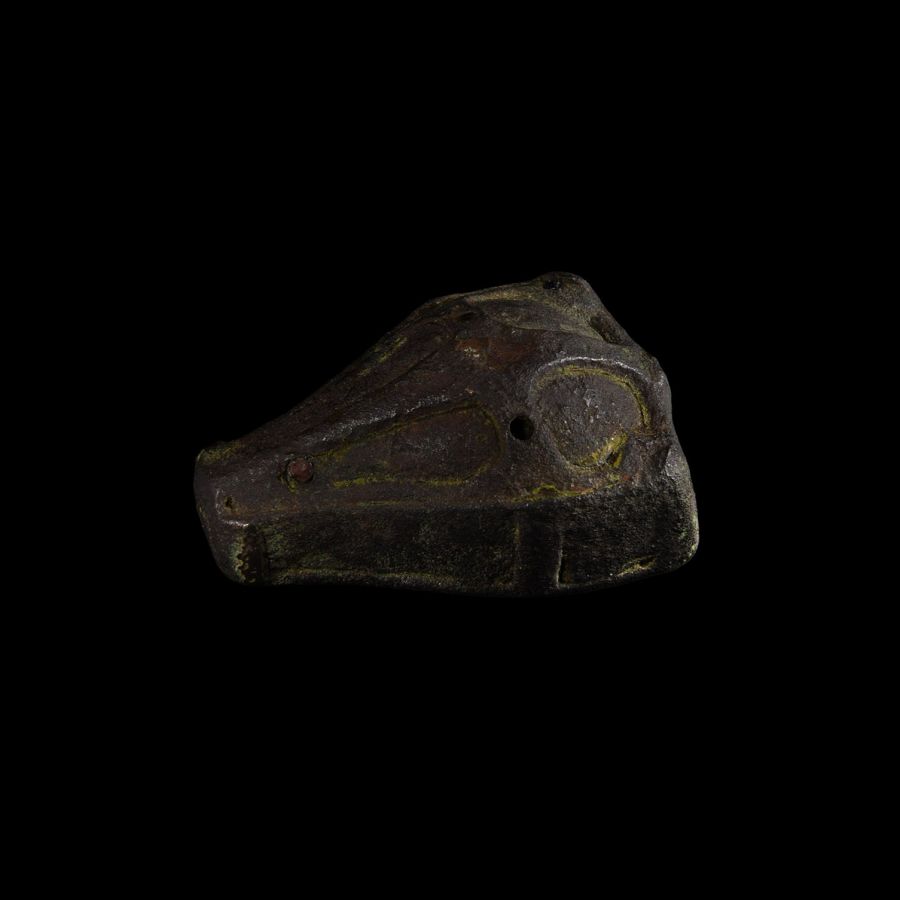
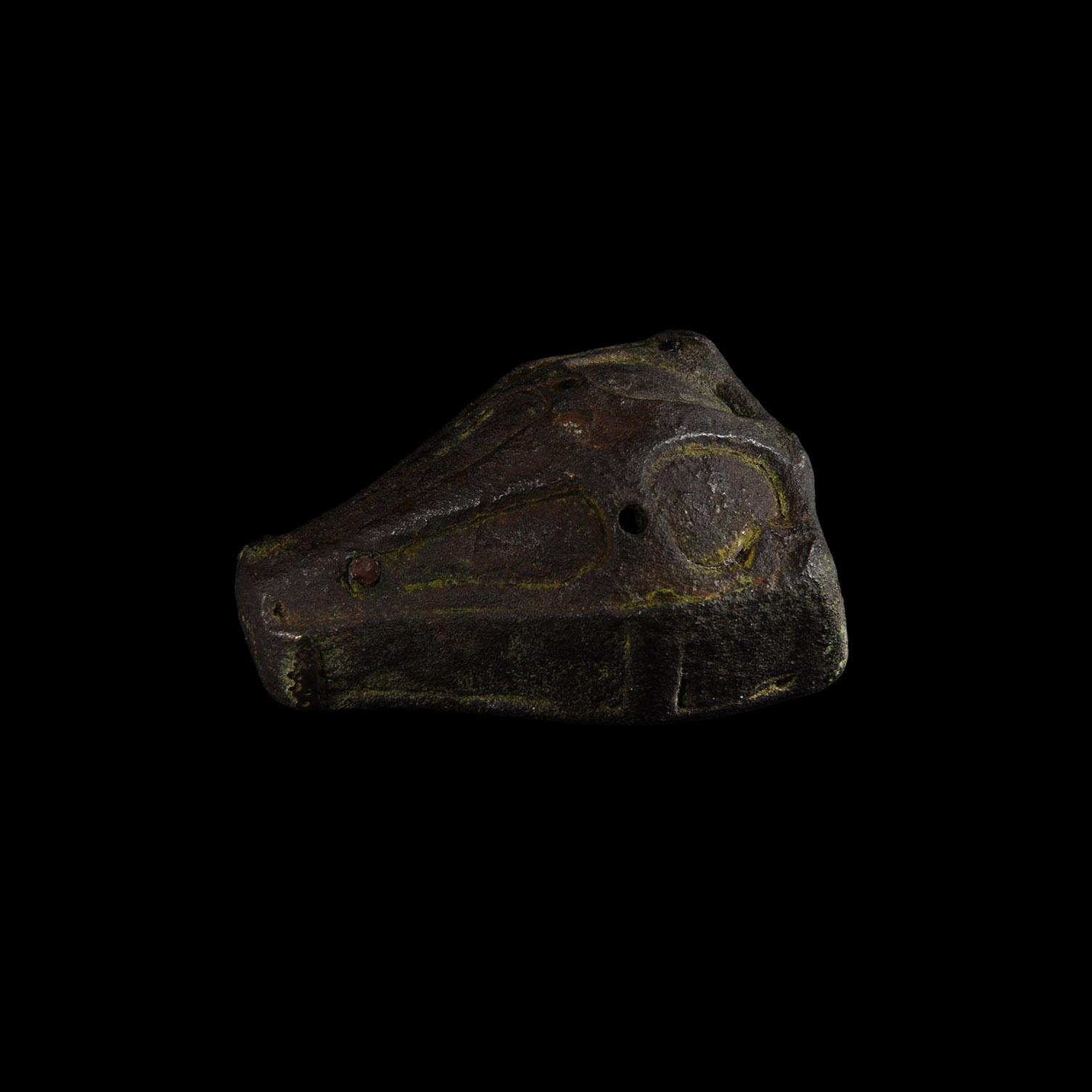
Viking Bronze Boar's Head Brooch with Cross
9TH-10TH CENTURY A.D.
2 1/8 in. (62 grams, 56 mm).
With decorative upper surface attached to a plain back-plate with spring-lugs and catchplate intact; the upper face divided by a heavy cast median rib with zoomorphic ornament in the outer panels, arranged symmetrically along the rib with a similar transverse band; the corners of the wider end reinforced with vertical posts ending in heavy lobed ‘ears’; the side panels decorated with zones of interlace ornament and the upper-end panel with a continuation of the median rib, traces of ornamental interlace; the lower-end panel plain; the transverse band pierced by two holes to accept pins (part of one one still in situ) representing 'eyes' on the stylised head; hollow-cast.
ProvenanceAcquired in the early 1990s.
From an old English collection.
Cf. MacGregor, A. et al., A Summary Catalogue of the Continental Archaeological Collections, Oxford, 1997, item 3.18, for type; and Franceschi, G., Jorn, A. & Magnus, B., Mennesker, Guder og Masker i Nordisk Jernalderkunst Vol. 1, Silkeborg, 2005, figs.130-1.
FootnotesThese animal head-brooches were seemingly manufactured solely on Gotland, and have been classified by scholars in various ways: for example, the manner in which the back-plate is formed and applied, or if a plain internal shell was overlaid with an openwork decorative casing. MacGregor classified them according to their decorative criteria, and his scheme is generally followed in Anglophone literature. They began to appear in the Vendel period (earlier 8th century) and continued into the 12th century in a broadly similar form. Our fitting is related to the conventional group of the gripping beast ornament, here very stylised.
CONDITIONTimeLine Auctions follows a vetting process to ensure the authenticity and legality of all items, reinforcing our commitment to integrity and responsible trading. Each antiquity, antique, and coin lot undergoes thorough examination by a vetting committee of at least ten external specialists, professional trade association members, scientists, and archaeologists: Our Vetting Process
AUCTIONS:
TimeLine is a leading auction house specialising in antiquities, ancient art, collectables, natural history, coins, medals, and books. Our auctions offer museums, collectors, historians, and enthusiasts the opportunity to acquire unique and historically significant pieces.
-
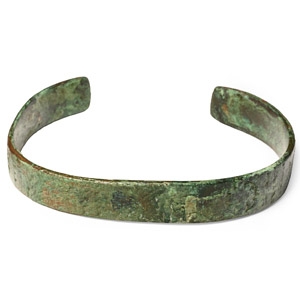
Viking Age Decorated Bronze Bracelet
Circa 900-1100 A.D.Sold for (Inc. bp): £124
Penannular type with flat-section body and stamped and incised decoration to the outer face. 17.14 grams, 62 mm
From a UK private collection. Ex Apollo Art Auction, 13 November 2022, no.459. -
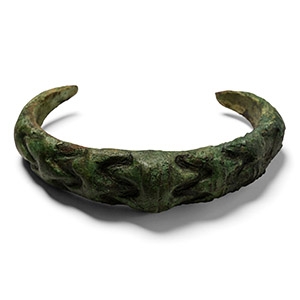
Viking Orpgard Type Bronze Bracelet
9th-10th century A.D.Sold for (Inc. bp): £390
Broad and penannular in profile with raised ribbing to the outer face. 84.1 grams, 79 mm
From the private collection of a London gentleman, from his grandfather's collection formed before the early 1970s. -
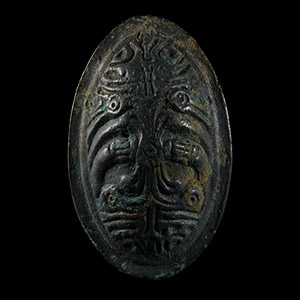
Viking Age Bronze Tortoise Brooch with Ravens
9th-10th century A.D.Sold for (Inc. bp): £702
With domed elliptical body and narrow flange, high-relief palmette ornament and omega-shaped panels and opposed ravens with curved beaks. 62.6 grams, 80 mm
From the collection of a North American gentleman, formed in the 1990s.
The silvery appearance of the brooch is probably due to a high proportion of tin in the bronze alloy.
