
Loading, please wait...
_900x900.jpg "Viking and Later Fire-Striker Collection")
_200x200.jpg "Viking and Later Fire-Striker Collection")
.jpg "Viking and Later Fire-Striker Collection")
LOT 0369
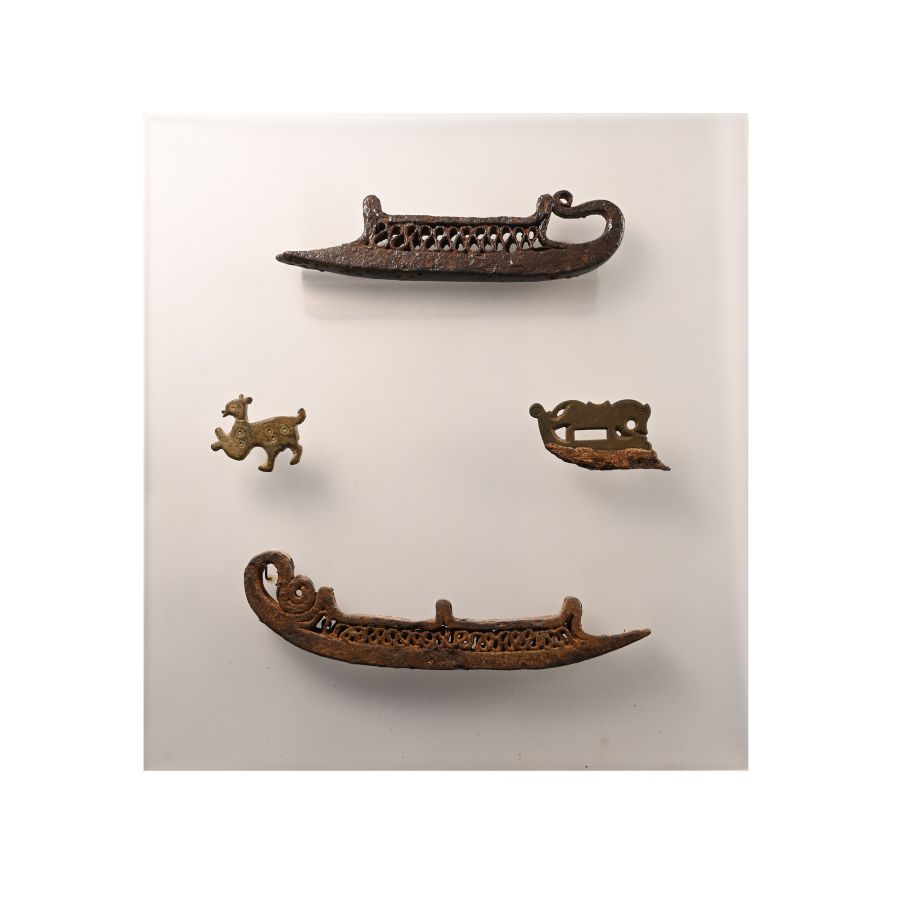
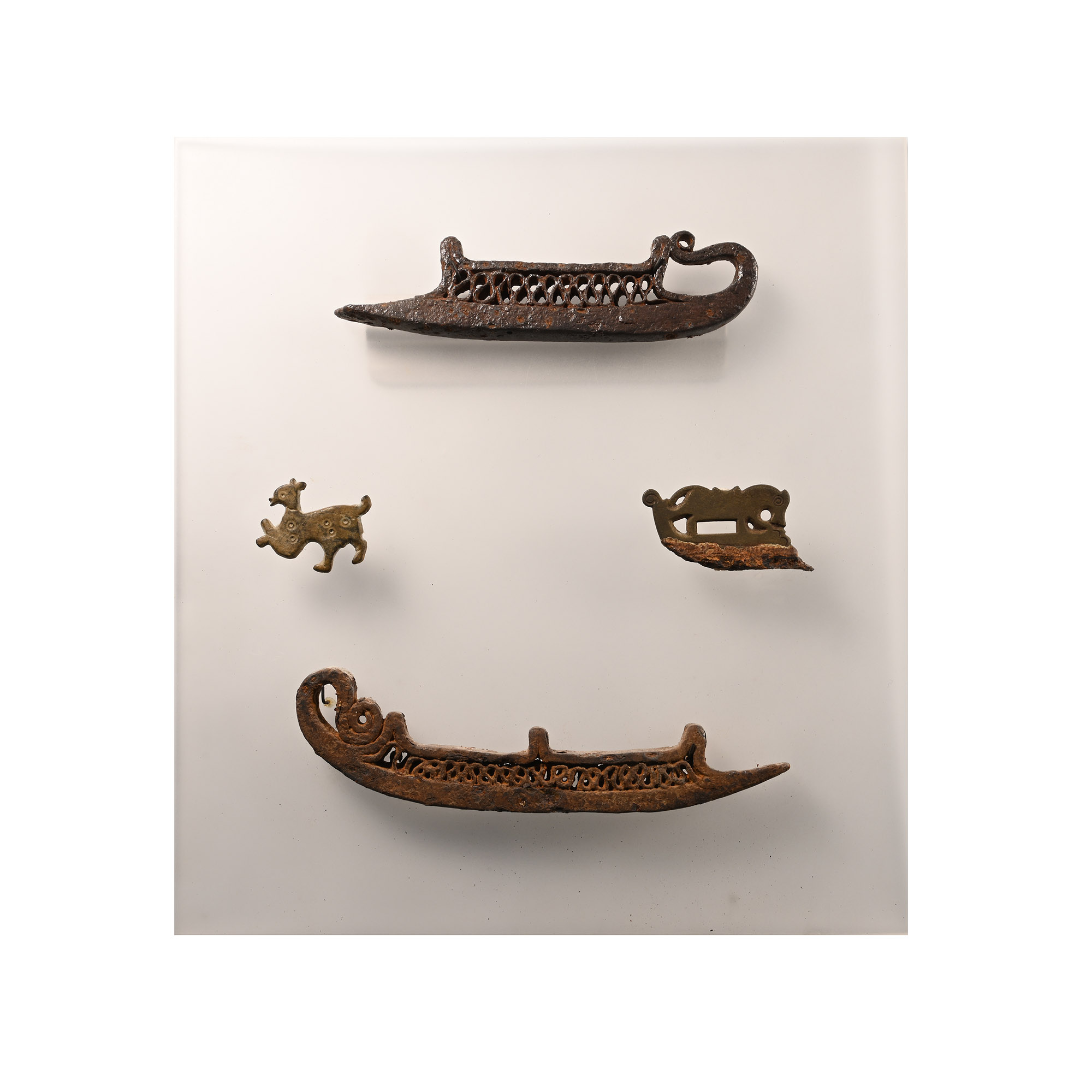
Viking and Later Fire-Striker Collection
11TH-15TH CENTURY A.D.
1 1/8 - 5 1/4 in. (523 grams total, 2.9-13.2 cm).
Comprising: two galley-shaped firesteels each with a core formed as looped corrugations in a sturdy frame with one scrolled end and flat underside for the striking face; fragment of a similar item formed as an advancing horse with saddle; mounted on a custom-made stand. [4]
ProvenanceAcquired on the London art market, 1990s.
Private collection, London.
This lot is accompanied by an illustrated lot declaration signed by the Head of the Antiquities Department, Dr Raffaele D'Amato.
See Cacciandra, V. & Cesati, A., Fire Steels, Turin, 1996; cf. Arbman, H., Birka I: Die Gräber, Uppsala, 1940, pl.144.
CONDITIONTimeLine Auctions follows a vetting process to ensure the authenticity and legality of all items, reinforcing our commitment to integrity and responsible trading. Each antiquity, antique, and coin lot undergoes thorough examination by a vetting committee of at least ten external specialists, professional trade association members, scientists, and archaeologists: Our Vetting Process
AUCTIONS:
TimeLine is a leading auction house specialising in antiquities, ancient art, collectables, natural history, coins, medals, and books. Our auctions offer museums, collectors, historians, and enthusiasts the opportunity to acquire unique and historically significant pieces.
LOT 0369
Viking and Later Fire-Striker Collection
Estimate £1,200 - 1,700€1,390 - 1,970 (for guidance only)$1,620 - 2,300 (for guidance only)
-
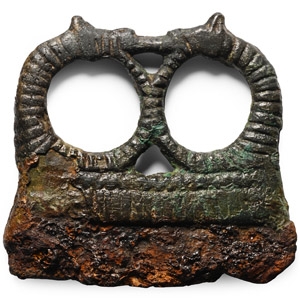
Scandinavian Viking Iron Fire Steel with Bronze Handle with Conjoined Horse Heads
9th-10th century A.D.Sold for (Inc. bp): £182
Bronze handle formed as two opposing horse-heads on ribbed necks, slot to underside to accept the verrous striker. 31 grams, 54 mm
From the private collection of a London gentleman, from his grandfather's collection formed before the early 1970s. This lot is accompanied by an illustrated lot declaration signed by the Head of the Antiquities Department, Dr Raffaele D'Amato. -
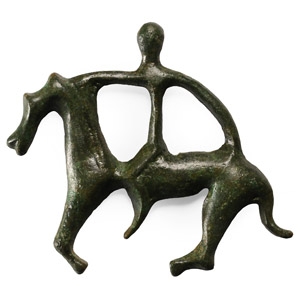
Viking Period Bronze Horseman Appliqué
11th-12th century A.D.Sold for (Inc. bp): £221
Convex in section with hollow reverse, rider with one hand gripping the horse's mane and the other on its rump; Finno-Ugrian type. 14.91 grams, 60 mm
From the private collection of a London gentleman, from his grandfather's collection formed before the early 1970s. This lot is accompanied by an illustrated lot declaration signed by the Head of the Antiquities Department, Dr Raffaele D'Amato. -
.jpg)
Viking Age Bronze Twisted Bracelet with Hatched Terminals
9th-12th century A.D.Sold for (Inc. bp): £117
Two rods tightly twisted and curved into a penannular shape, hammered flat towards the ends, each terminal with heavily hatched design to the outer edge. 80 grams, 80 mm
3 1/8 in.
From a Sussex, UK, private collection; acquired 1980s-1990s. This lot is accompanied by an illustrated lot declaration signed by the Head of the Antiquities Department, Dr Raffaele D'Amato.
