
Loading, please wait...
LOT 1518
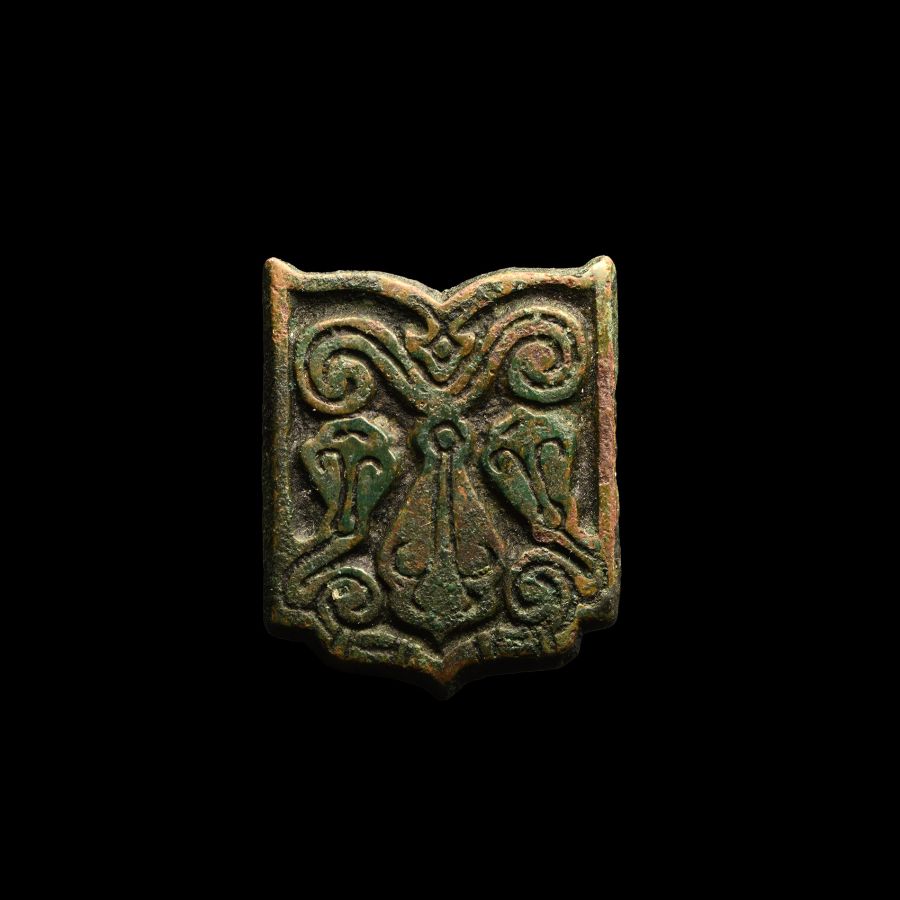
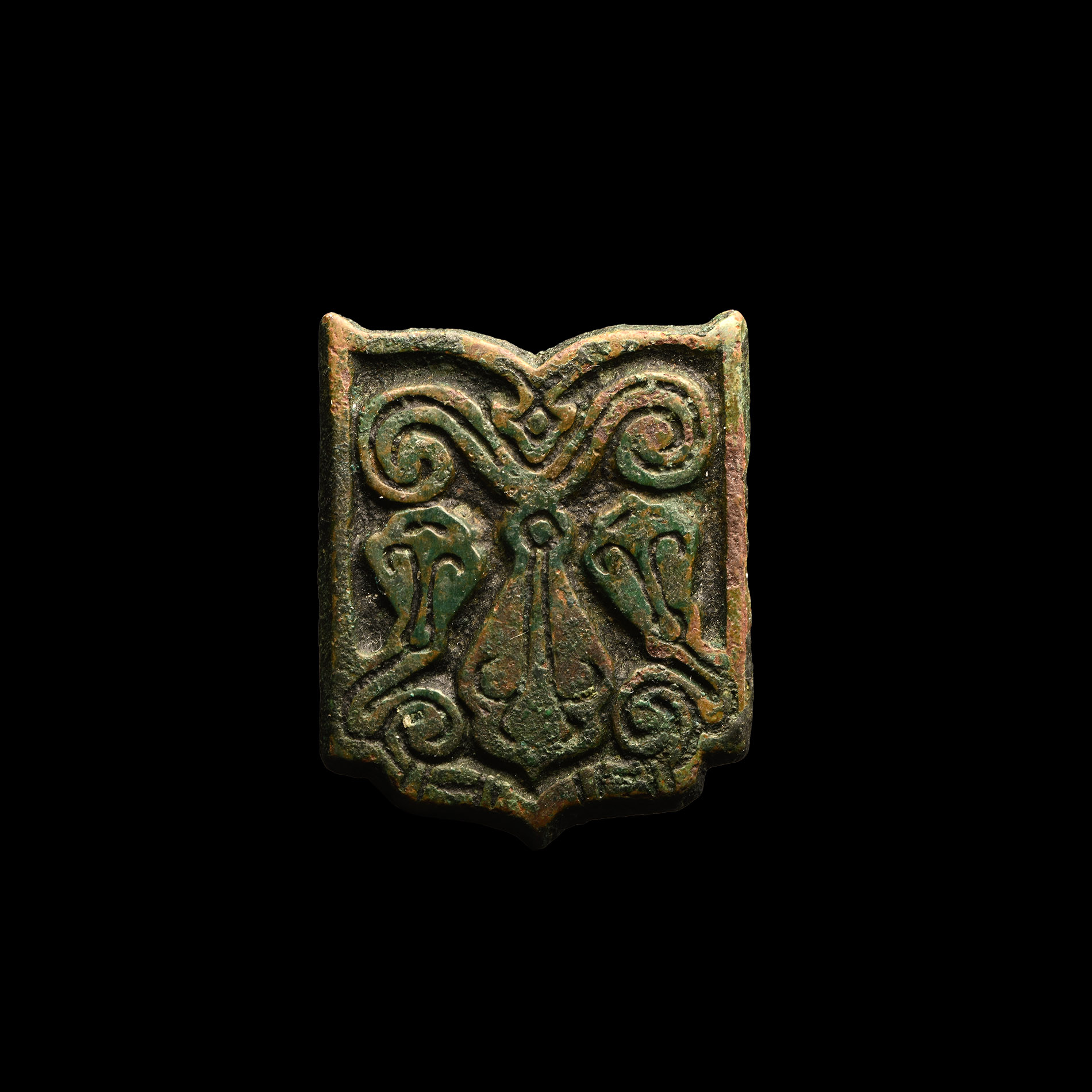
Viking Age Volga Bulgar Bronze Belt Mount
LATE 10TH CENTURY A.D.
1 1/4 in. (8.7 grams, 32 mm).
Of polygonal shape, reserved stylised vegetal forms; attachment rivets to reverse. [No Reserve]
ProvenanceFrom the collection of a North American gentleman, formed in the 1990s.
LiteratureCf. Historical Museum, Moscow, The road of Varangians to Greeks and Greece (In Russian and English), Moscow, 1996, nos.232-237, 422, for similar mounts.
FootnotesPentagonal strap mounts decorated with schematic plant ornaments, cast in bronze, characterised the population of Volga Bulgars, often in commercial relations with the Viking world. A belt-set with pentagonal and rectangular mounts decorated with plant ornaments, along with its strap end and buckle, were excavated by V.D. Sokolov in Slavic-Scandinavian graves in Russian territory.
CONDITIONTimeLine Auctions follows a vetting process to ensure the authenticity and legality of all items, reinforcing our commitment to integrity and responsible trading. Each antiquity, antique, and coin lot undergoes thorough examination by a vetting committee of at least ten external specialists, professional trade association members, scientists, and archaeologists: Our Vetting Process
AUCTIONS:
TimeLine is a leading auction house specialising in antiquities, ancient art, collectables, natural history, coins, medals, and books. Our auctions offer museums, collectors, historians, and enthusiasts the opportunity to acquire unique and historically significant pieces.
-
Viking Age Bronze Shield Mount
9th-11th century A.D.Sold for (Inc. bp): £13
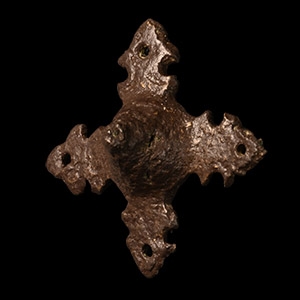
Raised conical boss to centre, four radiating trefoil-shaped pierced mounting lugs. 12.5 grams, 40 mm
Acquired in the 1970s. Ex property of a UK gentleman. -
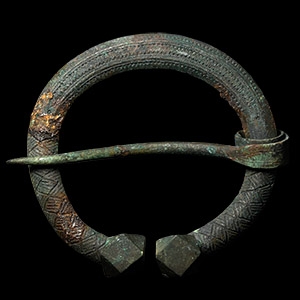
Large Viking Age Bronze Decorated Penannular Brooch
9th-11th century A.D.Sold for (Inc. bp): £143
Comprising facetted terminals and free-running tongue, decorated with three zones of geometric motifs, incised bands to the pin head. 160 grams, 10.2 cm wide
From the collection of a North American gentleman, formed in the 1990s. -
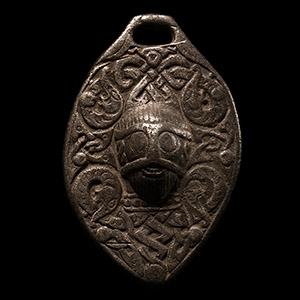
Viking Silver Urnes Style Rattle Pendant
9th century A.D.Sold for (Inc. bp): £2,600
Formed from a hollow vesica-shaped silver mount which rattles when shaken, probably a horse-harness fitting; with Urnes style interlaced dragons in low relief surrounding a facing bearded mask with large staring eyes (Thor?). 67 grams, 73 mm
Formerly acquired on the German art market in the early 1980s. Previously in a European collection in the 1990s. From an important central London collection. This lot has been checked against the Interpol Database of stolen works of art and is accompanied by searcher certificate no. 200377.
The last phase of Viking art is the Urnes style from about 1050-1150. The Urnes style has gracefully curved lines of different width - swelling, tapering - but always in a curve. The tendril clusters from the Ringerike style are abandoned. The Urnes style developed shortly before the middle of the 11th century.
