
Loading, please wait...
LOT 0337
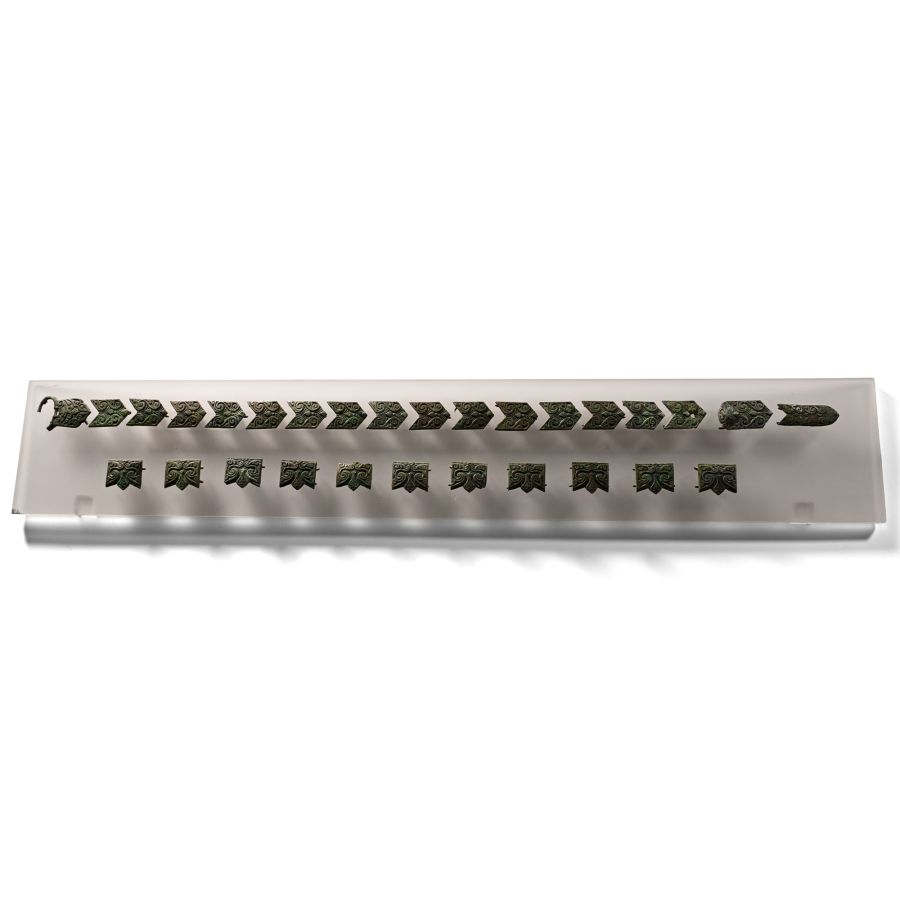
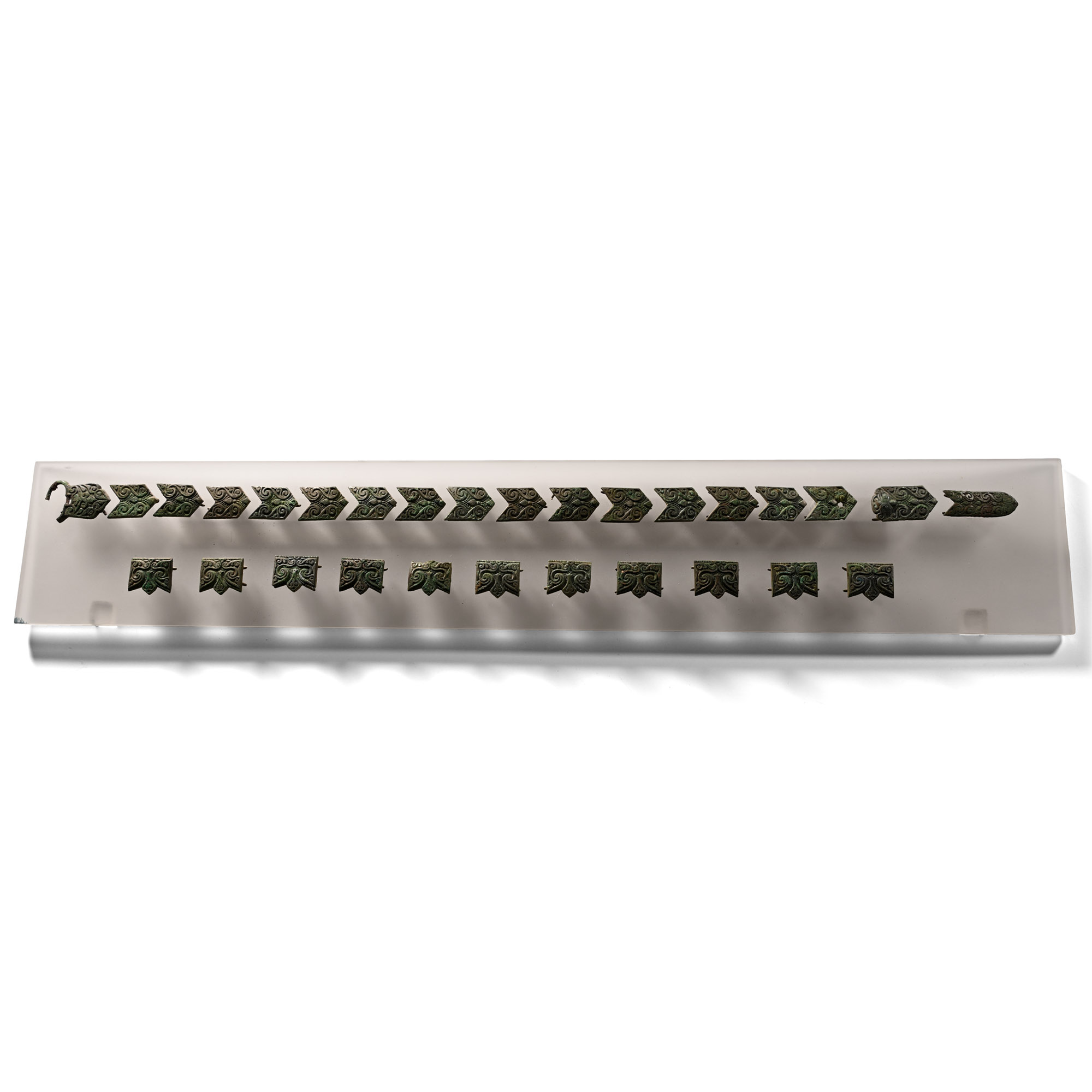
Viking Age Volga Bulgar Bronze Belt Mount Collection
10TH-11TH CENTURY A.D.
3/4 - 1 3/8 in. (525 grams total, mounts: 21-34 mm).
Comprising: twenty-seven fittings of polygonal shape with reserved stylised vegetal forms; one belt buckle of similar shape and decoration on the preserved part of the barb; a roundel; a narrow polygonal belt-tip; attachment rivets to reverse; mounted on a custom-made display stand. [29]
ProvenanceAcquired on the London art market, 1990s.
Private collection, London.
This lot has been checked against the Interpol Database of stolen works of art and is accompanied by search certificate number no.12621-234052.
This lot has been cleared against the Art Loss Register database, and is accompanied by an illustrated lot declaration signed by the Head of the Antiquities Department, Dr Raffaele D'Amato.
Cf. Historical Museum, Moscow, The road of Varangians to Greeks and Greece (In Russian and English), Moscow, 1996, nos.232-237, 422, for similar mounts.
FootnotesPentagonal strap mounts decorated with schematic plant ornaments, cast in bronze, characterised the population of Volga Bulgars, often in commercial relations with the Viking world. A belt-set with pentagonal and rectangular mounts decorated with plant ornaments, along with its strap end and buckle, were excavated by V.D. Sokolov in Slavic-Scandinavian graves in Russian territory.
CONDITIONTimeLine Auctions follows a vetting process to ensure the authenticity and legality of all items, reinforcing our commitment to integrity and responsible trading. Each antiquity, antique, and coin lot undergoes thorough examination by a vetting committee of at least ten external specialists, professional trade association members, scientists, and archaeologists: Our Vetting Process
AUCTIONS:
TimeLine is a leading auction house specialising in antiquities, ancient art, collectables, natural history, coins, medals, and books. Our auctions offer museums, collectors, historians, and enthusiasts the opportunity to acquire unique and historically significant pieces.
LOT 0337
Viking Age Volga Bulgar Bronze Belt Mount Collection
Estimate £1,800 - 2,400€2,090 - 2,780 (for guidance only)$2,430 - 3,240 (for guidance only)
-
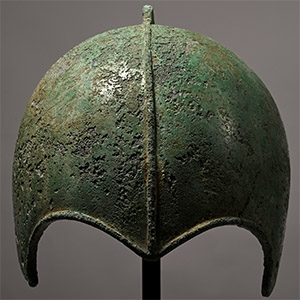
Scythian Bronze 'Kuban' Type Helmet
7th-6th century B.C.Sold for (Inc. bp): £18,200
Raised from a single sheet with rounded skull and semi-circular cut-outs for the eyes with raised rims, raised bar to the front extending to the top with a loop; ten circular perforations to the lower edge; accompanied by a custom-made display stand. 1.47 kg, 23.5 cm wide
Private collection formed in Europe in the 1980s. Westminster collection, central London, UK. Accompanied by an academic report by Dr Raffaele D’Amato. This lot has been checked against the Interpol Database of stolen works of art and is accompanied by search certificate number no.12616-235608. This lot has been cleared against the Art Loss Register database, and is accompanied by an illustrated lot declaration signed by the Head of the Antiquities Department, Dr Raffaele D'Amato.
This war helmet, typical of the Caucasian Scythians, belongs to the so-called Kuban type according to B. Z. Rabinovich, named after the north Caucasian region where the majority of this type of helmets were found. The helmet is almost identical to the helmet found in the 6th century barrow at Kelermes (Stanitsa Kelermeskaya), and in fact many of such helmets have been found in the Northern Caucasus. The helmets were typical of the noblemen fighting on horseback with spear, javelins and especially with bow and arrows. -
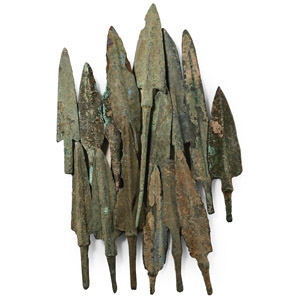
Luristan Bronze Arrowhead Collection
13th-6th century B.C.Sold for (Inc. bp): £195
Comprising triangular types with thick midrib, heater-shaped, leaf-shaped, and other types, one with a long tang and barbed head. 312 grams total, 76-162 mm
Ex London art market, 1980-1990s. This lot is accompanied by an illustrated lot declaration signed by the Head of the Antiquities Department, Dr Raffaele D'Amato.
One category of the represented arrowheads has a sharp, flat blade, the ends of which extend to form wings or barbs, and a prominent midrib extending into a long tang that often has a stop; the blade shape varies from deltoid to more triangular. Another form has no barbs, but it has a prominent midrib extending to the tang, and a narrow leaf-shaped blade, with squared shoulders. -
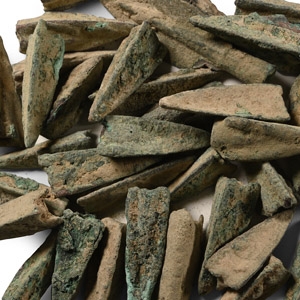
Greek Period Bronze Arrowhead Collection
Circa 5th-3rd century B.C.Estimate: £100 - 140 (+bp*)
Opening Bid: £50
Including triangular-section, leaf-shaped and other types. 115 grams total, 19 - 44 mm
Acquired in the 1990s. Ex Abelita family collection. This lot is accompanied by an illustrated lot declaration signed by the Head of the Antiquities Department, Dr Raffaele D'Amato.
