
Loading, please wait...
LOT 0335
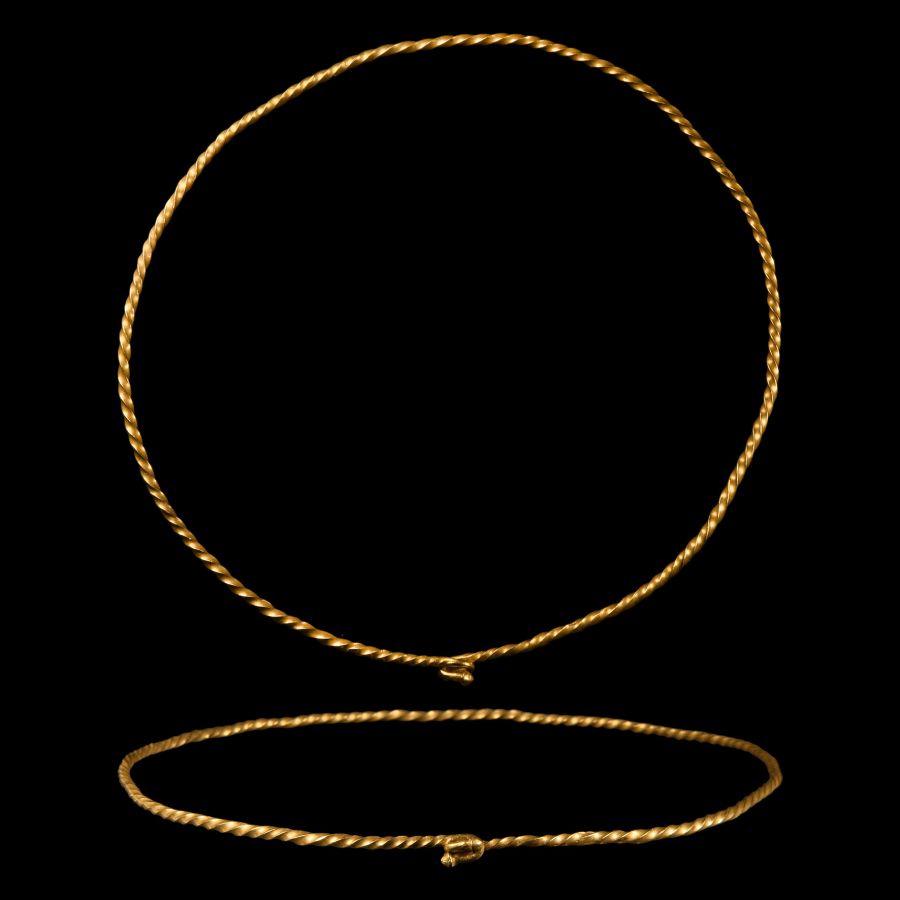
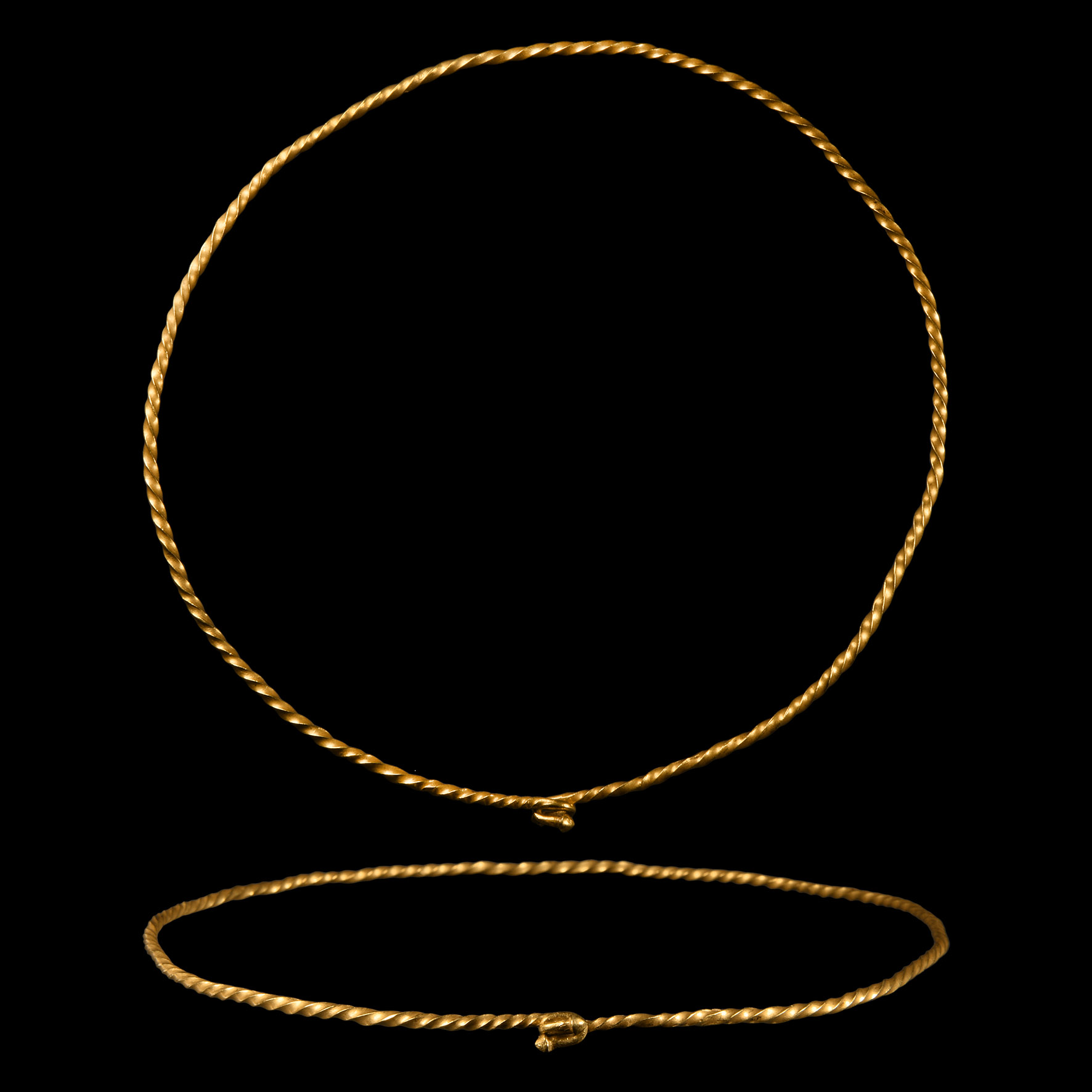
Viking Age Twisted Gold Torc
11TH CENTURY A.D.
5 1/8 in. (22.12 grams, 13 cm wide).
Comprising a slender penannular hoop and hooked finials with conical bosses.
ProvenanceFrom the collection of a North American gentleman, formed in the 1990s.
This lot has been checked against the Interpol Database of stolen works of art and is accompanied by search certificate no.200432.
Cf. Romisch-Germanischen Zentralmuseum Mainz (RGZM), Das Reich der Salier, 1024-1125, Sigmaringen, 1992, pp.168ff., fig.7, Vitrine 6.
FootnotesDuring the Salian period, large treasures of silver coins, bars and jewellery were buried in the West Slavic settlement areas, east of the borders of the empire. This torc corresponds with a Slavic neck collar from the hoard of Farve, Schleswig Holstein. The collar is in silver, but the structure is identical to our torc.
CONDITIONTimeLine Auctions follows a vetting process to ensure the authenticity and legality of all items, reinforcing our commitment to integrity and responsible trading. Each antiquity, antique, and coin lot undergoes thorough examination by a vetting committee of at least ten external specialists, professional trade association members, scientists, and archaeologists: Our Vetting Process
AUCTIONS:
TimeLine is a leading auction house specialising in antiquities, ancient art, collectables, natural history, coins, medals, and books. Our auctions offer museums, collectors, historians, and enthusiasts the opportunity to acquire unique and historically significant pieces.
-
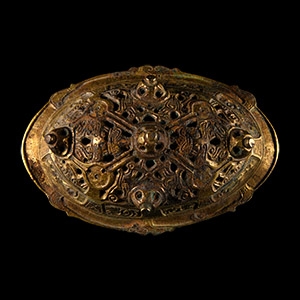
Scandinavian Viking Gilt Bronze Tortoise Brooch
9th-11th century A.D.Sold for (Inc. bp): £5,720
Of Type P 51 B4 (Jansson 1984b); double-shelled with detached openwork zoomorphic top shell studded with five projecting bosses, alternating chased zoomorphic and geometric panels below; flange rim with ornamental shaping; concave underside with pin-lugs and catchplate. 153 grams, 10.7 cm
From the collection of a North American gentleman, formed in the 1990s. This lot has been checked against the Interpol Database of stolen works of art and is accompanied by search certificate no.200460. -
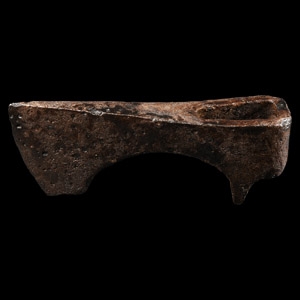
Viking Age Iron Bearded Axehead
11th-13th century A.D.Sold for (Inc. bp): £130
Finno-Ugrian with curved blade, swept rear edge, square chin, socket with downwards flanged sides. 602 grams, 16.5 cm
Acquired 1971-1972. From the collection of the vendor's father. Property of a London, UK, collector.
This type of bearded axe seems to correspond to the category of Eastern Axes inside the Viking axe classification. Usually these bearded axeheads (skeggöks) had a longer edge, designed to split tree trunks into planks and beams. Some of the bearded axes were known as halfÞynna öx; the neck on such 'half thin axe' was thinly forged, to make it lighter. Bearded axes of this type appear also in the weaponry of people from the Baltic. -
.jpg)
Viking Age Silver Twisted Neck Torc
9th-12th century A.D.Sold for (Inc. bp): £143
With round-section twisted wire body, tubular sleeves with faux ropework collars and ribbed suspension loop, one terminal repaired. 92 grams, 15.3 cm
Fine condition, one terminal repaired.
Private collection before 2000. UK art market. Ex property of a London gentleman.
